
.webp)
Post Summary
It's 3 AM. Your district manager's phone rings.
Store #23's freezer just died. Four hours of inventory at risk. Health inspection in six hours.
In 2020, this meant panic. Scrambling through contact lists. Sending emails. Hoping someone wakes up and checks their phone.
In 2026, it's different with operational resilience management systems.
The system catches the temperature drop automatically. Alerts the on-call technician. Creates a work order with all the equipment details. Tells the store manager exactly what to do. Documents everything for the inspector.
Freezer fixed in 90 minutes. No lost inventory. No violations. No chaos.
That's what operational resilience management systems deliver, keeping your business running when things go wrong.
.svg)

Priced on per user or per location basis
Available on iOS, Android and Web


What Are Operational Resilience Management Systems?
An operational resilience management system helps your business absorb disruptions and keep running. It's not about working faster; it's about staying functional when normal operations break down.
Here's the difference:
- Operational efficiency asks: "How fast can we do this?"
- Operational resilience asks: "What happens when we can't do this the normal way?"
For restaurants, retail stores, hotels, and facilities running multiple locations, this determines whether a problem becomes a minor headache or a business crisis.
Common Disruptions Multi-Unit Brands Face
- Equipment failures that threaten food safety
- Supply delays that empty your shelves
- Staff shortages during your busiest hours
- Sudden regulatory changes
- Weather that disrupts operations
- System outages that stop transactions
Each of these can ripple across every location. One store's problem becomes everyone's problem without the right operational resilience management system.
What Is Operational Resilience and Why It Matters More Than Speed
Operations leaders now prioritize operational resilience over pure speed improvements.
Why?
Because the fastest operations still fail when they can't adapt to disruption.
Traditional approach:
- Equipment breaks
- Someone fixes it
- Back to normal
- Same problem happens again
Operational resilience approach:
- Equipment breaks
- System logs the pattern
- AI analyzes similar failures across locations
- Maintenance schedules adjust automatically
- Problem gets prevented at other stores
The difference? Learning is built into the system. This is what operational readiness looks like in practice.
Operational Resilience Management Systems vs Traditional CMMS Software
Many operations teams use CMMS (maintenance management systems). How is an operational resilience management system different?
**
Traditional CMMS, Operational Resilience Management System
Manages equipment maintenance only, Manages operations + maintenance + safety
Reacts to equipment problems, Predicts and prevents disruptions
Used by facilities teams, Used by all frontline teams
Focuses on assets, Focuses on service continuity and operational readiness
**
Bottom line: CMMS manages maintenance tasks. Operational resilience solutions manage your entire response to any disruption.
Core Components of an Operational Resilience Management System
Here's what you actually need in an operational resilience solution for 2026:
1. Real-Time Monitoring That Actually Warns You
You need to see problems before they become crises.
This includes:
- Temperature tracking for refrigeration
- Equipment performance metrics
- Automated alerts when things drift
- Pattern recognition for gradual failures
When your walk-in cooler starts running warm, the operational resilience system alerts you before you lose inventory.
2. Smart Issue Routing for Operational Readiness
When something goes wrong, the right person gets notified immediately, automatically.
The system routes based on:
- Issue type (safety vs. maintenance vs. operations)
- Location and who's available
- Severity and business impact
- Who has the skills to fix it
Automated routing means no one's scrambling to figure out who to call.
3. Mobile Response Protocols
Your managers need clear instructions on their phones, not buried in a PDF somewhere.
Digital playbooks provide:
- Step-by-step instructions
- Photos and equipment specs
- Vendor contact information
- Works offline when the internet fails
Mobile access means your team can respond from anywhere, immediately.
4. Cross-Function Coordination
When a freezer fails, it's not just a maintenance problem:
- Operations needs to handle inventory
- Safety needs to document compliance
- Purchasing might need to order a replacement
Integrated systems connect these functions automatically instead of forcing your teams to play telephone.
5. Automatic Learning
The best operational resilience software learns from every incident.
This means:
- Every issue gets logged automatically
- AI spots patterns across locations
- Protocols update based on what works
- Solutions spread across your network
When Store #47 solves a problem, Store #23 doesn't have to figure it out again.
How Operational Resilience Management Systems Like Xenia Help Multi-Unit Brands
Running multiple locations creates unique challenges. Here's how operational resilience software like Xenia helps:
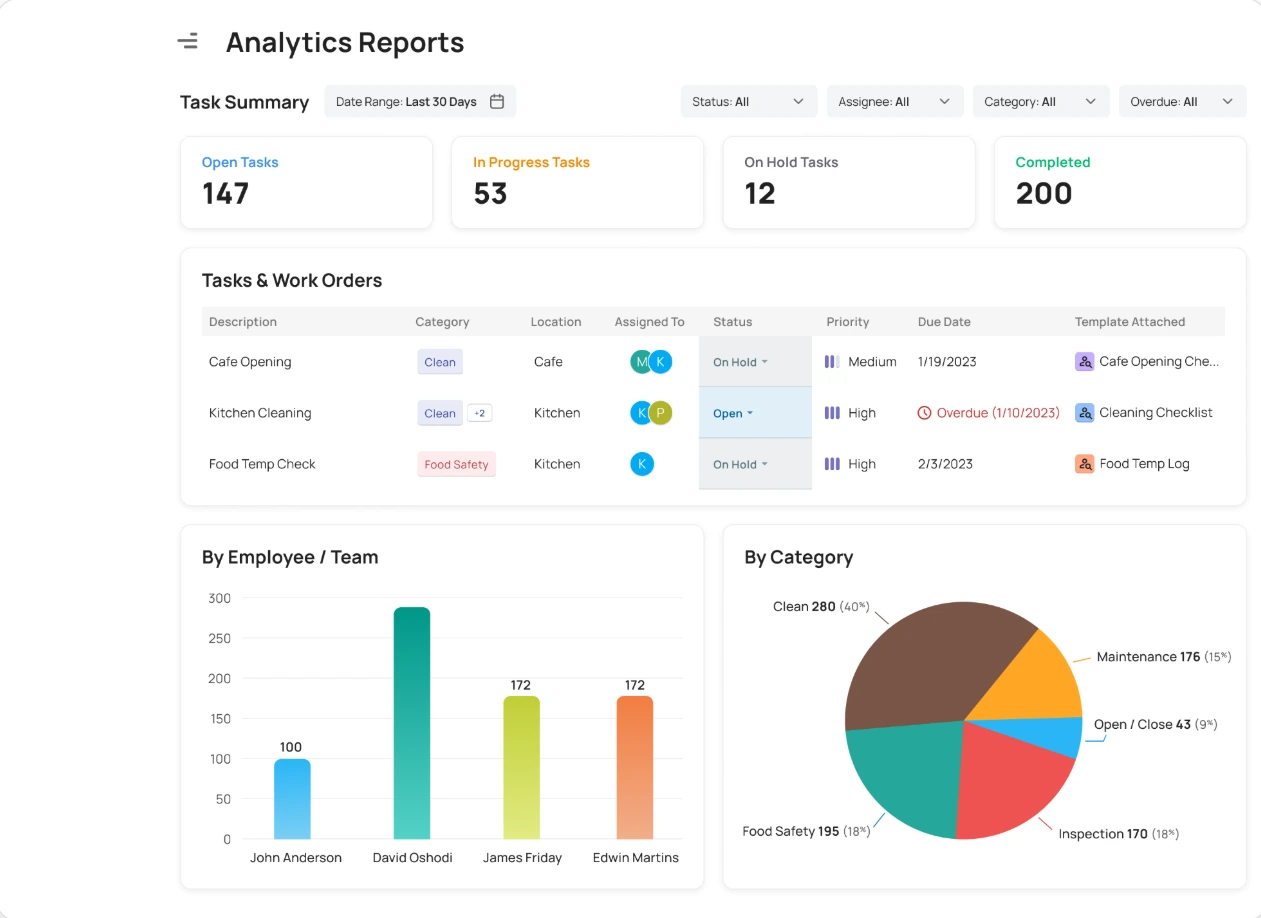
Centralized visibility with local action: Corporate sees everything happening across all locations in real-time through real-time dashboards, with automatic alerts for what needs attention and enterprise-wide pattern analysis. But local teams can respond immediately without waiting for approval, giving them the authority to execute response plans on the spot.
Consistent standards, flexible execution: Your brand standards stay consistent, but smart templates automatically adjust for:
- Different local regulations
- Different equipment at each location
- Different health department requirements
- Location-specific circumstances
One update pushes to all locations instantly.
.webp)
Network-wide knowledge sharing: When one location figures out a workaround for a supply shortage, that solution becomes available to every location immediately through AI-generated summaries and shared libraries.
Automatic compliance documentation: During health inspections, managers pull up complete records instantly, temperature logs, cleaning records, and equipment maintenance history, all captured automatically through daily operations with no scrambling for paperwork.
Everything in one system: Instead of separate systems for operations, maintenance and safety, Xenia integrates all three. When a freezer fails, operations sees food safety implications, maintenance sees equipment specs, and purchasing sees replacement options, all in the same place.
Mobile-first response: Xenia's mobile app puts complete capabilities in your managers' hands:
- Works offline during connectivity issues
- Photo and voice documentation in seconds
- Push notifications for critical alerts
- One-tap access to response protocols
You can document an incident, create a work order, and notify leadership, all in under 60 seconds from your phone.
.webp)
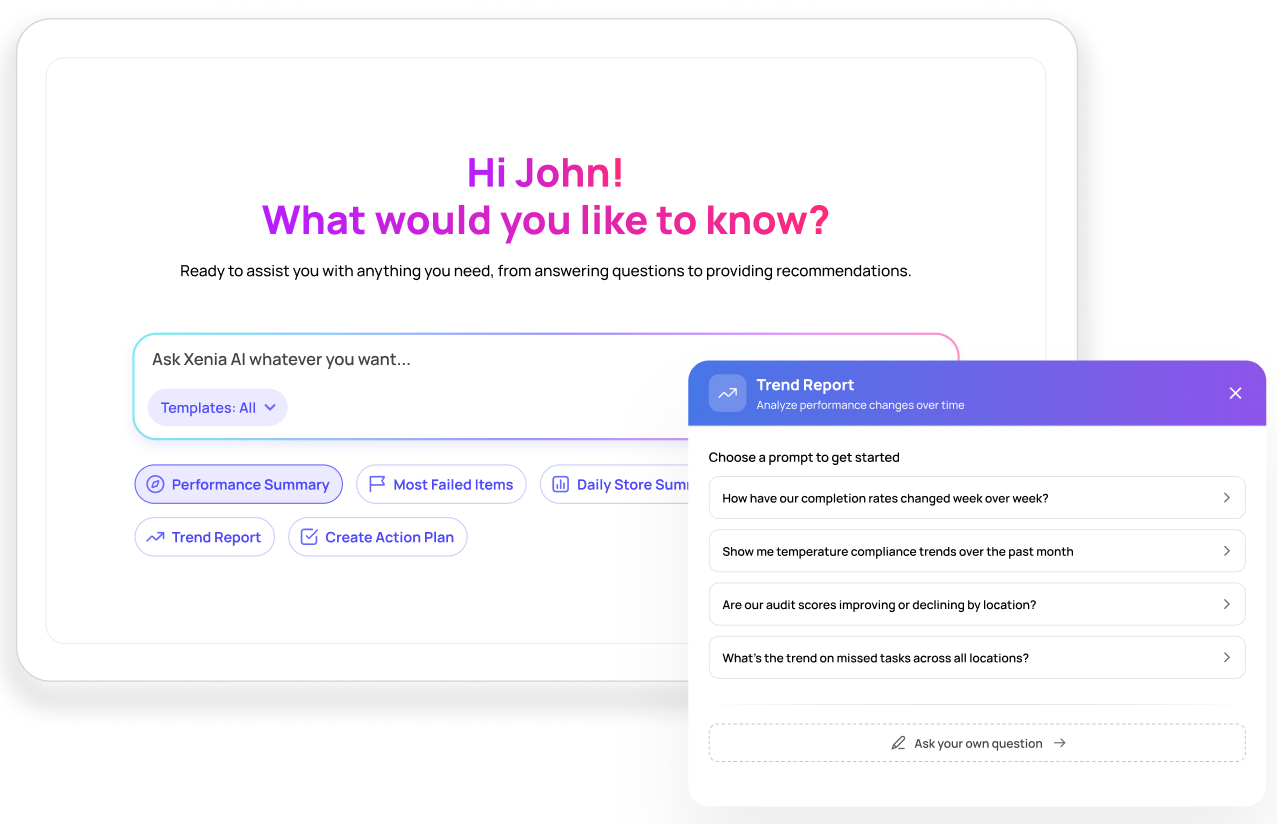
AI that actually helps: Xenia's AI transforms reactive systems into predictive ones:
- Photo analysis detects problems in inspection photos before they escalate
- Automated summaries identify patterns and suggest preventive actions
- Template intelligence optimizes protocols based on what works across your network

Real-time enterprise visibility: District and regional leaders see exactly what's happening across all locations without requesting manual reports, real-time status updates, automatic exception alerts, trend analysis, and custom dashboards by role.
Built for scale: Whether you run 10 locations or 1,000, Xenia scales effortlessly: update protocols once and push to all locations, solve a problem at one store and share across the network, maintain centralized management with local flexibility and scale with unlimited user capacity.
Frequently Asked Questions
What is the difference between an operational resilience management system and a standard CMMS?
A CMMS manages equipment maintenance. An operational resilience management system manages your entire response to any disruption, equipment failures, supply issues, staffing gaps, regulatory changes.
CMMS is maintenance-focused. Operational resilience solutions integrate operations, maintenance, and safety for complete continuity.
How does operational resilience software help multi-unit brands prepare for a crisis?
Operational resilience software helps multi-unit brands stay ready for crises. It gives a clear view of all locations, ensures every site follows the same response steps, sends quick alerts to teams, automatically keeps records, and shares solutions from one location to all others.
What is operational readiness and how do I measure it in a frontline business?
Operational readiness is all about being ready when things go wrong. You can measure it by seeing how fast your team reacts, if key resources have backups and whether problems and lost revenue are dropping.
Conclusion
The businesses winning in 2026 are not just fast. They are resilient.
They have stopped asking "How quickly can we do this?" and started asking "What happens when we can't do this the normal way?"
For multi-unit brands running restaurants, retail stores, hotels, convenience stores, and facilities, operational resilience management systems determine whether disruptions become minor problems or business crises.
The technology exists. The framework works. The only question: when will you build operational resilience into your operations?
Want to see how Xenia's operational resilience software builds readiness for multi-unit brands? Book a demo to see how we transform chaos into operational readiness.
Frequently Asked Questions
Got a question? Find our FAQs here. If your question hasn't been answered here, contact us.

Looks like there's no data available in our FAQ section at the moment.

A Modern, AI-Powered Platform Built Specifically for Frontline Operations
Xenia brings daily operations, maintenance, audits, and compliance into one mobile-first platform. Frontline teams execute work consistently across locations while leadership gets real-time visibility.
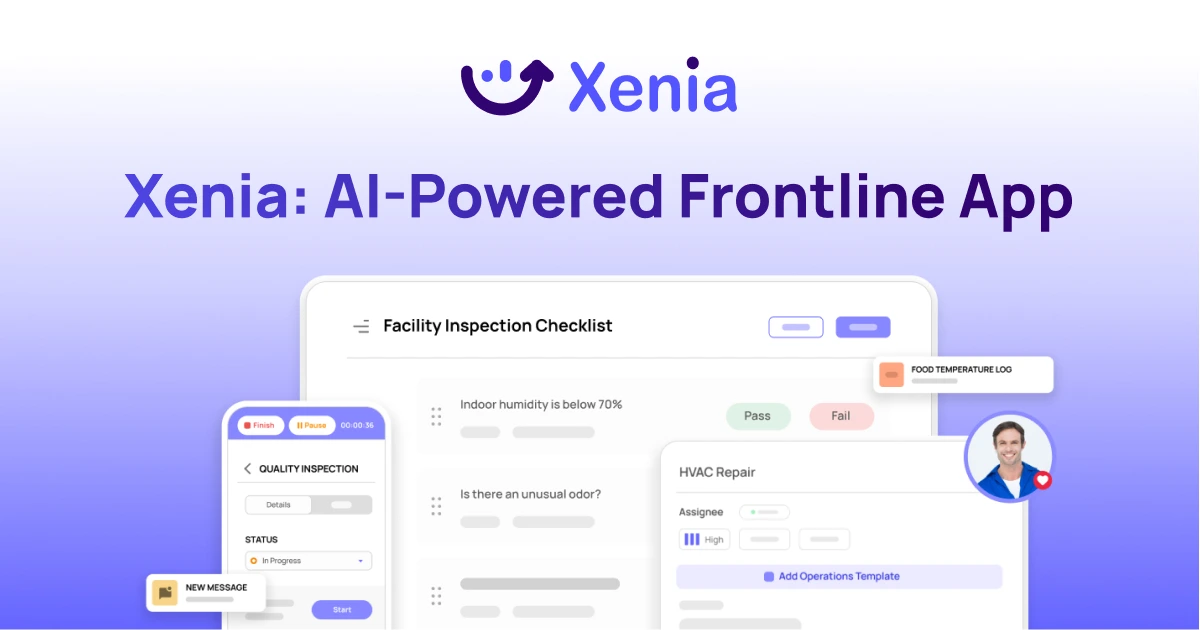
Why Multi-Location Operators Choose Xenia:
🤖 AI-Powered Operations, Create digital checklists instantly or convert paper forms with AI. Verify compliance automatically with photo analysis and get instant answers from your operational data.
✅ Daily Operations & Maintenance, Assign work across hundreds of locations in minutes. Report and route issues instantly. Schedule preventive maintenance to catch problems before downtime.
📊 Real-Time Visibility, Track completion, work orders, and performance across all locations through dashboards. Filter by site or asset to spot trends and take action.
Manage operations, maintenance, and compliance across all your locations from one platform

.svg)
.webp)
%201%20(1).webp)

.svg)
%201%20(2).webp)