
Post Summary
Running a retail business in 2026 requires smarter operations than ever before. You're dealing with staffing shortages, rising customer expectations, and managers stretched too thin to coach their teams.
Most retail brands still plan once a year and react when problems surface. That approach breaks down when you're managing multiple locations and market conditions shift overnight.
AI-powered retail changes the game.
AI retail management gives teams the tools to execute consistently while adapting to real-time conditions. Instead of waiting weeks for reports, managers get answers in seconds. Instead of chasing compliance manually, systems verify it automatically. Instead of drowning in data, teams get clear action steps.
This guide explains what AI-powered retail means, which problems it solves, and why the brands winning right now adapt faster than their competition.
.svg)

Priced on per user or per location basis
Available on iOS, Android and Web


What Is AI-Powered Retail?
AI-powered retail uses artificial intelligence to help multi-location brands execute better and adapt faster.
It's not about replacing your people. It's about giving frontline teams and managers the support they need to do their jobs well when conditions constantly change.
Here's the difference in simple terms:
Old way: A district manager spends three hours every Monday building spreadsheets to figure out which stores need help. By the time they spot a pattern, it's already cost thousands in lost sales or compliance failures.
New way: That same manager opens Xenia's reporting and analytics platform and asks, "Which stores are struggling with closing procedures?" They get an instant answer with visuals, specific gaps, and recommended fixes. Problems get solved this week instead of next quarter.
AI in the retail business focuses on practical execution improvements rather than theoretical technology.
Why AI in Retail Business Matters More Than Ever in 2026
The last few years made retail exponentially harder. Let's be honest about what you're dealing with:
- Your stores operate with lean teams that need maximum efficiency
- Experienced managers retire and take decades of knowledge with them
- New hires need support to get productive quickly
- Compliance requirements keep growing while your resources stay flat
- Your teams handle multiple responsibilities that demand smart prioritization
Most brands add more processes without removing manual work. Managers spend time on reports, forms, and meetings instead of coaching teams. AI shifts the balance back to what matters.
Artificial intelligence in retail addresses these challenges by automating manual work and surfacing actionable insights.
**
Traditional Retail Operations, AI-Powered Retail Operations
Hunt through 5 different systems to understand what's happening, Get all information in one place with plain-language summaries through unified operations software
Wait for monthly reports to spot problems, See issues in real-time with real-time tracking dashboards
Manually track compliance across dozens of locations, Automated monitoring with digital compliance tools
Spend hours building reports instead of coaching teams, Ask questions in plain language and get instant visual answers
React to problems after customers complain, Catch issues before customers ever notice them with preventive workflows
**
That's the real promise here. Not flashy demos or incremental improvements. Fundamental relief for the people keeping your stores running every single day.
The Core Ways AI Applications in Retail Create Value
AI retail intelligence creates value in three specific areas: visibility, consistency, and adaptation.
1. Real-Time Visibility Across All Your Locations
Most retail brands lack real-time visibility across locations.
You know something's off at a few stores. But you can't see the full picture until the monthly report arrives two weeks late. By then, you've already lost sales and frustrated customers.
Xenia's reporting change this completely.
Your regional manager doesn't wait for corporate analytics anymore. They just open the platform and ask questions:
- "Which locations have the highest incomplete task rates?"
- "Show me compliance trends over the last two weeks"
- "Which stores need help with closing procedures?"
The system pulls answers immediately with visual breakdowns and context through automated reporting.
This isn't just faster reporting. It's a completely different way of operating. You spot patterns during morning coffee. You adjust priorities before the lunch rush. You fix small issues before they become expensive disasters.
2. Consistent Brand Execution Without Micromanagement
Your customers expect the same experience whether they visit your Dallas store or your Denver store.
But keeping consistency across dozens of locations traditionally meant constant audits, endless checklists, and regional managers burning out from nonstop travel.
AI makes consistency scalable without burning out your people through retail audit software.
How it works:
- Store managers take photos during daily store walks using mobile inspection tools
- AI compares those images against your approved brand standards
- System flags gaps in merchandising, cleanliness, or product presentation
- Issues get caught before customers see them
- Follow-up tasks get assigned automatically through retail task management
- District managers see which stores need support without surprise visits
Your brand standards stay intact. Your managers don't turn into compliance police. And you're not spending thousands on travel to verify what photos can show you instantly.
3. Adaptive Execution When Reality Hits Your Plans
Retail operations require flexibility when unexpected situations arise.
A key employee calls out sick. A delivery shows up three hours late. The weather shifts, and customer traffic doubles unexpectedly. Suddenly, your carefully built schedule doesn't work.
AI helps your teams adapt in the moment through dynamic work scheduling:
- When staffing drops, the system helps managers reprioritize based on what's critical today
- When new procedures roll out, AI turns them into mobile checklists and guides teams through execution
- When performance dips at certain locations, AI surfaces the pattern and suggests fixes before it becomes a trend
This is the shift from static plans to dynamic execution. Your store doesn't blindly follow a script written three months ago. It responds to what's actually happening right now.
How AI Retail Digital Transformation Works in Real Stores
Most articles about AI stay abstract. They talk about "transformation" without explaining what that looks like on a Tuesday morning.
Here's how retail AI shows up in actual operations.
Predictive Maintenance
Equipment maintenance affects more than just repair costs.
When your AC breaks in July, customers walk right back out. When refrigeration goes down, you lose thousands in spoiled inventory. When your POS system crashes during peak hours, you can't process sales.
AI in the retail industry helps you move from emergency repairs to planned maintenance through preventive maintenance scheduling:
What this means for your bottom line:
- Planned maintenance costs less than emergency repairs
- Preventing equipment failures protects revenue during peak times through equipment management
- Extending asset life reduces capital spending on replacements
- Your teams stop scrambling to keep broken equipment running
Planogram Compliance
Planograms ensure products get displayed correctly. But traditional verification meant regional managers physically visiting stores, checking displays against printed diagrams, and documenting gaps in spreadsheets.
Traditional methods limit speed and scalability.
When you launch a new planogram, AI verifies implementation without anyone traveling. The entire process that used to take days now happens in minutes.
Dynamic Task Prioritization
Not all tasks matter equally. But traditional checklists treat everything the same.
Static checklists don't adapt to changing priorities throughout the day.
AI prioritizes tasks based on current conditions through smart retail task management:
**
Slow Tuesday With Full Staff , Busy Saturday With Thin Staffing, Week Before Inspection
Deep cleaning projects , Customer-facing tasks only, Compliance tasks move to top priority
Inventory organization , Critical compliance items, Documentation verification
Training and development , Minimum viable operations, Equipment maintenance checks
Planogram adjustments , Safety essentials, Photo evidence preparation
**
Real Examples of AI in Retail Operations
These aren't theoretical benefits. They're AI in retail examples. These artificial intelligence in retail examples show measurable results as they prioritized execution over perfection.
Power Market (360+ convenience store locations):
Power Market was managing operations across hundreds of locations using manual, paper-based systems. Approvals and HR tasks relied on disorganized back-and-forth. Store diversity made standardization nearly impossible.
They implemented Xenia with a phased approach, starting with HR and operations before expanding to store walks and compliance.
Results:
- 100% process automation eliminated manual HR approvals and task routing
- 360+ locations digitized from paper to automated digital workflows
- Multi-format standardization across beer caves, car washes, and regional layouts
"We moved everything from paper to online... from verbal checklists and instructions into scheduled tasks and scheduled checklists. Xenia helps automate everything." - Fidaa Mohrez, Senior Director of Operational Systems
Budget Greeting Cards (9 retail locations):
Budget Greeting Cards relied on paper copies, hard copies, and spreadsheets to track location data and task submissions across their wholesale distribution network. Manual processes led to inefficiencies and inconsistent quality standards.
They transitioned to Xenia's digital retail task management system with standardized inspections.
Results:
- 15% increase in operational efficiency through streamlined task management
- 95% compliance with quality standards via regular digital inspections
- 20% reduction in task completion time with automated workflows
"Xenia has transformed how we manage our daily operations, providing us with the tools and insights we need to deliver exceptional service to our customers." - Head of Operations, Budget Greeting Cards
The Future of AI in the Retail Industry: Autonomous Operations
The relationship between AI and retail is evolving from assistance to autonomy over the next decade.
The evolution is already happening in three clear stages:
Stage 1: AI-Assisted Operations (Now)
This is where most retail brands are today. AI helps managers make better decisions faster by:
- Surfacing issues that need human attention
- Providing recommended actions based on patterns
- Automating routine verification and documentation
- Reducing time spent on administrative tasks
Using AI in retail today means helping managers make better decisions faster.
Stage 2: AI-Guided Operations (2026-2027)
The next phase gives AI more autonomy while keeping humans in control:
- Systems automatically reprioritize tasks based on real-time conditions
- AI triggers corrective actions for minor issues without waiting for approval
- Predictive analytics prevent problems before they start
- Human oversight focuses on exceptions and strategic decisions
Think of it like cruise control with lane assist. The system handles routine execution while managers focus on coaching and customer experience.
Stage 3: Autonomous Store Operations (2028+)
The future state isn't about removing people. It's about fundamentally redefining what people do:
- AI manages all routine operations execution autonomously
- Store teams focus entirely on customer experience and problem-solving
- Managers become coaches and strategists instead of task trackers
- Corporate teams analyze trends and test innovations across the network
A store manager in 2028 won't spend any time checking if closing procedures happened. They'll spend that time developing their team and creating memorable customer moments.
What makes this possible:
The technology already exists. The shift happens when:
- Data infrastructure connects all systems seamlessly
- AI models understand your specific operations deeply
- Teams trust the system because it's proven reliable
- Leadership embraces operational autonomy as a competitive advantage
Brands investing in AI-powered retail now aren't just solving immediate problems. They're building the infrastructure for autonomous operations that will define retail excellence in the next decade.
How Xenia's AI for Retail Transforms Your Operations
Xenia's AI for retail is built specifically for multi-location retail brands that need intelligent operations without complexity.
Xenia's Analytical Agent lets managers ask questions in plain English like "Which stores had the most compliance issues last month?"
The system processes operational data and delivers visual reports through Xenia's reporting and analytics platform with issue trends, compliance gaps, store comparisons, and action plans, all in seconds.
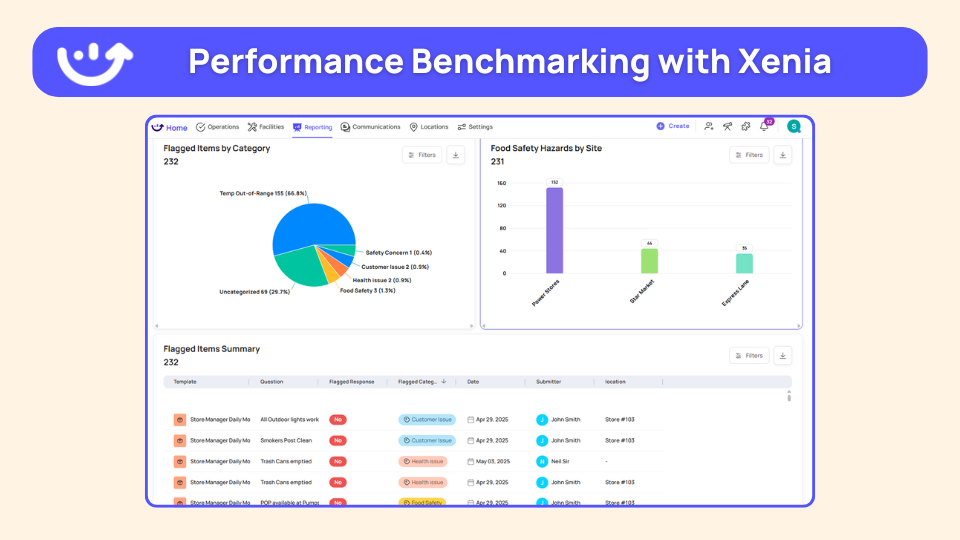
Store managers capture photos during walkthroughs using Xenia's mobile app. AI Photo Rollouts compares images against your standards and flags gaps in merchandising, planogram compliance, cleanliness, and safety.
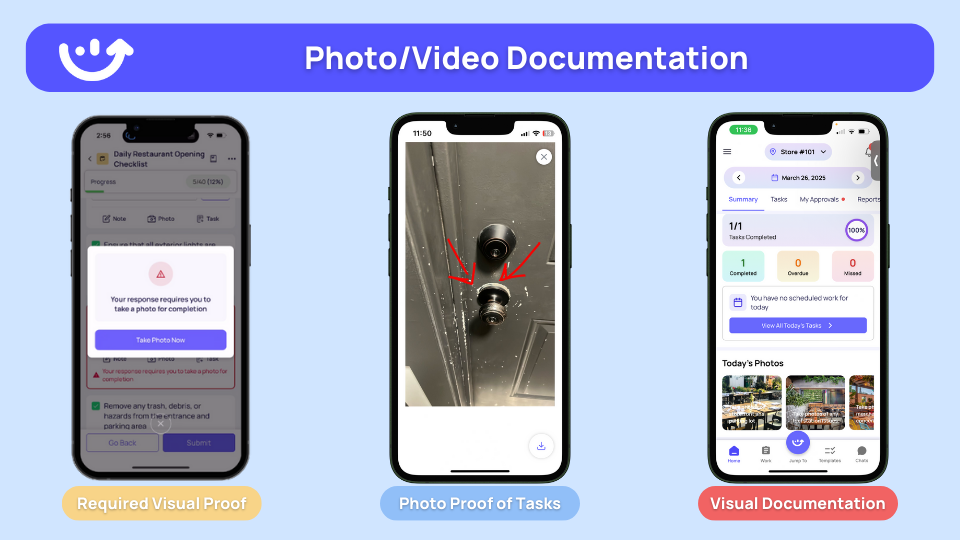
AI-Powered Summaries transform lengthy reports into digestible mobile dashboards showing compliance status, task trends, equipment issues, and team performance.
Critical issues get prioritized automatically based on severity and operational impact.
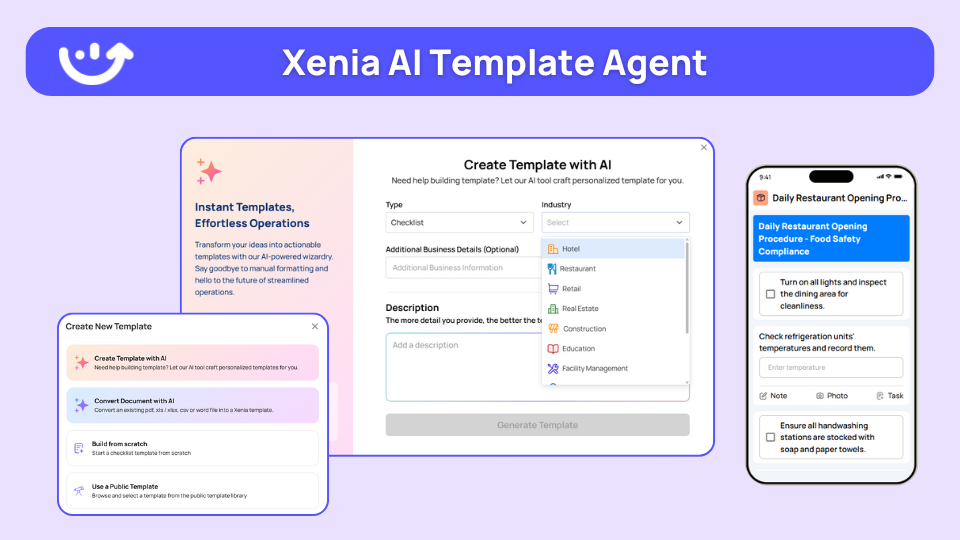
Template Agent converts paper forms into digital checklists in minutes. Describe needs in plain language or upload existing forms, the AI creates mobile checklists with photos, conditional logic, tracking, and task assignment.
Employees ask questions like "What's our sick leave policy?" and Smart Documentation uses AI-powered semantic search to deliver exact answers from your knowledge base in seconds, no more digging through folders.
Beyond AI, Xenia provides retail task management, digital checklists, inspections and audits, work order management, team communication, and asset management for daily execution.
Xenia integrates with HRIS platforms (Workday, ADP), POS systems, communication tools, and sensors through unified operations software without replacing existing infrastructure.
Frequently Asked Questions
What are the most successful AI use cases in retail operations today?
The highest-impact retail AI use cases solve daily operational friction. Automated compliance monitoring with photo verification saves hours of manual checking. Smart task prioritization helps thin teams focus on critical work.
Real-time analytics let managers spot and fix problems before they escalate. AI-powered templates compress procedure rollouts from weeks to days. The common thread: reducing manager cognitive load for more coaching, less administration.
How does AI-powered retail management solve the staffing and skills gap?
AI accelerates onboarding with real-time guidance during shifts. New hires get instant answers privately without fear of judgment. Intelligent documentation handles routine inquiries so managers stop answering the same questions repeatedly.
When experienced employees leave, their knowledge gets captured in digital SOPs instead of walking out the door. Limited teams become more capable, and new hires gain confidence faster.
What are the risks and challenges of artificial intelligence in retail digital transformation?
The biggest risk is using AI for surveillance rather than support, which destroys trust. Poor data quality creates unreliable insights. Lack of proper change management causes adoption resistance.
Integration complexity with legacy systems delays results. Rushing implementation without frontline input creates solutions that fail in actual stores. Success requires focusing on user experience and solving real problems, not just deploying technology.
Conclusion
Retail comes down to execution. The brands winning right now aren't the ones with the biggest budgets or fanciest strategies. They're the ones that can adapt quickly, catch problems early, and support their teams without burying managers in busywork.
That's what AI-powered retail actually does.
Xenia AI makes this real for convenience stores, retail chains, and multi-location brands. The AI-powered reporting and analytics platform gives you conversational analytics, automated photo verification, and instant answers across all locations. Book a demo to see how Xenia helps you execute consistently, adapt quickly, and scale without burning out your teams.
Frequently Asked Questions
Got a question? Find our FAQs here. If your question hasn't been answered here, contact us.

Looks like there's no data available in our FAQ section at the moment.

A Modern, AI-Powered Platform Built for Retail Operations
Xenia brings store operations, merchandising, audits, and loss prevention into one mobile-first platform. Store teams execute daily work consistently, maintain brand standards, and resolve issues faster, while regional and corporate leadership get real-time visibility across all locations.
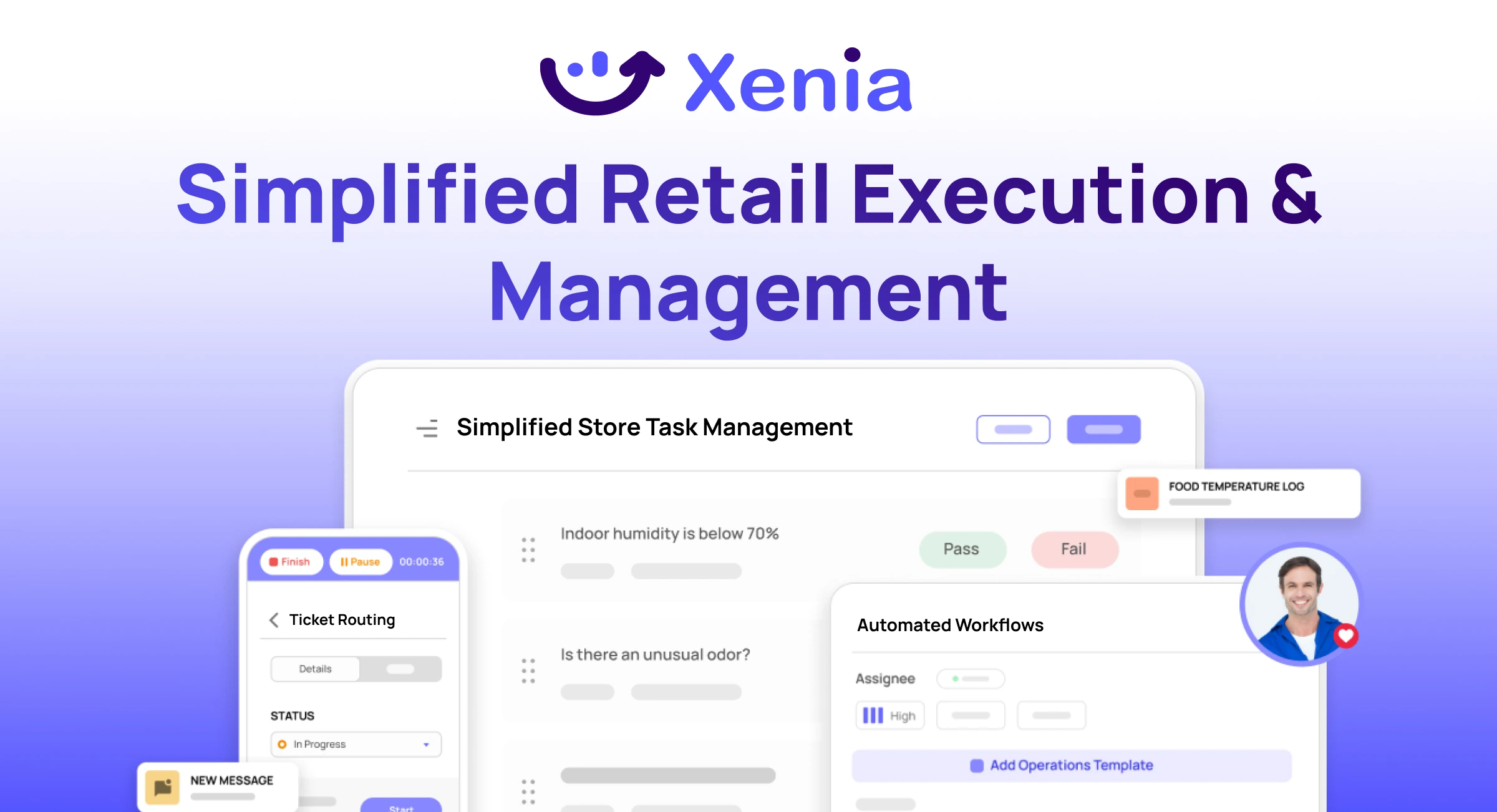
Why Retail Operators Choose Xenia:
🤖 AI-Powered Merchandising, Verify planograms, displays, and brand standards automatically with AI photo analysis. Build digital checklists instantly or convert existing merchandising guides.
🏬 Operations & Loss Prevention, Assign opening procedures, store walks, and resets across locations. Track theft, cash discrepancies, and security incidents with evidence and approval workflows.
📊 Real-Time Visibility, Compare audit scores and task completion across stores. Identify top and underperforming locations. Export reports for leadership reviews.
One platform for operations, merchandising compliance, and loss prevention across all locations.

.svg)
.webp)
%201%20(1).webp)

.svg)
%201%20(2).webp)