
Post Summary
Annual brand audits catch problems after customers have already noticed them. By the time your Q4 audit shows merchandising issues at Store 47, thousands of customers have walked through an inconsistent brand experience for months.
The operators who maintain brand consistency don't just run quarterly audits. They build brand compliance monitoring systems that catch issues the same day they start, get frontline teams involved in daily checks, and automatically alert the right people before problems reach customers.
This shift from fixing problems after they happen to catching them early changes how you think about compliance. It's not a quarterly event anymore. It's the daily infrastructure that keeps your brand consistent.
This guide shows you how to build frontline brand compliance monitoring programs that actually work at the frontline level, catch drift before customers see it, and maintain brand safety compliance monitoring best practices across every location you operate.
.svg)

Priced on per user or per location basis
Available on iOS, Android and Web


What Is Brand Compliance Monitoring?
Brand compliance monitoring is the ongoing process of making sure every location follows brand standards every day. It helps brands catch problems early instead of finding them months later during audits.
Think of it as real-time visibility versus a periodic checkup. Audits show how things looked on one day. Monitoring shows how things are actually running over time.
Effective monitoring does three things:
- Spots drift early before small issues turn into customer-facing problems
- Builds standards into daily work so frontline teams follow them naturally
- Routes issues immediately to the right people for fast resolution
The goal isn’t perfection. It’s visibility, so small gaps don’t turn into customer-facing problems.
Proactive Brand Monitoring vs Reactive Fixing
Traditional compliance programs are reactive; they discover problems through audits, then scramble to fix them. Always-on brand compliance monitoring is proactive; it identifies drift before it becomes a customer-facing issue.
Reactive Approach (Audit-Only)
Timeline:
- January 15: Store 47 stops following proper opening procedures
- February 13: District manager conducts quarterly audit, discovers multiple failures
- February 14: Creates corrective action email listing all issues
- February 19: Some issues fixed, others forgotten
Result: 30+ days of improper execution. Customer experience was impacted for a month.
Proactive Approach (Always-On Monitoring)
Timeline:
- January 15, 8:00 AM: Store 47 stops following proper opening procedures
- January 15, 9:30 AM: Daily checklist flags incomplete procedures, automated alert routes to the district manager
- January 15, 11:00 AM: District manager identifies root cause, adjusts staffing
- January 16: Opening procedures return to standard
Result: One day of improper execution. The issue was caught and fixed before it became a habit.
The difference is timing. Proactive brand compliance monitoring catches drift at the beginning, when it's easiest to correct.
Building Frontline-Ready Brand Compliance Programs
Brand compliance monitoring only works if frontline teams can actually execute it. Here's how to build compliance programs that frontline staff actually follow:
Make Daily Checks Fast and Obvious
Target: 10-15 minutes maximum for daily compliance verification tasks.
If your opening manager needs 30 minutes to complete the checklist, it won't happen consistently during the morning rush.
- Don't do this: "Complete comprehensive brand standards verification."
- Do this: "Verify 10 critical items: guest restroom clean, promotional displays match current campaign, opening procedures completed, food temps logged."
Use Simple Pass/Fail Criteria
Frontline teams shouldn't need to interpret scoring rubrics during daily brand compliance monitoring.
When frontline staff can determine pass/fail in 10 seconds without interpretation, compliance verification happens consistently.
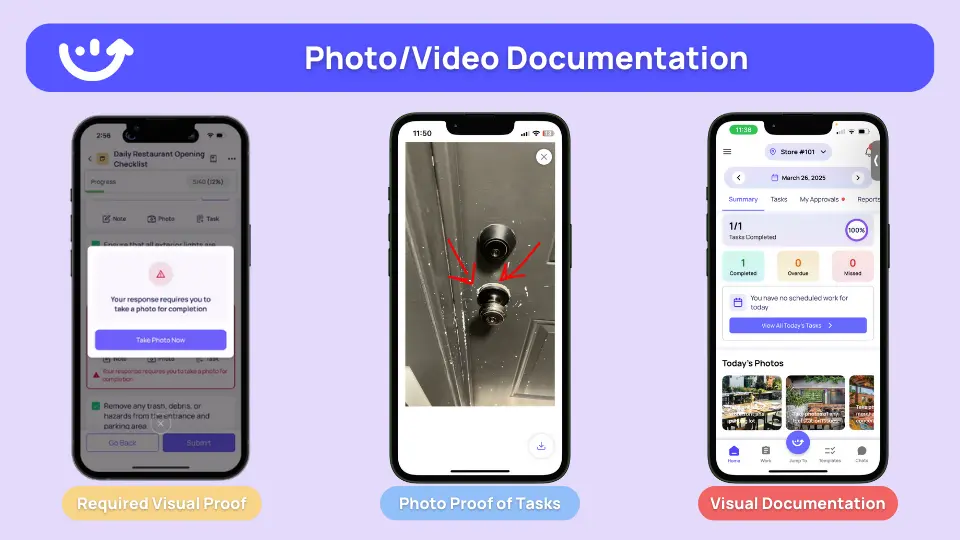
Require Photos for Failed Items
Photos eliminate subjectivity in brand compliance monitoring. "Display is messy" means different things to different people. A photo shows exactly what's wrong.
Make photos mandatory for any failed item in daily checks. This takes 15 seconds but dramatically improves issue resolution.
Build Checks Into Existing Routines
The most effective brand compliance monitoring happens as part of tasks teams already do, not as separate compliance exercises.
Integrate compliance into:
When compliance verification happens naturally within existing workflows, completion rates stay consistently high.
Automated Escalation Paths for Brand Safety Compliance Monitoring
Daily frontline verification only works if failed items automatically escalate to people who can fix them.
Severity-Based Escalation
Role-Based Routing
Different compliance failures need different expertise:
Automated corrective action workflows eliminate the manual work of deciding who should fix what.
Pattern Recognition for Systemic Issues
The most sophisticated systems identify patterns suggesting systemic problems:
Brand Safety Compliance Monitoring Best Practices: Protecting Your Brand
Brand safety compliance monitoring protects both customer well-being and brand reputation. These are the standards where failure creates immediate risk: food safety, health codes, safety protocols, and accessibility requirements. A non-negotiable for frontline brand compliance.
Make Safety Verification Non-Negotiable
Safety compliance checks cannot be optional or "when you have time" tasks.
Implementation requirements:
- Daily safety verification is a shift requirement - Opening managers cannot complete shift startup until safety checks are verified
- Systems prevent operation without verification - Digital checklists don't allow "opening complete" until all safety items pass
- Automatic escalation for any safety failure - Failed safety items immediately alert district managers
- Zero tolerance for skipped checks - Missing verification triggers immediate coaching
When safety verification is truly non-negotiable, compliance rates stay above 95%.
Require Multiple Verification Points
For critical safety standards, single-point verification isn't enough.
Example: Restaurant food safety monitoring
Multiple checks catch equipment failures quickly. If the walk-in cooler fails at 7:00 AM, the 11:00 AM check catches it before lunch service. (Learn more about food safety monitoring)
Use Digital Monitoring for Real-Time Visibility
Paper-based safety logs create compliance theater, boxes get checked, but nobody reviews them until an audit.
Digital brand safety compliance monitoring provides:
- Temperature sensors log refrigeration data automatically, alerting when equipment falls out of a safe range
- Digital checklists timestamp every verification, flagging missed checks automatically
- Photo requirements prove safety equipment is accessible and properly maintained
- Real-time dashboards show which locations have safety gaps right now
Comprehensive reporting and analytics transform compliance monitoring from "we think things are going well" to "we know exactly which locations are executing correctly and which need intervention right now."
Document Everything for Liability Protection
When safety compliance is questioned by health inspectors, in litigation, or during crisis management, documentation is your only defense.
This documentation protects your brand with timestamped, photo-verified evidence.
Online Brand Compliance Monitoring: Digital Channels
Brand compliance doesn’t stop at physical locations. In 2026, a large part of the brand experience lives online, on social media, review platforms, delivery apps, and third-party marketplaces. For many customers, these touchpoints shape trust before they ever walk through the door.
That’s why digital brand compliance needs the same level of attention as in-store execution.
Monitoring Social Media Brand Usage
Social media is often the first risk area. Brands need to actively monitor how their name and visuals are being used across platforms.
Common issues include:
- Outdated or modified logos and incorrect brand colors
- Off-brand messaging that associates the brand with conflicting positions
- Unofficial location or franchise accounts posting inconsistent content
- User-generated posts that reveal cleanliness, safety, or facility issues
Without monitoring, these problems can spread quickly and shape perception long before teams are aware of them.
Verifying Accuracy on Third-Party Marketplaces
Third-party marketplaces introduce a different kind of compliance risk. Customers mostly rely on delivery apps and review sites for accurate information, and even small inaccuracies can break trust.
Brands should regularly verify:
- Menu items, pricing, and availability
- Store hours, addresses, and contact details
- Photos and logos that reflect the current brand
- Promotions that match active campaigns
When information is wrong in multiple places, customers assume the brand is disorganized, not that a platform made a mistake.
Using Review Sites as Early Compliance Signals
Review sites provide early warning signals if you know what to look for. Individual reviews can be subjective, but patterns reveal operational issues.
Common review patterns include:
- Multiple cleanliness complaints point to lapses in cleaning standards
- Repeated order errors suggest training or system gaps
- Slow service during specific shifts indicates staffing or process issues
- Customer photos exposing maintenance problems before audits do
When ten reviews in two weeks mention dirty restrooms at the same location, that's not noise. It's a brand compliance failure that requires immediate attention. (Explore reputation management strategies)
Why Digital Brand Compliance Protects the Brand
As we said, the goal of digital brand compliance isn’t perfection. It’s visibility. When brands monitor online execution consistently, they catch issues early, respond faster, and prevent small gaps from turning into public brand damage.
Tools and Technology for Brand Compliance Monitoring
Effective brand compliance monitoring at scale requires technology built for daily use, not occasional audits.
Multi-unit operations platforms like Xenia are purpose-built for always-on compliance monitoring. They handle the mechanical work, mobile verification, automated task creation, real-time dashboards, and escalation workflows, so teams can focus on execution and improvement rather than documentation.
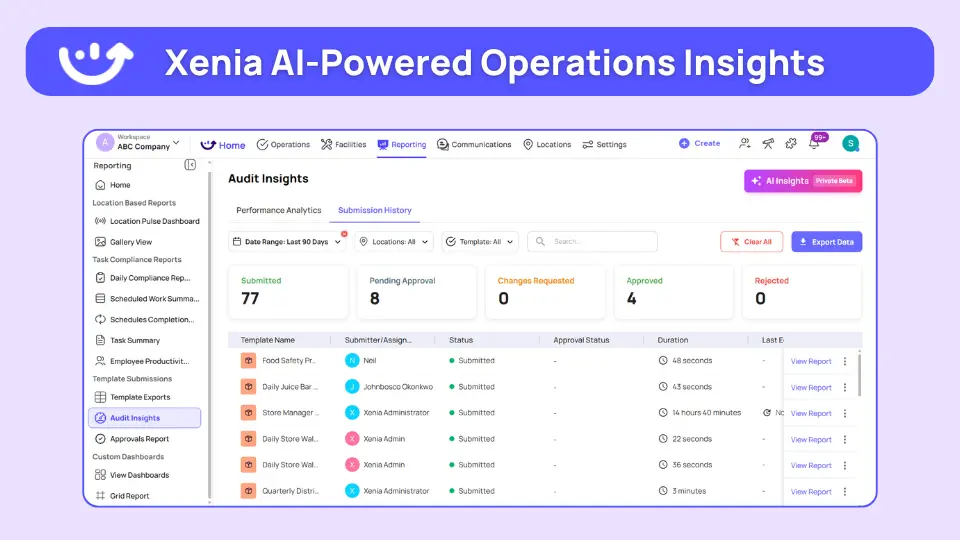
Frontline teams use quick, mobile checklists with simple pass/fail answers that take just a few minutes to complete. Offline functionality ensures checks can be done anywhere, while built-in photo capture and push notifications help document issues and alert managers as soon as problems appear.
Operations leaders get real-time dashboards showing current compliance across all locations. These dashboards highlight recent failures, missed checks, trends over time, and the status of corrective actions. Instead of guessing how the brand is performing, leaders can see exactly where intervention is needed.
AI-powered photo analysis adds consistency by reviewing photos against your set brand standards. It checks merchandising displays, cleanliness, safety equipment, and brand presentation automatically. This removes subjectivity from reviews. Standards are either met, or they aren't. The best part? Hours saved on manual review.
Together, these tools turn brand compliance from periodic reporting into continuous, reliable visibility. (Discover more about inspections and audits)
Frequently Asked Questions
What are the best practices for monitoring brand safety and compliance across digital and physical stores?
The best approach is to monitor more often where the risk is higher.
For physical locations, critical standards like food safety, health rules, and safety equipment should be checked daily through quick frontline checks. Broader operational standards can be verified weekly by managers, with full brand standards reviewed monthly by district leaders.
For digital channels, brands should use automated monitoring to track social media usage, third-party marketplace accuracy, and review site patterns. Flagged issues should be reviewed regularly and escalated quickly.
Most importantly, failures should automatically go to the right team. When issues are routed and acted on immediately, small problems don’t turn into bigger ones.
How do I build a brand compliance program that frontline staff actually follow?
Compliance works best when it feels like part of the job, not extra work.
Daily checks should take less than 10 minutes and use simple pass-or-fail questions. Ask for photos only when something fails or needs judgment. Build compliance into opening and shift procedures instead of treating it as a separate task.
Frontline teams also need to see that their input matters. When they flag an issue and it leads to a fix, trust builds. Consistent training helps ensure all managers interpret standards the same way.
When compliance feels like confirming quality, not filling out paperwork, teams stay engaged. (Learn about retail staff training)
What tools are used for online and offline brand compliance monitoring in 2026?
In 2026, most brands use mobile-first tools that work on phones and tablets, even without internet access. Teams can complete quick checklists, take photos, and sync data later.
Platforms like Xenia are built specifically for multi-unit brand compliance monitoring. They give leaders real-time visibility across locations, automatically create follow-up tasks when something fails, and show trends across the network. AI-powered capabilities compare photos against brand standards automatically, removing subjectivity from verification.
For digital compliance, brands rely on tools that monitor social media usage, check third-party listings for accuracy, track reviews for patterns, and protect brand assets. The most effective systems connect with existing operational tools, so compliance supports daily work instead of disrupting it. (Explore operations management software)
How does automated compliance monitoring reduce the risk of PR crises?
Automation helps brands spot problems early, before customers do.
Instead of waiting for quarterly audits, daily monitoring flags issues as soon as they happen. If a store slips on food safety, the system alerts managers the same day and assigns corrective actions right away.
Automation also catches patterns. If multiple locations fail the same standard in a short period, leaders are alerted to a larger issue, such as a training gap.
Early detection and fast follow-up prevent small failures from becoming public problems. That's how automated monitoring lowers the risk of PR crises. (Read about quality assurance practices)
Conclusion
Brand compliance monitoring is about giving frontline teams the systems they need to execute correctly every day, at every location.
Brands that maintain consistency across many locations don't rely on hope or quarterly audits. They use always-on monitoring to spot drift early, involve teams in daily verification, and automatically route issues for fast resolution before customers notice.
When compliance works this way, it becomes a daily habit instead of a quarterly scramble. Issues get fixed faster, and the customer experience stays consistent.
Xenia, the multi-unit operations platform, is built for continuous brand compliance monitoring. It handles the mechanics, mobile checks, automated task creation, real-time dashboards, and escalation workflows, so teams can focus on execution and improvement. The platform connects standards execution to outcomes that matter: customer satisfaction, operational efficiency, and sustainable growth.
The real question isn't whether to move beyond audits. It's whether you do it proactively or after a failure reaches customers.
Want to build brand compliance that works at the frontline level? See how operations leaders are moving from periodic audits to continuous monitoring that catches issues early and maintains brand standards daily.
Frequently Asked Questions
Got a question? Find our FAQs here. If your question hasn't been answered here, contact us.

Looks like there's no data available in our FAQ section at the moment.

A Modern, AI-Powered Platform Built Specifically for Frontline Operations
Xenia brings daily operations, maintenance, audits, and compliance into one mobile-first platform. Frontline teams execute work consistently across locations while leadership gets real-time visibility.
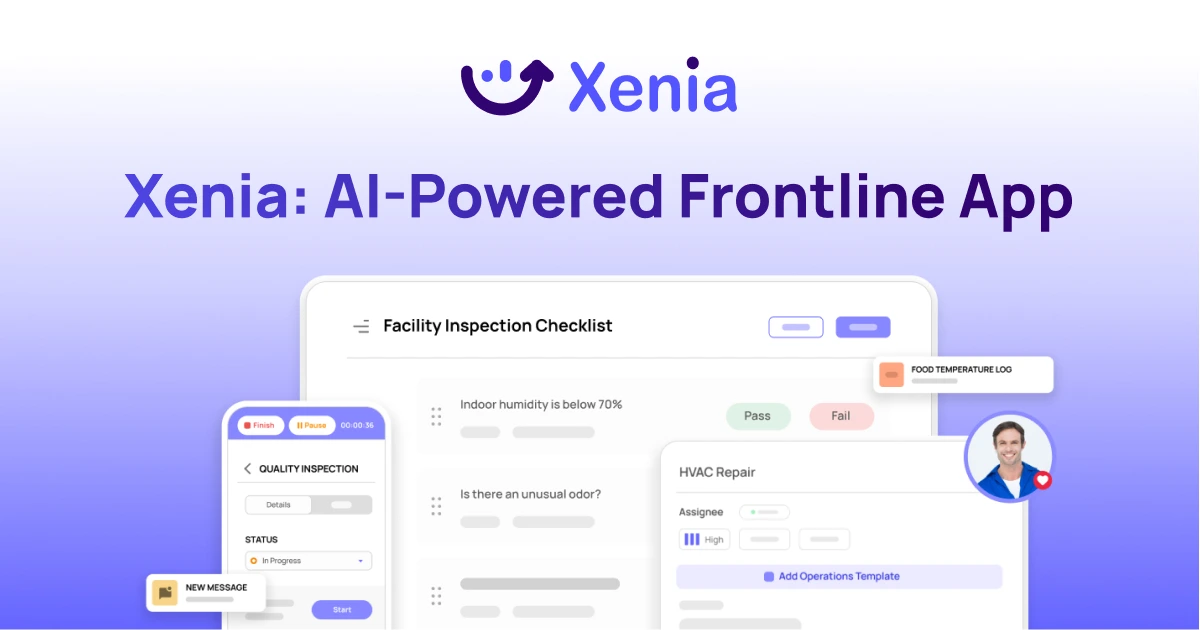
Why Multi-Location Operators Choose Xenia:
🤖 AI-Powered Operations, Create digital checklists instantly or convert paper forms with AI. Verify compliance automatically with photo analysis and get instant answers from your operational data.
✅ Daily Operations & Maintenance, Assign work across hundreds of locations in minutes. Report and route issues instantly. Schedule preventive maintenance to catch problems before downtime.
📊 Real-Time Visibility, Track completion, work orders, and performance across all locations through dashboards. Filter by site or asset to spot trends and take action.
Manage operations, maintenance, and compliance across all your locations from one platform

.svg)
.webp)
%201%20(1).webp)

.svg)
%201%20(2).webp)