
.webp)
Post Summary
Running multiple locations depends on frontline teams executing the right work every day. But most frontline operations still rely on outdated tools, slow training, and manual tracking.
This leads to high turnover, inconsistent execution, and stretched managers.
Frontline AI changes that by giving teams real-time support during their shift and giving managers clear visibility without extra admin work.
This guide explains what Frontline AI is, how it works, and how multi-location businesses use it to improve execution and retention in 2026.
.webp)
.svg)

Priced on per user or per location basis
Available on iOS, Android and Web


What Is Frontline AI?
Frontline AI is built for deskless workers, the people on the floor, not behind a computer. This includes restaurant staff, retail associates, and facility teams who need help during their shift, not after it.
Most AI tools are designed for office work, like emails and spreadsheets. Frontline AI is different. It works on mobile devices and gives real-time guidance while work is happening.
Here’s the difference in plain terms:
A traditional employee app opens a long PDF that no one has time to read and hasn’t been updated in years.
Frontline AI lets an employee ask, “What’s the closing checklist for Tuesday night?” and instantly get the right steps for today’s situation, including current inventory, scheduled maintenance, and short staffing.
This is the real shift. Instead of static documents, teams get live support. Frontline AI acts like a built-in coach and helps new and experienced workers do the job right from day one.
How AI Is Transforming the Workplace for Frontline Teams
Frontline managers wear many hats every day. They handle staffing, customer problems, daily checks, training, and often step in when the team is short.
AI workforce tools do not take their place. They take care of routine admin work so managers can focus on supporting their teams and keeping operations running smoothly.
What this looks like in practice:
- Instant answers to everyday questions
Managers can ask simple questions like, “Which stores are missing closing tasks?” and get clear answers right away. No reports to wait for. No spreadsheets to build. - Short summaries instead of long reports
AI turns long audit reports and task logs into quick, easy-to-read summaries on mobile. Managers can spot issues fast and fix them before customers notice. - Automatic compliance checks
Teams upload photos of displays, cleanliness, or food presentation. AI reviews them, flags problems, and creates follow-up tasks. This saves hours of manual work. - Faster task and checklist creation
Managers describe a process in plain language or upload an old paper form. AI turns it into a digital checklist and rolls it out to all locations in minutes.
The result? Managers spend less time searching for information and more time coaching their teams.
Real-Time Support for Multilingual Teams
Many frontline teams speak different languages. That makes training harder and increases the risk of mistakes and safety issues.
AI solves this by delivering instructions, safety alerts, and training in each worker’s preferred language. Managers share guidance once, and everyone receives it instantly in the language they understand.
It also lets companies roll out procedures in multiple languages across all locations, which ensures consistent training and safer operations everywhere.
Step-by-Step Task Guidance for Everyday Work
Frontline workers make dozens of decisions every shift. How do you handle a return without a receipt? What’s the right way to clean equipment? When should you escalate an issue?
Instead of pointing workers to a binder or PDF, AI guides them step by step, based on your actual policies and the situation at hand.
Old way:
“Check the SOP binder. Page 47.”
New way:
A worker asks, “How do I process a return without a receipt?” and gets clear, step-by-step instructions on their phone, including approvals and documentation.
Workers get answers privately, without fear of asking the “wrong” question. Managers get fewer interruptions. And work gets done the first time, correctly.
How AI for Frontline Workers Improves Retention
High turnover quietly eats into profits. Most frontline workers stay just a few months, and replacing one can cost thousands once you include hiring, training, and lost productivity.
AI won’t fix bad managers or low pay. But it does solve a major reason people quit: feeling unprepared and set up to fail.
1. Helps New Hires Get Up to Speed Faster
The first 30 days are when most frontline workers quit. They feel overwhelmed, do not know where to find answers, and worry about making mistakes.
AI shortens the learning curve by:
- Giving real-time guidance during shifts, so new hires do not have to keep asking coworkers for help
- Showing exactly what to do in the moment, instead of relying on training videos they watched once
- Building confidence through consistent support, not trial and error
A retail associate who used to take two months to feel confident can now get there in half the time. A new server stops feeling lost in days, not weeks.
When workers feel capable sooner, they are far more likely to stay.
2. Removes the Fear of Asking Questions
Many frontline workers do not ask questions because they do not want to look inexperienced. They guess instead, which leads to mistakes, stress, and burnout.
AI removes that fear. Workers can ask questions privately on their phone, like:
- “How do I process a refund without a receipt?”
- “What’s the correct temperature for holding fried chicken?”
- “Can I offer a discount if an order is wrong?”
They get clear answers instantly, without judgment or interrupting a busy manager.
That sense of safety reduces anxiety and keeps people engaged.
3. Makes Progress and Growth Visible
Most frontline workers do not know how they are doing or what it takes to move up. They work hard, but see no clear path forward.
AI changes that by showing:
- Tasks completed and improvement over time
- Skills they have already mastered
- What’s required to earn more responsibility or a promotion
When workers can see their progress and understand how to grow, they are more motivated to stay. Clear feedback turns everyday work into a reason to stick around.
Practical Examples: AI Copilots for Restaurant and Retail Staff
Restaurant Opening Tasks
Before the day starts, AI reviews yesterday’s closing checklist and highlights anything that was missed. It then creates today’s opening checklist based on the day of the week.
For example, it automatically includes deep-clean tasks that only happen on certain days. Temperature logs are checked in the background, and managers are alerted to equipment issues before customers arrive.
The result: fewer surprises during service and smoother openings.
Retail Visual Merchandising
During morning store walks, managers take photos of displays. AI checks those photos against approved planograms and flags anything that’s out of place.
District managers get a clear view of which stores are compliant and which ones need attention. Follow-up tasks are automatically assigned, so issues get fixed without back-and-forth emails.
Convenience Store Safety Compliance
New safety procedures are created once and rolled out instantly to every location.
AI turns safety rules into mobile checklists with required photos and completion tracking. Managers can easily see who’s certified, who’s completed training, and who needs follow-up, without spreadsheets or manual tracking.
The outcome: safer stores, consistent execution, and far less admin work.
How Xenia Supports Frontline AI Implementation
Xenia's AI capabilities are built specifically for multi-location businesses with frontline workforces, designed to empower workers and reduce manager cognitive load, not create surveillance systems.
AI Photo Rollouts verify brand standards automatically. Store managers capture photos during walkthroughs. AI compares them against approved standards and flags gaps in product quality, cleanliness, and merchandising. Catch issues before customers see them without manual review.
.webp)
Analytical Agent provides self-serve insights. Frontline managers ask questions in plain language and get instant answers with visualizations. No waiting on corporate reports. Faster, data-driven decisions without technical skills.
AI-powered Summaries deliver mobile visibility. Turn lengthy audit reports and task logs into digestible summaries. Managers get critical information in seconds while on the floor.

Template Agent enables rapid digitization. Create new checklists, forms, and SOPs with a text prompt or upload existing paper forms to convert them instantly. Launch new procedures across all locations immediately. Also you can access 1000+ ready-to-use templates.

These capabilities integrate with existing HRIS, POS, and communication systems. They connect frontline execution with operational intelligence without added complexity.
FAQs
What is Frontline AI and how does it differ from traditional employee apps?
Frontline AI is built for deskless workers who need help during their shift. It provides real-time guidance through mobile apps, voice, and photos, right on the floor. Unlike traditional employee apps that rely on static PDFs, frontline AI adapts to what’s happening in the moment.
Workers can ask questions, get step-by-step task help, and receive guidance tailored to the situation they are facing, without digging through manuals.
How can AI help frontline managers handle high turnover and training gaps?
AI helps new hires get up to speed faster by providing real-time guidance during their shifts. Instead of guessing or interrupting others, they get clear answers when they need them. It also lets workers ask “basic” questions in private, which reduces mistakes and stress in the first few weeks.
Does AI for frontline workers increase job satisfaction or create surveillance anxiety?
It depends on how AI is used. When AI helps workers succeed through private guidance, on-the-job support, and clear visibility into their progress, it improves job satisfaction. Workers feel supported, not judged.
But when AI is mainly used to monitor behavior and flag mistakes, it creates anxiety and breaks trust.
The difference is intent. AI should help people do their jobs better, not catch them doing something wrong. When used to reduce mental load and support workers, AI improves retention.
How can real-time translation AI improve safety for multilingual frontline teams?
Real-time translation AI ensures everyone understands safety instructions in the language they are most comfortable with. Alerts, equipment warnings, and training are delivered instantly in each worker’s preferred language.
A manager can speak once, and the team receives the message at the same time in their own language. This reduces confusion, prevents mistakes, and improves safety compliance across all locations.
What are some practical examples of AI copilots for restaurant and retail staff?
In restaurants, AI copilots create daily opening checklists, flag missed tasks, and alert managers to equipment issues before service starts.
In retail, managers take photos during store walks. AI checks them against planograms, shows which stores are compliant, and creates follow-up tasks automatically.
In convenience stores, AI helps roll out new safety procedures fast by turning them into mobile checklists with built-in tracking.
The result: more consistency, fewer manual checks, and less work for managers.
Conclusion
Frontline teams keep multi-location businesses running. But for a long time, they have been asked to handle complex work with outdated tools and very little real-time help.
Frontline AI changes this.
Instead of binders, PDFs, and guesswork, teams get clear answers during their shift. Managers spend less time chasing tasks and more time supporting people. New hires learn faster, make fewer mistakes, and feel confident sooner. And execution stays consistent across every location.
That’s what Xenia is built for.
Xenia brings frontline AI into one simple platform for restaurants, retailers, and convenience stores. It helps teams follow the right processes, helps managers stay in control, and supports workers without adding complexity or surveillance.
Book a demo today to see how Xenia helps frontline teams work better, stay longer, and deliver consistent results, every shift, every store.
Frequently Asked Questions
Got a question? Find our FAQs here. If your question hasn't been answered here, contact us.

Looks like there's no data available in our FAQ section at the moment.

A Modern, AI-Powered Platform Built Specifically for Frontline Operations
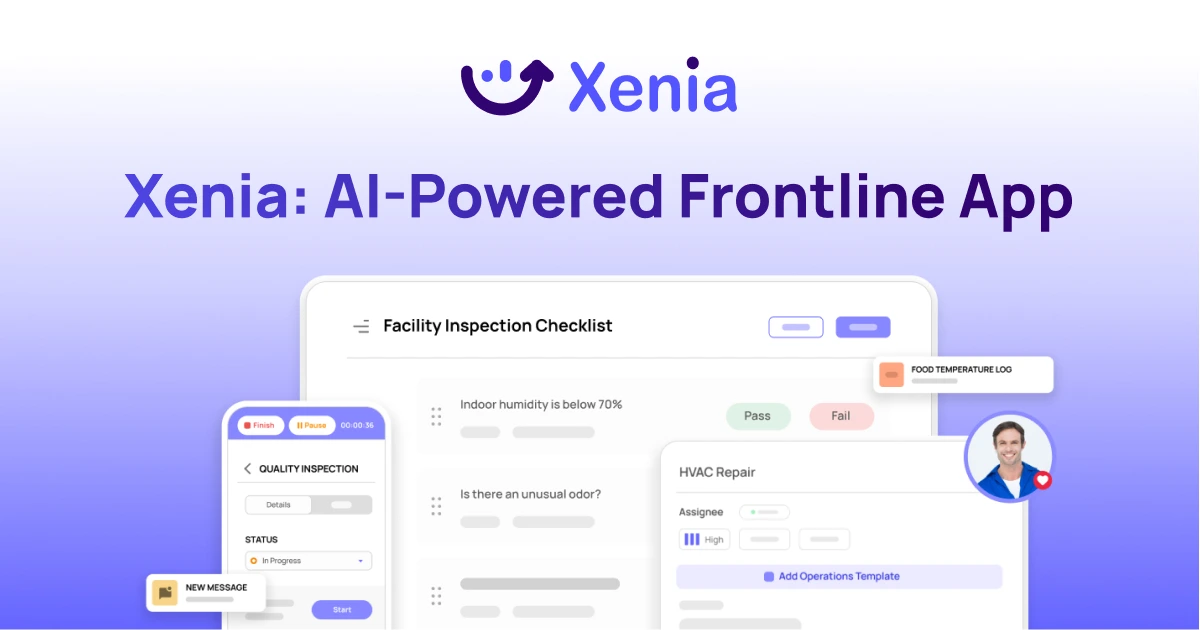
Xenia brings daily operations, maintenance, audits, and compliance into one mobile-first platform. Frontline teams execute work consistently across locations while leadership gets real-time visibility.
Why Multi-Location Operators Choose Xenia:
🤖 AI-Powered Operations, Create digital checklists instantly or convert paper forms with AI. Verify compliance automatically with photo analysis and get instant answers from your operational data.
✅ Daily Operations & Maintenance, Assign work across hundreds of locations in minutes. Report and route issues instantly. Schedule preventive maintenance to catch problems before downtime.
📊 Real-Time Visibility, Track completion, work orders, and performance across all locations through dashboards. Filter by site or asset to spot trends and take action.
Manage operations, maintenance, and compliance across all your locations from one platform

.svg)
.webp)
%201%20(1).webp)

.svg)
%201%20(2).webp)