
.webp)
Post Summary
Every Sunday, somewhere, a regional manager is rebuilding broken schedules for next week.
Two locations are overstaffed on slow days. Three are short on their busiest shift. Nobody flagged it. She pulled the reports herself, an hour into what was supposed to be her day off.
That is the scale problem.
Scheduling one location is manageable. Scheduling 10, 20, or 50 with the same logic and real visibility is different. And the frustrating part is that most operators don't find out something broke until it already cost them. A missed shift. A blown labor budget. A coverage gap that turned into a service failure.
This workforce scheduling guide is for the regional director or multi-unit manager running frontline teams across restaurants, retail, c-stores, or hospitality.
.webp)
.svg)

Priced on per user or per location basis
Available on iOS, Android and Web


What is workforce scheduling?
Workforce scheduling means getting the right people working the right shifts at the right stores. You schedule based on how busy you'll be, who can work, labor laws, and your budget.
Basic scheduling just fills shifts. Workforce scheduling does more.
It predicts how many people you need, shows you all your locations at once, and adjusts staffing based on traffic. Every location gets the right coverage without managers rebuilding schedules from scratch each week.
Why workforce scheduling breaks down at scale
Going from one location to ten doesn't make scheduling ten times harder. It makes it much harder.
Here is exactly why.
Visibility collapses first. At one location the manager sees everything. At ten, schedules live in separate spreadsheets, different apps, or email threads. Nobody has a regional view. A district manager wanting to see coverage across all units has to chase down ten files and hope they are current.
Then standards drift. Each location manager schedules differently. One builds conservatively. Another overstaffs slow days. A third cuts too close on the weekend rush. The result is unpredictable labor cost across your locations with no easy way to find where it's coming from.
Most schedules get built on habit, not data. That's why over and understaffing stays so common.
And when gaps appear, they surface too late. By the time a short shift gets flagged it's often the morning of. The manager scrambles. Someone gets called in on their day off. Or the shift runs short and service takes the hit. In a well-built system that gap would have been visible a week earlier, when it was still fixable.
None of these are people problems. They are systems problems.
For a broader look at how to standardize processes across distributed locations, our workforce management best practices guide shows how to build consistency without micromanaging individual sites.
Core components of an effective workforce schedule
A schedule that holds up at scale needs more than names and shift times. Here is what every well-built workforce schedule includes.
Demand forecasting tied to real data
Schedules built on last week's pattern will always be slightly wrong. The best schedules start with actual sales data, transaction volume, or traffic patterns by location and day-part.
A Tuesday lunch at one location might need four people. The same shift three miles away might need seven. Forecasting makes that distinction automatic instead of manual.
Role-based shift assignments
Every shift needs the right skill at the right station. Not just warm bodies.
A kitchen line needs a cook, not a host. A peak retail window needs someone trained on the register, not in the stockroom. Role-based scheduling means coverage is meaningful, not just numerically sufficient.
Availability and compliance inputs
These need to be loaded before the schedule gets built. Not after.
- Confirmed employee availability
- Approved time off
- Break rule requirements
- Overtime thresholds
- Predictive scheduling notice periods
Getting these wrong creates labor law exposure and employee frustration at the same time.
Cross-location visibility
District managers need one view of all locations. Not ten separate tabs to toggle between. Coverage status, gaps, and labor cost by location all in one place. That is what makes regional oversight actually possible.
Reusable shift templates
Building a schedule from scratch every week wastes manager time. Templates for normal weeks, peak periods, and seasonal patterns cut that rebuild time significantly. The manager adjusts for exceptions instead of starting over.
Real-time adjustment capability
No-shows happen. A system that shows a gap the moment it opens gives the manager options. Waiting until day-of removes most of them.
**
Schedule component, What it prevents
Demand forecasting, Chronic over and understaffing
Role-based assignments, Shifts covered by unqualified staff
Compliance inputs, Labor law violations and overtime blowouts
Cross-location visibility, Blind spots at the district level
Shift templates, Hours wasted rebuilding from scratch weekly
Real-time adjustments, Coverage failures that only surface day-of
**
How to build a workforce schedule at scale
Here is the step-by-step process built for multi-unit frontline operators. The actual sequence that works when you are managing more than one location.
1. Start with demand data, not headcount
Before touching the schedule, pull historical sales, traffic, or transaction volume by location and day-part. What did each location do last Tuesday morning? Last Saturday evening?
That data is the anchor. Everything builds from it. Operators who skip this step schedule based on habit, which is why so many schedules miss on the busiest days.
2. Set location-specific staffing targets
Every location has minimum coverage thresholds by role for each shift window. Set these clearly.
How many servers does Location A need for Friday dinner? How many cashiers does Location B need for Saturday afternoon? These targets become the floor every schedule gets built against. Not a number someone eyeballs on the day.
3. Load availability and compliance constraints
Pull confirmed employee availability, approved time off, and labor law requirements by state or region. This includes overtime thresholds, required break intervals, and predictive scheduling notice requirements.
Build the constraints in first. Adjust staffing targets after.
4. Build reusable templates
Create shift patterns for the normal week, peak period, and seasonal surge. These templates become deployable across all locations at once.
A district manager can push a holiday template to 15 locations at the same time instead of watching 15 location managers each build their own version from scratch.
5. Publish early
Late schedules cause no-shows. Give your team time to plan ahead. Some cities require 7 to 14 days notice by law. Even where it's not required, early schedules mean fewer last-minute problems and more people showing up for their shifts.
6. Monitor in real time and adjust fast
Once schedules go live, track actual versus scheduled at the location level. When a gap opens the system should show it immediately. The faster a manager sees a coverage problem, the more options they have to fix it.
Workforce scheduling techniques for multi-unit operations
These approaches work when you manage multiple locations.
Match staffing to traffic. Busy days get more people. Slow days get fewer people. Your labor cost stays on budget because you're scheduling based on what actually happens at each location.
Stagger start times. Instead of eight people working 9-5, have some start at 9, some at 10, some at 11. You get more coverage during rush hours and less during slow periods. Controls labor cost without hurting service.
Rotate the bad shifts. When the same people always work nights or weekends, they quit. Rotate shifts fairly and people stay longer. It costs nothing to do this.
Train people to do multiple jobs. When someone calls out, you can pull from a bigger pool of people who can cover. Cross-training isn't just about retention. It makes scheduling easier.
If you manage restaurants, our restaurant staff training topics guide shows which training creates the most scheduling flexibility.
Save templates for busy periods. Build schedules once for holidays, back-to-school, summer rush. When those periods hit, you deploy the template instead of starting from scratch.
**
Technique, Best used for
Demand-based scheduling, Locations with variable traffic by day-part
Split-shift and staggered scheduling, Controlling labor cost around peak windows
Rotating shift patterns, Reducing turnover from scheduling unfairness
Float and cross-trained staffing, Building buffer for call-outs and gaps
Peak-period templates, Holidays-seasonal surges-high-traffic events
**
What to look for in workforce scheduling software
Most scheduling tools are built for single stores or call centers. If you manage multiple locations, here's what matters.
One dashboard for all locations. If your district manager has to log into different tools for each store, the software wasn't built for multiple locations.
Schedules based on sales data. This is what makes real scheduling software different from a fancy spreadsheet. Without it, you're just guessing faster.
Different views for different roles. Store managers should see their store. District managers should see all stores.
Works on phones. If your hourly workers can't easily check the schedule on their phone, they won't use it.
Templates you can send to all locations at once. This saves hours every week. Plus real-time labor tracking shows when a location is heading toward overtime before payroll closes.
Built-in compliance rules. Overtime limits, break requirements, and scheduling laws get checked automatically. This matters when you operate in multiple states with different rules.
Connects to payroll and HR systems. Schedule data goes straight to payroll. No typing the same information twice.
**
Feature, Why it matters
Cross-location dashboard, One view instead of ten separate logins
Demand forecasting, Schedules tied to data-not habit
Role-based access, Right visibility for district vs. store managers
Mobile-first design, Hourly teams actually use it
Deployable templates, Push one schedule to all locations at once
Labor cost tracking, Catch overtime problems before payroll closes
Compliance tools, Protection across multi-state labor law variance
HRIS and payroll integration, No duplicate data entry-no sync errors
**
This is where Xenia comes in. Xenia is built for multi-location frontline operations. Not just scheduling but the full execution layer: task management, compliance tracking, shift handoff documentation, and real-time accountability across every unit.
District managers get a single view of every location. Store managers work from mobile. Everything stays connected from the schedule through to task completion and compliance records.
Related Resources
- Workforce Management Best Practices
- Restaurant Staff Training Topics
- Frontline Employee Communication
- Multi-Unit Operations Software
- District and Regional Leaders
Conclusion
Back to that regional manager rebuilding schedules on Sunday.
The problem is not that she's bad at scheduling. The problem is she's doing it manually, across ten locations, with no shared demand data, no reusable templates, and no real-time visibility into what's breaking before it becomes a crisis.
Efficient workforce scheduling at scale is not about working harder. It's about building the right system. Demand-tied forecasting, consistent templates across every location, real-time visibility, and software that was actually built for multi-unit operations.
Xenia gives multi-location operators exactly that.
Schedule a demo and see how it works across your locations.
Frequently Asked Questions
Got a question? Find our FAQs here. If your question hasn't been answered here, contact us.
How do you schedule when sales are unpredictable?

Build schedules based on your best forecast, then have backup plans ready. Keep a list of employees who can pick up extra shifts on short notice. Check actual traffic against your forecast and adjust next week's schedule based on what you learn.
Should all locations use the same shift template?
Start with the same base template, then adjust for each location's needs. A busy downtown store might need different coverage than a suburban location, but the structure should be the same.
Can scheduling software predict when employees will call out?
No, but it can show gaps the moment someone calls out. The faster you see the gap, the more time you have to find coverage before the shift starts.
What's the biggest mistake managers make when scheduling multiple locations?
Building schedules separately for each location instead of using one system. When every location manager builds their own schedule, you lose visibility and can't compare what's working across sites.

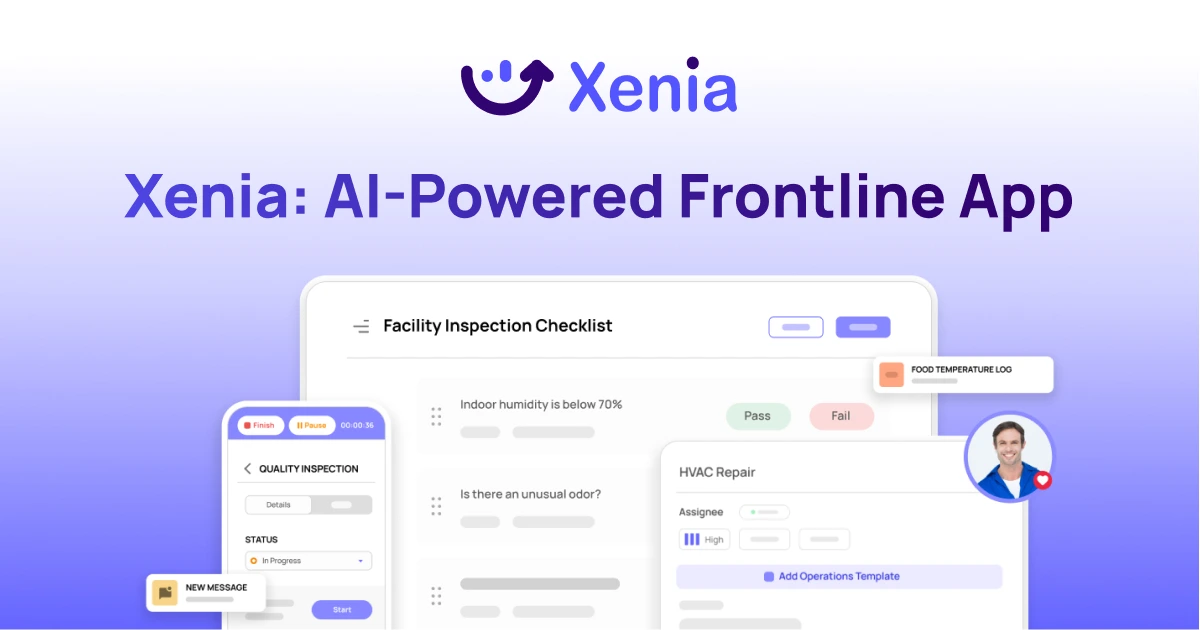
A Modern, AI-Powered Platform Built Specifically for Frontline Operations
Xenia brings daily operations, maintenance, audits, and compliance into one mobile-first platform. Frontline teams execute work consistently across locations while leadership gets real-time visibility.
Why Multi-Location Operators Choose Xenia:
🤖 AI-Powered Operations, Create digital checklists instantly or convert paper forms with AI. Verify compliance automatically with photo analysis and get instant answers from your operational data.
✅ Daily Operations & Maintenance, Assign work across hundreds of locations in minutes. Report and route issues instantly. Schedule preventive maintenance to catch problems before downtime.
📊 Real-Time Visibility, Track completion, work orders, and performance across all locations through dashboards. Filter by site or asset to spot trends and take action.
Manage operations, maintenance, and compliance across all your locations from one platform

.svg)
.webp)
%201%20(1).webp)

.svg)
%201%20(2).webp)