
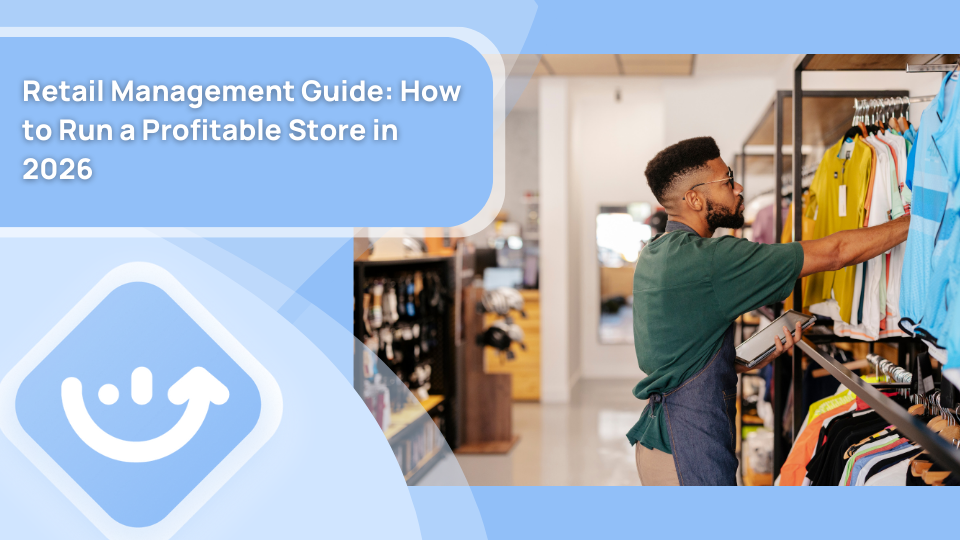
Post Summary
You just got promoted to store manager.
Congratulations.
Now here's what nobody told you: You are responsible for inventory, staff schedules, customer complaints, safety compliance, merchandising standards, loss prevention, equipment maintenance, and hitting sales targets.
All at the same time.
Most new managers try to handle everything manually. Spreadsheets for inventory. Group texts for staff communication. Paper checklists for opening procedures. Mental notes for equipment issues.
It falls apart fast.
Here's the reality: The stores that hit their numbers consistently are not run by managers who work harder. They are run by managers who use better systems.
This guide shows you exactly how to manage a retail store successfully using proven best practices, smart delegation, and the right retail tools.
.svg)

Priced on per user or per location basis
Available on iOS, Android and Web


What Is Retail Store Management?
Retail store management is about making sure your store runs smoothly every day, from staff and inventory to customer experience.
In 2026, successful managers don't rely on manual tracking. They use digital tools that give real-time visibility into tasks, store conditions, and equipment performance, so nothing is overlooked.
Think of retail store management as three core responsibilities:
Operations Management:
- Opening and closing procedures executed correctly
- Store appearance and cleanliness standards maintained
- Equipment functioning properly
- Safety and compliance requirements met
People Management:
- Staff scheduled appropriately for traffic patterns
- Team members trained and performing tasks correctly
- Communication clear between shifts and departments
- Performance issues addressed promptly
Inventory Management:
- Products in stock and on shelves when customers shop
- Shrink minimized through proper controls
- Merchandising standards followed consistently
- Inventory counts accurate
The store manager who masters all three? That's who gets promoted to district manager.
Types of Store Management and What They Mean
Store management in retail varies based on store format and operational complexity.
Single-Store Management
What it is: Managing one standalone retail location
Key responsibilities:
- Complete P&L ownership for one location
- Direct supervision of 10-25 team members
- Hands-on involvement in daily operations
- Local community engagement and reputation management
Success factors: Strong execution skills, team development, and customer relationship building
Multi-Store District Management
What it is: Overseeing 5-12 stores in a geographic area
Key responsibilities:
- Performance management across multiple locations
- Store manager development and support
- Identifying operational patterns and best practices
- Resource allocation between stores
Success factors: Systems thinking, pattern recognition, coaching ability
Specialty Retail Management
What it is: Managing stores requiring specialized product knowledge
Key responsibilities:
- Deep product expertise and staff training
- Customer education and consultation
- Specialized inventory management
- Building loyal customer communities
Success factors: Product passion, educational selling, relationship building
High-Volume Retail Management
What it is: Managing stores with $5M+ annual revenue or 100+ transactions daily
Key responsibilities:
- Complex staffing and scheduling
- High-volume inventory management
- Process optimization for efficiency
- Managing larger teams (30-50+ people)
Success factors: Systems mastery, delegation, process improvement
Understanding which type of store management you're doing helps you prioritize what matters most.
Key Retail Store Management Responsibilities in Multi-Unit Environments
Managing in a multi-unit environment adds complexity that most managers do not expect.
Brand Standard Consistency
Corporate sends the same merchandising plan to every store. Your job? Make sure your location executes it the same way Store 23 and Store 71 do.
What this means:
- Planograms implemented exactly as specified
- Promotional displays match reference images
- Signage placement consistent with brand standards
- Store appearance meets cleanliness expectations
The challenge: You can't physically watch your team execute every standard. You need verification systems.
Cross-Store Communication
District managers expect all stores to learn from each other's wins and losses.
What works in multi-unit communication:
**
Method, When to Use, Why It Works
Daily digital check-ins, Every morning, Ensures accountability - surfaces issues early
Weekly manager calls, Scheduled touchpoints, Share best practices - align on priorities
Shared task dashboards, Real-time visibility, Everyone sees what's complete vs pending
Photo-verified store audits, Standard execution checks, Objective proof of compliance
**
What does not work: Long email chains, hoping people read group texts, assuming everyone follows verbal instructions.
Performance Benchmarking
Your district manager compares your store's performance to every other store in the district.
Key metrics you are measured on:
**
Metric, What It Measures, How to Improve It
Sales per Square Foot, Space utilization efficiency, Better merchandising - inventory availability
Conversion Rate, Percentage of visitors who buy, Staff training - store experience - product availability
Average Transaction Value, Revenue per customer, Upselling - cross selling - promotional execution
Shrink Percentage, Inventory loss rate, Better controls - staff training - process compliance
Labor Cost Percentage, Staffing efficiency, Smarter scheduling - productivity improvement
**
You can't improve what you do not measure. Track these weekly, as well as monthly.
Compliance Documentation
Corporate, legal, and regulatory requirements do not care that you're busy.
Required documentation:
- Safety inspections completed and photographed
- Equipment maintenance logged with dates
- Staff training tracked and verified
- Incident reports filed within 24 hours
- Audit findings addressed with corrective actions
Manual documentation gets missed. Digital systems make compliance automatic.
Retail Store Management Best Practices for 2026
The stores hitting targets consistently do these things.
Move From Reactive to Preventive
Stop fighting fires. Prevent them.
Reactive management:
- Equipment breaks → call repair
- Shrink high → investigate after month-end
- Customer complaints → apologize and compensate
- Standards slip → re-train after district visit
Preventive management:
- Equipment inspected weekly → problems caught early
- Inventory counted continuously → shrink addressed immediately
- Customer feedback tracked daily → issues fixed before complaints
- Standards verified with photos → compliance maintained constantly
How to shift:
- Identify your top 5 recurring problems
- Create inspection checklists to catch them early
- Schedule preventive checks (daily/weekly/monthly)
- Track compliance with the preventive measures
- Measure reduction in reactive firefighting
Prevention costs less than reaction. Every time.
Use Data to Drive Decisions
Your gut is not enough anymore.
Replace gut feel with data:
**
Decision, Gut Feel Approach, Data-Driven Approach
Staffing levels, "Feels busy", Traffic patterns - conversion rates - sales per hour
Inventory orders, "Running low", Sales velocity - days of supply - seasonal trends
Training priorities, "Seems like an issue", Performance metrics by employee - customer feedback
Promotional success, "Seemed to work", Sales lift - margin impact - inventory turnover
**
Key reports to review weekly:
- Sales by hour/day/category
- Conversion rate trends
- Shrink by category
- Task completion rates
- Customer feedback scores
Let data show you where to focus.
Develop Your Team Systematically
Your job is not to do everything. It's to build a team that does everything.
Career development framework:
Entry Level → Senior Associate (6-12 months):
- Master all core tasks
- Demonstrate consistent performance
- Help train new team members
- Handle customer issues independently
Senior Associate → Shift Lead (12-18 months):
- Open and close store independently
- Manage shift team effectively
- Make judgment calls on store issues
- Execute merchandising standards
Shift Lead → Assistant Manager (18-24 months):
- Complete management training
- Demonstrate P&L understanding
- Lead team performance improvement
- Ready for store manager role
Create clear paths. People stay when they see growth.
Build Standard Operating Procedures
Document how your best people do things.
Priority SOPs to create:
Daily Operations:
- Opening procedures
- Closing procedures
- Cash handling
- Customer service standards
Weekly Tasks:
- Inventory receiving
- Merchandising resets
- Equipment inspections
- Cleaning deep-dives
Monthly Processes:
- Inventory counts
- Performance reviews
- Safety audits
- Vendor management
Update SOPs quarterly. Capture improvements. Share best practices.
How Xenia Improves Retail Business Management
Most retail managers juggle 5-7 different systems.
The typical mess:
- Task management in one app
- Inspections in another
- Communication in texts and Slack
- Reports in spreadsheets
- Training materials in shared drives
Each system creates complexity.
Xenia combines task management, inspections, communication, and reporting into a unified retail management software built specifically for retail store operations.

What unified management delivers:
**
Function, How It Works in Xenia, Impact on Your Day
Task Assignment, Create once - assign to roles - auto-recurring, Stop repeating yourself every shift
Photo Verification, Required photos for task completion, Objective proof tasks done correctly
Team Communication, Task-specific threads - company announcements, End the text message chaos
Mobile Inspections, Build checklists - track completion - flag issues, Standardize quality across all shifts
Real-Time Dashboards, See all stores - all tasks - all status, Instant visibility without asking
Template Library, Pre-built retail SOPs and checklists, Launch in days - not months
**
Store managers complete daily operations in one interface. District managers see all stores from one dashboard.
Everything works together. Nothing falls through the cracks.
FAQs
What are the key retail store management responsibilities in a multi-unit environment?
Brand standard consistency across locations. Execute merchandising, promotions, and policies exactly like other stores in your district.
Cross-store communication and best practice sharing. Learn from other stores' wins and losses.
Performance benchmarking against district metrics. Track sales per square foot, conversion rates, shrinkage, and labor costs weekly.
Compliance documentation for corporate, legal, and regulatory requirements. Safety inspections, equipment logs, training records, and incident reports.
How can I manage a retail store successfully with high staff turnover?
Build documented training systems. New hires follow the same structured path every time, a week-by-week curriculum with clear certifications.
Create SOPs for everything. Opening procedures ,closing routines, inventory processes. When someone leaves, their replacement follows the same documented steps.
Use role-based task assignment. Assign tasks to "opening manager" not "Sarah." Tasks survive when people leave.
Extract knowledge before departures. Exit interviews capture undocumented processes and tribal knowledge.
What are the best tips for managing inventory in a retail store to prevent shrink?
Strict receiving procedures. Count everything. Inspect for damage. Compare to purchase orders. Log immediately. Photograph issues.
Weekly cycle counting. Count 25% of inventory monthly instead of waiting for annual counts. Catch problems 12x faster.
Access controls for high-shrink areas. Limit stock room access. Lock high-value merchandise. Log restricted area entries.
POS controls at checkout. Require manager approval for large voids. Verify refunds with receipts. Monitor discount usage. Run exception reports weekly.
How do I improve retail store operations through better team communication?
Daily shift huddles. Five minutes. Cover yesterday's wins and issues, today's priorities, task assignments, and questions. Keep it tight.
Retail task management software instead of texts and emails. One system for assignments, status, accountability, and communication history.
Standardized shift handoff protocols. Document cash status, inventory issues, equipment problems, and incomplete tasks. No verbal-only handoffs.
Specific channels for specific purposes. Urgent issues, daily operations, training resources, and team recognition. Clear structure = effective communication.
Conclusion
Managing a retail store successfully in 2026 requires systems, not superhuman effort.
Stop trying to remember everything. Stop chasing down task completion. Stop searching through texts for information.
Build systems that:
- Assign tasks automatically based on roles
- Verify completion with photo proof
- Surface issues in real-time
- Document everything automatically
- Give you visibility without constant questions
The best store managers are not the hardest workers. They are the smartest system builders.
Xenia retail management software combines task management, inspections, and communication in one platform, designed for retail operations.
Want to see how it works? Book a demo.
Frequently Asked Questions
Got a question? Find our FAQs here. If your question hasn't been answered here, contact us.

Looks like there's no data available in our FAQ section at the moment.

A Modern, AI-Powered Platform Built for Retail Operations
Xenia brings store operations, merchandising, audits, and loss prevention into one mobile-first platform. Store teams execute daily work consistently, maintain brand standards, and resolve issues faster, while regional and corporate leadership get real-time visibility across all locations.
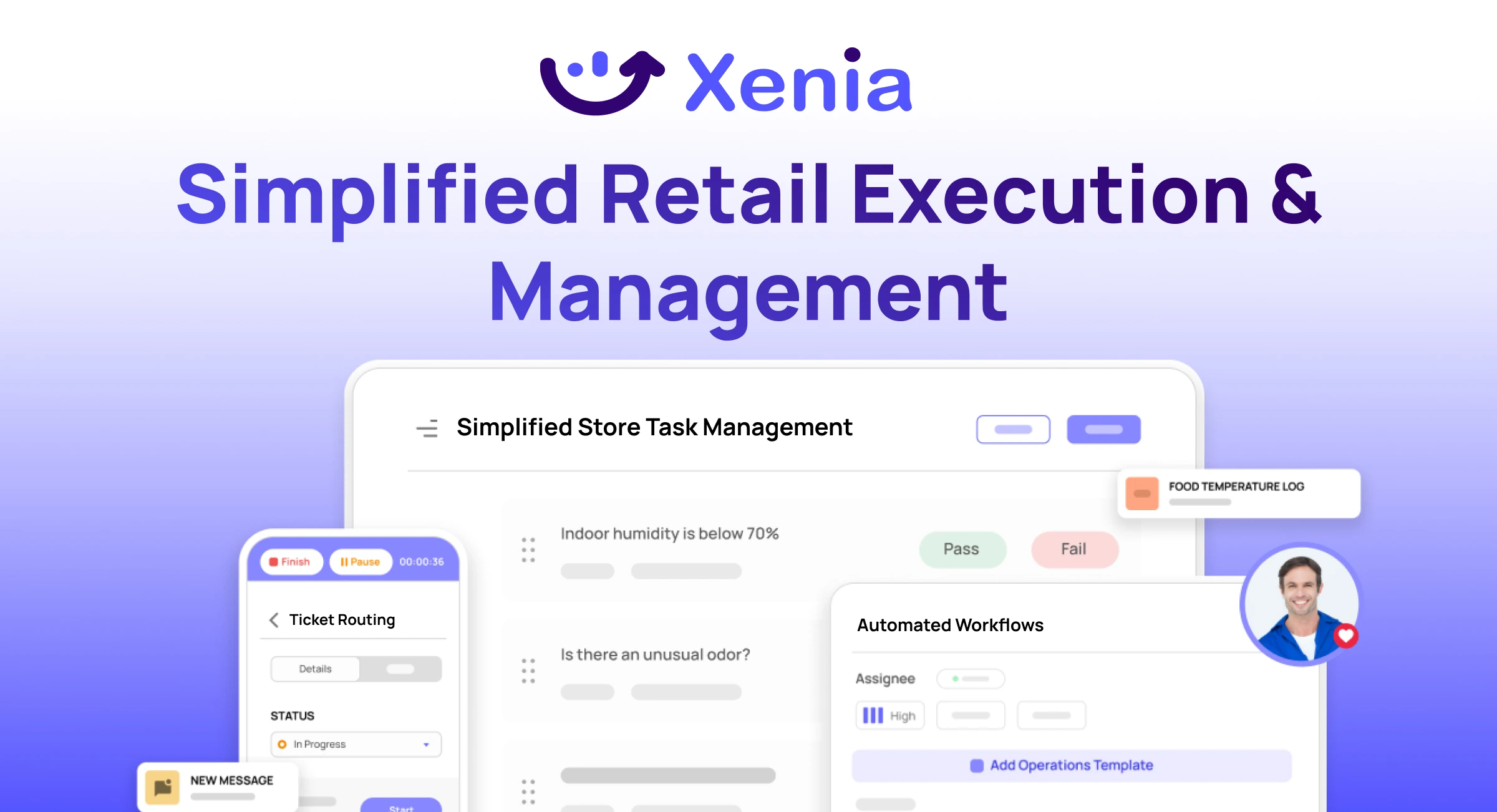
Why Retail Operators Choose Xenia:
🤖 AI-Powered Merchandising, Verify planograms, displays, and brand standards automatically with AI photo analysis. Build digital checklists instantly or convert existing merchandising guides.
🏬 Operations & Loss Prevention, Assign opening procedures, store walks, and resets across locations. Track theft, cash discrepancies, and security incidents with evidence and approval workflows.
📊 Real-Time Visibility, Compare audit scores and task completion across stores. Identify top and underperforming locations. Export reports for leadership reviews.
One platform for operations, merchandising compliance, and loss prevention across all locations.

.svg)
.webp)
%201%20(1).webp)

.svg)
%201%20(2).webp)