
Post Summary
Safety audits used to be about compliance. Clipboards. Hard hats. Checking boxes to satisfy OSHA.
That's no longer enough.
In 2026, workplace safety is under new pressure. Extreme heat is more common. Labor is tighter. Work is more distributed. And burnout is no longer a "soft issue," it's a leading safety risk.
Modern workplace safety audits aren't just about avoiding fines. They're about protecting people in environments that are changing faster than policies can keep up.
The organizations doing this well don't treat safety audits as a once-a-quarter inspection. They treat them as a living system that adapts to physical, operational, and psychological risk.
This guide breaks down what is the safety audit process, how it now goes beyond physical hazards, and how to conduct a safety audit that's practical and compliant in 2026.
.svg)

Priced on per user or per location basis
Available on iOS, Android and Web


What Is a Workplace Safety Audit?
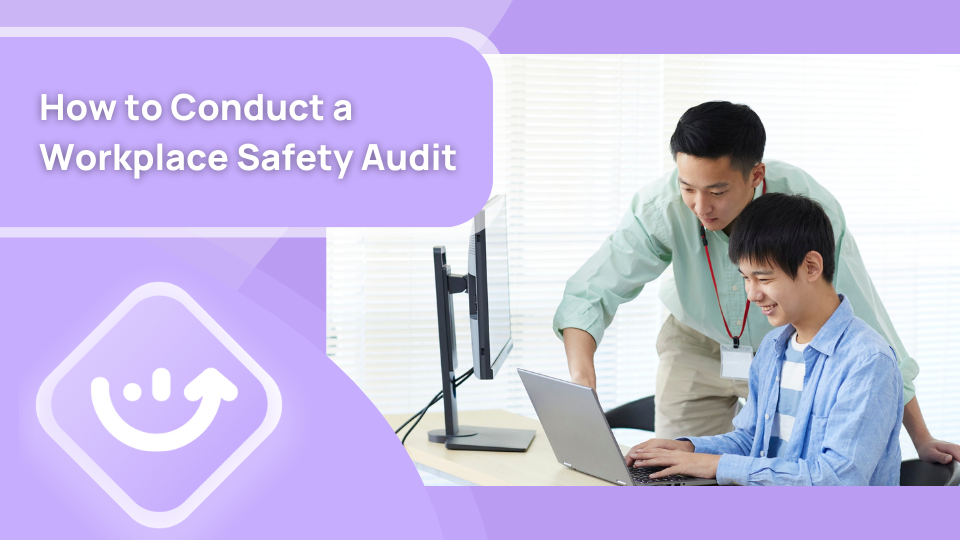
A workplace safety audit checks how well an organization finds, manages, and prevents risks that could harm employees.
Not just accidents. Not just equipment. People.
Modern workplace audits look across three layers of risk:
- Physical risks like machinery, falls, heat exposure, and PPE usage
- Operational risks like fatigue, understaffing, and unsafe workarounds
- Psychological risks like burnout, stress, and reporting hesitation
Safety audits focus on how work actually happens, not how policies describe it.
What Is the Purpose of a Workplace Safety Audit?
The purpose of a safety audit is prevention, not documentation.
Effective workplace safety audits help organizations:
- Reduce injuries and near misses
- Identify unsafe conditions before they escalate
- Meet OSHA and ISO 45001 requirements consistently
- Protect workers during extreme heat and high-risk conditions
- Address fatigue and burnout that quietly increase incident risk
In modern operations, safety failures are rarely sudden. They're patterns that went unnoticed.
Safety audits exist to make those patterns visible early.
Workplace Safety Audits vs Operational Audits
These audits serve different roles and shouldn't be treated interchangeably.
**
Area, Workplace Safety Audit, Operational Audit
Primary focus, Worker safety and health, Process execution and performance
Risk addressed, Injury /illness /fatigue, Inefficiency / inconsistency
Time horizon, Immediate and preventive, Ongoing and performance-driven
Ownership, Safety / Operations, Operations / Leadership
Frequency, Daily to weekly, Daily to continuous
**
A business can operate efficiently and still be unsafe. That's why safety audits need their own structure and cadence.
Core Areas of a Modern Workplace Safety Audit
In 2026, effective safety audits go beyond basic hazard checks. They cover a wider risk surface that reflects how work actually happens today.
Physical Safety Audits
This is the foundation. Physical safety audits assess tangible, visible hazards that could cause injury.
They typically cover:
- Machinery safety and lockout/tagout procedures
- Slip, trip, and fall hazards
- Electrical safety
- PPE availability and usage
- Emergency exits and signage
These audits answer a basic but critical question:
Is the physical environment safe to work in today, not just on paper?
Heat Illness Prevention Audits
Heat is no longer a seasonal concern. It's a year-round operational risk.
OSHA's increased focus on heat illness prevention means audits must now evaluate:
- Access to water, shade, and cooling
- Break frequency during high-temperature shifts
- Workload adjustments during heat advisories
- Supervisor response protocols for heat stress symptoms
Example
A warehouse passes general safety inspections but shows higher incident rates during heat waves. A heat-focused safety audit reveals break schedules aren't adjusted during extreme temperatures. Updating the plan reduces heat-related incidents within weeks.
Heat safety audits are no longer optional add-ons. They are becoming a standard requirement.
Behavioral and Psychological Safety Audits
This is one of the biggest shifts in workplace safety.
Psychological safety audits look at conditions that increase risk indirectly but significantly.
They assess:
- Excessive overtime and fatigue
- Chronic understaffing
- High stress or burnout indicators
- Unsafe pressure to "push through" issues
- Lack of reporting due to fear or blame
Why this matters
Tired people take shortcuts.
Stressed people miss hazards.
Burned-out teams stop reporting near misses.
Example
A distribution center shows rising minor injuries. A psychological safety audit links incidents to extended shifts during peak season. Adjusting schedules reduces both injuries and turnover.
In 2026, ignoring mental health isn't just a people issue. It's a safety failure.
Training and Competency Audits
Safety policies don't protect people. Safety audit training does.
Training-focused safety audits evaluate whether employees:
- Received the right training for their role
- Completed training recently enough to retain it
- Understand procedures under real conditions
- Can demonstrate safe behavior, not just recall rules
These audits often uncover a gap between "training completed" and "training applied."
A signed training record doesn't mean a safe worker.
How to Conduct a Workplace Safety Audit in 2026
Workplace safety audits in 2026 are more structured, but far more practical than old inspections. They're no longer about running checklists once in a while. They're built to keep up with day-to-day risk, catch issues early, and help teams fix problems before someone gets hurt.
The best workplace safety audit methods USA teams are using stay consistent while still adapting to how work actually happens. The safety audit procedure below shows how teams run safety audits that reduce real risk, not just generate reports.
Step 1: Define Clear, Auditable Safety Standards
Every effective workplace safety audit starts with clarity.
Safety standards must be specific, observable, and consistent across locations. Vague requirements like "maintain a safe workspace" or "ensure proper PPE usage" leave too much room for interpretation and create inconsistent audit results.
Good safety standards describe conditions and behaviors, not intentions.
For example:
- Instead of "PPE must be worn," define which PPE, where, and under what conditions
- Instead of "equipment must be safe," define inspection criteria, guarding requirements, and acceptable wear levels
If two auditors can evaluate the same situation and reach different conclusions, the standard isn't ready for audit use.
In 2026, many organizations also calibrate standards by role and environment. What "safe" looks like in a warehouse during peak summer heat is different from what it looks like in an office or retail setting. Clear standards account for those differences without lowering expectations.
Step 2: Audit at the Speed of Risk
One of the biggest failures of traditional safety programs is timing.
Quarterly or annual safety audits cannot keep up with risks that change daily. Staffing levels fluctuate. Equipment ages. Weather conditions shift. Fatigue builds gradually.
Modern workplace safety audits are scheduled based on risk exposure, not calendar convenience.
High-risk environments often require:
- Daily or shift-based safety checks
- Weekly focused audits on recurring risk areas
- Event-triggered audits after incidents, near misses, or environmental changes
Lower-risk environments still require regular audits, but the frequency should reflect actual exposure, not policy tradition.
The objective isn't to increase audit volume for its own sake. It's to identify risk while there is still time to act.
Timely audits prevent small deviations from becoming normalized, unsafe behavior.
Step 3: Capture Real Operating Conditions
Modern safety audits rely on reality, not assumptions.
Audits that rely only on checklists or sign-offs often miss what's really causing problems. In 2026, strong safety audits use multiple inputs to get a clear, real-world view of risk.
These inputs typically include:
- Direct on-site observations of work being performed
- Task-level data showing how jobs are executed, not just assigned
- Incident and near-miss reports, including informal observations
- Environmental factors such as temperature, noise, or congestion
- System-generated signals like missed inspections, delayed tasks, or repeated deviations
This approach helps auditors understand not just what happened but why it happened.
When audits reflect real conditions, teams are more likely to trust the findings and act on them. When audits feel disconnected from reality, they get ignored.
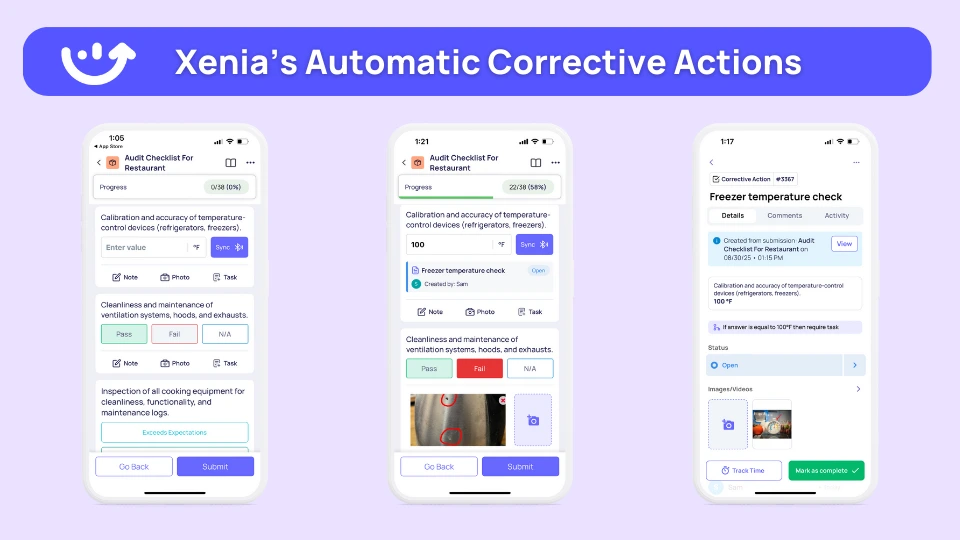
Step 4: Turn Findings Into Immediate Action
A workplace safety audit that ends as a safety audit report does not improve safety.
The most important part of the audit process is what happens after a risk is identified.
Effective safety audits are directly connected to action. Findings should automatically trigger:
- Corrective tasks with clear owners and deadlines
- Targeted retraining when gaps are skill-related
- Escalations for repeat issues or high-severity risks
- Policy or standard updates when expectations no longer match reality
Speed is critical. The longer a risk sits unresolved, the more likely it becomes an incident.
Modern safety programs reduce friction between identification and resolution. Audits surface issues, workflows assign responsibility, and follow-up verifies closure. This closed-loop process is what turns audits into prevention.
Many teams work with safety audit consultants to design these action workflows, ensuring that audit findings translate into measurable safety improvements rather than sitting in filed reports.
Step 5: Track Improvement, Not Just Compliance
Passing a safety audit does not mean a workplace is safe.
Compliance metrics alone often hide recurring issues. A location may "pass" repeatedly while addressing the same hazards over and over again.
In 2026, mature safety programs focus on trend-based indicators, including:
- Repeat hazards by location or task
- Time to resolution for safety issues
- Incident and near-miss frequency over time
- Behavioral changes following training or corrective action
These metrics show whether safety conditions are actually improving or simply being documented.
The goal of a workplace safety audit program is not a clean report or a high completion rate. The goal is fewer injuries, fewer close calls, and safer daily execution.
When audits are designed to measure improvement instead of paperwork, safety becomes part of how work gets done, not something checked after the fact.
Where Technology Fits in Modern Workplace Safety Audits
Manual safety audits weren't built for how workplaces operate today. They start to fail as soon as teams scale across locations, shifts, and risks that change every day.
In 2026, safety audits aren't done once in a while. They run alongside daily work, helping teams spot risks early and fix issues fast.
Modern safety auditing software helps close the gap between safety rules on paper and what's actually happening on the floor.
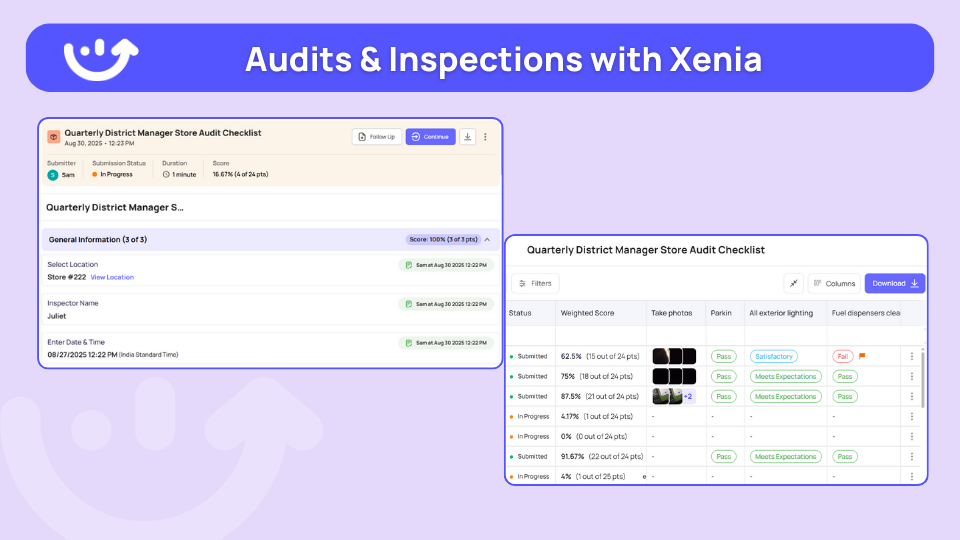
Modern safety audit software enables:
- Automated data collection across locations
- Pattern detection and trend analysis
- Instant corrective actions and follow-up
- Closed-loop accountability from issue to resolution
When safety audits sit in reports, problems sit there too. When audits are part of daily work, risks get fixed while work is still happening.
Platforms like Xenia bring safety audits, corrective actions, training, and analytics into a single mobile-first system. Instead of writing down issues after the fact, teams can spot risks early and act on them right away across all locations.
FAQs
What is a workplace safety audit?
A workplace safety audit checks how well a business identifies and controls risks that could harm employees. It looks at real working conditions, not just written policies, to prevent injuries, illness, and unsafe behavior.
What is included in a workplace safety audit?
Modern safety audits cover physical hazards, heat exposure, fatigue, training effectiveness, and psychological safety. They also review how issues are reported, fixed, and followed up over time.
How often should workplace safety audits be conducted?
Audit frequency depends on risk. High-risk environments often require daily or weekly audits, while lower-risk workplaces may audit less often. The key is auditing often enough to catch issues before they become incidents.
How is a safety audit different from a safety inspection?
A safety inspection checks conditions at a point in time. A safety audit looks at patterns, behavior, and systems over time to understand why risks keep appearing and how to prevent them.
How do you conduct a workplace safety audit for remote or hybrid teams?
Remote safety audits focus on ergonomics, workload, working hours, and mental well-being. They rely on structured self-assessments, manager reviews, and trend analysis instead of physical inspections.
What should be included in a safety audit report?
A comprehensive safety audit report should document identified hazards, corrective actions taken, responsible parties, completion timelines, and trend analysis showing whether conditions are improving over time.
Conclusion
Workplace safety audits in 2026 are no longer about paperwork or compliance optics. They're about protecting people in environments that change every day.
When audits lag behind operations, risk becomes invisible. Small issues turn into incidents. Near misses turn into injuries.
Modern teams are moving toward continuous safety auditing because it matches how work actually happens. Risks shift daily. Audits must keep up.
Technology like Xenia supports this shift by turning safety audits into connected systems. Issues are surfaced early, actions are tracked automatically, and managers spend less time on paperwork and more time keeping people safe.
See how Xenia helps teams run safety audits faster and turn risks into action, not reports.
Frequently Asked Questions
Got a question? Find our FAQs here. If your question hasn't been answered here, contact us.

Looks like there's no data available in our FAQ section at the moment.

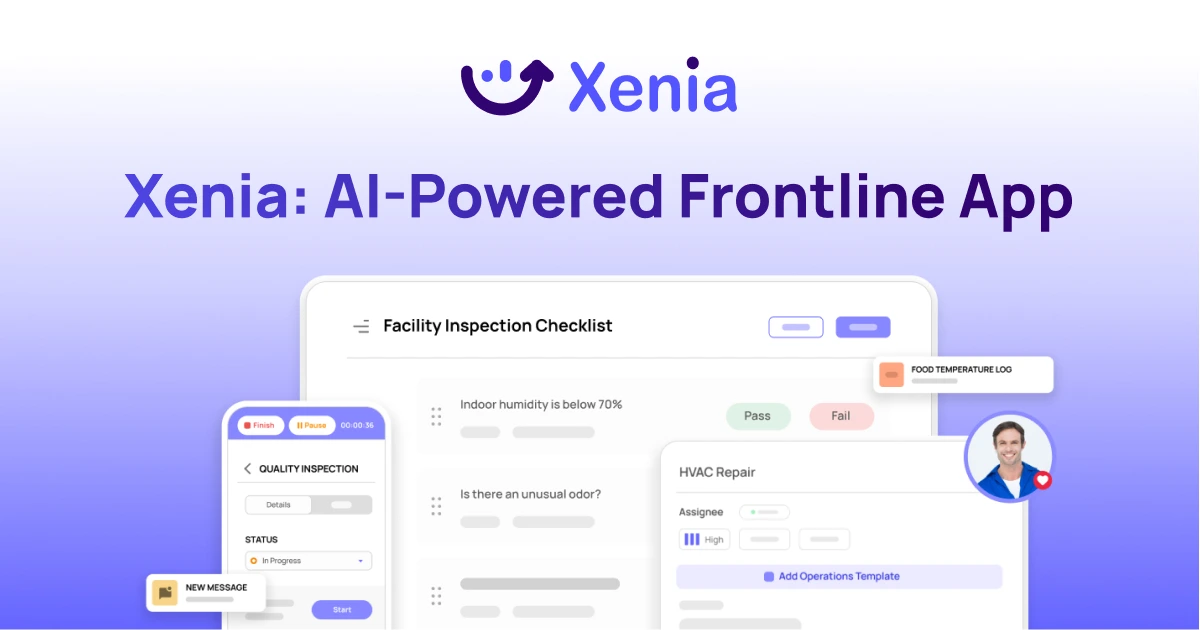
A Modern, AI-Powered Platform Built Specifically for Frontline Operations
Xenia brings daily operations, maintenance, audits, and compliance into one mobile-first platform. Frontline teams execute work consistently across locations while leadership gets real-time visibility.
Why Multi-Location Operators Choose Xenia:
🤖 AI-Powered Operations, Create digital checklists instantly or convert paper forms with AI. Verify compliance automatically with photo analysis and get instant answers from your operational data.
✅ Daily Operations & Maintenance, Assign work across hundreds of locations in minutes. Report and route issues instantly. Schedule preventive maintenance to catch problems before downtime.
📊 Real-Time Visibility, Track completion, work orders, and performance across all locations through dashboards. Filter by site or asset to spot trends and take action.
Manage operations, maintenance, and compliance across all your locations from one platform

.svg)
.webp)
%201%20(1).webp)

.svg)
%201%20(2).webp)