

.webp)
Post Summary
The schedule was done. Then the messages started coming in.
One employee had a Tuesday conflict that they forgot to mention. Another had a standing Wednesday restriction the manager had no record of. A third had already been scheduled for hours they had told HR they cannot work.
The schedule had to be rebuilt from scratch.
The problem was not that the employees had restrictions. Every team has restrictions. The availability information had never been collected consistently, never stored where the manager could access it, and never updated when circumstances changed.
That is an availability process problem. Not a staffing problem.
This article covers how to collect availability correctly, how to track it, and how to use it before the schedule grid opens.
.webp)
.svg)

Priced on per user or per location basis
Available on iOS, Android and Web


What is employee availability and why it differs from a work schedule
These two things get confused constantly, but they’re very different.
- Availability is what an employee can work
- A schedule is what the employer assigns
Availability is an input. The schedule is the output. Managers who treat them as the same thing produce preventable conflicts every single week.
Here is the distinction that matters most in practice:
**
Term, What it means, When it is set
Availability, What days and hours an employee is able to work, Collected before the schedule is built
Schedule, What the employer assigns based on availability and demand, Published after availability is confirmed
Time off, A confirmed-approved absence, Loaded separately from general availability
**
Types of employee availability
There are three types of availability a frontline manager needs to track. Each one needs to be managed differently.
Recurring availability
Standing restrictions that do not change week to week. A student who cannot work Tuesday afternoons. A parent who needs Friday evenings off. A second-job holder unavailable Sunday mornings.
This forms the baseline. Collect it at hire. Review it quarterly. Build schedules around it.
Temporary restrictions
One-off or time-limited conflicts that differ from the employee's normal availability. A medical appointment. A school event. A family commitment over one specific weekend.
These need a clear submission process and a deadline. Without both, they arrive after the schedule is already published.
Approved time off
A formally requested and confirmed absence. This is different from an availability restriction. Time off should be loaded into the scheduling process separately, not discovered while filling shift slots.
How to collect employee availability correctly
Availability collection is not a one-time form. It is a system. Four things need to be in place before availability data is usable at schedule-build time.
Collect it at hire, before the first schedule
Availability should be part of onboarding. Not an afterthought.
Before a new employee's first schedule is built, their recurring availability and any known restrictions should already be on file. Managers who collect it after the first schedule is published are already a week behind.
Build this into HR workflows so it happens automatically at onboarding, not whenever someone remembers to ask.
Use a standardized form for every employee
Verbal availability discussions produce inconsistent records. One manager writes it on a sticky note. Another sends a text. A third just remembers it.
None of those survive a manager transition. None of them are accessible at 9pm on Sunday when the schedule needs to be built.
A standardized form, same format at every location, creates a consistent record the manager can actually use. The downloadable template with this article covers every field.
Set a clear submission deadline for changes
Employees need to know two things: how far in advance to submit changes, and what happens if they do not.
A common standard is one to two weeks before the affected schedule period. Without a deadline, changes arrive after the schedule is already built. At that point the manager has two options: rebuild or create a conflict. Neither is good.
Re-collect availability periodically
Availability collected at hire and never revisited becomes wrong fast.
A student's class schedule changes every semester. A parent's childcare situation shifts. A second job gets added. A quarterly or semester-based re-collection process keeps the data current. Without it, you are scheduling against a record that stopped reflecting reality months ago.
How to track employee availability across a team
Collecting availability is half the problem. Storing it somewhere accessible is the other half.
Most managers fall down here. Availability in email threads, text messages, or memory is not accessible at schedule-build time. It might as well not exist.
Four practices that fix this.
Store availability in one place, not in email
If availability lives in individual email threads or a manager's memory, it cannot be consulted systematically before building.
Pick one location. A shared document, a scheduling system, an HR platform. The format matters less than the commitment to keeping it in one place, always updated.
Employee accountability records that centralize availability, contact attempts, and schedule documentation give managers one place to check before building, not five.
Separate availability from the schedule itself
Availability is an input to the schedule. It should not be discovered in the act of building one.
Managers who find restrictions while filling shift slots rebuild schedules. Managers who load availability before opening the grid build once. The sequence is the entire fix.
Flag temporary restrictions separately from recurring availability
A one-time Tuesday conflict should not overwrite a standing Tuesday availability record.
These need to live in separate fields. A temporary restriction noted for a specific week should expire. A recurring restriction should remain. If those two things merge into one record, the manager eventually builds around a constraint that no longer exists.
Keep an audit trail of changes
Every submitted availability change and manager acknowledgment should be documented.
If a dispute arises later, the record settles it. Undocumented availability changes are one of the most consistent sources of scheduling disputes in frontline operations. Documentation is cheap. Disputes are not.
How to use availability data to build better schedules
Collecting and tracking availability only matters if it actually gets used before the schedule is built. Here is what changes when the process is right.
Load availability before opening the schedule grid
The sequence is everything.
Availability and time-off constraints should be confirmed and loaded before any shift assignments begin. This narrows the assignable pool to employees who can actually work. The mid-build rebuild disappears entirely.
Before building:
- Confirm all submitted availability updates are loaded
- Flag approved time off as blocked
- Identify any gaps in coverage before names are assigned
Match available employees to demand windows
Once availability is loaded, the matching becomes obvious.
An employee available only 10am to 2pm is a natural fit for a midday coverage gap, not a closing shift. An employee available only evenings goes on the closing rotation. Availability data makes that matching deliberate instead of accidental.
For matching available staff to your highest-demand windows, see peak-hour scheduling for the specific process.
Identify coverage gaps before the schedule publishes
When availability is loaded upfront, gaps surface on Wednesday when you are building. Not on Friday when the schedule is already out.
A shift with no available qualified employees is a staffing problem. The earlier you see it, the more options you have. Waiting until the schedule is published leaves you with overtime or undercoverage.
Use availability patterns to inform hiring decisions
If the same shift windows consistently have limited available employees, that is a hiring signal, not a scheduling problem.
Availability data across a full team, reviewed over time, tells you where gaps are structural. You cannot schedule your way out of a structural coverage gap. You hire your way out of it.
Employee availability sheet: what to include
Every manager needs a standardized availability form before the first schedule is built.
The template below covers everything: employee information, availability by day and shift window, recurring vs one-time restriction flag, approved time off, notes, and signature fields for both the employee and manager.
Download it, customize it for your location, and use it as the standard across every site.
.webp)
Common employee availability mistakes and how to fix them
**
Mistake, What goes wrong, The fix
Collecting availability once at hire, Record is outdated within months, Quarterly re-collection built into the HR calendar
Accepting verbal changes, No documentation-disputes follow, Written submission required-manager acknowledgment in writing
Treating preferences as constraints, Schedule becomes unworkable, Separate form fields for hard limits vs stated preferences
No stated consequence for late submissions, Changes arrive after the schedule is built, Written policy: late submissions may not be accommodated
**
Only collecting availability once
Availability collected at hire and never updated is outdated within months. Life changes. Class schedules change. Childcare changes.
Fix: quarterly re-collection built into the HR calendar. A scheduled event, not a reactive one.
Accepting verbal availability changes
Verbal changes leave no record. The employee remembers the conversation. The manager does not. A conflict happens and there is nothing to refer to.
Fix: written submission required for all changes, acknowledged in writing by the manager. Use task management workflows that create a documented record of submission and acknowledgment automatically.
Conflating availability with schedule preferences
Availability is what an employee can work. Schedule preferences are what they would like to work. These are not the same constraint.
Treating preferences as hard limits produces a schedule no one can execute. Fix: separate fields on the form. One column for hard constraints. One for preferences. One is a limit. The other is a request.
Not telling employees what happens when availability is not submitted on time
Without a stated consequence, late submissions arrive after the schedule is already built.
Fix: a clear written policy. The deadline. What happens if it is missed. Typically that the manager schedules based on available information without guarantee of accommodation. Employees who know the stakes submit on time.
Related resources
- Employee Scheduling Guide
- Workforce Scheduling Guide
- Time Off Request Policy
- Shift Swap Policy
- Task Management Software
- Operations Leaders Tools
- General Manager Tools
- Multi-Unit Operations Software
Conclusion
The three messages that forced the manager to rebuild the schedule were not the employees' fault.
The information existed. It just lived in three different places: two text threads, and one manager's memory.
The fix does not need new software. It needs a standard form, a clear deadline, and one place to store everything.
When availability is loaded before the schedule opens, the schedule gets built once. HR workflows that collect availability at onboarding and employee accountability systems that store the records make that automatic at every location.
See how Xenia works to bring availability tracking, scheduling, and documentation together in one place.
Frequently Asked Questions
Got a question? Find our FAQs here. If your question hasn't been answered here, contact us.
What is the difference between availability and a shift preference?

Availability is a hard constraint. A shift preference is a request. One defines when an employee can work. The other describes what they would prefer. Treating both as the same type of input produces schedules that are either impossible to execute or that override real constraints.
How do you handle availability for employees who work across multiple locations?
Track it at the employee level, not the location level. One availability record applies to all sites. Scheduling without cross-location visibility creates the same conflicts as ignoring availability entirely.
Should availability forms be kept on file and for how long?
Yes. Keep them while the employee is active and for a period after separation. Availability records can matter in scheduling disputes or wage claims. Align retention with your payroll recordkeeping policy as a baseline.
What happens if an employee's availability conflicts with business staffing needs?
Address it early. Options include adjusting the role, redistributing shifts, or backfilling the position. Availability mismatches that go unresolved usually end in the employee leaving. Working around them is not a long-term solution.
Can an employer require employees to have open availability?
Yes, but with limits. Employers can set minimum availability requirements at hire. In markets with fair workweek laws, additional rules apply. Outside those markets, requiring a minimum availability window is legal as long as it is communicated at hire and applied consistently.

A Modern, AI-Powered Platform Built Specifically for Frontline Operations
Xenia brings daily operations, maintenance, audits, and compliance into one mobile-first platform. Frontline teams execute work consistently across locations while leadership gets real-time visibility.
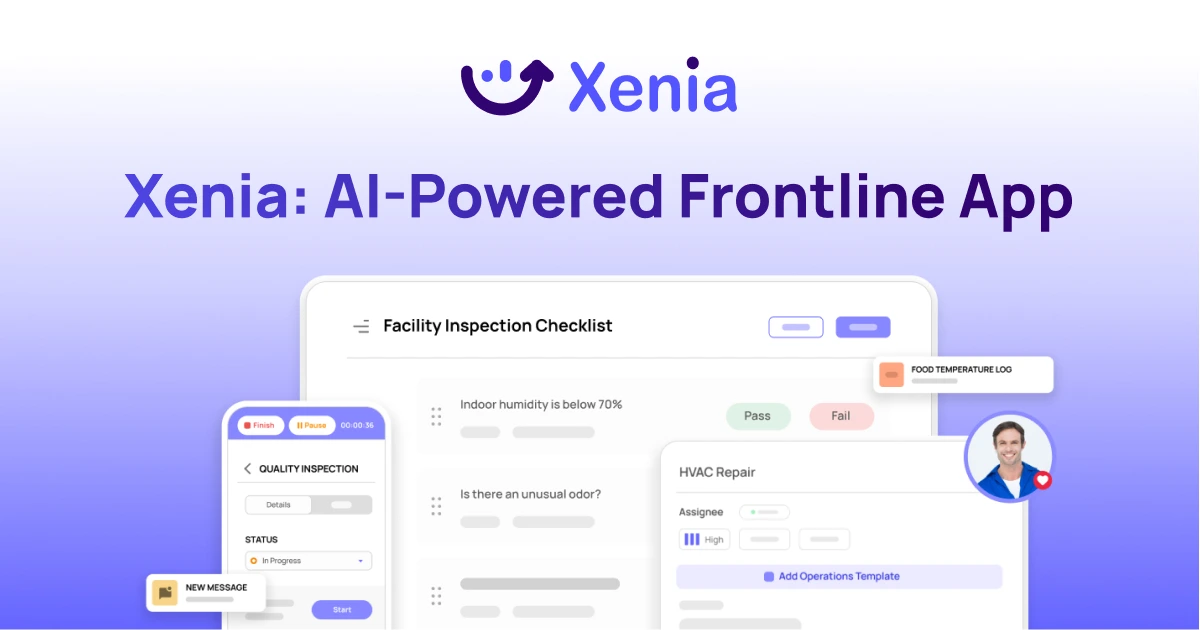
Why Multi-Location Operators Choose Xenia:
🤖 AI-Powered Operations, Create digital checklists instantly or convert paper forms with AI. Verify compliance automatically with photo analysis and get instant answers from your operational data.
✅ Daily Operations & Maintenance, Assign work across hundreds of locations in minutes. Report and route issues instantly. Schedule preventive maintenance to catch problems before downtime.
📊 Real-Time Visibility, Track completion, work orders, and performance across all locations through dashboards. Filter by site or asset to spot trends and take action.
Manage operations, maintenance, and compliance across all your locations from one platform

.svg)
.webp)
%201%20(1).webp)

.svg)
%201%20(2).webp)