

Most people never think about how food gets to their plate.
But if you work in food and beverage, you need to. The food and beverage supply chain touches everything. Your costs. Your safety. Your product quality. Your customers.
This guide explains it all.
What Is a Food Supply Chain?
.webp)
The food supply chain is simple. Farmers grow it. Processors package it. Warehouses store it. Trucks move it. Retailers sell it. Customers eat it. Every step connected.
Each step depends on the one before it. One breakdown anywhere in that chain and the effects show up fast. Shortages. Spoilage. Compliance failures. The whole system pays the price.
What Is the First Step in the Food Supply Chain?
Step one is production.
The food production chain starts here. Food gets grown, raised, or caught. That is it. Nothing else in the supply chain can happen without this step.
Quality here flows through to everything downstream. Bad inputs lead to bad outputs. Who you source from directly shapes what ends up on your customer's plate.
What Is Food Supply Chain Management?
Food supply chain management is the coordination at every stage.
Who supplies your food. How quality gets checked. Whether safety rules are followed. How fast you respond when something goes wrong.
Supply chain management in the food industry is not a back-office function. It is an operational one. Get it right and your locations run smoothly. Get it wrong and the problems are impossible to hide.
What Is the Global Food Supply Chain?
Most food travels further than people realize.
The global food supply chain is the worldwide system that moves ingredients across countries and continents. In the United States alone, about 20% of food is imported, often passing through multiple countries before it lands on a shelf or in a kitchen.
Global sourcing has clear advantages. Access to more ingredients. Lower costs. Products available regardless of season.
But the vulnerabilities are just as clear. Longer shipping times. Supply cuts from political instability or extreme weather. Regulatory differences across borders. Traceability that gets harder with every extra country involved.
For operators managing many locations, none of this is theoretical. One disruption anywhere in the network and your shelves feel it within days.
What Is Traceability in the Food Supply Chain?
No trail means no traceability. And no traceability means big problems.
Traceability means one thing. Know where your product came from and where it went.
The farm, the batch, the locations, the customers.
When something goes wrong with food safety, that trail is what saves you. It helps you find the affected product fast instead of clearing entire shelves and taking a massive financial hit.
It also keeps you compliant. The FDA mandates detailed records for high-risk foods under FSMA. That is not a suggestion.
Document every handoff. Receiving logs, storage records, supplier info. Build the trail at every step and you will always have the answers you need.
Learn more about why food safety is important in modern food operations.
Food Supply Chain Logistics
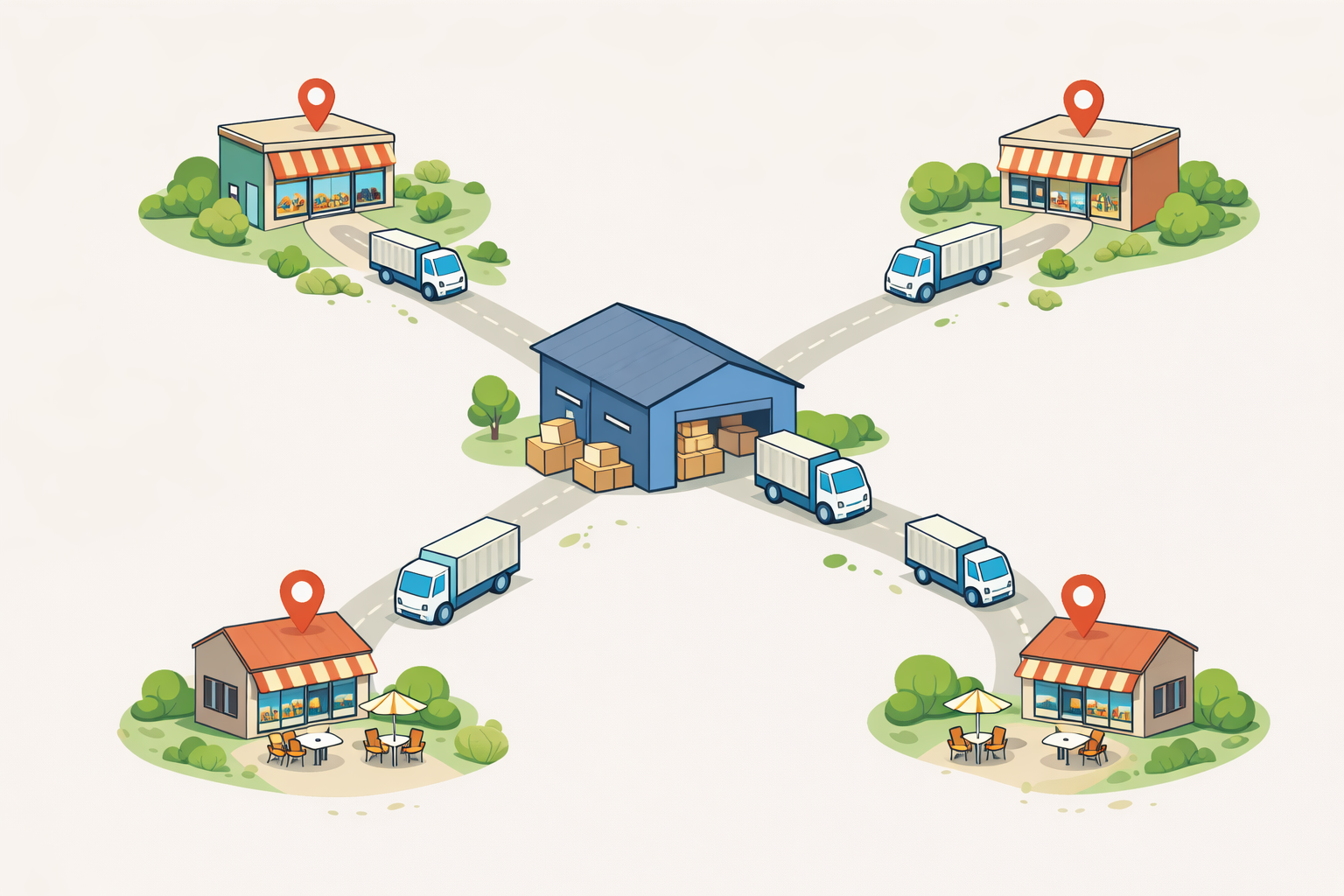
Logistics is what keeps the food supply chain physically moving. It covers everything involved in transporting and storing food safely and on time.
Cold Chain Management
Temperature-sensitive food has one rule. Stay cold from production to consumer, no exceptions.
Break that chain once and you get spoiled product, a safety incident, or a compliance problem. Sometimes all three.
Proper food temperature logging ensures cold chain integrity.
Transportation and Routing
Perishable food has one rule. Arrive cold and on time.
Refrigerated trucks handle most of it. Trains cover longer distances. Air freight steps in when speed matters most. Different methods, one standard.
Delivery Verification
A delivery is not complete just because a truck showed up.
Someone needs to check that the right products arrived in the right quantities at the right temperature and in acceptable condition. This step gets overlooked constantly. Skip it once and a small problem at the door becomes a big problem down the line.
Use a receiving checklist to verify every delivery consistently.
Inventory Replenishment
Making sure each location has enough product without having too much. Running out means lost sales. Having too much means more waste.
Proper inventory management balances stock levels across all locations.
Learn more about restaurant inventory management best practices.
Food Supply Chain Examples
Every business in the food industry has a supply chain. They just look a little different.
These food supply chain examples show how it plays out in the real world.
A fast food chain sources from farms, routes everything through a distribution center, and ships to hundreds of locations weekly. Deliveries get checked. Stock gets rotated. Temperatures get logged.
A grocery chain works with thousands of global suppliers. Stock moves through regional warehouses and lands on shelves based on live sales data.
A convenience store network gets fresh food delivered daily from local suppliers and rotates it fast to cut waste on short-dated items.
The food delivery supply chain works the same way. A third-party delivery platform depends on restaurants receiving the right ingredients, prepping accurately, and packaging correctly before a single order leaves the kitchen.
The businesses are different. The supply chain basics are the same. And what happens at each individual location determines whether any of it actually works.
Modern restaurant automation helps standardize receiving and inventory processes across all locations.
Who Leads in Food Supply Chain Advancements?
The best operators in food supply chain management share one thing. They use technology and build consistent processes at every location.
McDonald's has built systems that can trace exactly where an ingredient came from and catch quality issues before they reach a customer. Walmart worked with IBM to build a traceability system that can track leafy greens back to their source in seconds, not days.
On the technology side, modern supply chain software for food and beverage now makes things like real-time temperature alerts, digital delivery checks, and multi-location reporting available to operators of all sizes.
AI in food and beverage is transforming how operators predict demand, optimize inventory, and maintain food safety compliance.
The difference is not how big your company is. It is how consistently your team executes at every single location.
How to Improve Food Supply Chain Performance
Digitize Your Receiving Process
Paper checklists get lost, skipped, and forgotten. Digital logs do not.
Photos and timestamps give you a real record of every delivery at every location. Problems get spotted early. Nothing slips through.
Use digital food delivery checklists to standardize receiving across all locations.
Learn about digital food safety management systems for comprehensive compliance tracking.
Standardize Across Every Location
Inconsistency comes from leaving decisions to individuals. Consistency comes from building a process everyone follows.
Same receiving checklist. Same storage steps. Same temperature logging. Every location. No exceptions.
Implement restaurant SOPs to ensure consistency across distributed operations.
Monitor Temperatures in Real Time
Sensors connected to your cold storage give you live temperature data. Instead of finding out about a broken cooler during a morning check, you get an alert the moment something goes wrong.
Build Corrective Action Workflows
Turn every flagged issue into an assigned task with a clear deadline. Give it an owner. Track the resolution. No owner means no fix.
Learn more about corrective action workflows.
Track Supplier Performance Over Time
Your suppliers either deliver consistently or they do not. Data tells you which is which.
Over time, performance records show you who to trust and who to replace. Better data means smarter sourcing and harder vendor conversations become a lot easier.
How to Reduce Waste in the Food Supply Chain
Food waste is one of the biggest controllable costs in the food industry.
The USDA puts it at 30 to 40 percent of the entire U.S. food supply every year. And most of it does not have to happen.
At Receiving
If damaged or low-quality product gets accepted, it becomes a problem later. A simple receiving checklist with photos stops bad product from entering your operation in the first place.
In Storage
First in, first out rotation sounds easy but breaks down without structure. Building rotation checks into every shift makes it happen consistently across all locations.
Learn more about FIFO food safety practices and essential food safety practices.
During Prep
Prepping too much food is one of the biggest hidden costs in restaurant operations. Tracking prep amounts against expected sales helps teams prep smarter over time.
Central kitchen management software helps optimize prep across multiple locations.
At End of Service
Food thrown away at the end of a shift costs money. Logging what gets discarded and why gives you the data to order better and prep smarter going forward.
Use a food waste log to track waste systematically.
The answer to waste is always the same. You need visibility. And visibility only comes from consistent documentation.
Related Resources
Checklists & Templates
- Food Safety Checklist
- Food Delivery and Storage Checklist
- Food Temperature Log
- Food Waste Log
- Food Storage Inspection
- Food Receiving Log
- Food Inventory Log
- HACCP Plan Template
- Food Safety Risk Assessment Checklist
Tools

.svg)
.webp)
%201%20(1).webp)

.svg)
%201%20(2).webp)


