

Not all preventative maintenance works the same way.
The tasks are similar. The timing and triggers are not. Understanding the different types helps you choose the right approach for each asset in your operation.
What Are the 4 Types of Preventative Maintenance?
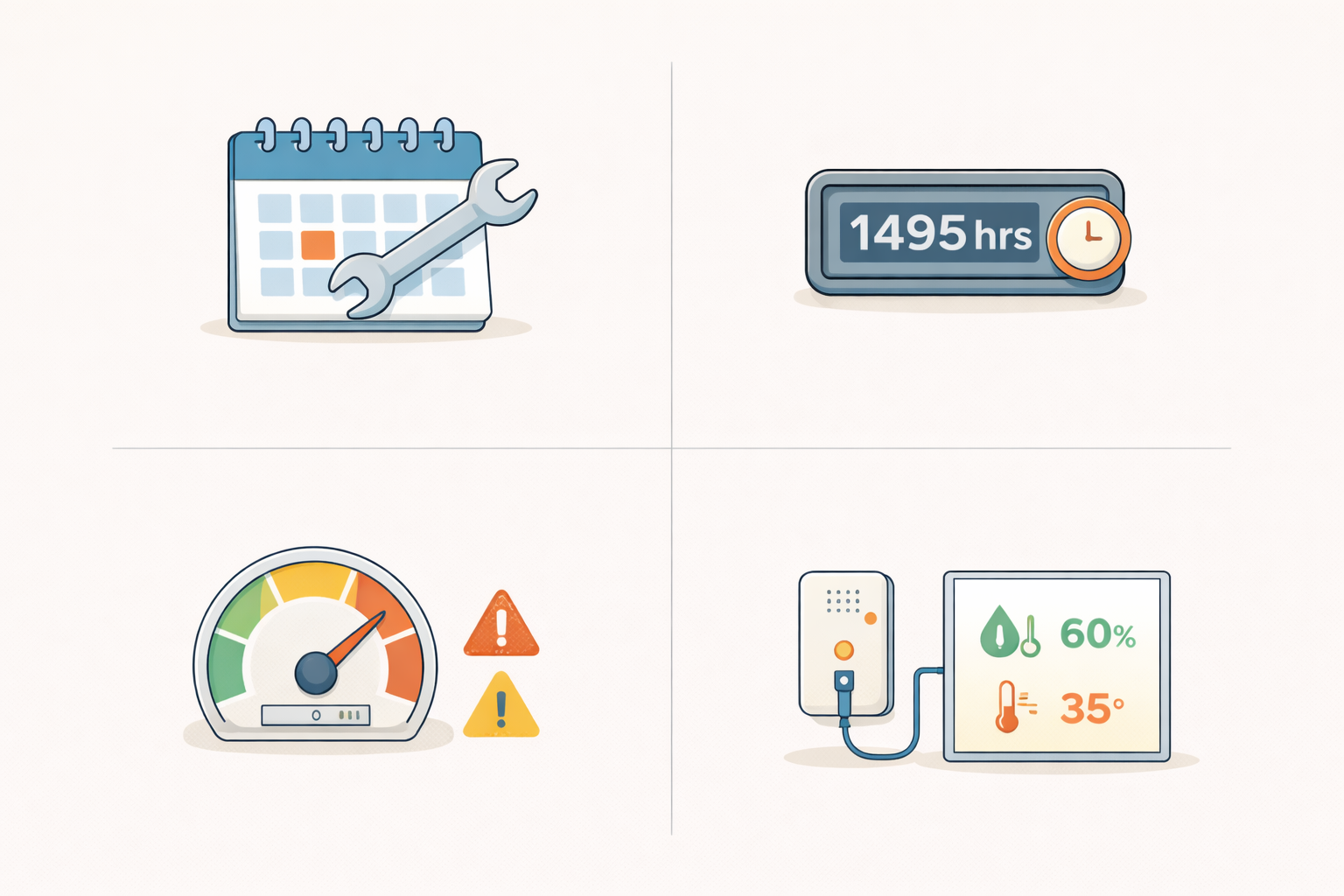
There are four main types. Each one uses a different trigger to decide when service happens.
**
Type, When Service Happens, Best For
Time-based, Fixed schedule, Simple recurring tasks
Usage-based, Hours - cycles or miles, High-use equipment
Condition-based, Equipment condition signals, Critical assets
Predictive, Real-time sensor data, Advanced operations
**
Time-based maintenance runs on a fixed schedule regardless of equipment condition. Every 30 days, every quarter, every year. Most frontline operations start here because it is the simplest to manage and the easiest to roll out across multiple locations.
Usage-based maintenance is triggered by how much the equipment has been used. Hours operated, cycles completed, miles driven. A commercial fryer serviced after every 400 hours of operation is a good example. This type makes sense for high-use equipment where time alone does not tell the full story.
Condition-based maintenance happens when monitoring shows early warning signs. Unusual vibration, rising temperatures, declining performance. You act when the signals appear, not on a fixed calendar. This keeps you from over-servicing equipment that is fine while still catching problems before they cause failures.
Predictive maintenance is the most advanced type. Real-time sensors and data predict exactly when equipment is likely to fail. You only service it when the data says it is time. More precise than the others but requires more technology investment. Most operations layer this in after the basics are already running well. Learn more about predictive maintenance software here.
Preventive Maintenance Examples
Examples make this easier to understand. Here is what each type looks like across common frontline industries.
Time-based examples:
- Monthly HVAC filter replacement across retail locations
- Quarterly fire extinguisher inspections at every site
- Annual boiler service in hospitality properties
- Weekly refrigeration unit checks in convenience stores
Usage-based examples:
- Commercial fryer serviced after every 400 hours of operation
- Delivery vehicle oil change every 5,000 miles
- Industrial mixer inspected after every 1,000 cycles
- POS hardware serviced after a set number of transactions
Condition-based examples:
- Refrigeration unit flagged when temperatures start drifting outside safe ranges
- Conveyor belt inspected after unusual vibration is detected
- Generator scheduled for service when performance readings drop below threshold
Predictive examples:
- Sensors on a rooftop HVAC unit detect a bearing starting to wear and trigger a service request before failure occurs
- Kitchen equipment monitored continuously with alerts sent the moment performance drops
Every type follows the same logic. Act before failure, not after. The method changes. The goal never does.
A solid preventative maintenance schedule is what keeps all of these types running consistently across your operation. Without a schedule, maintenance happens when someone remembers. That is breakdown maintenance with a different name.
Related Resources
Free tools and templates to support your maintenance program:

.svg)
.webp)
%201%20(1).webp)

.svg)
%201%20(2).webp)


