
Post Summary
Brand standards audits aren't just corporate compliance exercises. They're systematic evaluations of how well your operational infrastructure delivers on brand promises, whether you run 2 locations or 200.
Here's what we've learned working with multi-unit operators: businesses that scale successfully treat brand standards development like building infrastructure. They measure what matters, fix what's broken, and continuously improve how they maintain consistency.
This brand standards audit guide shows you exactly how to evaluate brand health and create audit programs that drive real operational improvement.
.svg)

Priced on per user or per location basis
Available on iOS, Android and Web


What Is a Brand Standards Audit?
A brand standards audit evaluates how well each location delivers the expected customer experience. It measures everything from cleanliness to service quality against defined standards.
Think of it like regular equipment inspections, but more comprehensive.
Inspections are quick checks focused on specific items or risks, a temperature log, a cleanliness walkthrough, and a safety check.
A brand standards audit goes deeper. It’s an end-to-end evaluation that looks at everything from A to Z: visual presentation, operational execution, service behaviors, compliance, and follow-through. It doesn’t just ask, “Is this okay right now?”, it asks, “Is this location consistently delivering the brand as designed?”
Good audits do three things:
Identify gaps between expectations and execution. Where are the locations drifting? Which areas need attention?
Create accountability through documentation. Clear evidence with photos and objective scoring shows what's working and what isn't.
Drive systematic improvement. Not just documenting problems, but fixing them through corrective actions.
Why Brand Standards Matter
Customers expect consistency. When they visit Location A on Monday and Location B on Thursday, they want the same experience. Same quality. Same service.
In multi-unit operations, every location is a brand touchpoint.
But consistency doesn't happen by accident. It requires systems, regular audits that identify issues, and systematic follow-through that fixes them.
Multi-unit operators who scale successfully share one trait: they audit regularly and act on findings. Not to punish teams, but to close gaps before customers notice.
The 8-Step Brand Standards Audit Framework
This framework works across industries, retail, restaurants, hospitality, and convenience stores. It's the systematic approach that turns audits from documentation exercises into improvement drivers.
Step 1: Define Your Audit Categories and Brand Standards
Start brand standards development by organizing what you're measuring into clear categories:
**
Category, What to Measure, Why It Matters
Guest experience standards, Cleanliness presentation service quality and ambiance, Directly impacts customer perception and brand reputation
Food safety and compliance, Temperature logs sanitation allergen protocols and health codes, Prevents violations and protects customers and the brand
Visual merchandising, Displays signage promotions and planogram compliance, Maintains brand recognition and drives sales
Facilities and maintenance, Equipment condition and preventive maintenance, Prevents costly breakdowns and maintains the physical brand environment
Operational execution, Opening and closing tasks inventory security and cash handling, Ensures efficiency and protects operational integrity
**
Match audit frequency to operational importance:
- Food safety: Daily checks
- Visual merchandising: Weekly
- Facilities: Monthly
This categorization is essential for brand standards development, as you're defining what "meeting brand standards" actually means in measurable terms.
Step 2: Build Weighted Scoring for Your Brand Standards
Not all compliance items carry equal weight in your brand standards audit. A missing fire extinguisher is more serious than a slightly crooked picture frame.
Weighted scoring structure:
**
Priority Level, Point Value, Examples, Action Timeline
Critical, 10 points, Health violations safety hazards major brand failures, Immediate fix required
Major, 5 points, Operational inconsistencies impacting customer experience, Address quickly
Minor, 1 to 2 points, Small deviations from ideal standards, Not urgent
**
Benefits of weighted scoring:
- Automatically prioritizes team attention during brand audit
- Quickly identifies locations needing immediate intervention vs coaching
- Makes brand standards audits more objective with clear criteria
Step 3: Make Brand Standards Audits Location-Specific
Common mistake: Creating one massive audit template with every possible item for every location type.
Result: District managers waste time marking "N/A" on 50+ irrelevant questions.
Better approach: Use conditional logic
- Store has drive-thru → Show drive-thru inspection items
- Store has no drive-thru → Hide those items
- Keeps audits focused and scores comparable
A location scoring 95% means the same thing whether they answered 150 or 200 questions; they met their applicable brand standards at that level.
Step 4: Require Photo Documentation in Your Brand Standards Audit
Photos eliminate subjectivity. Three months from now, nobody will remember what "display needs improvement" meant.
Make photos mandatory for:
- All critical failures
- Major brand presentation issues
- Before/after comparisons for corrective actions
- Reference documentation for training
Modern capabilities: AI-powered photo analysis can compare uploads against approved planograms automatically.
Protection benefit: Timestamped evidence shows exactly what conditions existed when customers or corporate leadership question execution quality.
Step 5: Automate Corrective Actions from Brand Standards Audits
The value of a brand standards audit is what happens next. When an item fails, your system should automatically:
1. Create specific tasks
- Wrong: "Fix display"
- Right: "Reset promotional end-cap to match planogram reference image, take verification photo."
2. Assign to appropriate roles
- Food safety failures → Kitchen managers
- Merchandising gaps → Store managers
- Facility issues → Maintenance coordinators
3. Track follow-up completion
- Nothing closes until verified with photo proof
Impact on resolution rates:
- Manual follow-up via email: <40% resolved within 30 days
- Automated corrective action workflows: >85% resolved within 2 weeks
Step 6: Schedule Brand Standards Audits by Performance Level
Should you audit every location monthly? Quarterly? The answer depends on their track record.
**
Performance Tier, Audit Frequency, Focus
High performers (90%+), Quarterly comprehensive audits, Earned trust through consistent execution
Standard performers (75–89%), Monthly targeted audits, Focus on historically weak areas
Underperformers (<75%), Bi-weekly comprehensive audits, Intensive monitoring with coaching support
New locations (first 90 days), Weekly audits, Establish operational foundation
**
Step 7: Enable Performance Benchmarking Across Brand Standards
Individual scores matter. Comparative patterns matter more.
Example: Store 47 scores 78% on visual merchandising. Is that good or bad?
- Network average 85% → Needs attention
- Network average 72% → Actually outperforming
What effective systems show:
Location rankings
- Identify the top 20% (models for best practices)
- Identify the bottom 20% (need intervention)
Category trends
- Reveal network-wide patterns
- Example: Food safety rising while cleanliness falling across 200 locations = systemic issue
Common failures
- Repeated failures across 40% of stores = SOP needs clarification
Comprehensive reporting and analytics transform brand standards audits from individual scorecards into strategic brand reputation management tools.
Step 8: Build Continuous Improvement Loops
The ultimate purpose of brand standards audits is to create organizational learning that raises performance network-wide.
Quarterly review questions:
**
Question, Action
Which brand standards consistently fail?, If 60% cannot maintain a standard despite training adjust the requirement or identify systemic barriers
What are the top locations doing differently?, When Store 103 outperforms peers by 15 points document their approach and share network wide
Are auditors scoring consistently?, Regular calibration sessions reduce variance and keep comparisons meaningful
**
This continuous improvement mindset prevents your brand standards audit program from becoming stale. You're constantly refining:
- What you measure
- How you measure it
- What standards actually drive customer satisfaction and operational performance
Internal vs External Brand Standards Audits: Use Both
Complete monitoring requires both internal and external audits.
Internal audits provide ongoing operational visibility. District managers conduct these regularly, covering comprehensive categories and generating immediate corrective actions.
But familiarity can lead to leniency. Managers might unconsciously soften scores for teams they know well.
External audits provide an objective customer perspective. Third-party evaluators assess service quality without operational bias. They happen less frequently but calibrate internal programs.
Use external audits to validate internal programs. If internal scores show 85% compliance but mystery shops rate customer experience poorly, there's a gap worth investigating.
How Technology Transforms Brand Standards Audits
Traditional audit tools were built for documentation. Modern operations platforms rebuild brand standards audits around action.
The shift from clipboards and spreadsheets to purpose-built brand standard audit systems changes three fundamental things:
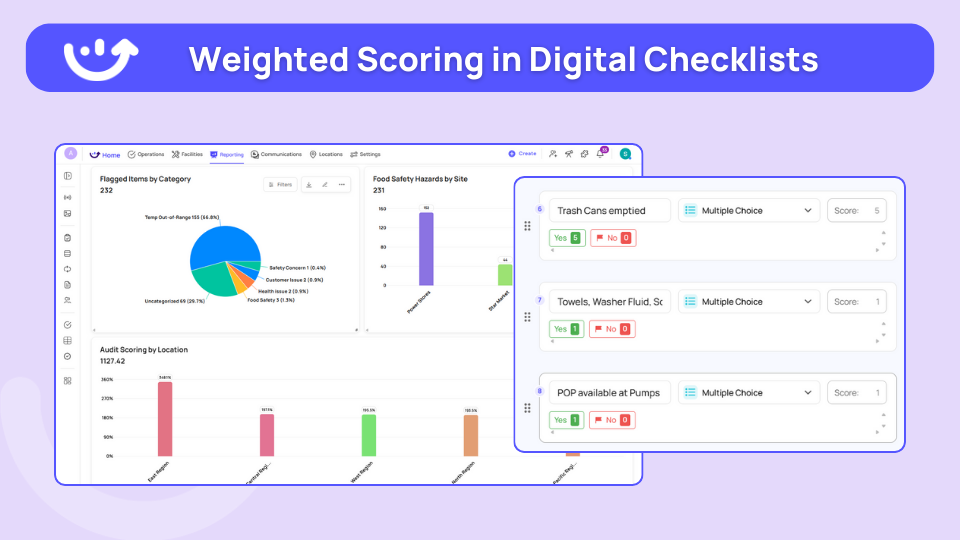
Weighted scoring with automatic corrective actions: Failed items in brand standards audits generate tasks that route to appropriate roles with clear completion criteria and photo verification requirements.
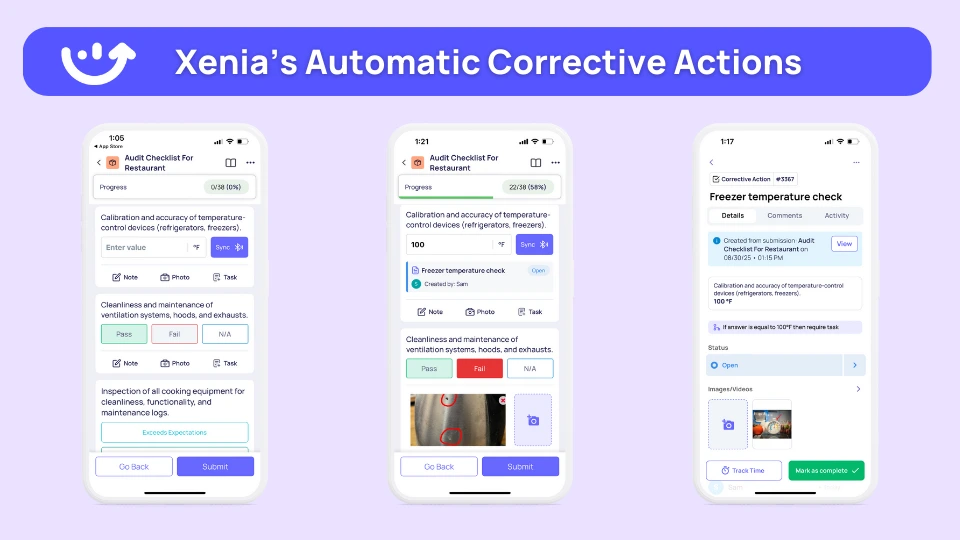
Automated corrective action workflows eliminate manual follow-up bottlenecks. When a display fails standards, the system automatically creates a task for the store manager with the planogram reference, deadline, and photo verification requirement; no district manager intervention is needed.
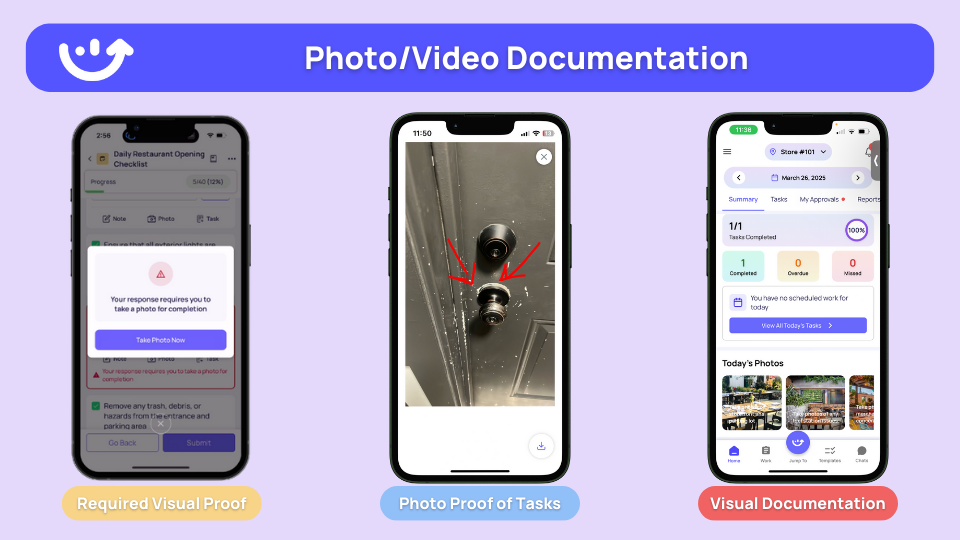
AI-powered photo analysis verifies visual merchandising, promotional displays, and facility conditions instantly. District managers upload photos during audits, and the system flags deviations from brand specifications in real-time.
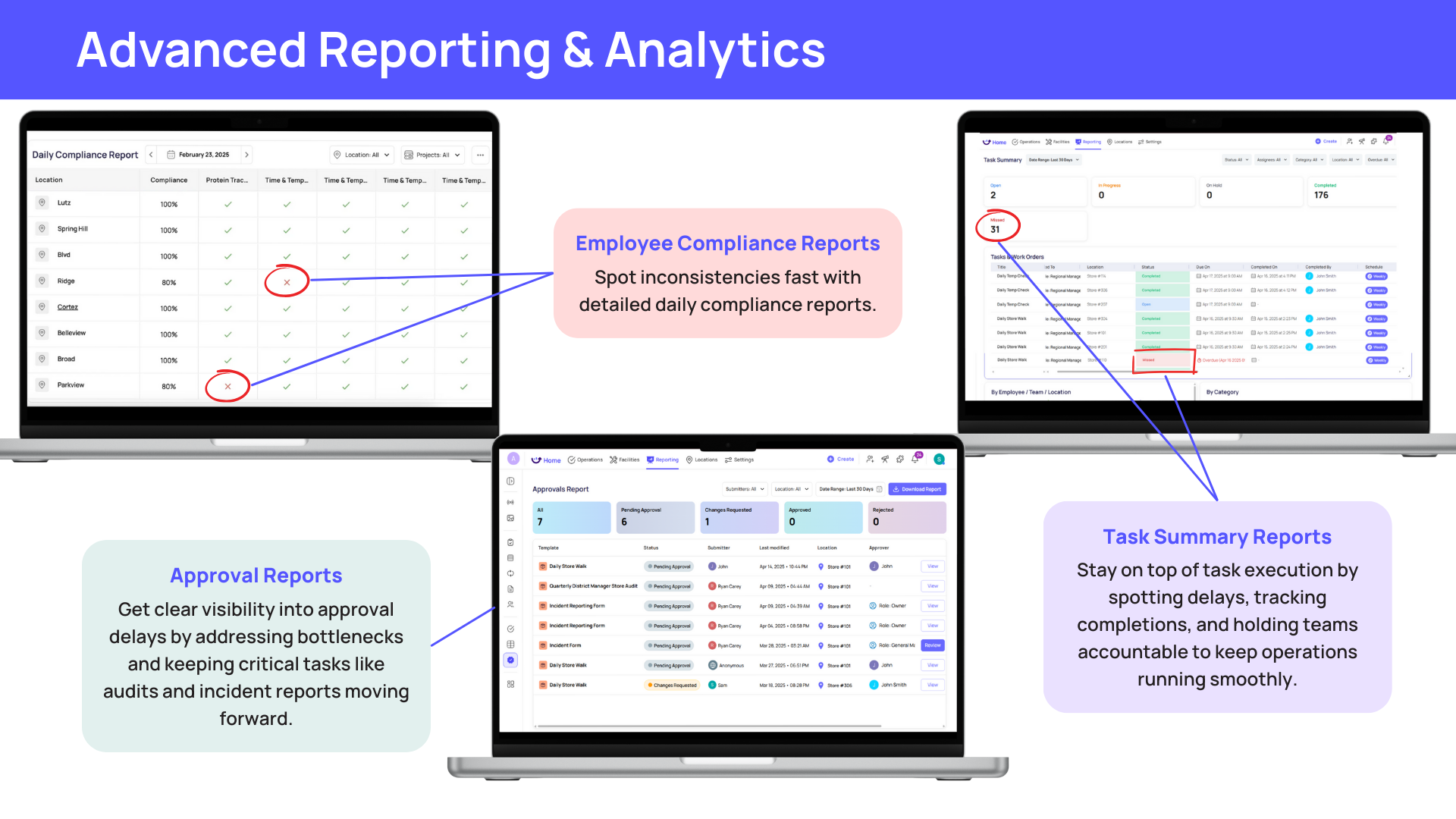
Real-time dashboards for brand reputation management: Regional directors see brand standards audit scores across their entire portfolio, sortable by location, category, or time period. This enables proactive intervention before individual issues become systemic problems.
Comprehensive reporting surfaces patterns invisible in individual audits. When merchandising scores decline across 40% of stores in three weeks, operations leaders can investigate root causes and implement network-wide solutions.
Multi-unit operations platforms like Xenia enable flexible audit scheduling, food safety Monday, promotional displays Wednesday, facility checks Friday, and maintain continuous oversight without a comprehensive audit burden.
Your brand standards audit program stops being something that happens to locations quarterly and starts being how operations run daily through continuous monitoring, immediate feedback, and systematic improvement.
Frequently Asked Questions About Brand Standards Audits
How do I conduct a brand standards audit for a franchise with 50+ locations?
The key is to start with one solid audit that works everywhere, then adapt it based on how each location operates. Not every store needs every question, and forcing that usually wastes time.
Audit frequency should reflect performance. Strong locations don’t need constant oversight, while weaker ones benefit from more frequent, focused reviews. Between full audits, running quick checks on areas like food safety or merchandising helps you stay on top of risk without overwhelming district managers.
What is the difference between a visual brand audit and an operational brand audit?
A visual brand audit looks at what the customer experiences at a glance. It focuses on cleanliness, displays, signage, and overall presentation. The goal is to answer whether the location looks like your brand.
An operational brand audit looks behind the scenes. It reviews how the location runs day to day, including procedures, equipment upkeep, safety practices, and staff execution. The strongest programs use both, adjusting the balance based on the business. Retail often leans more visual, while restaurants place heavier emphasis on operations and food safety.
How often should a multi-unit business perform a full brand standards review?
There’s no single right schedule. New locations usually need frequent audits early on to build good habits. Locations that are struggling benefit from more regular check-ins and coaching. Stable, high-performing locations can be reviewed less often without losing control.
Between full audits, targeted checks for high-risk areas like food safety or active promotions help maintain consistency without adding unnecessary workload.
What are the most common brand standards failures in the hospitality industry?
Most breakdowns come from execution slipping over time. Cleaning routines get rushed during busy periods. Seasonal signage stays up too long or gets damaged and ignored. Maintenance issues are logged but not followed through on. Training happens, but not consistently. Food safety logs are completed, but processes aren’t always followed on the floor.
These aren’t knowledge gaps. Teams generally know what’s expected. The real issue is having systems that ensure standards are actually completed, verified, and corrected when they’re not.
Conclusion
Brand standards audits aren’t about paperwork. They’re about making sure every location delivers the same experience as you grow. Whether you manage 10 locations or 100, the teams that scale well treat audits as part of how the business runs, not as a compliance task.
What really makes the difference is focusing on the things that matter most, fixing issues instead of just recording them, and spotting patterns across locations rather than obsessing over individual scores.
If audit results live in reports, follow-ups get lost in emails, and district managers spend more time filling forms than helping teams improve, that’s not a people issue. It’s a systems issue.
Tools like Xenia take care of the busywork so your team can focus on coaching, improving execution, and running better stores. The result is more consistent experiences, smoother operations, and growth that doesn’t break your brand.
Frequently Asked Questions
Got a question? Find our FAQs here. If your question hasn't been answered here, contact us.

Looks like there's no data available in our FAQ section at the moment.

A Modern, AI-Powered Platform Built Specifically for Frontline Operations
Xenia brings daily operations, maintenance, audits, and compliance into one mobile-first platform. Frontline teams execute work consistently across locations while leadership gets real-time visibility.
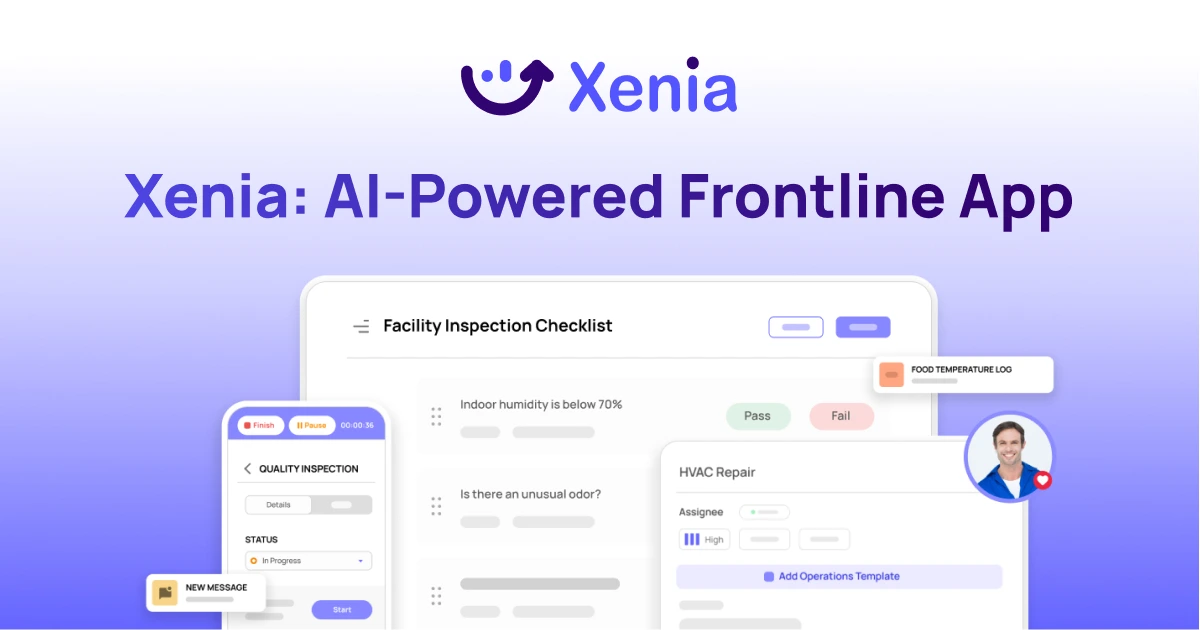
Why Multi-Location Operators Choose Xenia:
🤖 AI-Powered Operations, Create digital checklists instantly or convert paper forms with AI. Verify compliance automatically with photo analysis and get instant answers from your operational data.
✅ Daily Operations & Maintenance, Assign work across hundreds of locations in minutes. Report and route issues instantly. Schedule preventive maintenance to catch problems before downtime.
📊 Real-Time Visibility, Track completion, work orders, and performance across all locations through dashboards. Filter by site or asset to spot trends and take action.
Manage operations, maintenance, and compliance across all your locations from one platform

.svg)
.webp)
%201%20(1).webp)

.svg)
%201%20(2).webp)