
Post Summary
Why teams are looking for CompanyCam alternatives in 2026
The best CompanyCam alternatives in 2026 are Xenia, FieldPulse, BuildOps, OctopusPro, and Procore. CompanyCam is strong at job-site photo capture with time and location stamps.
But its Core plan now includes only one user, standardized checklists sit behind the $129-per-month Crew plan, and it does not carry work orders, scored inspections, or escalation-tracked corrective actions. Xenia is the top pick for teams that need photo proof plus the checklist, the work order, and the corrective action attached to it in one app.
Be clear about one thing first. CompanyCam is well liked. It holds 4.7 out of 5 across 103 reviews on Capterra's CompanyCam review page. Crews are not leaving because the photos are bad. They leave because the photo is where the work starts, and CompanyCam stops there.
Limitations of CompanyCam
1. Feature gating replaced the seat minimum. Older roundups still repeat that CompanyCam forces you into three seats. That is out of date, and it matters.
From CompanyCam's own pricing page: Core is $63 per month billed annually, or $79 monthly, and includes one user. Crew is $129 per month with three users and adds real-time job tracking, task assignment, templates, and standardized checklists.
Scale is $199 per month with three users and adds unlimited templates, document signing, and LiDAR room measurement. Enterprise is a custom annual contract for 50 or more users. Extra seats are $29 each. So the 2026 pain is not the seat floor. It is that checklists start on Crew and document signing is Scale-only. A two-person crew that needs a standardized checklist pays for seats it will never assign.
2. The bill climbs with the crew. At $29 per extra seat, a 15-person field team on Crew runs $129 plus 12 times $29. That is $477 per month, roughly $5,724 a year, for photo documentation and checklists. That figure is arithmetic off CompanyCam's published rates, not a CompanyCam claim. Most ops leads expect work orders and scored inspections inside that budget.
3. Complexity after updates, and low-signal usability. Capterra reviewers most often cite cost, support responsiveness, and interface complexity following updates. One reviewer put the connectivity problem plainly: "Since it is Internet based, sometimes when I am out in an area with a low signal, it becomes difficult to use." Another flagged the upsell: "The price is a bit high and if you want to utilize some additional features you have to pay substantially more."
4. Photos are not the workflow. CompanyCam's features page lists photo and video capture, unlimited cloud storage, annotation with measurements and drawings, galleries and timelines, a project feed, comments, tags, and documents. It does not list work orders, dispatch, preventive maintenance, scored inspections, or corrective actions tracked to closure.
So teams pay for CompanyCam plus a field service platform plus a task tool. If you run crews and subs across multiple sites, contractor and vendor management is the actual workflow, and the photo is one field on that record.
One piece of roadmap context, stated neutrally. CompanyCam is scaling fast. It reached unicorn status after an August 2025 Series C and announced its first acquisition, California construction fintech Beam Finance, on March 14, 2026, per Silicon Prairie News.
That is not a knock. It is a fair question to put to any vendor mid-expansion: what does this product look like in 18 months? If your search started with crew scheduling and frontline messaging rather than photos, the same evaluation runs through our Connecteam alternatives comparison for frontline teams.
CompanyCam alternatives compared at a glance
Here is the short version for a contractor or multi-site ops lead who wants to scan and move on. The columns are the nine things this buyer actually evaluates, not a feature dump.
**
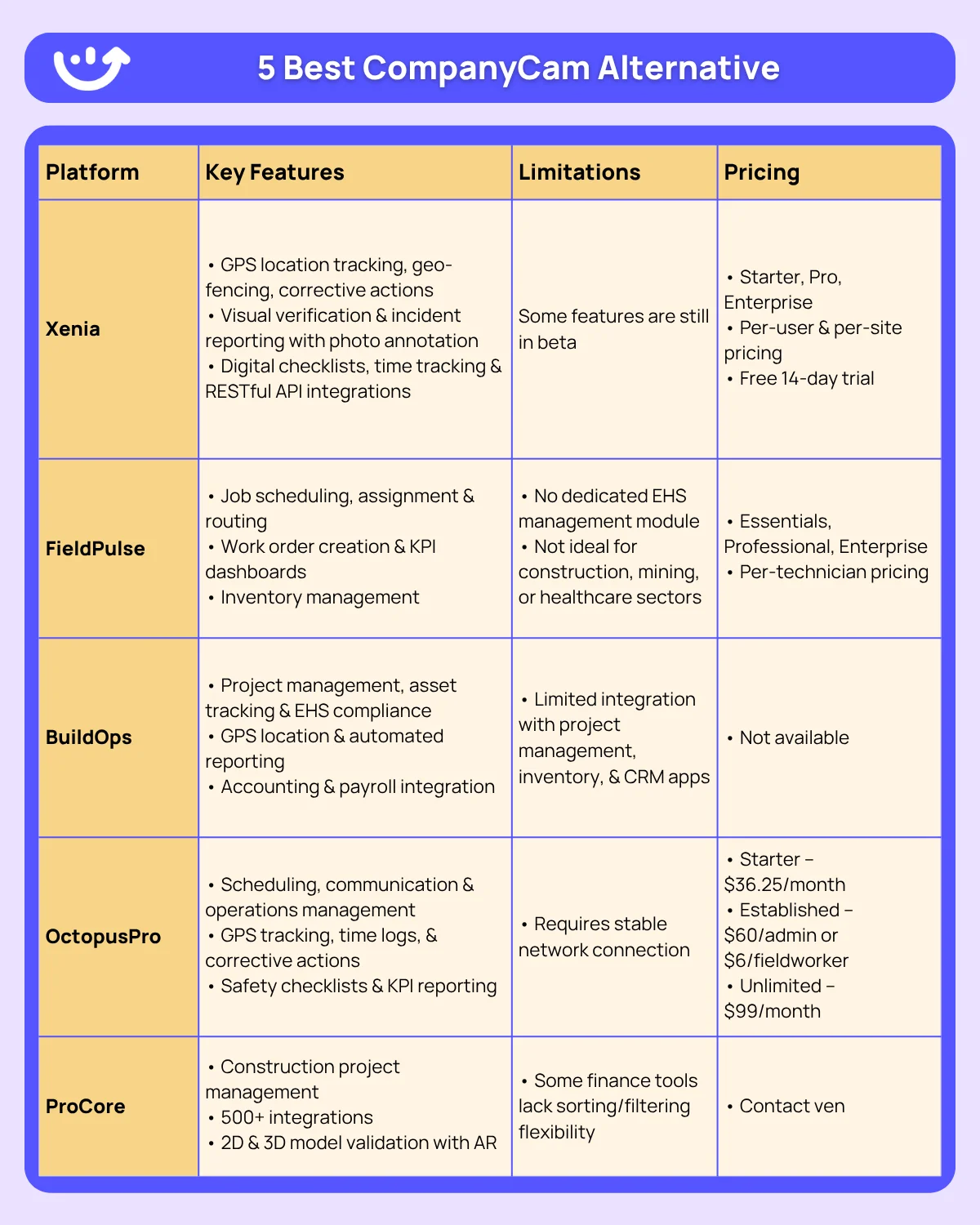
Platform, Best for, Photo docs and annotation, GPS and time-stamped proof, Checklists and forms, Work orders and PM, Corrective actions with escalation , Offline , Pricing model, API and integrations
CompanyCam, Job-site photo documentation, Yes; measurements and drawings on photos , Yes; time and location stamped , Yes; but Crew ($129/mo) and above. Unlimited templates on Scale , No , No , Yes; on Core and up , Per-seat tiers: Core $63; Crew $129; Scale $199 annual; plus $29 per extra user , Open API on paid plans; Zapier; Chrome extension
Xenia , Photo proof tied to checklists; work orders; and corrective actions in one app , Yes; annotate with markings; arrows; and text notes inside checklists , Yes; GPS location and time-stamped submissions , Yes; digital checklists; audits; and SOPs on all plans , Yes; including QR-code work order submission and preventive maintenance , Yes; auto-assigned from failed items with owner; deadline; and escalation , Yes , Custom per location; with per-user or per-site options. Basic; Pro; Enterprise. 14-day free trial , RESTful API; webhooks; 50+ named integrations across HRIS; ticketing; BI; SSO; storage
FieldPulse , Residential HVAC; plumbing; and electrical service businesses , Photo capture from mobile. Integrates with CompanyCam rather than replacing it , Via the CompanyCam integration , Custom Forms; enabled on request , Yes; scheduling; dispatch; estimates; invoicing , Not documented as a scored corrective-action workflow , Yes; Custom Forms work in Offline Mode , Seat-based; quote only. Essentials; Professional; Enterprise. Full-access and field-only seat rates , QuickBooks Online and Desktop; Xero; Zapier; Google Calendar; Mailchimp; CompanyCam
BuildOps , Commercial specialty trades: HVAC; electrical; plumbing; refrigeration; fire and life safety , Photo and video on field notes; invoices; and quotes. Nameplate scanner auto-fills asset details , Not published as a distinct capability , Yes; custom workflows and checklists in the tech app , Yes; service agreements; PM; asset and job-site history , Not published as a distinct escalation workflow , Yes. "Works in basements; on roofs; in dead zones" , Quote only; priced on field and office user count. Subcontractors need no licenses , ERP and accounting integrations including QuickBooks; Sage; Vista ,,
OctopusPro , Booking-driven mobile service businesses , Photo capture on job records , GPS fieldworker tracking and time logs , Yes; checklists and quality-control forms , Job and booking management , Correction and prevention templates , Partial; cached job data only , Starter $36.25/mo. Established $60 per admin plus $6 per fieldworker. Unlimited Users $99/mo plus $1 per booked job or 2% of invoiced revenue , Accounting; payment; and calendar integrations ,,
Procore , General contractors and owners on capital projects , Yes; photos tied to drawings; RFIs; and daily logs , Yes; inside project documentation , Yes; inspections; punch lists; daily logs , Project-management workflows rather than facilities work orders , Punch list and observation closure , Yes; mobile offline , No published dollar pricing. Annual fee by product; scaled to Annual Construction Volume. Unlimited users , App Marketplace. Procore's own material cites over 200 integrations
**
Nobody in this set is a like-for-like CompanyCam swap. CompanyCam is a photo-documentation product. Xenia, FieldPulse, BuildOps, and OctopusPro are operations platforms with photo capture inside them. Procore is a construction project-management system. Pretending otherwise is how buyers end up running two tools and paying for both.
The pricing models are not comparable, so compare the trigger instead. CompanyCam and OctopusPro publish rates. FieldPulse, BuildOps, and Procore quote. Xenia quotes per location on its pricing page.
The useful question on a demo call is what makes your bill go up next year: seats (CompanyCam, FieldPulse, OctopusPro), the split between field and office headcount (BuildOps), annual construction volume (Procore), or locations (Xenia).
Read the checklist column twice. Checklists are where photo-only tools stop and ops platforms start. On CompanyCam a standardized checklist costs you the jump from Core to Crew. On FieldPulse, Custom Forms have to be enabled by the vendor. On Xenia, digital checklists and audits are on every plan, and the data flows out through a documented API and webhooks listed on the Xenia integrations directory.
.svg)


1. Xenia: our top CompanyCam alternative
CompanyCam tells you what a job site looked like. Xenia tells you what happened next. A photo that fails a standard becomes a corrective task with an owner, a deadline, and an escalation rule, inside the same record. That is the wedge, and it is the reason Xenia sits at the top of this list for multi-site crews rather than solo photographers.
GPS location tracking and geo-fencing
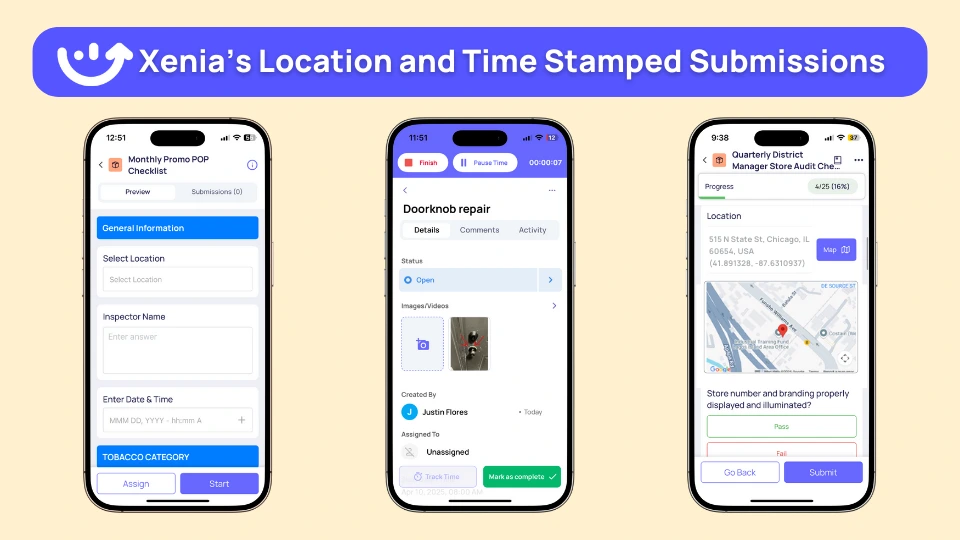
Every Xenia submission carries a GPS location and a time stamp. Managers see where crews and assets are in real time, so they can route the nearest available tech instead of guessing. For the crew, location-stamped records are the proof layer, not a surveillance feature. When a customer disputes a callback or an insurer asks who was on site at 3pm, the record answers.
Geo-fencing draws a virtual boundary around a site. When a worker enters or leaves, the system logs the event and notifies the supervisor. Mark a hazardous zone and a manager gets an alert the moment someone walks into it. The same boundary flags unauthorized asset movement off the yard.
Corrective actions
.webp)
This is the capability CompanyCam does not carry, and it is the one that changes the math. A failed audit item leads to an automatic corrective task, tracked to resolution, with escalation if it is not addressed by the deadline. Most platforms collect the data. Few drive it to closure.
Xenia creates work orders straight from failed items, assigns them, and escalates on deadline. See the wording on the automated work order creation page. A worked example: a walk-in storing temperature-sensitive stock drifts out of range.
Bluetooth thermometers write the reading into digital temperature logs automatically. The out-of-range value fires an alert, and the supervisor assigns a manual inspection to the closest available tech from the same screen. Xenia requires and stores the photo as evidence. It does not interpret what is in the image, and no honest vendor should claim it does.
Visual verification and photo annotation
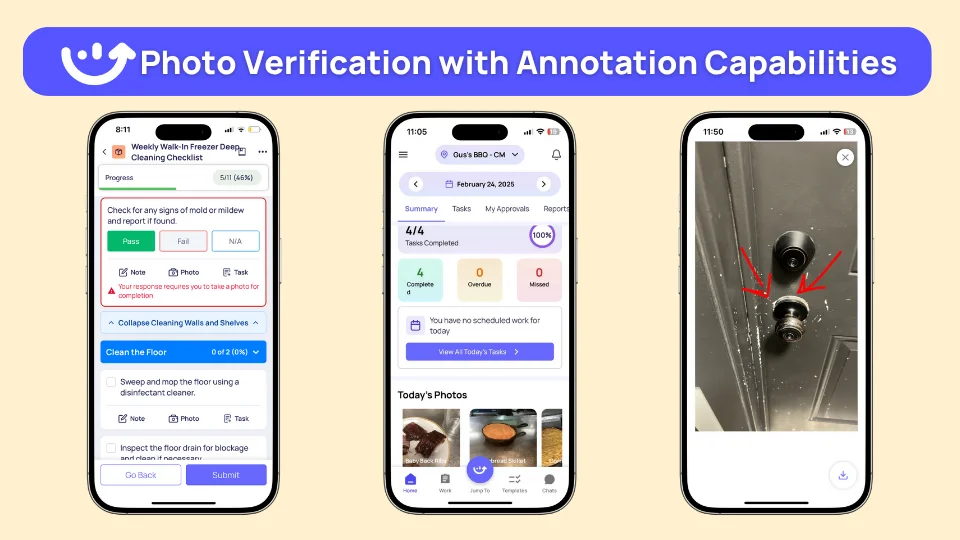
Crews capture photos and video while the work is happening, with live time stamps and geotags. They sign off on tasks and documents from the Xenia mobile app, so the record shows who completed what and when.
Where a standard requires visual proof, the checklist item can demand an image or a video before it will submit. That is the difference between a photo library and compliance evidence you can hand an inspector.
Incident reporting
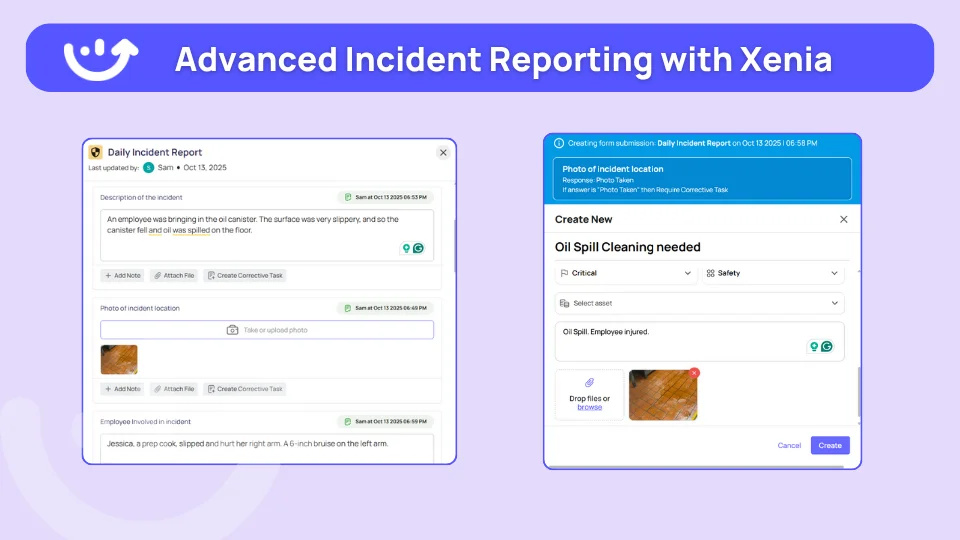
Workers capture an image, mark it up, and share it. They add digital markings, highlights, circles, arrows, and text notes to point at the problem or document the fix. Annotation is built into checklists, inspections, and task forms, so the marked-up image lands in the document and records management trail rather than a camera roll. A highlighted hazard routes to a manager who assigns a corrective task with a named owner.
The stakes here are not paperwork. The US Bureau of Labor Statistics recorded 1,032 fatal work injuries among construction and extraction workers in 2024, including 370 fatal falls, slips, and trips, out of 5,070 total US workplace fatalities, per the BLS Census of Fatal Occupational Injuries released February 19, 2026.
A photo-annotated hazard report that routes to a named owner with a deadline is a safety control. Xenia is not a replacement for a dedicated EHS platform, and we do not pitch it as one.
Digital task management, checklists, and forms

Schedules only work when the time data behind them is real. Xenia captures start and end times on digital forms with time stamps, so supervisors assign against actual capacity instead of a guess. The same logs surface where jobs are running long.
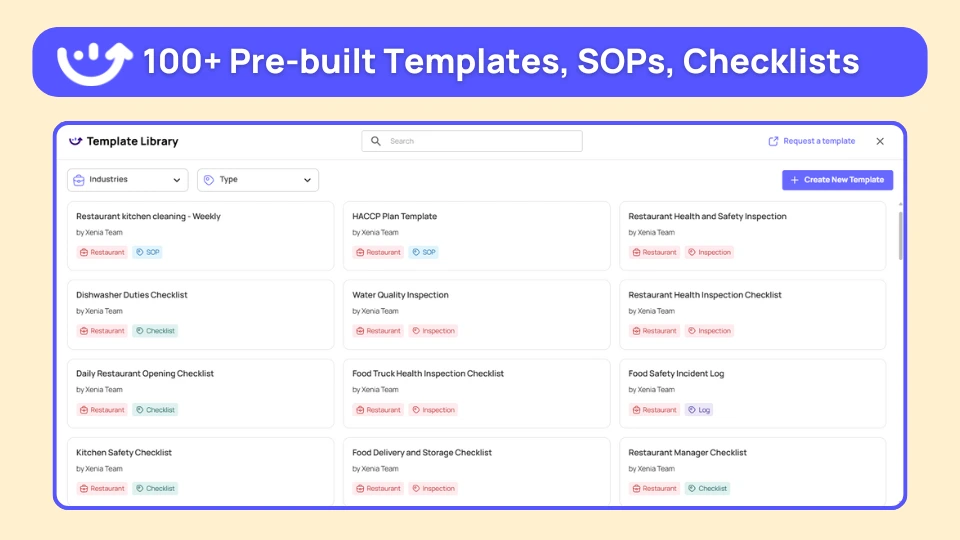
The Xenia template library ships 100+ prebuilt checklists, inspections, and SOPs you can edit for your trade. Forms support date input, start and end time logging, break and pause tracking, media attachments with images, video, and signatures, custom fields such as overtime hours, completion analytics by user and location, and scheduling frequencies.
Crews open the right checklist by scanning a QR or barcode on the asset. That same access point powers work requests: staff or third-party vendors submit a request by scanning a QR code without logging in, the form auto-populates the asset, location, and category, and a manager approves and routes it by region, priority, and skill.
Integrations, API, and webhooks
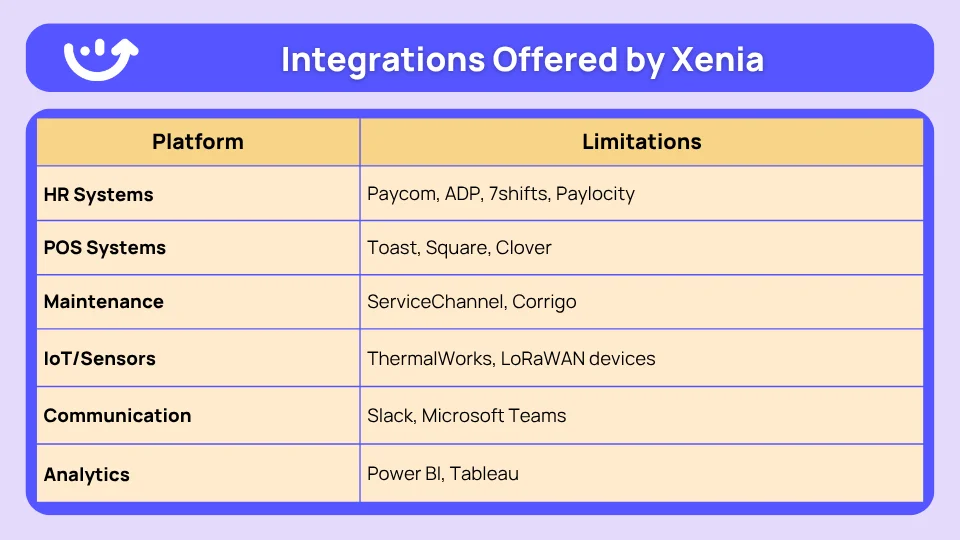
A field tool that does not talk to your other systems creates double entry. Xenia publishes a RESTful API with full documentation and webhook support for event-driven workflows, plus prebuilt connections across HRIS and payroll (Workday, ADP, UKG, 7shifts, Paycom, Paylocity, BambooHR, Paycor, Gusto, Paychex), ticketing (ServiceNow, Asana, Monday.com, ClickUp, Jira, Trello, Zendesk, Freshservice), BI (Power BI, Qlik, Tableau), SSO (Okta, Microsoft Entra ID, Google Workspace, OneLogin, Ping Identity, Auth0), and storage (SharePoint, Dropbox, Google Drive).
Webhooks push updates the moment an event fires, and in-app team chats keep the conversation attached to the job instead of scattered across texts. Data imports and exports by spreadsheet are supported for the systems that will never have an API.
Xenia's pricing, and one honest limit
Xenia publishes three plans on its pricing page: Basic, Pro, and Enterprise, each quoted as custom pricing per location, with per-user and per-site options. There is a 14-day free trial. Per-location pricing matters when your headcount swings seasonally, because adding a summer crew does not add a line item.
Two customer notes, kept to what is on the record. Power Works Electrical uses Xenia for estimating and safety processes. ServiceSource uses Xenia audits and inspections for compliance and site operations.
The honest limit: Xenia is a frontline operations platform, not a construction project-management system. It does not carry drawing-set management, RFIs, submittals, or BIM. If your problem is coordinating architects, engineers, and submittals on a capital project, Procore is the right category and Xenia is not.

Priced on per user or per location basis
Available on iOS, Android and Web


Other CompanyCam alternatives worth evaluating
2. FieldPulse
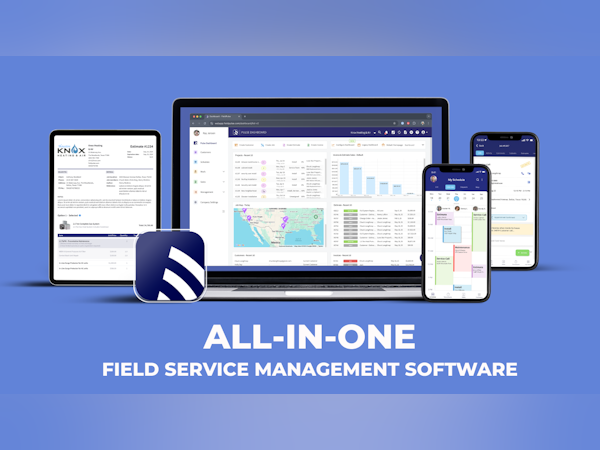
FieldPulse is all-in-one field service management for residential trades: scheduling, dispatch, CRM, estimates, invoicing, and job costing. It holds 4.6 out of 5 from 493 reviews on Capterra. What it does better than CompanyCam is run the commercial side of the job, where the photo is a byproduct of the work order rather than the product.
Here is the nuance no competing roundup explains properly. FieldPulse is an official CompanyCam partner, not a replacement. There is a "Take Photo in CompanyCam" button inside FieldPulse, projects sync both ways, and CompanyCam offers FieldPulse users a two-week trial plus 25% off the first two months, per the FieldPulse and CompanyCam partner page. If your goal is to stop paying for CompanyCam, FieldPulse alone does not get you there.
Limitation: Custom Forms, the checklist and inspection layer, are not self-serve. FieldPulse's own docs say "Contact us TODAY to enable Custom Forms." There is no dedicated EHS module. Pricing is quote only. The FieldPulse pricing page says pricing is seat-based and built around team needs, with seats bought upfront for the contract term and separate rates for full-access and field-only mobile seats. Third-party trackers estimate roughly $65 to $115 per user per month by tier, which is contractor-reported and not vendor-confirmed.
3. BuildOps
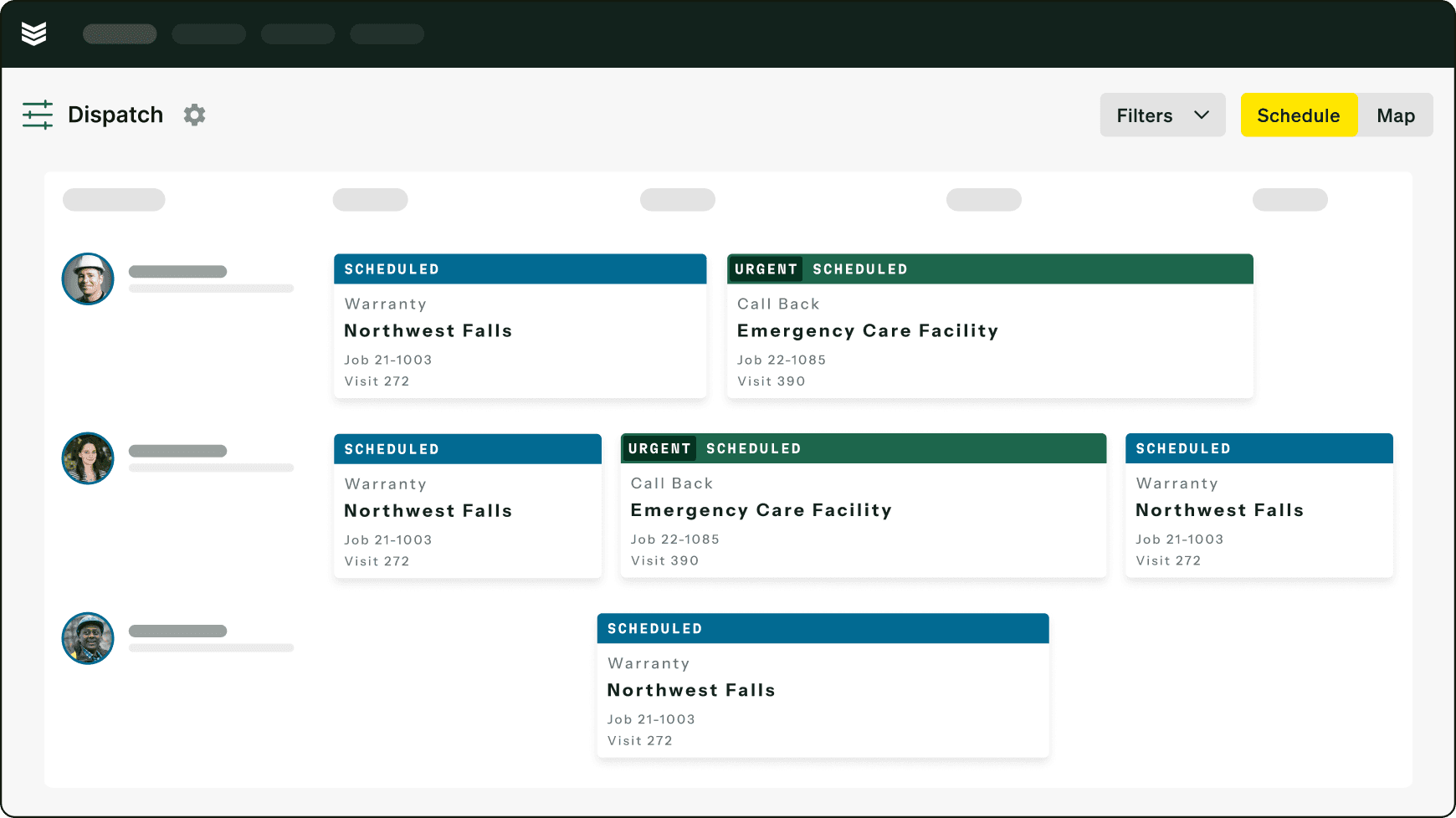
BuildOps is purpose-built for commercial specialty contractors in HVAC, electrical, plumbing, refrigeration, and fire and life safety. It holds 4.4 out of 5 from 177 reviews on Capterra. Where it beats CompanyCam is asset-centric service work. The BuildOps technician mobile app lists custom workflows and checklists, photo and video capability, asset and job-site history, and a nameplate scanner that fills asset details from a photo. Offline is explicit: "Works in basements, on roofs, in dead zones. Data saves locally and syncs the moment signal returns."
Limitation: this is the top of the market and it is not sold to two-truck shops. Third-party reviews flag material implementation and onboarding cost on top of licensing. Pricing deserves a correction to the old "no information available" line. BuildOps publishes the model, just not the number: "BuildOps pricing is based on the number of field and office users on your account." One genuinely useful detail for commercial contractors is that subcontractors are managed through BuildOps but do not require their own licenses. Third-party listings quoting a $49-per-user starting figure are not confirmed by BuildOps.
4. OctopusPro
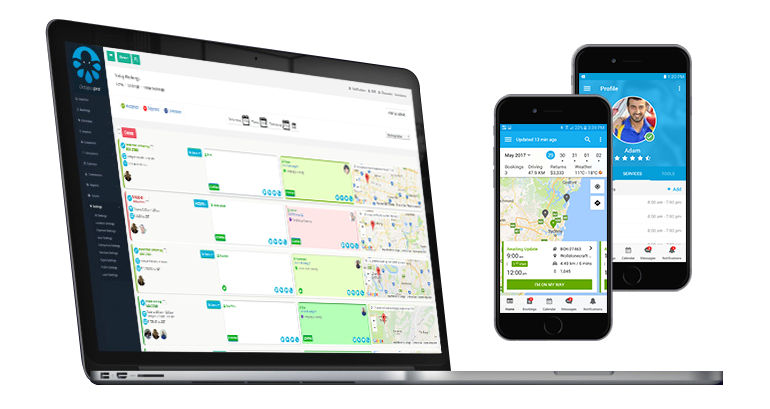
OctopusPro is cloud field service management for booking-driven mobile service businesses. Scheduling, quotes, invoicing, GPS fieldworker tracking, checklists, quality-control forms, and correction and prevention templates. What it does better than CompanyCam is publish its rates, which almost nobody in this category does.
Pricing: Starter is $36.25 per month, or $348 a year, covering one admin plus one fieldworker, with no usage fees. Established is $60 per admin seat and $6 per fieldworker seat per month, unlimited users, no usage fees. Unlimited Users is $99 per month, or $999 a year, plus either $1 per booked job or 2% of monthly invoiced revenue, and it requires your own Google Maps API key. That usage fee is the detail most roundups miss, and it is the one that decides whether the top plan is cheap or expensive for you.
Limitation, corrected: offline support is real but partial. OctopusPro's FAQ documents "offline access for certain fieldworker app functions, so staff can continue working with cached job information." Crews can view previously loaded jobs and update progress, then sync. It is not a full offline platform, but the blanket "needs a stable connection" claim you will see elsewhere is wrong.
5. Procore
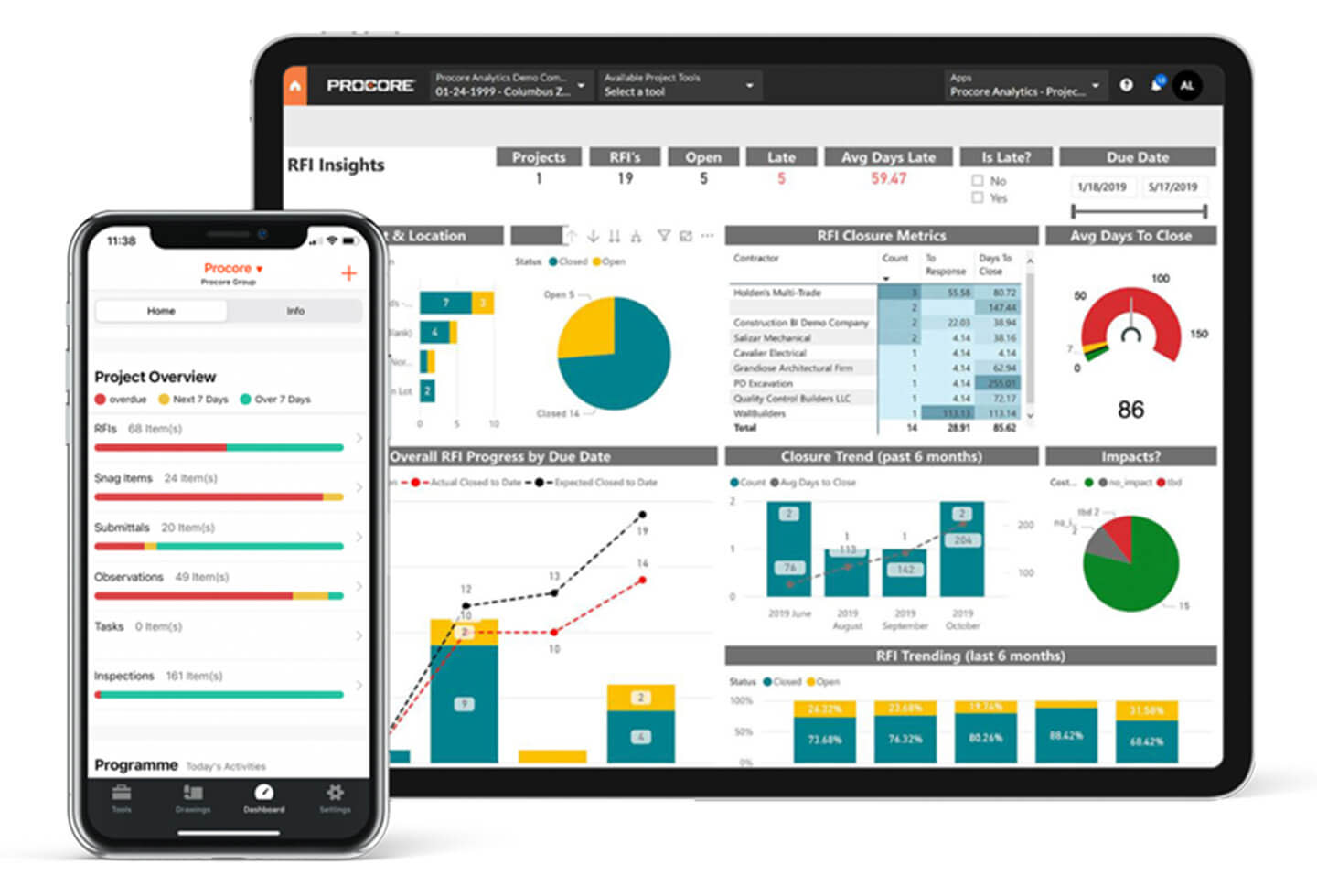
Procore runs construction project management from preconstruction to closeout, connecting owners, GCs, architects, engineers, subs, and suppliers. It beats CompanyCam at everything upstream of the photo: drawings, RFIs, submittals, daily logs, change orders, and project financials. Photos live inside that record instead of beside it.
Limitation: different category, different budget. It is not a job-site photo app and it is heavy for a service crew. Third-party reviews flag first-year implementation cost. Pricing also deserves better than "contact the vendor." Procore's pricing page states that pricing depends on the products you need and the amount of construction you do, charged as an annual fee by product and scaled to Annual Construction Volume, defined as the aggregate dollar value of construction work across your projects. Users are unlimited and free: "We'll never charge you for adding more users to Procore," including clients, subcontractors, and vendors. Third-party analyses put mid-market contracts in the $15K to $80K per year range, which is an estimate and not a Procore figure.
One correction on integrations. The "500+ integrations" number that circulates is third-party only. Procore's own blog says "over 200 integrations currently available." If you are scoring vendors on inspection depth rather than project scope, our guide to construction inspection software and the construction site safety checklist template are the faster route.
How to choose the right CompanyCam alternative
Pick by what breaks your week, not by feature count. Route yourself with the table below.
**
If this is you, Look at, Why
Solo or two-person crew; photos only, Stay on CompanyCam Core , $63 a month annual with one user is hard to beat for pure photo documentation; and offline mode is included
You need checklists; work orders; and photo proof in one app across multiple sites , Xenia , Digital checklists and audits on every plan; work orders auto-created from failed items; corrective actions with owner and deadline; per-location pricing
Residential HVAC; plumbing; or electrical business that needs dispatch and invoicing , FieldPulse , Full field service management. Note that it partners with CompanyCam rather than replacing it
Booking-driven mobile sCommercial mechanical or fire and life safety contractor with asset-heavy service agreements , BuildOps , Asset and job-site history; nameplate scanner; documented offline; subs need no licenses
Booking-driven mobile service business on a tight budget , OctopusPro , Published rates from $36.25 a month. Watch the usage fee on the top plan
GC or owner running capital projects with drawings; RFIs; and submittals , Procore , Unlimited users including subs and clients. Different category; different budget
**
Then take these five questions into every demo call:
The verdict. CompanyCam remains the best pure photo-documentation app for contractors, and 4.7 out of 5 across 103 Capterra reviews says its customers agree. The reason teams leave is not the photos. It is that the photo is where the work starts, and CompanyCam stops there. Xenia is the pick when you need the checklist, the work order, and the corrective action attached to that photo in one system. If you are running the same evaluation on a checklist-only incumbent instead, the Zenput alternatives comparison walks the identical decision, and the construction daily report log template is a good place to test whether a platform can actually replace your paper.
Ready to see it on a real job? Book a demo and bring your worst checklist, or claim the 14-day free trial and run one inspection end to end this week.
Frequently Asked Questions
Got a question? Find our FAQs here. If your question hasn't been answered here, contact us.
Is there a free CompanyCam alternative?

Why are contractors looking for CompanyCam alternatives?
How much does CompanyCam cost in 2026?
What are the top specialized Photo and Document Management software?
What are some of the best Field Service Management (FSM) software?
What are some top CompanyCam alternatives?

A Modern, AI-Powered Platform Built Specifically for Frontline Operations
Xenia brings daily operations, maintenance, audits, and compliance into one mobile-first platform. Frontline teams execute work consistently across locations while leadership gets real-time visibility.
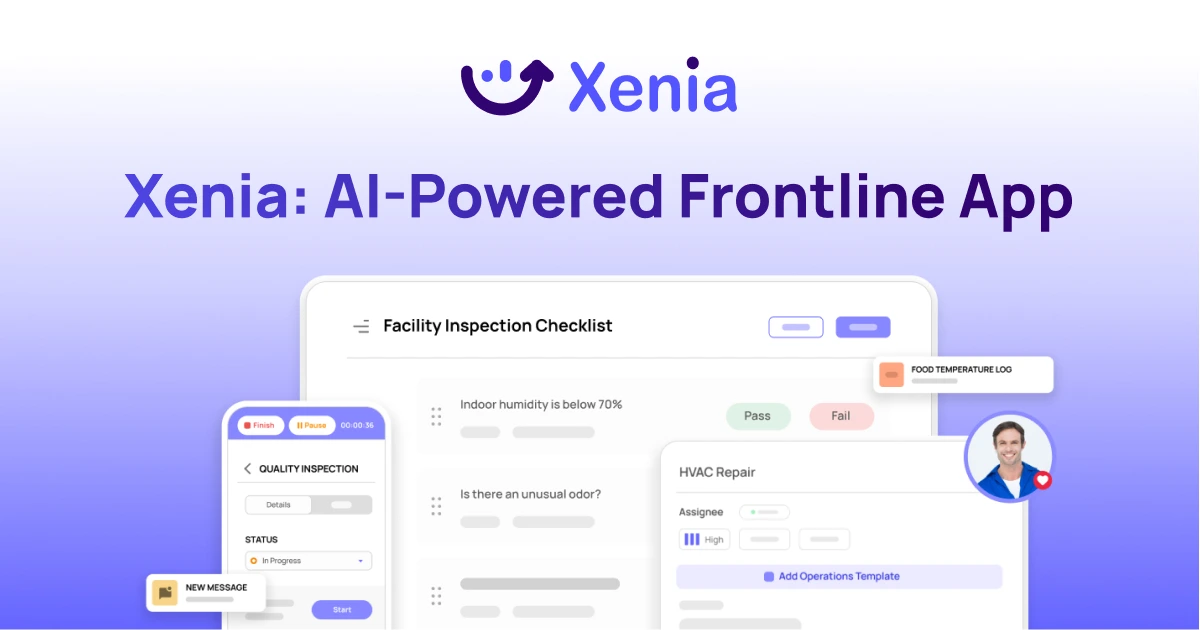
Why Multi-Location Operators Choose Xenia:
🤖 AI-Powered Operations, Create digital checklists instantly or convert paper forms with AI. Verify compliance automatically with photo analysis and get instant answers from your operational data.
✅ Daily Operations & Maintenance, Assign work across hundreds of locations in minutes. Report and route issues instantly. Schedule preventive maintenance to catch problems before downtime.
📊 Real-Time Visibility, Track completion, work orders, and performance across all locations through dashboards. Filter by site or asset to spot trends and take action.
Manage operations, maintenance, and compliance across all your locations from one platform

.svg)
.webp)
%201%20(1).webp)

.svg)
%201%20(2).webp)