
Post Summary
Zenput earned its place in multi-unit operations. It gave restaurant and c-store operators a way to standardize daily tasks across locations back when most teams were still running on clipboards and spreadsheets. For years, it was the default choice.
But this is 2026, and the category has moved. A growing number of operators are now actively shopping for a better fit.
The Crunchtime acquisition closed in 2022. Since then, questions about roadmap direction, form-count pricing, and platform completeness have pushed more multi-unit teams into evaluation mode than at any point in Zenput's history.
If you are reading this, you are probably one of them.
This guide covers the nine best Zenput alternatives in 2026: what each platform actually does, where it fits, and which one makes the most sense based on how complex your operations are and how many locations you run.
Why are multi-unit operators looking for Zenput alternatives in 2026?
The reasons operators are leaving Zenput come down to three things: acquisition uncertainty, form-count limits, and a platform that was never built to be a full operations solution. Understanding these tells you exactly what to look for in a replacement.
The Crunchtime acquisition factor
Zenput was acquired by Crunchtime in 2022. Crunchtime is a restaurant enterprise platform with a heavy focus on inventory and back-office workflows.
Independent and mid-market operators face the same concern with Zenput. Will Zenput's roadmap start serving Crunchtime's enterprise restaurant customers rather than the broader multi-unit operations use case?
Post-acquisition reviews on G2 and Capterra have flagged both support quality and feature velocity. The product still works, but operators sizing up a three-to-five-year partnership want more certainty about where the platform is heading. When a tool has a history of breaking during active audit periods, that reliability risk gets harder to ignore the more locations you run.
Form-count pricing limits
Zenput's lower pricing tiers cap the number of forms and checklists you can deploy. That is fine if your playbook is simple. Multi-unit operators rarely have a simple playbook.
Think about what a real checklist library looks like across 50 or 100 locations: opening and closing checklists by daypart, location-specific food safety logs, district manager audit forms, brand standards inspections, seasonal compliance checks, and facilities request forms. The moment you build a serious playbook, you hit the form ceiling, and scaling past it means a pricing jump. That friction is what pushes a lot of operators toward Zenput competitors.
Platform completeness
Zenput is a checklists and audits tool. It was built to be exactly that. But operations teams have outgrown what a standalone checklist tool can support.
Most Zenput users also run a separate CMMS for maintenance work orders, a separate communications tool for team announcements, and often a separate document library for SOPs and training. That is three or four tools for workflows that should live in one place. The fragmented stack is the thing operations leaders are actually trying to escape.
The 7 best Zenput alternatives in 2026
No two operations platforms are alike. Each one gives you a different set of tools to keep locations running. Before you commit, get clear on what you actually need: audits only, or maintenance and communications too? A simple playbook, or a deep one? A single vertical, or a mixed fleet? The list below runs from the most complete replacement to the more specialized and adjacent options.
.svg)

1. Xenia | The best Zenput alternative overall
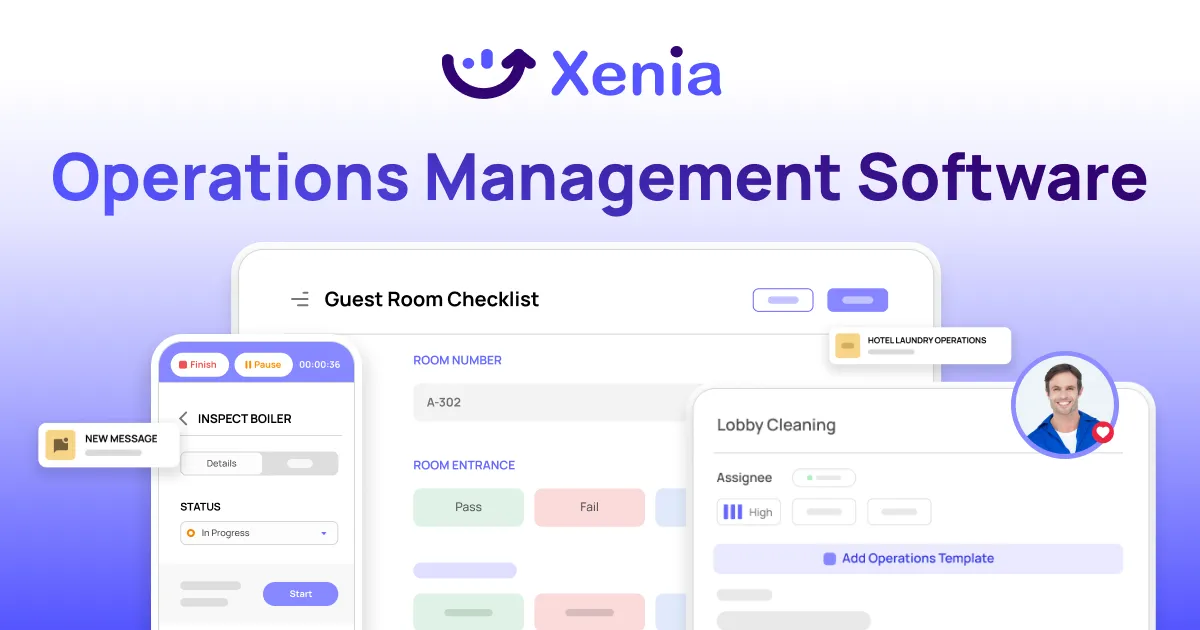
Most tools, Zenput included, give you a way to track tasks and log inspections. Tracking is not the same as managing, and documentation is not the same as execution. That is the gap Xenia is built to close.
Xenia is a modern, AI-powered operations platform for multi-unit teams that want one system instead of a stack of three.
It covers everything Zenput covers, then adds the workflows Zenput never did. Xenia has native maintenance and work orders, in-app team communications, a document library for SOPs, and AI-powered reporting across every location. Operators who move from Zenput to Xenia tend to describe the switch the same way, as going from "audits only" to "everything in one place."
That consolidation is the whole point. Power Market made the move across 300-plus locations and replaced a Zenput + CMMS + comms stack in a single step. Growing restaurant brands like Bacari and Tipsy Putt use Xenia to catch issues earlier, tighten food safety visibility, and give every team member a way to deliver consistent results shift after shift.
Whether you run 5 locations or 5000 locations, Xenia scales with you rather than against you.
Xenia's Standout features
1. Digital task management. Build custom checklists, SOPs, inspections, log books, and audits, then attach them directly to work orders and projects. Every submission captures images, timestamps, and comments, so each task is traceable and audit-ready without manual compilation.

2. Native work orders and maintenance. Xenia includes a dedicated work order system with QR-code asset tracking, preventive maintenance scheduling, and full asset history. A failed audit item can generate a maintenance work order automatically, so the fix is assigned and tracked inside the same platform instead of dropping into a separate CMMS.
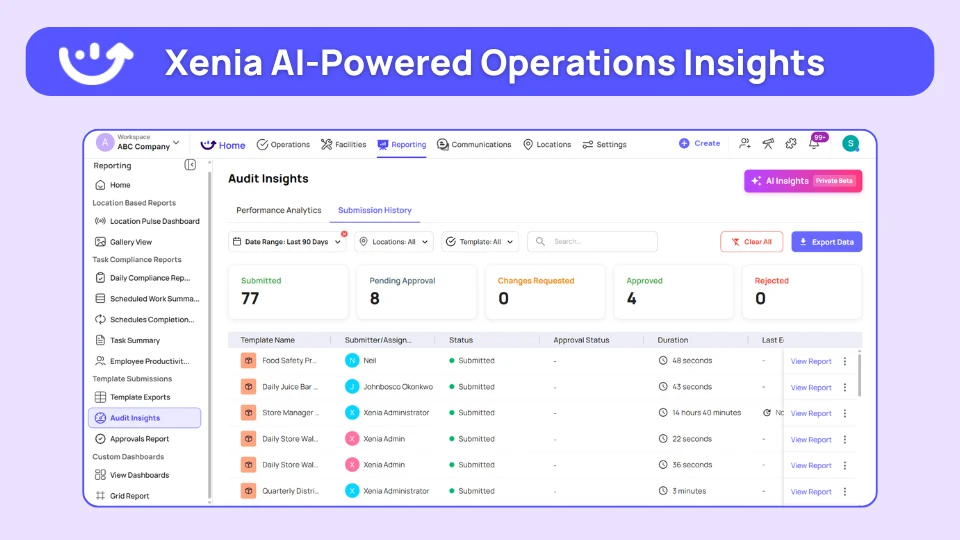
3. AI-powered reporting. Where Zenput reporting means exporting data and assembling it in Excel, Xenia builds widget-based dashboards managers can shape themselves to track health scores, repeat inspection failures, equipment issues, or productivity.
AI summaries answer plain questions in seconds: which locations failed the most compliance items last month, which audit items fail most often across the fleet. Reports share to stakeholders automatically.
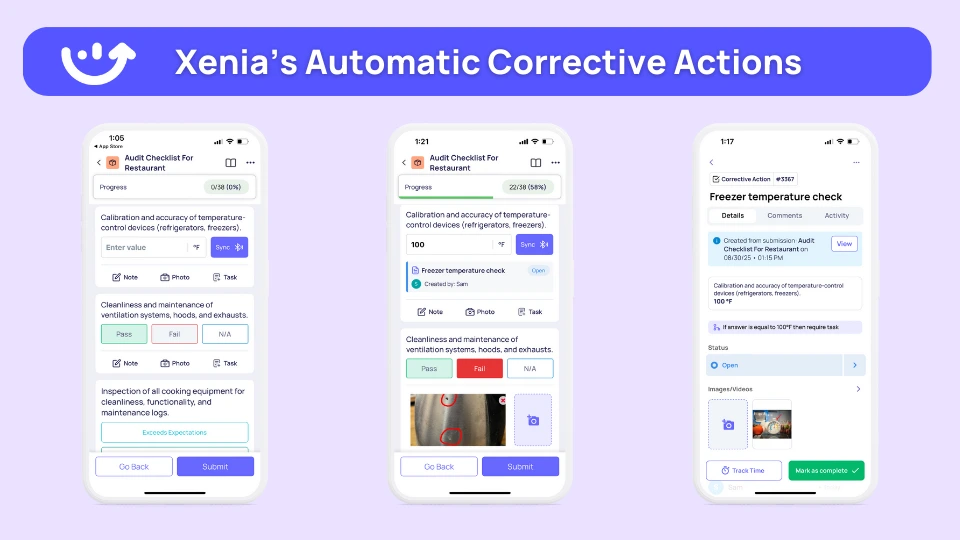
4. Conditional logic & automated corrective actions. Audit forms branch on answers, surface different checklists by location type or brand, and generate a corrective action task the moment an item fails. That task is assigned to the right person with a due date and a photo-proof requirement, so the loop closes in-platform instead of relying on someone to chase the fix.
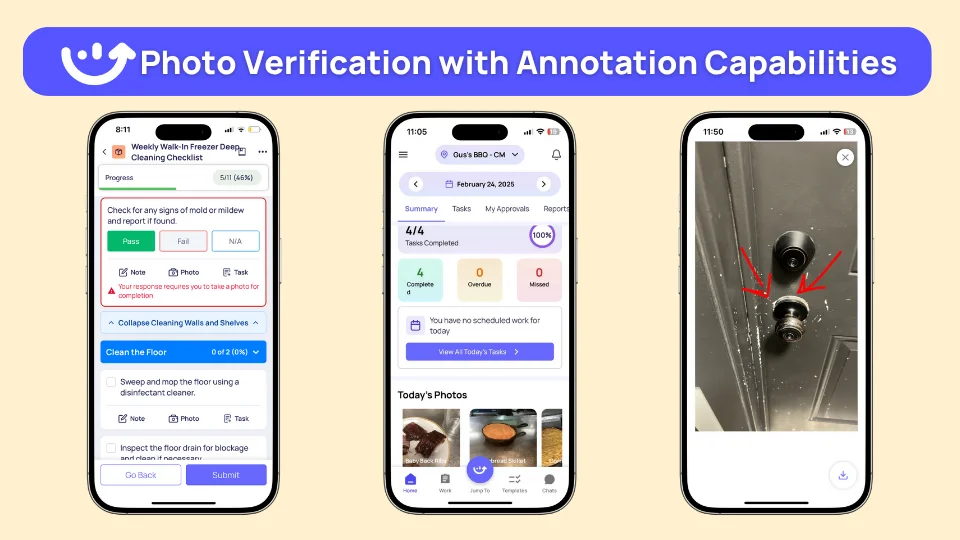
5. Live photo capture and AI photo analysis. Zenput allows gallery uploads, which means a photo taken last week can be attached to today's compliance check. Xenia can require a live-capture photo at the moment of submission, timestamped and tied to that specific form. For critical food safety and brand standards items, that is the difference between documented compliance and assumed compliance.
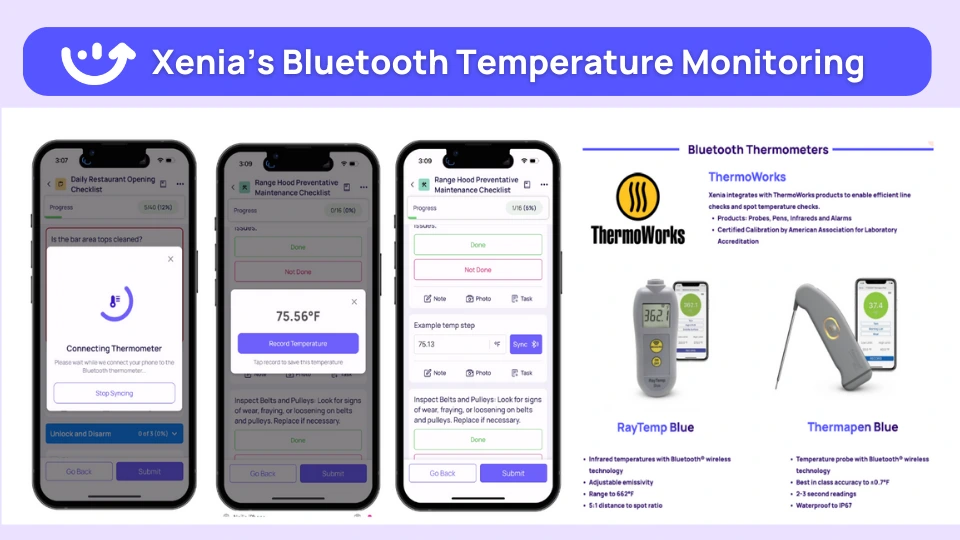
6. Food safety and temperature monitoring. Xenia supports temperature logging with handheld Bluetooth probe integration, with no hardware lock-in. Decoupled hardware means you are not tied to a single sensor vendor, and food safety, allergen controls, and staff certification tracking live alongside the rest of your operations data.
7. Mobile-first and offline. Xenia works in the walk-in freezer or during a blackout. Update checklists, receive alerts, and document issues offline, and everything syncs the moment you reconnect.
8. Location hierarchies. Role-based access and custom hierarchies support 50-plus locations. Managers see only their sites, mobile views adapt per user, and standards stay consistent as you add locations.
Xenia's Pricing
Xenia is priced per location with unlimited users, so every associate is in the app with no per-seat cost jump. Unlimited forms and checklists are included at every tier, so building out your playbook never triggers a pricing jump the way form-count tiers do. As your fleet grows, the cost per location goes down rather than up.
Verdict: Xenia vs Zenput
Xenia is the most complete Zenput replacement for multi-unit operators who want a unified execution platform without form limits or tool sprawl. If your only requirement is digitizing checklists, plenty of tools will do that. If you want audits, maintenance, communications, and reporting in one login, this is the one to shortlist first.
**
Capability, Xenia, Zenput
Checklists and daily ops, Yes, Yes
Audit workflows, Yes, Yes
Form and checklist limits, Unlimited, Tier-capped
Native maintenance and work orders, Yes, No
In-app team communications, Yes, No
Training and compliance tracking, Yes, Limited
AI-powered reporting, Yes, No
Live photo capture (anti-pencil-whipping), Required at submission, Gallery uploads
Auto-routing of corrective actions, Automated, Manual
Pricing model, Per location-unlimited users, Form-count tiers
**

Priced on per user or per location basis
Available on iOS, Android and Web


Other Zenput alternatives worth evaluating
2. FreshCheq
FreshCheq is a cloud-based task management tool built for restaurants of most sizes.
It focuses on daily operational logs, quality control, and food safety, with percent-complete tracking so managers can see at a glance which locations have finished their checklists. Teams use it to track food temperatures, waste, and consistency, and to build reports that surface patterns over time.
Key features
- Real-time alerts and push notifications when logs are not completed on time, so managers can follow up with staff the same day.
- Compliance tracking geared toward passing Ecosure, Steritech, and health inspections.
- Guided onboarding, where the FreshCheq team helps build your logs and train staff without disrupting daily operations.
Pricing
Starts at $0 per month, with a first location running $629 per year billed annually and each additional location at $400 per year. A free trial is available.
Verdict: A solid, no-frills choice for single-concept restaurant groups whose main need is daily logs and food safety. Lighter on audits, maintenance, and multi-location reporting than a full operations platform.
3. monday.com
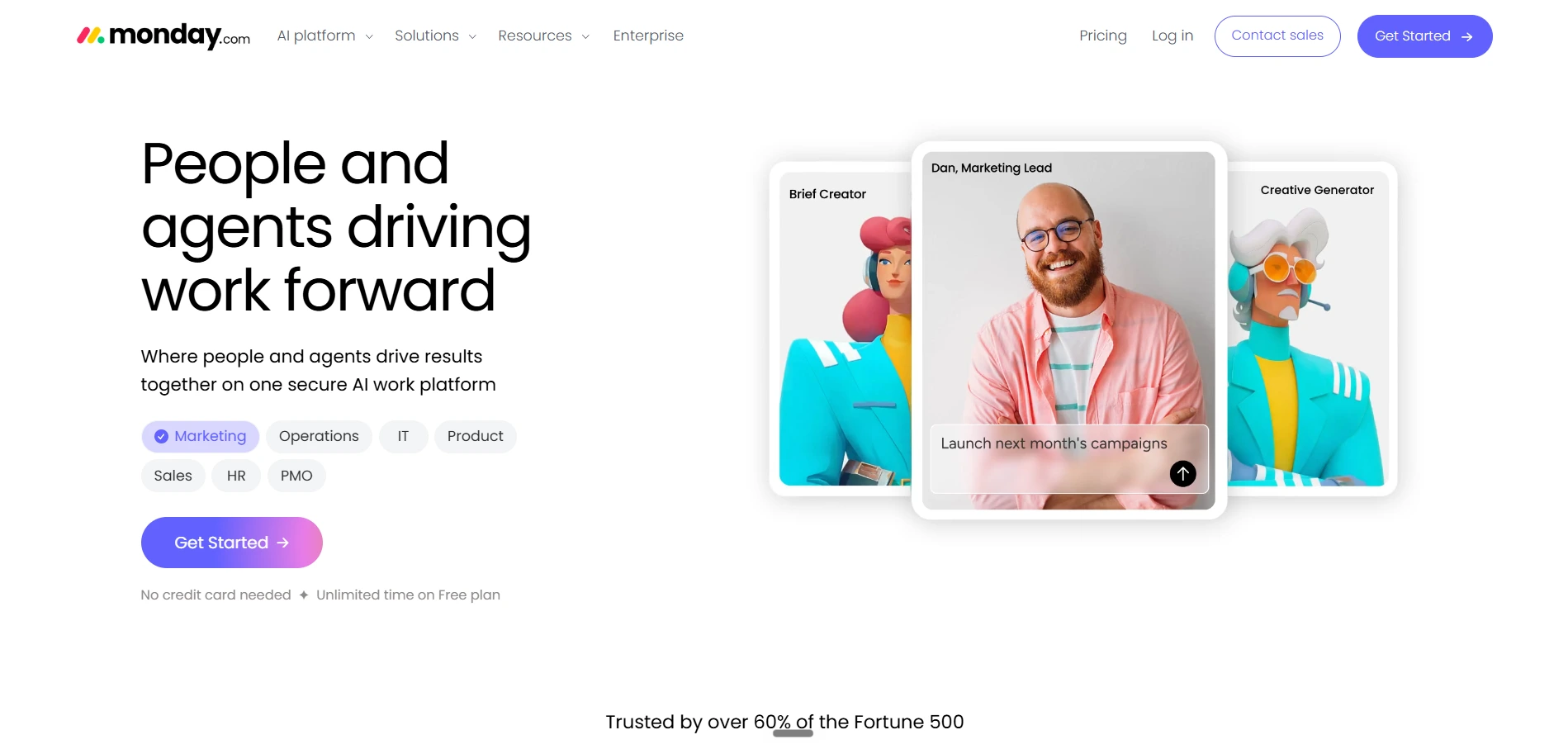
monday.com is a flexible work operating system used across many industries to manage workflows, tasks, and projects. It is not restaurant-specific, but its drag-and-drop boards and automation make it adaptable enough that some operators bend it into an operations tool.
It is strongest as a general project and workflow manager rather than a frontline execution app.
Key features
- Customizable boards and workflows you can shape to almost any process.
- Automations and integrations with tools like Slack, Microsoft Teams, and common CRMs.
- Visual project tracking with timelines, dashboards, and Gantt views.
Pricing
Free plan for up to two seats; Basic at $9 per seat per month; Standard at $12; Pro at $19, all billed annually. Enterprise pricing is custom.
Verdict: Good for office and project work, weaker for frontline operations. The per-seat model gets expensive fast across high-turnover, multi-location teams, and it has no native food safety, audit, or maintenance depth.
4. cFlow
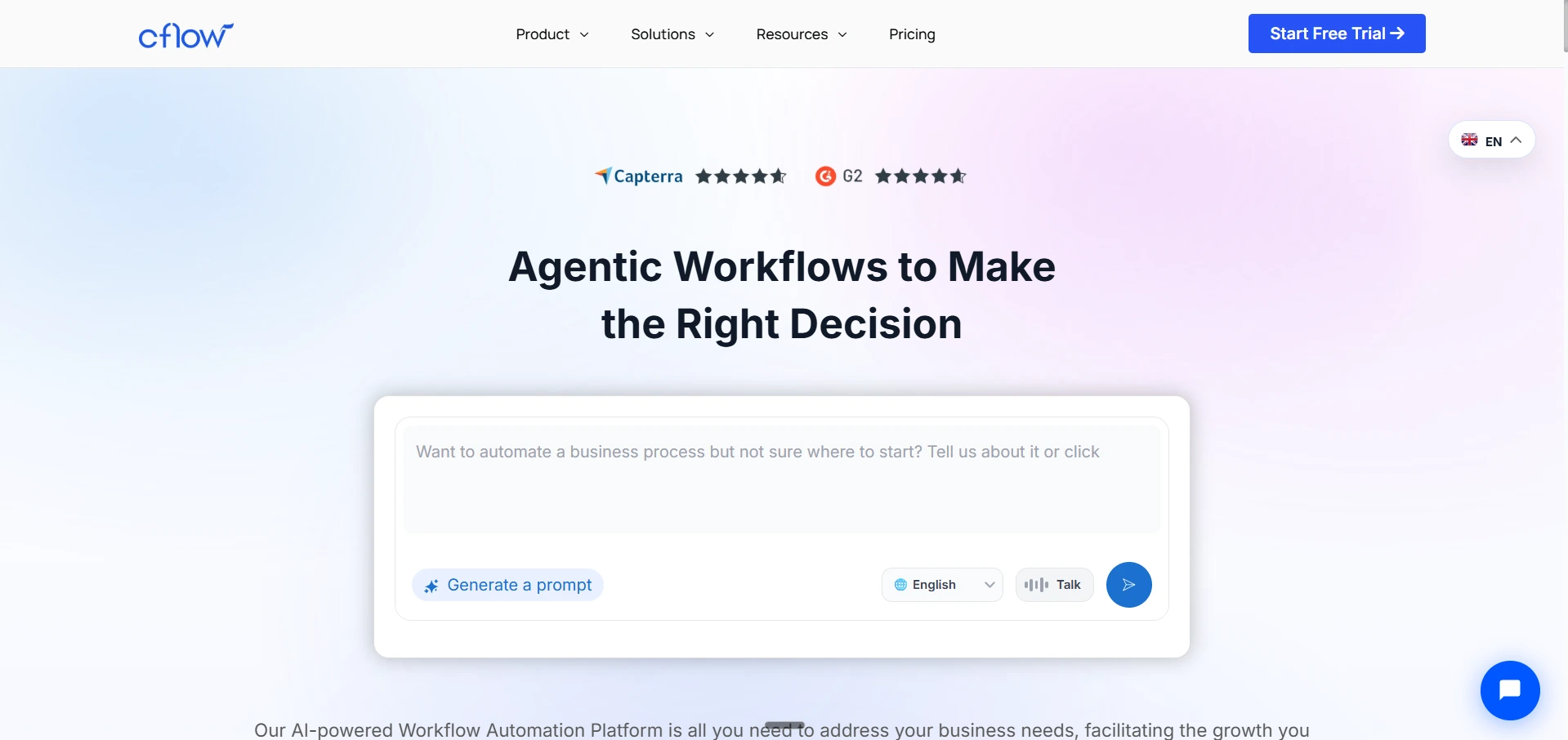
cFlow is a general-purpose workflow automation and forms platform for businesses of most sizes. It is not built for restaurants or retail specifically, but its form designer and rules engine let teams digitize approval and data-collection processes. It can be deployed in the cloud or on-premise, which appeals to organizations with specific infrastructure requirements.
Key features
- A quick, no-code workflow designer for building custom forms and processes.
- Cloud or on-premise deployment options.
- Lookup tables and auto-population to cut manual data entry and errors.
Pricing
Joy at $11 per user per month; Bliss at $16 per user per month; Zen at custom pricing.
Verdict: A capable business-process tool, but a poor fit for frontline multi-unit operations. No food safety, audit scoring, maintenance, or location-level operational reporting out of the box.
5. FORM OpX
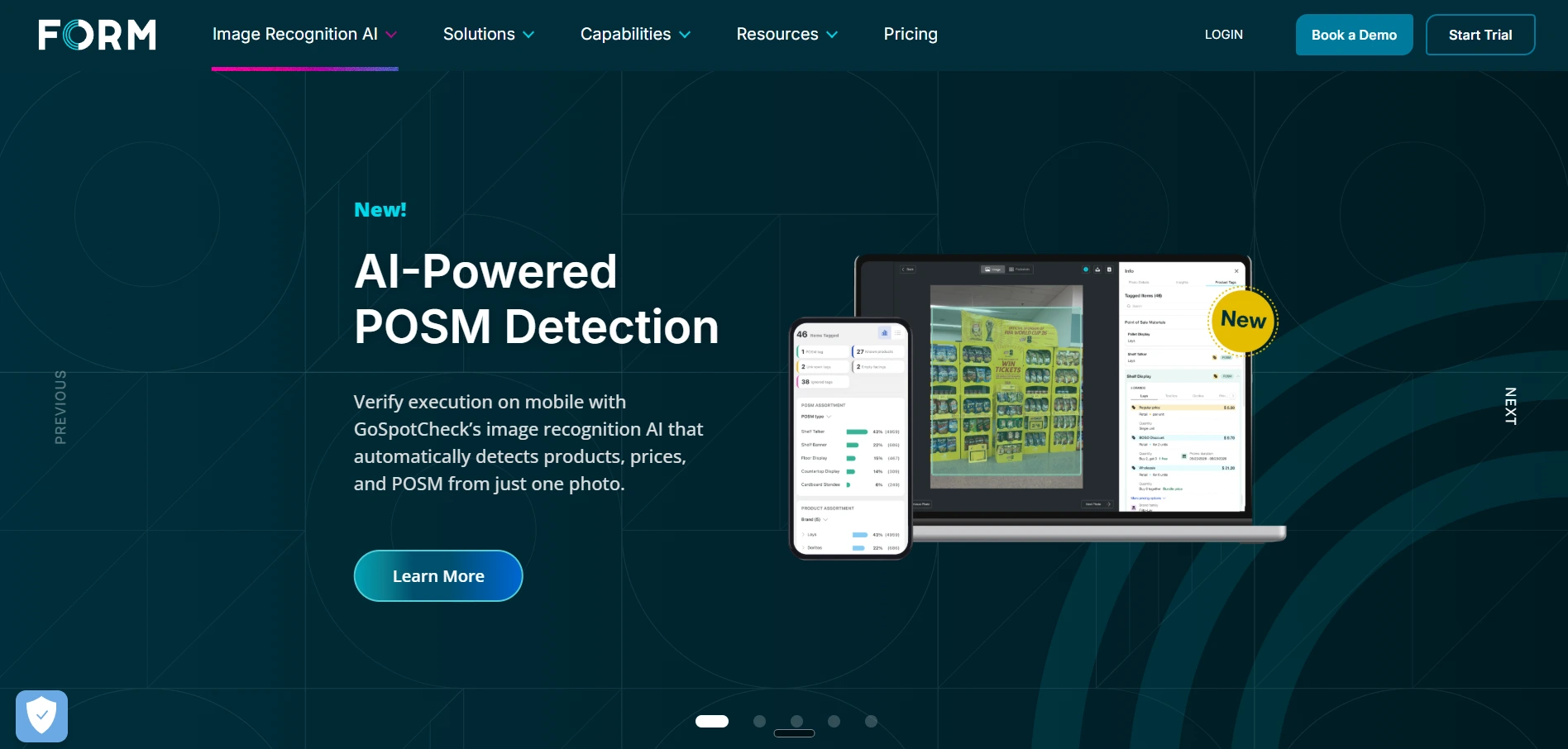
FORM OpX (from FORM, the parent of GoSpotCheck) is a field-execution and data-collection platform aimed at teams that run mobile inspections and audits across distributed sites. It leans on automation and business intelligence tooling to turn field data into reporting, and it is used across field service and retail execution more than restaurants specifically.
Key features
- Automated task and workflow triggers to route work and reduce manual coordination.
- Reporting and BI dashboards to pull insights from field data.
- Photo reporting for visual evidence of field conditions.
Pricing
Essential from $299 per month; Pro from $999 per month; Enterprise custom.
Verdict: Reasonable for audits and field data capture, but thinner on native maintenance and in-app communications. Operators outgrowing GoSpotCheck-style tools at 100-plus locations often cite gaps in conditional logic depth and facilities integration.
6. Integrify (Nutrient)
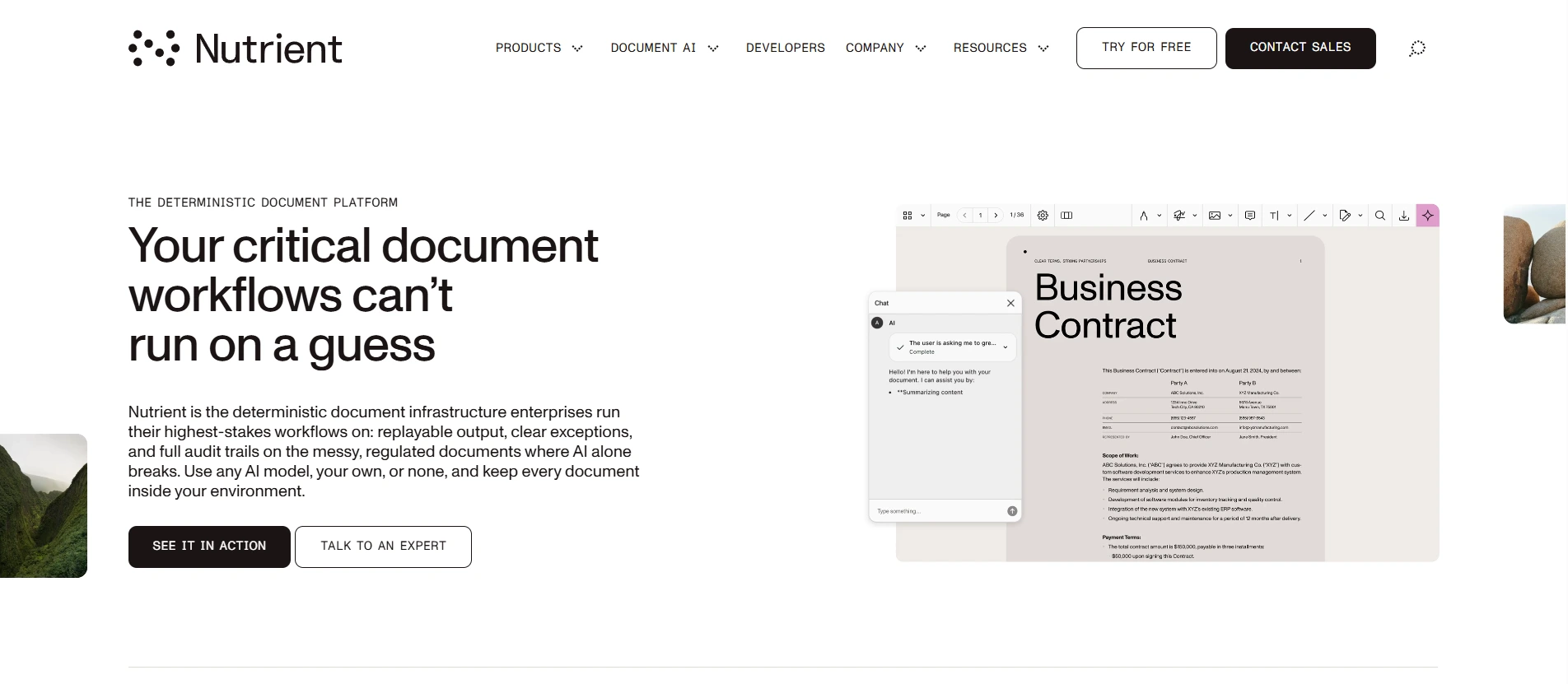
Integrify (Now Nutrient) is a low-code business process automation platform for building forms, approval workflows, and self-service portals. It is horizontal software used by HR, IT, finance, and operations teams to digitize internal processes, and it connects to enterprise systems like SAP, Oracle, and Salesforce through an open API.
Key features
- A form designer for dynamic, business-specific data collection.
- A graphical workflow editor for building and visualizing processes.
- Reporting and audit trails for process performance and compliance.
Pricing
Contact the vendor for pricing.
Verdict: Built for enterprise process automation, not frontline operations. There is no restaurant or retail operations layer, so it would take heavy configuration to approximate what a purpose-built platform does on day one.
7. Process Street
.webp)
Process Street is a workflow and checklist software used by teams to build recurring processes, standard operating procedures, and approval flows. It is horizontal rather than restaurant-specific, but its structured checklists and automations make it a common pick for teams that want repeatable processes without heavy setup.
Key features
- Templated, recurring checklists with conditional logic.
- Task assignments, due dates, and approval steps.
- Integrations and automation to connect checklists to other tools.
Pricing
Plans are available on request, with a free trial to evaluate the platform.
Verdict: Clean and easy for process documentation, but general-purpose. It lacks native food safety, maintenance, and multi-location operational reporting, so most multi-unit operators will still need additional tools alongside it.
Conclusion
Zenput built the category, and that matters. But the category has moved on. Multi-unit operators today need more than a checklist tool. They need audits, maintenance, communications, and reporting in one system, pricing that makes sense as they grow, and a vendor that is still actively building.
The best Zenput alternative for your team depends on your location count, your operations complexity, and how much of your current stack you want to consolidate.
If you only need daily logs or food safety, a narrower tool like FreshCheq or Squadle may be enough. If you want to replace a fragmented stack with one platform that scales, that answer for most multi-unit operators is Xenia.
One platform. Every location. No spreadsheets required. Book a demo to see how Xenia compares for your operation, your location count, and your use cases.
Why do multi-unit operations teams choose Xenia over Zenput?
Operators who move from Zenput to Xenia point to three things, and one of them is about the vendor rather than the product.
The consolidation factor. They are retiring tools, not adding one. Crunchtime Ops Execution handles checklists and audits. A CMMS handles maintenance. A comms tool handles announcements.
Xenia handles all three on one record, so the audit, the corrective task, the work order, and the announcement share a history instead of living in three exports. The savings show up as fewer contracts, fewer logins, and operations data in one place. G&M Oil replaced fragmented manual processes with Xenia across 220 stores, which is what that looks like at C-store scale. The longer argument sits in restaurant operations tool consolidation.
The pricing clarity. No form limits, no per-module fees, one flat rate per location, with custom volume pricing at Enterprise. Compare that against the other three units on this page: per seat at Mitti and GoAudits, module-based at Operandio, and quote-only at Crunchtime Ops Execution and Jolt. Nothing here is dishonest. But the model you can model is the one procurement clears fastest. Current tiers are on the pricing page.
The reporting layer. Knowing which locations are struggling, which SOPs get missed most often, and where corrective actions are stalling, without building a spreadsheet first, is what separates a multi-unit operations execution platform from a checklist tool. The sourced complaint about Zenput reporting is limited customization and formatting. The practical version at 50 locations is simpler: the ops director wants the issues view, not the completion view.
On vendor durability, be specific rather than snide. Xenia is independent and announced a $12M Series A led by PSG on November 18, 2025. That is the fact worth weighing against a three to five year contract with a platform inside a portfolio, and it is the whole claim. Every other vendor on this page is actively shipping too.
See how Xenia compares to Zenput, now Crunchtime Ops Execution, for your operation, your location count, and your use cases. Book a 20-minute call with the team. No sales deck. Just your operation, your questions, and a live demo. Book a demo.
Frequently Asked Questions
Got a question? Find our FAQs here. If your question hasn't been answered here, contact us.
How does Xenia's pricing compare to Zenput?

Does Xenia replace Zenput completely?
Why are operators switching from Zenput in 2026?
What is the best Zenput alternative for restaurant operations in 2026?


A Modern, AI-Powered Platform Built Specifically for Frontline Operations
Xenia brings daily operations, maintenance, audits, and compliance into one mobile-first platform. Frontline teams execute work consistently across locations while leadership gets real-time visibility.
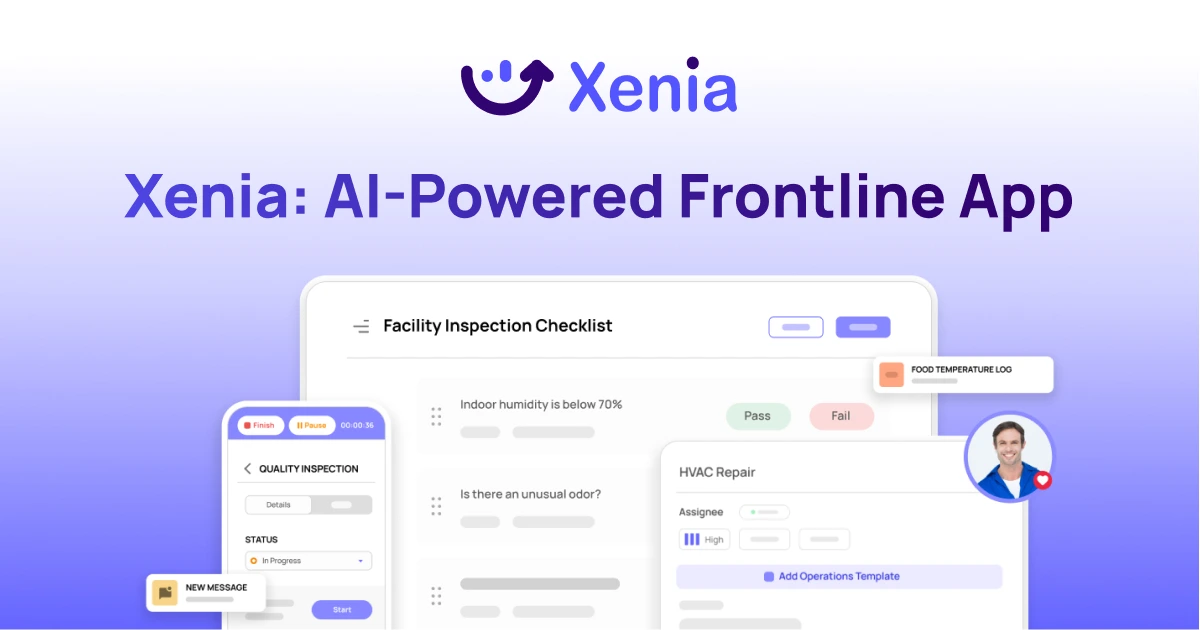
Why Multi-Location Operators Choose Xenia:
🤖 AI-Powered Operations, Create digital checklists instantly or convert paper forms with AI. Verify compliance automatically with photo analysis and get instant answers from your operational data.
✅ Daily Operations & Maintenance, Assign work across hundreds of locations in minutes. Report and route issues instantly. Schedule preventive maintenance to catch problems before downtime.
📊 Real-Time Visibility, Track completion, work orders, and performance across all locations through dashboards. Filter by site or asset to spot trends and take action.
Manage operations, maintenance, and compliance across all your locations from one platform

.svg)
.webp)
%201%20(1).webp)

.svg)
%201%20(2).webp)