
.webp)
Post Summary
Your stores are losing people. You already know the number is high. What you might not know is that pay is rarely the main reason they leave.
Most frontline retail workers who quit were already checked out long before they handed in their notice. They stopped caring weeks or months earlier. The paycheck just delayed the decision.
That is the part worth sitting with. Retail employee engagement is not a morale problem you fix with a team lunch. It is an operations problem. Associates disengage when their work is unclear, when communication never reaches them, when no one notices what they do well, when accountability is applied to some people and not others.
Every one of those is fixable. But they need operational fixes, not HR ones.
This guide covers what actually drives retail staff engagement across distributed store teams, what kills it silently over time, and which strategies work at scale across five stores or five hundred.
.webp)
.svg)

Priced on per user or per location basis
Available on iOS, Android and Web


Related resources
- Why your retail staff keeps quitting (and what to do about it
- How to coach retail employees without micromanaging
- What deskless workers actually need from their employers
- The real reason retail training does not stick across locations
- How to run store operations that do not burn your team out
Why retail staff engagement is harder than people think
Most engagement frameworks are built for office workers. They do not translate to the retail floor.
Here is why.
Your team is scattered. Different buildings, different shift times, different managers with completely different styles. A policy update that exists at the district level may never reach the associate closing the suburban location on Saturday night. Some stores get the new procedure. Others never hear about it.
Your workers are deskless. They are not checking email between customers. They get information during a rushed shift handover, or from a break room notice printed two weeks ago and buried under a food safety poster. If that is your communication system, most of your team is operating on outdated information.
Turnover feeds itself. When you are constantly onboarding new people, managers have less time for the team already in place. Existing associates feel the neglect. They disengage. More leave. The cycle repeats until someone addresses the root cause.
Shift work breaks team identity. An associate might work three different shift compositions in a week without seeing the same coworker twice. You cannot build a culture of engagement in that environment without deliberate systems behind it. Goodwill alone does not get you there.
What actually drives frontline employee engagement in retail
The research and the operator experience say the same things. These are the drivers that move the needle.
**
Driver, When it is working, When it has broken down
Role clarity, Associates know what to do every shift without asking, Managers answer the same basic questions every day
Communication, Updates reach staff before they matter, Staff find out about changes from customers
Recognition, Specific good work gets acknowledged by name, Nobody notices when a shift runs well
Tools and resources, Information is available when someone needs it, Associates guess or skip steps they cannot find
Consistent accountability, Every associate is held to the same standard, Some people do noticeably less with no consequence
Growth, There is a visible next step, Associates feel like they are just filling a position
**
Most retail operations have two or three of these working well and two or three completely broken. The ones that damage engagement fastest are inconsistent accountability and poor communication. Both breed resentment. One punishes your best performers. The other makes your whole team feel invisible.
6 retail employee engagement strategies that work across locations
1. Stop letting information die in the middle of your org chart
Here is how most retail communication works.
Corporate tells regional managers. Regional managers tell district managers. District managers tell store managers. Store managers may or may not pass it on before it matters.
By the time a new policy reaches the floor associate who needs to execute it, it is late, incomplete, or wrong.
The fix is simple. Push information directly to frontline staff on their phones, with confirmation it arrived. When you use announcement tools with mandatory read receipts, you know exactly who has seen the update and who has not. No more guessing whether location seven knows about the new return policy before Saturday.
This is not about more messages. It is about fewer, better ones that actually land.
Read more: Strategies for effective frontline employee communication and Streamline communication between HQ and retail branches.
2. Give people task clarity before every shift, not during it
When an associate arrives and has to figure out what they are supposed to do today, that uncertainty follows them through the whole shift. When two managers give different instructions about the same task, the associate loses confidence in both.
Role-based task assignment with digital checklists fixes this. Every person opens their shift with a clear list of what belongs to them. Priorities set. Time windows defined. They work through it independently without waiting to be directed.
That independence matters. There is a real difference between micromanagement and clarity.
- Micromanagement is a manager hovering over someone's shoulder
- Clarity is a well-structured checklist that lets someone execute on their own
When task completion is tracked digitally, accountability also stops being a disciplinary tool and becomes part of the daily rhythm. People complete tasks because that is how the system works.
More on this: Retail task management and Task management efficiency in multi-unit retail operations.
3. Make recognition specific, not generic
"Good job this week" does not register. Your associate hears it, nods, and forgets it by the time they reach the parking lot.
What actually lands looks like this:
- "Your compliance score this month was second highest across the district."
- "You flagged that planogram issue before the regional manager showed up."
Specific recognition tells someone you noticed their individual contribution. Generic recognition tells them nothing.
The problem is that most retail recognition is informal and inconsistent. It depends on whether a busy manager remembered to say something to the right person on the right day. At scale across multiple locations, that is essentially random.
What works instead:
- Task completion data that surfaces top performers automatically, removing the memory dependency
- District-level visibility so regional managers can recognize store associates directly, not only through the local manager
- Performance check-ins tied to real operational data, not a manager's memory of the last few weeks
4. Onboarding is where engagement either starts or breaks
Most retail turnover happens in the first 90 days.
The associate who gets thrown onto the floor after a two-hour walkthrough never fully settles. They spend their shifts slightly uncertain, slightly behind, and slightly more open to leaving when a better option shows up.
Good retail onboarding is not a one-day orientation. It is a structured multi-week process that covers procedures, product knowledge, safety, and team norms. And it needs to run the same way at every location. If your flagship has excellent onboarding and your newest store improvises, you will see the retention gap within three months.
Digital onboarding checklists on mobile solve the consistency problem without adding manager workload.
- New associates work through structured tasks during their first days and weeks
- Managers see real-time progress for each person without manually checking in
- Nothing gets skipped because it was a busy weekend
Related: Frontline employee training and the Retail employee training checklist.
5. Use data to make accountability fair across every location
High performers leave when low performers face no consequences. That pattern holds in retail as much as anywhere.
The issue is that accountability in multi-location retail depends too much on individual managers. Some hold the standard consistently. Others let things slide. The same behavior gets treated differently depending on which store and which manager, and your best people notice.
When compliance scores, task completion rates, and audit results are visible across the organization, selective enforcement becomes impossible. Everyone is measured against the same standard.
It also changes the performance conversation entirely.
**
Before data, After data
"I feel like you have not been contributing enough.", "Your task completion this week was 61% against a team average of 88%."
Subjective-easy to dispute, Factual-fair and clear
Creates defensiveness, Creates a real conversation
**
See how audit data supports accountability: Retail audit guide and Conduct effective retail store audits.
6. Show associates how their work connects to something bigger
Most retail associates know their corner of the store. They do not know how their section's compliance score affects the district audit. They do not know whether their location ranks in the top or bottom half of the region. They have almost no visibility into why any of it matters beyond their shift.
That gap has a real cost. People invest more when they understand why their work matters.
You do not need an elaborate program to close it. A few things that actually work:
- Share audit results with the floor team after a visit and explain what the numbers mean
- Post weekly task completion comparisons so people can see where they stand
- Have a district manager speak directly to store associates at least once a quarter, not only to the store manager
When people can see the output of their effort, they put more into the input.
Operations execution and retail employee engagement are the same problem
This point gets missed in almost every engagement conversation.
The way a store runs day to day is directly connected to how engaged the people in that store are. When processes are unclear, when associates cannot find a procedure document, when tasks are communicated verbally and forgotten an hour later, when managers spend their entire shift firefighting instead of coaching, engagement drops. The friction itself wears people down. It makes the job feel harder than it has to be.
That is why retail operations execution and employee engagement belong in the same conversation. Fixing how work is structured, communicated, and tracked does more for frontline workforce engagement than most HR initiatives.
A multi-location operations execution approach gives every team member the same quality of information, the same task clarity, and the same accountability structure regardless of which store they work in. That consistency is itself a form of engagement infrastructure. And it is the part that actually scales.
How to measure retail employee engagement in real time
Annual surveys are too slow for retail. By the time results come back, most of the team that filled them out has turned over. You need engagement signals that update continuously, not once a year.
The good news is that most of those signals already live in your operational data.
**
Metric, Why it matters for engagement, How to capture it
Task completion rate per associate, Disengaged people stop completing tasks before they stop showing up, Digital task management with individual-level tracking
Compliance audit scores by location, Low scores often reflect undertrained or disengaged staff, Scored operational audits with location benchmarking
Shift attendance patterns, Frequent no-shows appear weeks before formal resignation, Attendance tracking linked to scheduling data
Onboarding completion rate, New hires who skip onboarding steps leave faster, Structured digital onboarding with manager dashboards
Announcement read rates, If your team ignores communications-engagement is already low, Mandatory acknowledgment tracking on all announcements
Time from issue identified to corrective action closed, Long gaps signal that people do not own their follow-through, Corrective action workflow tracking with timestamps
**
None of these require asking anyone how they feel. They come from how your operations already run day to day.
Engagement mistakes that cost operators their best people
Most of these mistakes happen quietly. You do not see the damage until turnover spikes and your best people are already gone.
Here are the ones that come up again and again.
Putting all the weight on individual store managers
A great manager lifts engagement at their location. A distracted or inconsistent one tanks it. When engagement depends entirely on personality, it will always be uneven across your stores. That is not a people problem. It is a systems problem.
Treating every location the same
A 40-person flagship and an 8-person suburban store do not have the same dynamics. A one-size-fits-all engagement program misses both. Use location-specific configurations and conditional task structures to give each team what they actually need.
Launching programs you cannot sustain
If you announce a recognition initiative with fanfare and let it quietly die two months later, you have confirmed something to your team: company initiatives do not stick. That cynicism is harder to undo than the original disengagement. Build the operational backbone before you make the announcement.
Routing all communication through store managers
This assumes managers always have the time, context, and energy to relay information accurately. That assumption fails constantly. Build systems where communication reaches frontline staff directly, with confirmation that it arrived.
Related: How to prevent employee burnout and Retail employee engagement strategies.
What an engaged retail team actually looks like day to day
It is worth being concrete about the outcome you are working toward. The signals of high retail workforce engagement are visible on the floor, not just in survey data.
An engaged associate flags a stockroom issue before it becomes a compliance problem. They do not wait to be asked.
They know the product. When a customer asks a question, they give an accurate answer. They have used the training available and retained what matters.
Shift handovers are clean. The incoming team knows what happened, what is pending, and what needs attention. Nothing gets dropped because it was not written down.
The team holds each other to a standard. High-performing, engaged groups self-manage to a real degree. They do not quietly carry people who are not contributing. They say something.
None of that happens by accident. It is the direct result of clear systems, reliable communication, and operational structure that makes doing the job well the path of least resistance.
How Xenia supports retail employee engagement across every store you run
Retail engagement failures are almost always operational failures underneath.
Associates disengage because tasks are ambiguous, communication never reaches the floor, accountability varies by manager, and nobody can find the SOP when they need it. These are operational gaps. They have operational solutions.
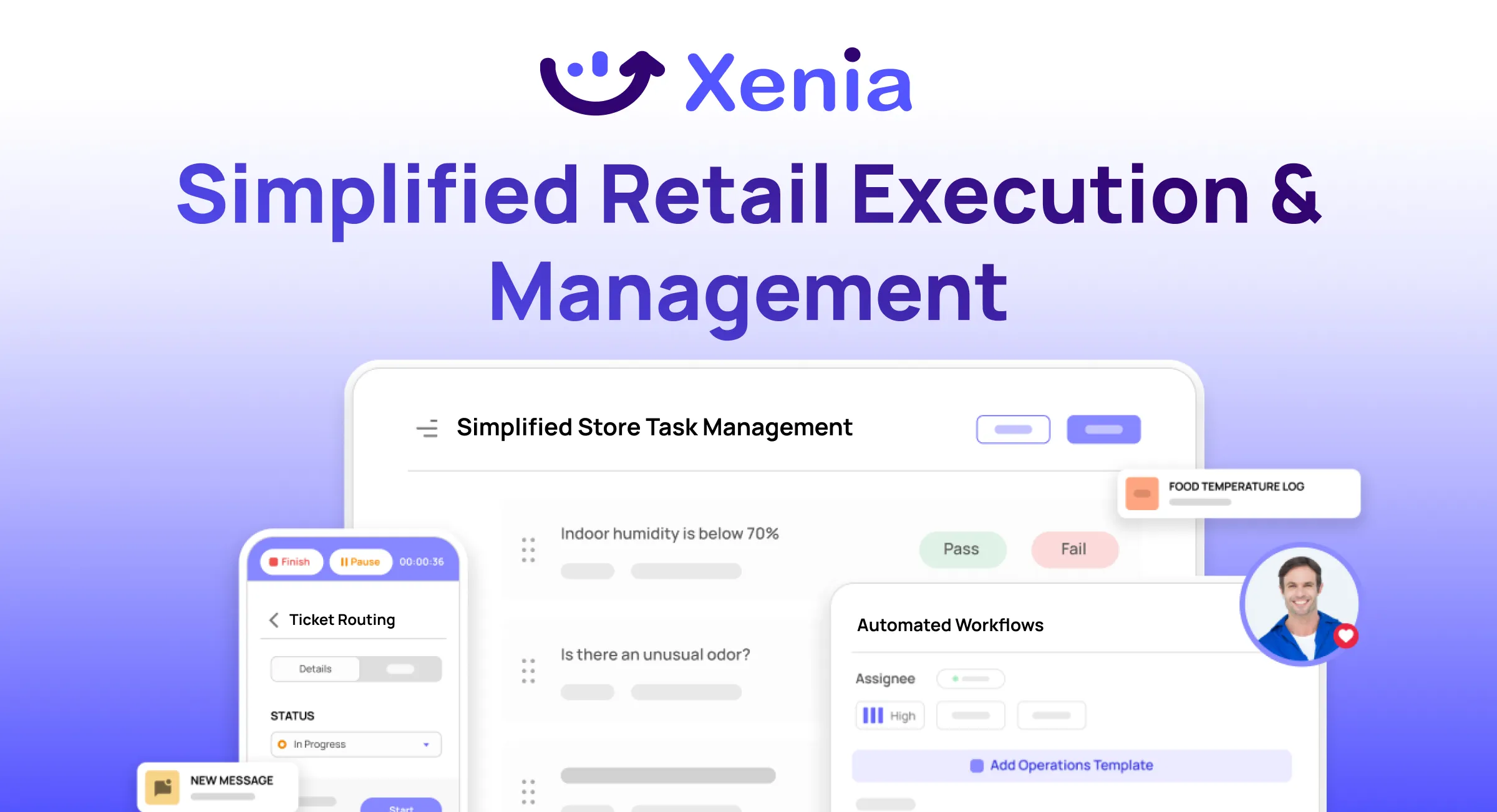
Xenia is a frontline operations execution system built for multi-unit retail operators. Here is what it does for store associate engagement:
- Every associate starts each shift with a role-based task list pushed to their phone
- Announcements reach frontline staff directly with mandatory read receipts
- Onboarding follows the same structured process at every location
- Audit scores and task completion data are visible across the whole organization
- Corrective action workflows automatically assign follow-up when issues are flagged
- The AI Template Agent builds SOPs and checklists from scratch or converts existing documents into mobile-ready formats
This is not a culture program. It is the operational infrastructure that makes consistent culture possible at scale.
Conclusion
Retail employee engagement shows up in audit scores, task completion rates, and turnover costs. The gaps are almost never cultural mysteries. They are operational failures with operational solutions.
Xenia gives multi-unit retail operators the infrastructure to fix them. Task clarity, direct frontline communication, consistent onboarding, and real-time accountability data across every location you run.
Book a demo and see what changes when your operations actually support your people.
Frequently Asked Questions
Got a question? Find our FAQs here. If your question hasn't been answered here, contact us.
What is the first thing to fix if engagement is already low at a specific location?

Start with communication. In most cases, updates are stopping somewhere in the management chain before they reach the floor. Fix the information gap first. Everything else is harder to address when the team feels uninformed.
How often should district managers check in with store-level associates directly?
At least once a quarter. Associates who never interact with anyone above their store manager feel disconnected fast. Even a brief direct touchpoint from regional leadership makes a real difference to how invested floor staff feel.
What does high retail employee engagement look like in practice?
Engaged associates flag problems early, answer customer questions accurately, hand off shifts cleanly, and hold each other to standard. That is not personality. It is what good operational systems produce over time.
Does pay matter less than recognition for retail employee retention?
Pay matters but it is not enough on its own. Role clarity, recognition, and belonging drive retention independently of compensation. Specific, timely recognition tied to real operational results keeps people longer than a pay bump alone.


A Modern, AI-Powered Platform Built for Retail Operations
Xenia brings store operations, merchandising, audits, and loss prevention into one mobile-first platform. Store teams execute daily work consistently, maintain brand standards, and resolve issues faster, while regional and corporate leadership get real-time visibility across all locations.
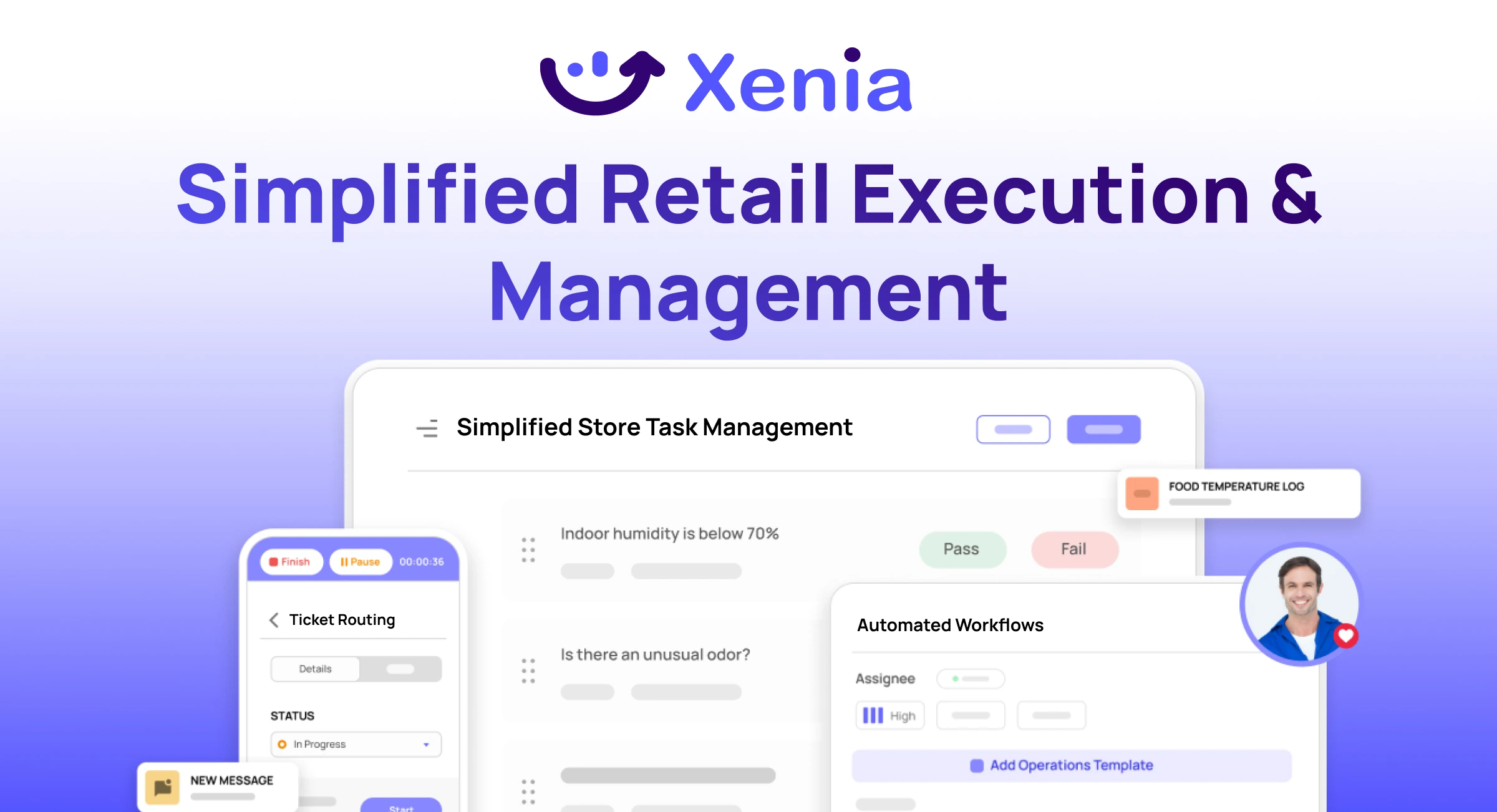
Why Retail Operators Choose Xenia:
🤖 AI-Powered Merchandising, Verify planograms, displays, and brand standards automatically with AI photo analysis. Build digital checklists instantly or convert existing merchandising guides.
🏬 Operations & Loss Prevention, Assign opening procedures, store walks, and resets across locations. Track theft, cash discrepancies, and security incidents with evidence and approval workflows.
📊 Real-Time Visibility, Compare audit scores and task completion across stores. Identify top and underperforming locations. Export reports for leadership reviews.
One platform for operations, merchandising compliance, and loss prevention across all locations.

.svg)
.webp)
%201%20(1).webp)

.svg)
%201%20(2).webp)