

Post Summary
A QSR chain rolls out a new compliance platform to all 120 locations at once. Three months later, 60% of locations are using it correctly. The other 40% are back on spreadsheets. They found the workaround within two weeks.
The GMs who did that were veterans. They'd seen bad rollouts before. They knew exactly how to wait one out.
This is the pattern. All-at-once rollouts treat adoption as a logistics problem. Get the software deployed. Send the training video. Mark it done. But adoption isn't a logistics problem. It's a behavioral problem. You're not installing software. You're trying to change how 200 people work every single day. Those are completely different challenges.
This article gives you a practical change management plan built specifically for multi-unit ops. It covers which locations to pilot first, how to turn your most skeptical veteran GMs into your loudest advocates, and how to set a clear decision gate before you commit your entire chain. It's the process that separates a launch from an actual adoption.
.svg)

Priced on per user or per location basis
Available on iOS, Android and Web


Why all-at-once rollouts fail in multi-unit ops
The adoption curve in frontline operations is not uniform. Here's how it actually breaks down.
**
Staff profile, Adoption speed, Impact on rollout
Younger GMs-lower tenure, Fast, Adopt quickly-minimal friction
Mid-tenure GMs, Moderate, Follow the lead of veterans
Veterans-5+ years, Slow to never, Resistance spreads to everyone around them
**
Veterans are often the most respected people in your field. When they push back, mid-tenure GMs watch and follow. All-at-once rollouts hit this problem at every location simultaneously.
You're managing resistance at 120 locations with zero proof-of-value data, because the pilot hasn't happened yet. The most valuable people in your operation become your biggest obstacle, and you have nothing to show them.
The controlled pilot solves this before resistance gets the chance to spread. You generate proof at a small set of locations first. You collect the data. You convert a veteran at each pilot location into an advocate. By the time you hit the resistant majority in the full rollout, you have real numbers and a real peer saying "this actually works."
That is a completely different conversation.
Why veteran staff resistance is different
Veterans are not resisting technology. They're resisting disruption to workflows they've spent years perfecting. That distinction matters more than most ops leaders realize.
If you assume they're tech-averse, you respond with better training materials. If you understand they're protecting workflows that actually work, you respond with something much more useful: a specific, personal reason the new tool makes their job easier.
Their objection is rational. When they ask "how is this different from the last platform we were asked to adopt?", a generic answer about organizational efficiency is not going to move them.
Here's what does and doesn't work.
**
Approach, What actually happens
Top-down mandate, Compliance theater. GMs log in-check the box-keep working the old way
Generic training sessions, Forgotten within two weeks
Converting one veteran into a champion, Peer credibility that spreads organically to resistant colleagues
Giving veterans a personal benefit, Motivated advocates who have skin in the game
**
A veteran GM who tells peers "this saved me three hours every Sunday" is ten times more persuasive than any email from the VP of Operations.
The controlled pilot framework
Three phases. Each one has a clear input and a clear output. Don't compress them and don't skip ahead.
**
Phase, What happens, Output
Phase 1, Pilot design and location selection, 3 to 5 confirmed pilot locations with baselines
Phase 2, Pilot execution and data collection, 8 to 12 weeks of before-and-after data
Phase 3, Decision gate and expansion planning, Green light-extend or pause decision
**
Phase 1: How to select your pilot locations
This is the decision that most operators get wrong. The instinct is to pilot at your best locations because you want the pilot to succeed. That instinct produces data that tells you nothing about how the tool will perform at your median location. And your median location is where the real rollout happens.
Three criteria matter here.
Criterion 1: Representative mix.
Your pilot portfolio should reflect your actual chain. Include at least one above-average location, one average location, and one struggling location. If the tool works across that range, you have data that's actually predictive. If it only works at the top locations, you've learned something important before committing to 120 locations.
Criterion 2: A genuinely willing GM.
The GM has to want to try this, not be told to try it. A resistant GM in a pilot location will sandbox your results. They'll find every friction point, document every failure, and share that story with peers before you've had a chance to fix anything. Ask for volunteers. Look for GMs who have already complained about the exact problem the new tool solves. They have a personal stake.
Criterion 3: A measurable baseline.
You cannot prove value at the decision gate without baseline data. And without proof of value, you cannot convert resistant veterans during expansion. The baseline is the foundation of your entire business case. Select locations where you can capture clean pre-rollout numbers on the metrics that matter.
**
Chain size, Recommended pilot locations
Under 100 units, 3 to 5 locations
Over 100 units, 8 to 12 locations
**
Below 3 locations, you don't have enough data to draw conclusions. Above 12 locations, you've lost the control that makes a pilot useful.
Phase 2: What to instrument before launch
Run a 30-day baseline period before the pilot starts. No one touches the new platform during this window. You're just capturing current-state numbers at every pilot location.
These are the four metrics you need.
**
Metric, Why it matters for your business case
Average audit and compliance score, Your primary compliance outcome measure
Task completion rate and cycle time, Shows operational throughput change
Time from issue flagged to corrective action, Measures how fast the accountability loop closes
GM time spent on admin and reporting, The personal time-back story that converts veterans
**
The last one is the most powerful for veteran conversion. Not because it's the most important to the company, but because it's the most important to the GM personally. A veteran who gets three hours back every week from manual reporting doesn't need to be convinced by your business case. They experienced the benefit directly.
Set weekly check-ins with pilot GMs during the first four weeks. The purpose of these calls is not troubleshooting. It's friction collection. Every point where the tool creates more work than it saves needs to be surfaced before it becomes a permanent workaround. If early friction calcifies, you've already lost those users.
Tools like checklists and SOPs and frontline communication platforms are the most common rollout subjects in multi-unit ops. They're also the workflows where baseline measurement is most straightforward. Completion rates, cycle times, and communication acknowledgment rates are all easy to capture before and after.
Also identify your veteran champion target at each pilot location during this phase. This is the GM or senior team member whose endorsement carries the most weight with peer skeptics. They don't have to be enthusiastic yet. They just need to be respected.
Phase 3: The decision gate
Run the pilot for 8 to 12 weeks before making the expansion decision. Less than 8 weeks and you're measuring novelty adoption, which fades fast. More than 12 weeks, and organizational momentum stalls.
Three criteria determine whether you move forward.
**
Criterion, What "green light" looks like
Adoption depth, 80% or more of intended daily use cases in active use at pilot locations
Measurable improvement, At least one baseline metric has improved compared to the pre-pilot period
Veteran champion ready, At least one veteran GM willing to present their experience at a regional meeting
**
If all three are met, move to champion expansion. If one is missing, extend the pilot by four weeks and address the specific gap. If two or more are missing, pause and diagnose before expanding.
Here's the most important political move you can make before any of this starts. Present these three criteria to leadership before the pilot begins. "We will expand when X, Y, and Z are true" is much harder for anyone to override than "we need more time."
It converts the expansion decision from a judgment call into an objective checkpoint. For managing the broader organizational dynamics and deployment risk that come with multi-location technology projects, the retail risk management guide covers the framework that applies here.
Building your champion network
The champion network is the difference between a launch and a real adoption. Champions are not trainers. They are peer advocates. The distinction matters because what changes a veteran GM's behavior is not knowledge of how to use a tool. It's belief that the tool is worth using. Only a peer can deliver that.
How to identify champion candidates.
Look for GMs who check three boxes: respected by peers, vocal about operational pain points, and willing to try new approaches. They don't need to be early adopters. A converted skeptic is a more powerful champion than an enthusiastic early adopter because the resistant majority trusts the skeptic's judgment more.
How to convert a veteran into a champion.
Give them a problem the tool solves for them personally. Not for the company. Not for the brand. For them specifically. The GM who reclaims three hours every Sunday. The GM who used to rebuild a compliance spreadsheet every Monday morning and now pulls a dashboard in 30 seconds. Personal value converts where company value doesn't.
What the champion actually does in the full rollout.
They don't run IT-led training sessions. They facilitate peer conversations. They share their before-and-after story at regional meetings in their own words, not a script. They're available by phone for resistant peers during the first two weeks of expansion. Give them the story and get out of the way. A scripted champion sounds like a corporate endorsement. An unscripted one sounds like a real person.
Champion-led peer training connects directly to your broader frontline employee training infrastructure. Champions don't replace structured onboarding. They make the case for why the onboarding is worth taking seriously.
The 90-day rollout timeline
Here is the full timeline from pilot launch to champion expansion.
**
Week, Activity, Key output
Weeks 1 to 2, Pilot launch. Daily check-ins with pilot GMs., First written friction report by end of Week 2
Weeks 3 to 6, Data collection. Weekly metrics review. Champion candidate identification., Friction points addressed. Baseline comparison data building.
Weeks 7 to 8, Champion enablement. Before-and-after story prep. Regional presentation planning., Champions briefed. Presentation ready.
Week 9, Decision gate. Assess against three criteria., Expand-extend or pause decision made.
Weeks 10 to 12, Champion expansion. Roll to 20 to 30% of remaining locations. Hard legacy sunset date set., Peer training underway. No escape valve to old tools.
**
Nothing in weeks 1 and 2 should wait until week 3. Every friction point that surfaces in the first two weeks needs to be addressed immediately. If it waits, it becomes a workaround. Workarounds become permanent.
Multi-unit operations dashboards make the weeks 3 to 6 data collection phase manageable without weekly manual status reports. You can see adoption rates, task completion, and compliance scores by location in a single view rather than chasing updates from pilot GMs by email.
Common rollout failure modes
Every one of these is preventable. Every one of them is common.
Skipping the pilot.
"We're already behind schedule. We need to move fast." This produces the exact outcome you were trying to avoid: a slow, contested full rollout. You don't save time by skipping the pilot. You trade 8 weeks of controlled learning for 6 months of uncontrolled resistance at every location simultaneously.
Picking the wrong pilot locations.
Rolling out at your top three locations generates success data that isn't predictive of your median location. Include at least one average-performing location. If you don't, the expansion phase results will surprise you and leadership will have questions you can't answer.
Treating champions as trainers.
Hand a champion a training deck and a schedule, and you've turned them into another corporate voice. Their job is to tell their story, not deliver a curriculum. Over-structuring the champion role neutralizes the only thing that makes it work: authenticity.
No hard sunset date.
If the old tool keeps running after the new one launches, veterans will use it. Every day the old tool stays available is a day someone uses it as a reason not to change. Set the sunset date during the champion expansion phase and commit to it publicly. The frontline operations platform rollout and adoption guide covers the sunset mechanics including how to handle the edge cases that always surface at shutdown.
Over-communicating from the top.
Three VP emails about the new platform's benefits will not move a 12-year veteran GM. One five-minute phone call from a peer who says "I went in skeptical and I was wrong" will. Match your communication channels to how your field actually receives and processes information.
Managing rollout risk
Every technology deployment carries operational risk. Not the risk of the technology failing. The risk of the adoption process creating confusion while your locations need to keep running.
Three practices reduce that risk.
Never launch a pilot at a location during a peak operational period. A new menu rollout, seasonal rush, or major promotion creates too much competing noise. The platform needs attention it won't get during the highest-pressure two weeks of the quarter.
Establish a clear escalation path for pilot GMs when they hit a problem. If the only option is an IT ticket with a 72-hour SLA, you've already lost them. A direct line to someone who resolves issues within 24 hours is the difference between a friction point that gets fixed and a workaround that becomes the new norm.
Treat rollout risk as part of your overall operational risk picture, not a standalone technology project. The risks of a failed adoption are operational risks with real dollar consequences. Continued spreadsheet dependency, fragmented compliance data, and employee accountability gaps don't disappear just because you bought new software. They compound while the platform sits underused.
For operators thinking about how the rollout connects to a broader operations execution system, the adoption phase is where the execution layer actually gets built. A platform that isn't adopted doesn't produce data. A platform without data doesn't drive the multi-unit operations execution outcomes you invested in.
How Xenia helps
Xenia is built for this rollout model from the ground up.
Checklists and SOPs are configurable without months of IT setup, so pilot locations are running on day one without a professional services engagement.
Frontline communication gives your champion network a dedicated channel to share updates, surface friction, and keep the pilot cohort aligned without email chains that disappear into inboxes.
Multi-unit operations provides the location-level dashboards that generate your pilot proof data automatically, including completion rates, audit scores, and cycle times before and after, without manual exports or report building.
And employee accountability gives your regional managers visibility into adoption rates by location so you catch friction early rather than discovering it at the decision gate.
The pilot generates the data. The data builds the case. The case converts the champions. The champions close the rollout.
See how it works with a demo.
.webp)
Conclusion
The difference between a rollout that drives lasting adoption and one that generates workarounds within two weeks is not the technology. It's the process.
A controlled pilot with a clear decision gate and a champion network turns the toughest critics in your field into the loudest advocates. It gives your leadership team the proof they need, your expansion plan the data it requires, and your resistant veterans the peer credibility they'll actually respond to.
Book a demo to see how Xenia's mobile-first design, configurable onboarding, and location-level dashboards support exactly this rollout process from pilot through full deployment.
Frequently Asked Questions
Got a question? Find our FAQs here. If your question hasn't been answered here, contact us.
How do we pick champions when nobody volunteers?

Start with pain. Ask GMs in your pilot locations what frustrates them most about current operations. The GM who spends two hours every Sunday building a manual compliance report is the person whose life most visibly improves when that's automated. You don't need someone excited about technology. You need someone with a problem the tool solves well.
What's the minimum pilot length?
8 weeks for a single-workflow tool. 12 weeks for a platform replacing multiple tools. Anything shorter and you're measuring novelty, not habit. What you need is the tool becoming the default way people do the work. That takes at least two full operational cycles.
How do we handle corporate pressure to expand before the pilot is complete?
Get sign-off on the decision gate criteria before the pilot begins, not after. Present the three criteria to leadership upfront. "We expand when X, Y, and Z are true" converts the expansion decision from a timeline judgment to an objective checkpoint. When pressure comes, you have an agreed framework to point to.
What if our best pilot GMs are also our most resistant veterans?
That's actually the ideal scenario. A resistant veteran who adopts during the pilot is your most powerful champion. The rest of your field knows they went in skeptical. "If that person changed their mind, maybe I should look at this" is the exact sentence you're trying to generate. You can't manufacture that with an enthusiastic early adopter.


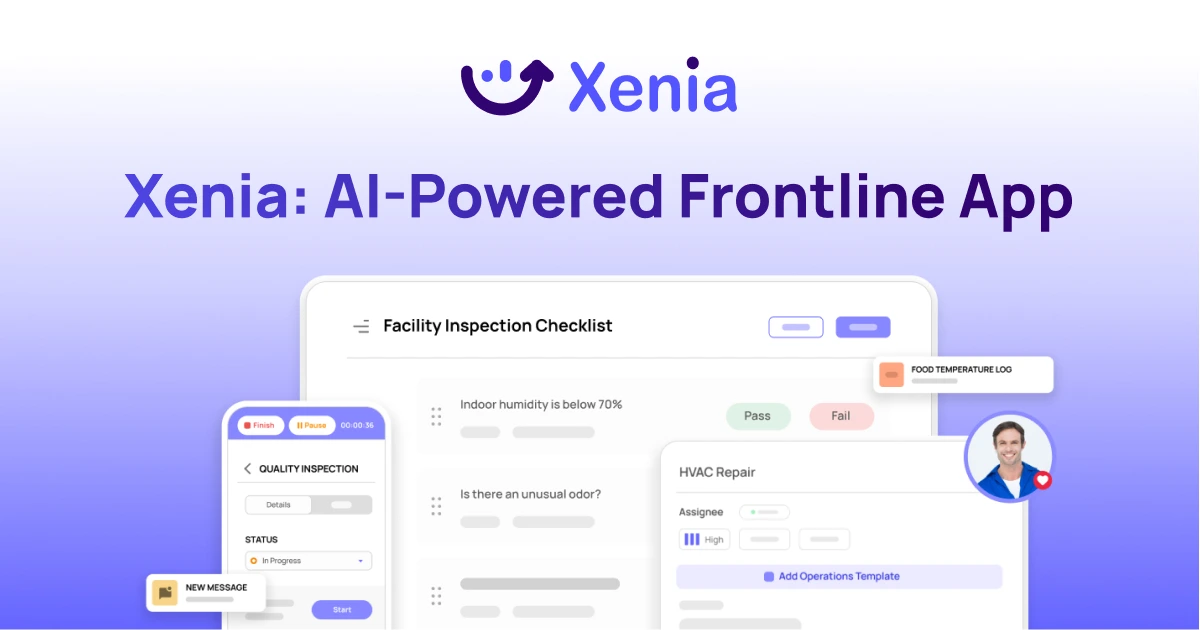
A Modern, AI-Powered Platform Built Specifically for Frontline Operations
Xenia brings daily operations, maintenance, audits, and compliance into one mobile-first platform. Frontline teams execute work consistently across locations while leadership gets real-time visibility.
Why Multi-Location Operators Choose Xenia:
🤖 AI-Powered Operations, Create digital checklists instantly or convert paper forms with AI. Verify compliance automatically with photo analysis and get instant answers from your operational data.
✅ Daily Operations & Maintenance, Assign work across hundreds of locations in minutes. Report and route issues instantly. Schedule preventive maintenance to catch problems before downtime.
📊 Real-Time Visibility, Track completion, work orders, and performance across all locations through dashboards. Filter by site or asset to spot trends and take action.
Manage operations, maintenance, and compliance across all your locations from one platform

.svg)
.webp)
%201%20(1).webp)

.svg)
%201%20(2).webp)