
Post Summary
Picture this. Your regional VP rolls into a location unannounced on a Tuesday afternoon. The team is running a promotion that got cancelled two weeks ago. The new allergen protocol posted in the group chat? Nobody printed it. The shift handoff from this morning? It happened verbally, and half the notes didn't transfer.
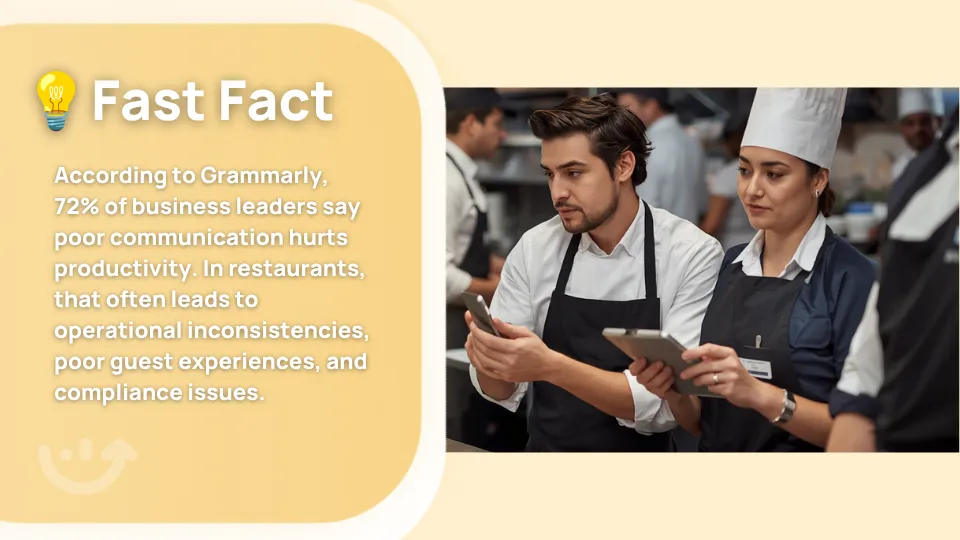
This is what communication breakdown looks like at scale. Not a single catastrophic failure. Just a slow, invisible erosion where the right information stops reaching the right people at the right time.
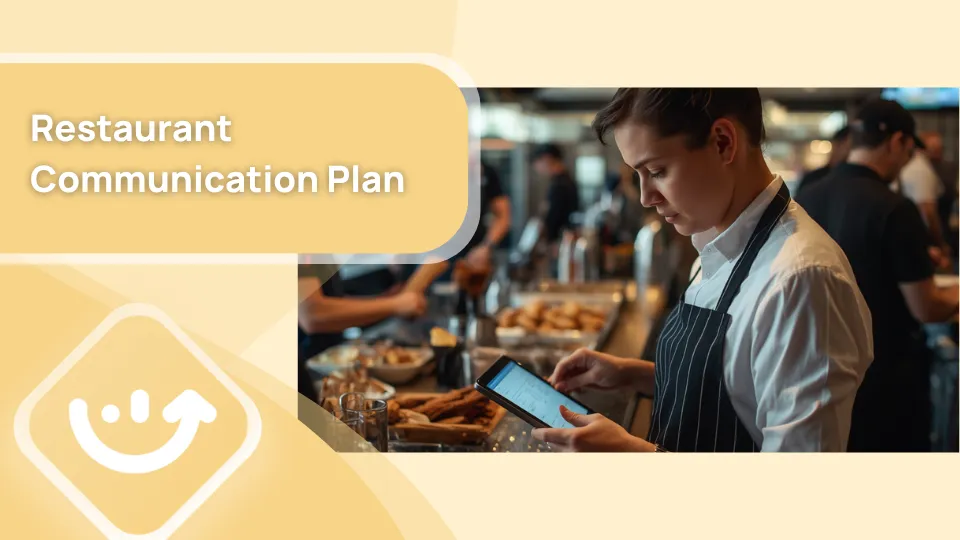
Most multi-unit restaurant operators have this problem. Very few have a real restaurant communication plan to fix it.
The difference between a high-performing multi-unit group and a chaotic one often comes down to structure. Not more messages. Not another app. Structure. Who gets what information, through which channel, on what schedule, and who is responsible for making sure it happened.
This guide builds that structure for you. It covers every layer of restaurant team communication, from HQ-to-store rollouts to shift handoff documentation to feedback loops that actually surface problems before they become crises.
.svg)

Priced on per user or per location basis
Available on iOS, Android and Web


Related Resources
- Best Restaurant Communication Apps: Full software comparison for multi-unit restaurant teams
- Strategies for Effective Frontline Employee Communication: Tactical approaches for reaching deskless workers at scale
- Restaurant Shift Handoff Documentation: How to build a shift handoff process that does not lose information
- Restaurant Notification Fatigue: How to fix over-messaging before it breaks your communication plan
- Streamline Communication Between HQ and Retail Branches: For operators running franchise or mixed-format locations
- Deskless Worker Team Communication: Communication strategies designed around staff who are not at desks
- Internal Communication Guide: Broader internal comms framework applicable to restaurant operators
- Shift Handover Log Tool: Free digital log for shift-to-shift documentation
What a Restaurant Communication Plan Actually Includes
Most operators confuse having communication tools with having a restaurant communication plan. They are not the same thing.
A group chat is a tool. A communication plan is a framework. It answers four questions before any message gets sent. Get all four right and your restaurant communication strategy becomes a system. Get one wrong and the whole thing leaks.
**
Component, What It Defines
Audience map, Who needs to receive which messages and at which level
Channel mix, Where each type of message gets sent
Cadence, How often each communication happens and when
Accountability, Who sends it-who reads it and how you verify
**
Skip any one of these and the plan breaks down. Most operations have some version of each. Almost none have all four working together with clear ownership.
Audience Map
Not every message is for everyone. This sounds obvious. In practice it gets ignored constantly.
Multi-location restaurant communication works when you have clearly defined audience layers. The wrong message going to the wrong layer creates two problems at once: the right people don't get it, and the wrong people get noise they have to filter through.
**
Audience Layer, What They Need to Hear
HQ / Corporate, Brand direction-compliance changes-strategic priorities
District Manager, Location performance-escalation paths-coaching priorities
General Manager, Weekly priorities-SOP updates-staffing issues
Shift Manager, Daily task assignments-handoff notes-safety reminders
Hourly Staff, Shift-specific tasks-recognition-immediate safety alerts
**
Messages that skip layers create confusion. Messages sent to all layers at once create noise. Define your layers. Stick to them.
Channel Mix
One of the fastest ways to break a restaurant communication strategy is using one channel for everything. When urgent safety alerts live in the same thread as memes and weekend schedule swaps, nobody reads the safety alerts.
Different message types need different channels. Full stop.
**
Message Type, Best Channel
Urgent safety or compliance alert, Push notification via frontline app with acknowledgement required
Daily task list, Digital checklist with completion tracking
SOP or policy update, Document in library plus team huddle for alignment
Weekly location priorities, Written briefing posted before Monday first shift
Recognition and culture content, Broadcast announcement-read confirmation optional
Staff feedback collection, Anonymous pulse survey via mobile
Shift handoff notes, Structured digital log with timestamps
**
Cadence
A cadence turns one-off messages into a system. Managers know what to expect. Staff know when information is coming and where to find it. The manager's judgment about "whether this is worth sending" gets replaced by a schedule.
**
Frequency, What It Covers
Daily, Shift task priorities-opening and closing checklists-handoff notes
Weekly, Location priorities-DM check-ins-staff recognition
Monthly, Brand standard reminders-certification updates-training refreshers
Immediate / Ad hoc, Compliance alerts-urgent changes-safety incidents
**
Feedback Loop
Most restaurant communication plans send information down. Almost none build a reliable path for information to come back up.
That is the structural gap that causes the most damage. Corporate finds out about a broken process three months after store teams already knew. A procedure that makes no sense in practice stays in place because nobody asked. A guest complaint pattern nobody saw coming.
Build feedback into the plan from day one. Manager weekly summaries. Staff pulse surveys. A standing question from DMs: "What's one thing at your location right now that isn't working?" That question alone, asked consistently, surfaces more operational intelligence than most quarterly reviews.
5-Step Restaurant Communication Plan Framework
This is the structure most multi-unit restaurant operators are missing. Not complicated. But it requires intention.
Follow these five steps and your restaurant communication strategy goes from ad hoc to operational.
Step 1: Map your audiences
Before you write a single message, define who needs to hear what. List every role: corporate, district managers, general managers, shift managers, hourly staff. For each role, answer one question: what do they need to know to do their job well today? Build your audience map around that answer, not around your org chart.
Step 2: Categorize your messages
Sort everything you currently communicate into these five buckets:
- Operational: shift tasks, daily priorities, scheduling changes, opening and closing procedures
- Brand and product: new menu items, promotional launches, LTO execution, planogram updates
- HR and compliance: policy changes, labor law updates, certification expiry reminders
- Safety: HACCP alerts, cleaning protocol updates, incident response, allergen changes
- Culture and recognition: performance shoutouts, team wins, milestone celebrations
Each bucket needs a defined channel and a named owner. If nobody owns it, it goes out inconsistently. That inconsistency is where drift starts.
Step 3: Pick the right channels
Match each message category to the right delivery method. Push notifications for urgent alerts. Digital checklists with completion tracking for daily task assignment. Document libraries for SOPs. Team huddles for training and alignment on anything complex. Broadcast announcements for culture and recognition.
Don't use WhatsApp for compliance updates. Don't bury urgent alerts in an email digest nobody opens mid-shift. Channel discipline is what separates a restaurant communication plan that works from one that looks good in a slide deck.
Step 4: Set and publish your cadence
Build a communication calendar. Put it somewhere managers can see it. Monday morning priorities go out by 8am. Wednesday DM check-in by noon. Friday recognition post before PM shift. Publish that calendar to all GMs. Consistency matters more than perfection. A plan that goes out every week on the same schedule is worth more than a perfect one that goes out whenever someone remembers.
Step 5: Measure what you care about
Decide in advance how you will know the plan is working. Acknowledgement rates on critical messages. Task completion rates in the 24 hours after a brief goes out. GM summary submission rates. Staff pulse survey participation. Pick three metrics and track them weekly. Communication that can't be measured stays invisible.
HQ-to-Store Communication Patterns That Actually Work
Most of the communication load in a multi-unit restaurant group flows from corporate down to store level. The patterns below cover the five situations where that communication most commonly breaks down.
New SOP Rollout
Attaching a PDF to a group chat is not an SOP rollout. It is file sharing. There is a difference.
A real SOP rollout follows three phases:
Pre-read: The SOP goes to GMs at least 48 hours before it takes effect. Not 48 hours before the mandatory training. 48 hours before the new standard applies. GMs read it, flag questions, get answers before briefing their teams.
Huddle: The GM walks the team through key changes at the start of a shift. Not a lecture. A five-minute focused briefing with room for questions. Staff hear it from a manager they know, in their own language, in context.
Verification: A checklist or audit confirms the new SOP is being followed within two weeks of rollout. This step is what makes the first two steps stick.
Promotion Launch Communication
New menu items and LTOs fail operationally when staff learn about them from guests. That happens more than it should.
The right sequence:
- HQ sends the promotional brief and all training materials to GMs at least one week before launch
- GMs run a prep session covering the product, the pricing, and how to handle guest questions
- Staff complete a knowledge check before their first shift where the promotion is live
- District managers verify execution during the first week using a store visit checklist
None of this is complicated. All of it requires a communication plan that defines who is responsible at each step.
Brand Standards Reinforcement
Brand standards drift silently. A location that was at 94% compliance six months ago can be at 78% today without anyone noticing. There is no single moment where drift becomes visible. It just accumulates.
A restaurant communication strategy for brand standards needs regular touchpoints built into the cadence:
- Monthly visual standards posts with reference photos go to all GMs
- Quarterly brand audit scores are shared back to GMs with specific feedback, not just overall numbers
- Locations hitting compliance targets get recognized publicly so the behavior gets reinforced
Compliance and Safety Updates
Labor law changes and food safety alerts are not weekly digest content. They have their own fast-track communication path. They go out via the primary alert channel the same day. Read receipt or acknowledgement required before the next shift. No exceptions.
This is one area where channel discipline pays for itself immediately. When staff know that the primary alert channel only carries urgent and important updates, they read it.
Recognition and Culture Communication
Recognition sent through the same channel as compliance alerts gets ignored. Or worse, it gets lost in the noise and staff feel like recognition never happens, even when it does.
Build a separate cadence for recognition: weekly shoutouts from DMs posted Friday before close, monthly performance wins in the all-hands summary, and location-level compliance or guest satisfaction wins celebrated publicly. Keep it consistent and keep it visible.
Store-to-HQ: Building a Real Feedback Loop
A one-way communication system is half a plan.
Most restaurant brands push information down reasonably well. What they rarely have is a structured path for information to move back up. Store teams know things that corporate doesn't: which SOP creates confusion in practice, which equipment keeps breaking down in a way that maintenance tickets don't capture, which promotion is confusing guests at the counter.
That information almost never makes it to corporate unless there is a system designed to collect it.
Why one-way communication becomes the default: It is easier to push than to pull. Pulling feedback requires structure, consistent ownership, and someone accountable for reading the responses and acting on them. That infrastructure is harder to build than another group chat.
Three feedback channels that work for multi-unit restaurant groups:
Manager weekly summary. A short structured form that GMs submit before Monday morning. It covers last week's key incidents, any operational blockers, staff issues, and one thing that needs to be escalated. Takes five minutes to complete. Gives DMs real visibility without requiring a phone call.
Staff anonymous pulse survey. Two to three questions sent to hourly staff monthly via SMS or frontline app. Keep it short enough that staff actually complete it. "Do you have what you need to do your job well?" is more useful than a 20-question engagement survey. Track participation by location, not just responses.
Weekly escalation question. Every Friday, DMs ask GMs: "What's one thing at your location right now that isn't working?" Responses go into a shared log. When three locations flag the same issue in the same week, it stops being a store problem and becomes a system problem. That distinction matters for how leadership responds.
Shift Handoff Communication: Where Most Plans Break Down
The shift handoff is the single most common point of information loss in restaurant operations.
What the opening team knows, the PM team often doesn't. What the PM team dealt with during service, the closing team never hears. A piece of equipment that's running slow. A guest complaint that needs follow-up. A prep item that ran out and wasn't restocked. These things disappear in the gap between shifts.
A solid shift handoff communication system does not need to be complicated. It needs to be consistent and documented.
**
Handoff, What It Must Cover
AM to PM,What changed during morning-what is pending-any equipment or guest issues
PM to Closing, Status of closing tasks-anything unresolved-staff notes and incidents
Closing to Next AM, Overnight issues-equipment status-prep needs-anything that cannot wait
**
The handoff should live in a digital log, not a verbal conversation at the pass or a sticky note on the manager's notebook. Digital records mean anyone can see the current status when they walk in. There is a timestamp. Nothing disappears when managers overlap by only ten minutes.
For a full framework on documentation, see Xenia's guide on restaurant shift handoff documentation. There is also a free shift handover log template available to use immediately.
A Sample Weekly Restaurant Communication Calendar
This is what a structured restaurant communication cadence looks like when it's running properly. Adjust timing to fit your operation. What matters is that every slot has a named owner and a defined channel.
**
Day and Time, Communication, Owner, Channel
Monday 8am, Weekly priorities brief sent to all GMs, HQ Ops or regional DM, Frontline app announcement
Monday first shift, GM runs team huddle-posts daily task list, GM, Digital checklist and verbal briefing
Tuesday AM, DM reviews all GM weekly summaries, DM, Structured form submissions
Wednesday noon, Mid-week DM check-in with each GM, DM, Direct message or brief call
Thursday, Compliance alerts or training reminders if any, HQ, Push notification with acknowledgement
Friday before PM shift, Weekly recap and recognition post, DM or HQ, Frontline app broadcast
Sunday PM, Preview of next week's priorities, HQ Ops, Posted to GM dashboard
**
Ambiguity is what kills cadence. Every item on this calendar has someone responsible for it. That is the point.
Common Restaurant Communication Plan Mistakes
Getting the structure right is half the work. Avoiding these patterns is the other half.
Using one channel for everything
This is the most common mistake. When urgent alerts, daily task lists, team banter, and scheduling requests all go through one thread, the channel loses meaning. Important messages compete with noise. Staff learn to skim. The thing that needs to be read gets skipped.
No defined cadence
"We communicate when there is something to say" sounds reasonable. In practice it means managers are constantly making judgment calls about what's worth sending, and important updates either wait too long or go out in bursts that overwhelm people. A cadence removes that friction.
Manager filtering
When HQ communicates to DMs who tell GMs who tell shift managers who brief hourly staff, the message degrades at every layer. Key details get dropped. Urgency gets softened. Framing changes. By the time the update reaches the person who needs to act on it, the version they hear may look nothing like the original intent. For critical communications, go as direct as the audience map allows.
No acknowledgement tracking
Sending a message and communicating are not the same thing. If you cannot see who read a critical update, you do not know if it reached anyone. Acknowledgement tracking on high-priority messages is not optional. It is how you close the loop.
Notification fatigue
Staff who receive too many push notifications stop reading them. That is not laziness. It is a rational response to too much noise. Volume without prioritization trains people to ignore alerts, including the ones that matter. Xenia has a detailed breakdown of how this plays out in restaurant teams at restaurant notification fatigue.
No feedback structure
A communication plan with no feedback loop is a broadcast system. It tells you nothing about whether the message landed, whether the procedure makes sense in practice, or whether your team has the information they actually need. Build feedback in. Not as an afterthought. As a core component.
Tools That Support a Restaurant Communication Plan
The right tool does not fix a broken plan. But the right plan needs tools that can actually run it. Here is a short overview of options in this space. For a full head-to-head comparison, see best restaurant communication apps.
Xenia is a mobile-first frontline operations execution platform built specifically for multi-unit restaurant operators.
The frontline communication module connects shift-aligned messaging directly to tasks, checklists, and operational workflows. Messages are tied to what needs to happen, not just what needs to be read. Read receipts and acknowledgement tracking are built in. Xenia is designed to complement scheduling and payroll tools, not replace them.
.webp)
7shifts Team Communication pairs messaging directly with scheduling, which makes it natural to communicate around shift structure and coverage.
.webp)
Crew is a purpose-built frontline communication platform with messaging, document sharing, and shift coordination tools.
.webp)
Beekeeper is a frontline communication suite with broadcast messaging, team surveys, and centralized document management.

Conclusion
Multi-unit restaurant communication is not a technology problem. And it is not a people problem.
It is a structure problem. Most operators have the people and the tools. They do not have a system that connects them in a way that keeps every location, every shift, and every manager working from the same information.
Build the structure first. The audience map, the channel mix, the cadence, the feedback loop. Get those right and the rest follows.
Xenia's frontline communication module is built to run this kind of plan across multiple locations. Every message tied to a task. Every acknowledgement tracked. Every location visible from one dashboard. No more chasing GMs for updates or guessing whether the brief actually landed.
Book a demo to see it in action.
Frequently Asked Questions
Got a question? Find our FAQs here. If your question hasn't been answered here, contact us.
Who is responsible for restaurant communication in a multi-unit group?

Every layer owns a piece. Corporate handles brand and compliance updates. District managers handle GM alignment. GMs handle shift-level briefings. The mistake is assuming one person covers all of it. Map ownership to every layer or it falls through the gaps.
What happens when restaurant communication breaks down across locations?
Locations drift. One GM follows the new SOP, another runs the old one. Guests notice before leadership does. Compliance gaps show up in audits. The root cause is almost never the people. It is the absence of a system.
How often should restaurants communicate with their teams?
Daily for shift tasks and handoff notes. Weekly for location priorities and recognition. Monthly for policy and training updates. Safety alerts go out the same day, no waiting for the next scheduled send. The schedule matters less than sticking to it.
What is a restaurant communication plan?
It is a system that decides who gets which message, through which channel, and when. Without one, managers send updates whenever they feel like it. Staff get the same message three times or miss it entirely. A plan makes communication predictable instead of random.


A Modern, AI-Powered Platform Built for Restaurant Operations
Xenia brings kitchen operations, food safety, audits, and team communication into one mobile-first platform. Restaurant teams execute daily work consistently, maintain compliance, and resolve issues faster, while leadership gets real-time visibility across all locations.
.webp)
Why Restaurant Operators Choose Xenia:
🤖 AI-Powered Operations, Convert paper logs instantly and verify food presentation and kitchen cleanliness automatically. Get instant answers about food safety trends without building reports.
🍽️ Food Safety & Compliance, Track line checks and temperature logs with automated alerts. Trigger corrective actions when readings exceed safe ranges. Maintain audit-ready records for health inspections.
📊 Multi-Location Control, Monitor food safety compliance and task completion across regions. Benchmark locations to identify training needs. Export reports for operational reviews.
One platform for kitchen operations, food safety, and compliance across all locations.

.svg)
.webp)
%201%20(1).webp)

.svg)
%201%20(2).webp)