
Post Summary
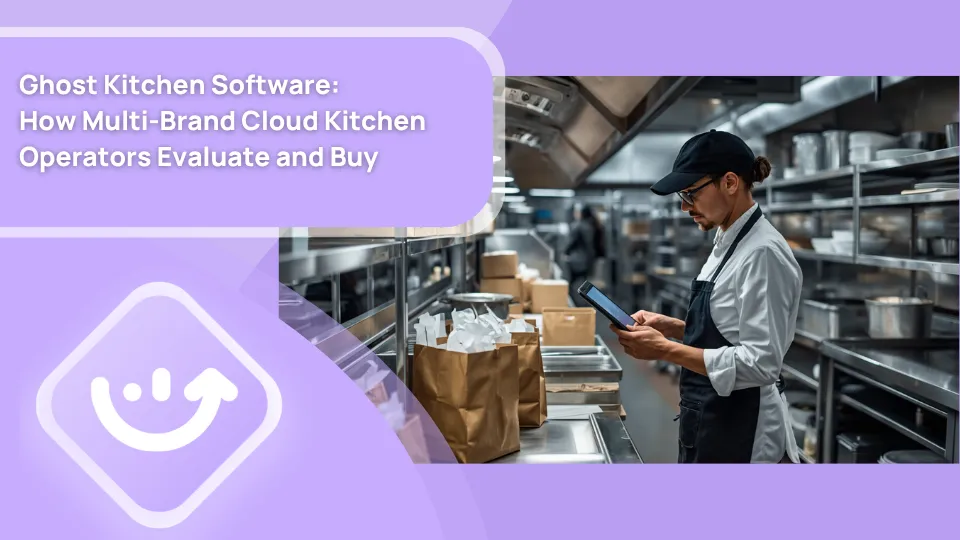
Running three virtual brands out of one kitchen is harder than it sounds.
You have separate menus, separate delivery tablets, separate brand standards, and one kitchen crew trying to keep track of all of it.
The orders come in from DoorDash, Uber Eats, and Grubhub at the same time.
The fridge that holds Brand A's proteins is also the fridge that serves Brand C. And when a health inspector walks in, they want documentation for all of it, not just the one concept you happen to be proud of.
The software question comes up fast. Every ghost kitchen operator eventually asks: what platform actually runs this thing?
This article is a straight buyer's guide for 2026. It covers the six best ghost kitchen software platforms, how to evaluate them, and what most operators buy wrong the first time.
Related Resources
- How weighted audit scoring works and why it matters for food safety
- Why corrective action tracking is the part most restaurant operators skip
- How to track food safety in a multi-location restaurant operation
- Restaurant operations tool consolidation: when to combine and when to specialize
- The rise of restaurant automation and what it means for kitchen operations
What "ghost kitchen software" actually means in 2026
This is where most buyers get confused. "Ghost kitchen software" is not one thing. It is three layers of technology stacked on top of each other, and most articles on this topic only cover two of them.
The three layers work like this:
Layer 1: Order routing and aggregation.
This is the layer that receives orders from Uber Eats, DoorDash, Grubhub, and any other delivery platform, then funnels them into one stream so your kitchen does not have to watch five separate tablets.
Layer 2: POS and menu sync.
This layer handles payment processing and keeps your menu prices and item availability synced across platforms. If you 86 an item, this layer pushes that change everywhere at once.
Layer 3: Operations execution.
This is the layer most ghost kitchen operators underinvest in. It handles food safety documentation, opening and closing checklists, line check audits, equipment maintenance, brand standards by virtual concept, and corrective action workflows when something goes wrong.
Most operators buy Layer 1 and maybe Layer 2. Then they patch together Layer 3 with paper logs and group texts. That works until a health inspection, a foodborne illness complaint, or a franchisor audit shows up.
Most ghost kitchen software guides focus entirely on order aggregation. They ignore the operations layer, which is where multi-brand cloud kitchens actually break down.
7 categories of software a multi-brand cloud kitchen needs
If you are building a full tech stack for a ghost kitchen, here is what you actually need:
- Order aggregator pulls delivery orders from multiple platforms into one dashboard and one printer. Without it, you are managing five tablets at once.
- POS with menu sync handles transactions and keeps item availability consistent across every delivery channel in real time.
- KDS and prep coordination shows kitchen staff the order queue by station so prep runs in the right sequence regardless of which brand an order belongs to.
- Inventory and food cost management tracks ingredient-level usage by brand so you can see which virtual concept is eating into margin.
- Operations execution platform runs the food safety checks, line check audits, corrective actions, opening and closing procedures, and equipment inspections that keep your kitchen compliant and consistent. This is the layer that most operators bolt on too late.
- Temperature and food safety monitoring covers both manual temperature logging and continuous IoT sensor data from walk-in coolers and prep fridges.
- Reporting and unit economics gives you per-brand cost-to-serve, audit completion rates, and delivery platform performance in one place.
How to evaluate ghost kitchen software: 8 buying criteria
Before you request a demo from anyone, run every tool you are considering against this list.
**
Criteria, Why it matters
Brand-level reporting, Can you see audit scores-order volumes and food safety data by virtual concept-not just by kitchen?
Multi-tenant menu management, Can you update one brand's menu without touching the others?
Order routing across delivery platforms, Does it handle DoorDash-Uber Eats and Grubhub simultaneously without a tablet for each?
Real-time prep visibility, Can managers see what is in the queue and where it is in prep without walking to the line?
Cross-brand inventory consolidation, Can you track shared ingredients across concepts and assign costs per brand?
Compliance and food safety audit trail, Does it produce a per-brand audit trail you can hand to a health inspector or franchisor?
Integration with existing POS and aggregator, Does it plug into what you already have or does it require a full stack replacement?
Per-brand unit economics, Can you calculate cost-to-serve for each virtual concept independently?
**
If a tool you are evaluating cannot answer yes to at least five of these, it was built for single-concept restaurants, not multi-brand cloud kitchens.
The 6 best ghost kitchen software platforms in 2026
.svg)
.webp)
1. Xenia: Best for ghost kitchen operations execution
.webp)
Xenia sits in Layer 3, which is the layer most ghost kitchen operators ignore until something goes wrong.
The core use case for multi-brand cloud kitchens is this: you have multiple virtual brands running out of one kitchen, and you need to track food safety, line checks, equipment maintenance, and opening and closing procedures by brand and by pod, not just by location.
Xenia's audits and inspections module runs weighted scoring audits with automatic corrective action generation when something fails. If your walk-in cooler is holding Brand A's proteins at the wrong temperature, the system flags it, creates a corrective action, and assigns it to the kitchen manager. The audit trail is timestamped and stored per brand.
The checklists and sops module lets you build brand-specific opening procedures, prep checklists, and sanitation protocols. Conditional logic means staff only see the steps relevant to the brand they are running that shift.
Temperature monitoring covers both manual HACCP logs and continuous IoT sensor monitoring via Bluetooth and LoRaWAN. If a fridge drifts into the danger zone at 2 a.m., you get an alert before the food is lost. For more on how temperature compliance documentation works in practice, see HACCP temperature logs and walk-in cooler temperature log.
AI Photo Analysis lets managers verify that plating and packaging are consistent with brand standards without being physically on the line. Photo evidence is stored and reviewable at the concept level.
The analytics dashboard gives you completion rates for critical procedures by brand and by pod, so you can see which virtual concept is running tight operations and which one is a compliance risk.
For context on how multi-location operations execution works at scale, that piece covers the broader framework Xenia is built on.

Priced on per user or per location basis
Available on iOS, Android and Web


2. Otter

Otter connects to over 100 delivery platforms and pulls orders into a single tablet. It handles menu management across channels and gives you basic sales reporting.
The gap is that it does not touch food safety, audits, or brand-level operational compliance. It is a great Layer 1 tool, but it stops there.
Pricing is based on location and platform volume. Best for operators who want to consolidate their delivery tablets and stop the multi-tablet chaos.
3. Deliverect
Deliverect is built for operators managing the same menu across many delivery platforms. Menu changes push everywhere at once, and their POS integrations are broad.
Like Otter, it lives in Layer 1 and Layer 2. It does not handle food safety documentation, corrective actions, or operational checklists.
Pricing starts around $70 to $120 per location per month. Best for operators whose biggest pain is menu inconsistency across channels.
4. CloudKitchens (CSS)
CloudKitchens' proprietary software stack is built for brands operating inside CloudKitchens facilities. It covers order management, menu tools, and some basic reporting.
The limitation is that it is tied to their real estate and not portable to third-party kitchen spaces. If you are not a CloudKitchens tenant, this is not relevant to you.
Best for operators who are inside a CloudKitchens location and want a fully integrated platform.
5. MarketMan
MarketMan handles ingredient-level inventory tracking, purchase orders, and food cost reporting. For ghost kitchen operators running multiple concepts with shared ingredients, it can track which brand consumed what and calculate cost-to-serve by concept.
The gap is operations execution: no audit workflows, no food safety documentation, no corrective actions. Best used alongside an operations platform like Xenia.
Pricing varies by plan and volume.
6. Toast
.webp)
Toast is the most common POS in the restaurant industry for good reason. It handles payments, menu management, and integrates with most major delivery aggregators.
For ghost kitchens, Toast's multi-concept menu management is solid. The limitation is the same as all POS tools: it is not an operations execution platform. It does not run food safety audits or generate corrective actions.
Best as the Layer 2 foundation you build everything else on top of. Pricing starts around $110 per month per location.
Common buying mistakes ghost kitchen operators make
Most operators who waste money on ghost kitchen software make the same three mistakes.
The first is buying only the aggregator and assuming operations will sort itself out. Otter or Deliverect will stop the tablet chaos, but they do not tell you which brand failed its line check this morning or whether the walk-in cooler is in compliance.
The second is choosing software that reports at the kitchen level instead of the brand level. If you are running four virtual concepts, you need to know whether Brand B specifically is the one with recurring temperature violations, not just that your kitchen had a bad week.
The third is skipping a multi-tenant audit trail. If a franchisor or health inspector asks for compliance records for a specific virtual brand, you need to produce them by brand. Paper logs and a shared spreadsheet will not hold up.
For a broader look at what operators get wrong when evaluating restaurant operations platforms, questions before buying a restaurant operations platform is worth reading before you sign anything.
How to pilot ghost kitchen software in 30 days
A 90-day pilot is too long. Here is a tighter timeline that tells you what you need to know in 30 days.
Week 1: Map your current workflows by brand. Write down what happens every time an order comes in for Brand A versus Brand C. Identify where the friction is: tablet overload, food safety documentation gaps, missed line checks. Set one KPI per brand that you will measure at the end of the pilot.
Week 2: Run the new software in parallel with your current process. Do not kill your paper logs yet. Compare what the software captures versus what you were doing manually. This surfaces gaps in the tool before you depend on it.
Week 3: Train pod managers and kitchen leads on the platform. This is the real test. If your team cannot complete the checklists and audits in the flow of a busy service, the tool will not survive contact with actual operations.
Week 4: Measure. Look at cost-to-serve per brand, audit completion rate by concept, and on-time delivery by platform. If the numbers are not better or you cannot see them clearly, either the tool is wrong or the implementation is incomplete.
For related reading on restaurant line checks versus compliance audits, that piece explains the distinction between what operators check daily and what audits are actually evaluating.
Conclusion
Ghost kitchen software is three layers: order aggregation, POS and menu sync, and operations execution. Most operators buy the first two and skip the third. That works until a health inspection or franchisor audit makes the gap obvious.
The operations execution layer is where multi-brand cloud kitchens hold together or fall apart. That is exactly what Xenia is built for. Brand-specific audits, weighted corrective action workflows, food safety documentation, and real-time temperature monitoring, all stored at the concept level so every virtual brand has its own audit trail.
Your aggregator handles orders. Your POS handles payments. Xenia handles the part that keeps you compliant.
Book a demo and see Xenia in action.
Frequently Asked Questions
Got a question? Find our FAQs here. If your question hasn't been answered here, contact us.
What should I look for in a ghost kitchen operations platform?

Brand-level reporting first. You need audit scores and food safety data by virtual concept, not just by location. Then look for corrective action workflows, temperature monitoring, and a mobile interface your kitchen team will actually use mid-service.
How do you track food safety across multiple virtual brands in one kitchen?
Assign every temperature log, line check, and audit to a specific concept, not just the kitchen. IoT sensors catch fridge issues in real time. Digital HACCP logs give you the per-brand records health inspectors actually want to see.
What is the cheapest ghost kitchen software for a single virtual brand?
Start with Xenia's free plan. It covers up to five users and includes digital checklists and food safety logs at no cost. Add an aggregator like Otter for order management and you have a working stack without spending much.
Is ghost kitchen software different from regular restaurant software?
Yes. Regular software tracks one concept in one space. Ghost kitchen software tracks food safety and compliance by virtual brand. If your walk-in serves four concepts, you need to know which brand's product failed, not just that something went wrong.


A Modern, AI-Powered Platform Built Specifically for Frontline Operations
Xenia brings daily operations, maintenance, audits, and compliance into one mobile-first platform. Frontline teams execute work consistently across locations while leadership gets real-time visibility.
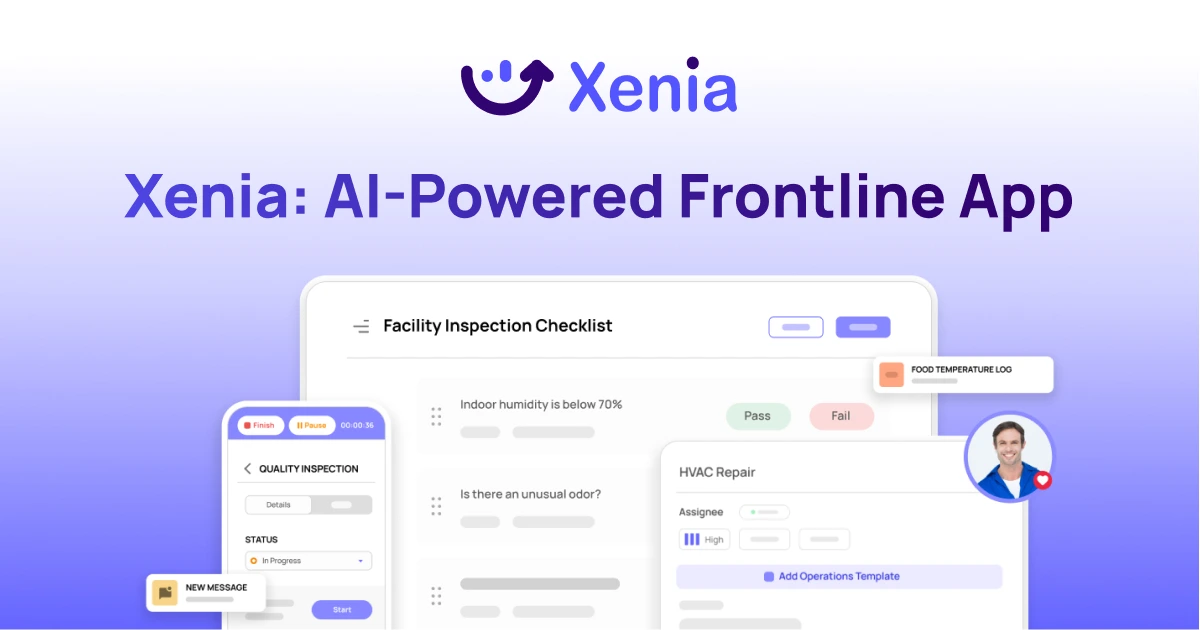
Why Multi-Location Operators Choose Xenia:
🤖 AI-Powered Operations, Create digital checklists instantly or convert paper forms with AI. Verify compliance automatically with photo analysis and get instant answers from your operational data.
✅ Daily Operations & Maintenance, Assign work across hundreds of locations in minutes. Report and route issues instantly. Schedule preventive maintenance to catch problems before downtime.
📊 Real-Time Visibility, Track completion, work orders, and performance across all locations through dashboards. Filter by site or asset to spot trends and take action.
Manage operations, maintenance, and compliance across all your locations from one platform

.svg)
.webp)
%201%20(1).webp)

.svg)
%201%20(2).webp)