

Post Summary
Most HVAC units do not just stop working.
They give you signs. Rising energy bills. Unusual sounds. Longer cool-down times. But when there is no maintenance schedule and no service history, those signs get missed until something fails completely.
By then the repair bill is three times what a filter change would have cost.
This guide covers everything you need to build a commercial HVAC maintenance program that works across every location.
.svg)

Priced on per user or per location basis
Available on iOS, Android and Web


What Is Commercial HVAC Maintenance?
Commercial HVAC maintenance is scheduled servicing of your heating, ventilation, and air conditioning systems before anything breaks.
Filter replacements, coil cleaning, refrigerant checks, and full system inspections. Done right, it keeps equipment running longer and locations compliant.
The problem is most teams have no idea if it is actually happening at every location.
Commercial HVAC Repair vs Maintenance
Before building your program, understand this distinction. It matters for budgeting and planning.
Commercial HVAC maintenance is planned servicing done before failure. Filter changes. Coil cleaning. Belt inspections. You know when it is happening and what it costs.
Commercial HVAC repair is reactive work done after something fails. Compressor replacement. Refrigerant recharge. Motor replacement. You never know when it is coming or how much it will cost.
**
Aspect, Maintenance, Repair
Timing, Planned and scheduled, Reactive-after failure
Cost, Predictable and lower, Higher and unpredictable
Downtime, Minimal-planned windows, Unplanned-often urgent
**
Commercial HVAC Maintenance Checklist
A good commercial HVAC maintenance checklist is organized by frequency. Here is what needs to happen and when.
Monthly
Monthly tasks have the biggest impact on day-to-day system performance. They are also the easiest to miss without a formal schedule.
- Air filter inspection and replacement
- Thermostat calibration check
- Condensate drain inspection for blockages
- Airflow check across all vents
- Visual inspection for leaks, corrosion, or unusual wear
HVAC Quarterly Maintenance
HVAC quarterly maintenance goes deeper. This is where you catch the issues that monthly checks miss before they turn into failures.
- Condenser and evaporator coil cleaning
- Belt and pulley inspection for tension and wear
- Electrical connections check and tightening
- Refrigerant level check for leaks or pressure issues
- Fan blade inspection for damage and debris
- Lubrication of all moving parts
Semi-Annual
Every six months your system needs a deeper review. Full system performance test, ductwork inspection, heat exchanger inspection, safety controls test, and exhaust and ventilation check. These catch structural issues before they become expensive.
Annual
Once a year your system needs a complete overhaul inspection. Full refrigerant system inspection with pressure testing. Combustion analysis for furnaces. Complete electrical system inspection. Compressor inspection. Full system cleaning including coils, drains, blower, and housing.
Commercial AC Maintenance by Industry
Different industries run different equipment. Here is what commercial AC maintenance looks like across restaurants, retail, and convenience stores.
Restaurants
Restaurant HVAC systems work harder than almost any other commercial environment. High heat from cooking equipment, grease-laden air, and constant ventilation demands strain the system every single day.
One pain point that comes up consistently in restaurant operations reviews: teams do not find out there is a ventilation problem until a health inspector shows up and makes them aware of it. By that point it is already a compliance issue, not just a maintenance issue.
Monthly exhaust maintenance is not optional here. Grease buildup in exhaust systems is one of the leading causes of commercial kitchen fires. It is a health and safety requirement.
**
Equipment, PM Task, Frequency
Exhaust hood ventilation, Filter degreasing-fan inspection-airflow test, Monthly
Make-up air units, Filter replacement-damper inspection, Monthly
Rooftop HVAC units, Coil cleaning-belt inspection-refrigerant check, Quarterly
Kitchen exhaust fans, Blade cleaning-motor lubrication-belt check, Monthly
Dining area air handlers, Filter replacement-coil cleaning, Quarterly
**
Retail
Retail HVAC failures hit differently. Uncomfortable customers leave. Sales drop. And the problem could have been prevented with a quarterly service visit.
For teams managing multiple locations, consistency is the real challenge. Not knowing what to maintain but making sure it actually happens everywhere. One missed schedule at Store 34 and you are already behind.
**
Equipment, PM Task, Frequency
Rooftop units, Filter replacement-coil cleaning-belt inspection, Quarterly
Split systems, Refrigerant check-coil cleaning-filter replacement, Quarterly
Ceiling cassette units, Filter cleaning-drainage check-airflow test, Monthly
Exhaust fans, Blade inspection-motor check-lubrication, Quarterly
**
Convenience Stores
C-store HVAC systems deal with high door-open frequency, refrigeration heat loads, and fuel system ventilation requirements all at once. Consistent scheduled maintenance matters more here than almost anywhere else.
A common issue in convenience store operations: fuel system ventilation gets deprioritized because it is out of sight. It does not show obvious signs of failure until there is a compliance violation or an air quality issue. Monthly inspections prevent both.
**
Equipment, PM Task, Frequency
Rooftop HVAC units, Coil cleaning-filter replacement-refrigerant check, Quarterly
Ventilation fans, Blade inspection-motor lubrication, Monthly
Fuel system ventilation, Airflow test-damper inspection, Monthly
Walk-in cooler condensers, Coil cleaning-fan inspection, Monthly
**
Commercial Furnace Maintenance
Commercial furnace maintenance deserves its own attention within your HVAC program. A failed furnace in winter means immediate disruption and potential safety violations.
Here is what it covers and how often:
- Burner inspection and cleaning - annual
- Heat exchanger inspection - annual
- Combustion analysis - annual
- Flue and venting inspection - annual
- Ignition system check - semi-annual
- Filter replacement - monthly
- Thermostat and controls check - quarterly
- Blower motor inspection - quarterly
Commercial furnace maintenance should always be performed by a licensed HVAC technician. Carbon monoxide risks from cracked heat exchangers are not something an internal team should assess without proper equipment and certification.
Commercial HVAC Inspection Report Template
Every HVAC service visit needs one thing beyond the actual work. A documented inspection report.
Without it you have no proof anything was done. Vendors show up, complete the visit, and leave. No documentation. No photos. Six months later when that unit fails, you have nothing to work with.
A complete commercial HVAC inspection report template should include:
- Property and equipment details including unit ID, model, and serial number
- Inspection date and technician information including license number
- Tasks completed with specific notes
- Parts replaced with part numbers and reasons
- System readings including refrigerant pressure and temperature differentials
- Issues found with severity ratings and recommended actions
- Before and after photos of key components
- Next service date with recommended tasks
This report becomes part of that equipment's permanent service history. When a unit fails, you have everything in one place.
How Xenia Manages Commercial HVAC Maintenance Across Multiple Locations
One location is manageable with a spreadsheet and a vendor phone number.
Ten locations is where things start slipping. Fifty is a visibility nightmare.
Operations teams managing commercial HVAC maintenance across multiple locations face the same problems. No centralized record of which vendor serviced which unit. No visibility into whether quarterly maintenance happened at every site. No escalation when a task goes overdue.
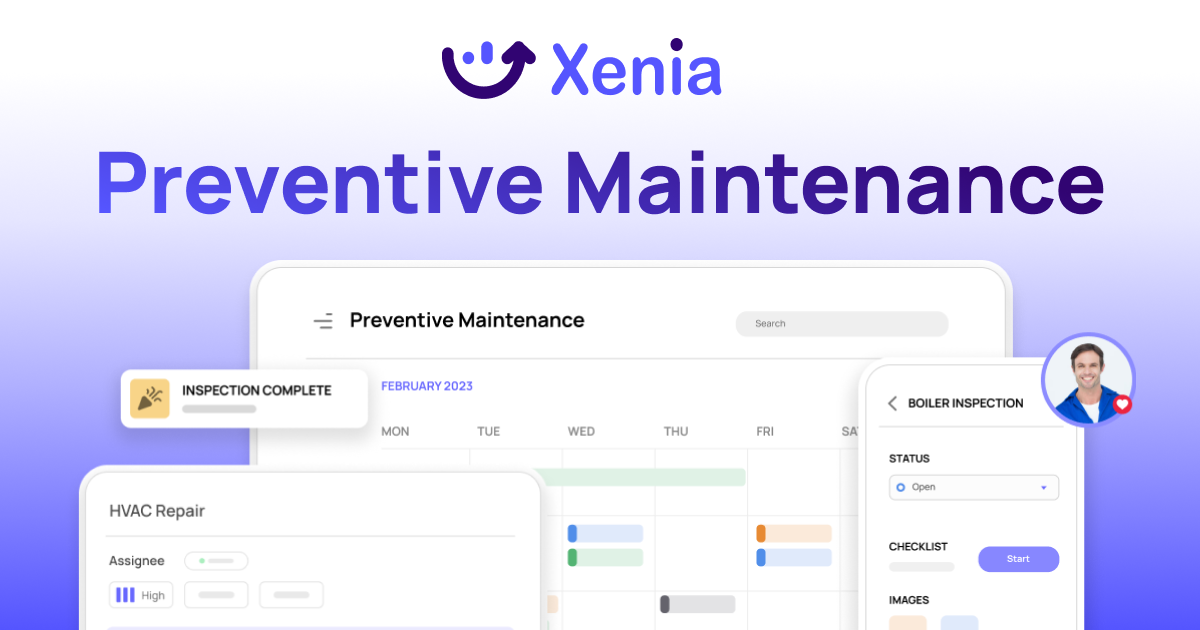
Xenia's commercial preventive maintenance software is built for exactly this.
Asset management: Every HVAC unit gets a digital profile. Serial number, warranty, install date, full service history. This is the foundation of any HVAC program.
Preventive maintenance scheduling: Auto-created work orders on fixed or floating intervals. This is the core feature for this article.
Work order routing: Automatically routes HVAC work orders to the right vendor or technician based on category and location. Relevant because vendor management is a major pain point.
Photo documentation: Required before work order closes. Proof the work was done.
Inspection report templates: Digital HVAC inspection reports linked to asset records permanently.
Escalation workflows: Overdue tasks escalate automatically.
Multi-location reporting dashboard: PM compliance visibility across every location.
Related Resources
- HVAC Preventive Maintenance Checklist
- HVAC Inspection Checklist
- Preventive Maintenance Calendar
- Equipment Maintenance Log
- Maintenance Work Order Log
- Boiler PM Log
- Cooling System Inspection Checklist
- Hotel Preventive Maintenance Calendar
Conclusion
You now have everything you need to build a commercial HVAC maintenance program that works.
Checklist by frequency. Named ownership on every task. Inspection reports and photos from every vendor visit. Automated work order creation so nothing gets missed.
Xenia makes the whole thing simple. Auto-created work orders. Mobile-first execution. Digital inspection reports. Photo verification. PM compliance reporting across every location from one dashboard.
Book a demo and see how it works for multi-location operations teams.
Frequently Asked Questions
Got a question? Find our FAQs here. If your question hasn't been answered here, contact us.
What is industrial HVAC maintenance?

Servicing of HVAC systems in factories, warehouses, and plants. Built for extreme heat loads and chemical exposure. Far more complex and specialized than commercial HVAC maintenance which focuses on comfort and compliance in restaurants, retail, and C-stores.
What should an HVAC inspection report template include?
Everything from equipment details and tasks completed to parts replaced, system readings, issues found, and before and after photos. Plus the next service date.
What is included in commercial furnace maintenance?
Burner inspection, heat exchanger check, combustion analysis, filter replacement, and blower motor inspection. None of this is DIY. Always use a licensed technician.
What is the difference between commercial HVAC repair and maintenance?
Maintenance happens before something breaks. Repair happens after. Maintenance is planned, predictable, and cheaper. Repair is reactive, urgent, and expensive. The choice is obvious.
How often should commercial HVAC maintenance be done?
Filters every month. Coil cleaning and refrigerant checks every quarter. Full system performance tests every six months. Complete inspection and combustion analysis once a year. A preventive maintenance calendar helps you map this out before moving it into software.

A Modern, AI-Powered Platform Built Specifically for Frontline Operations
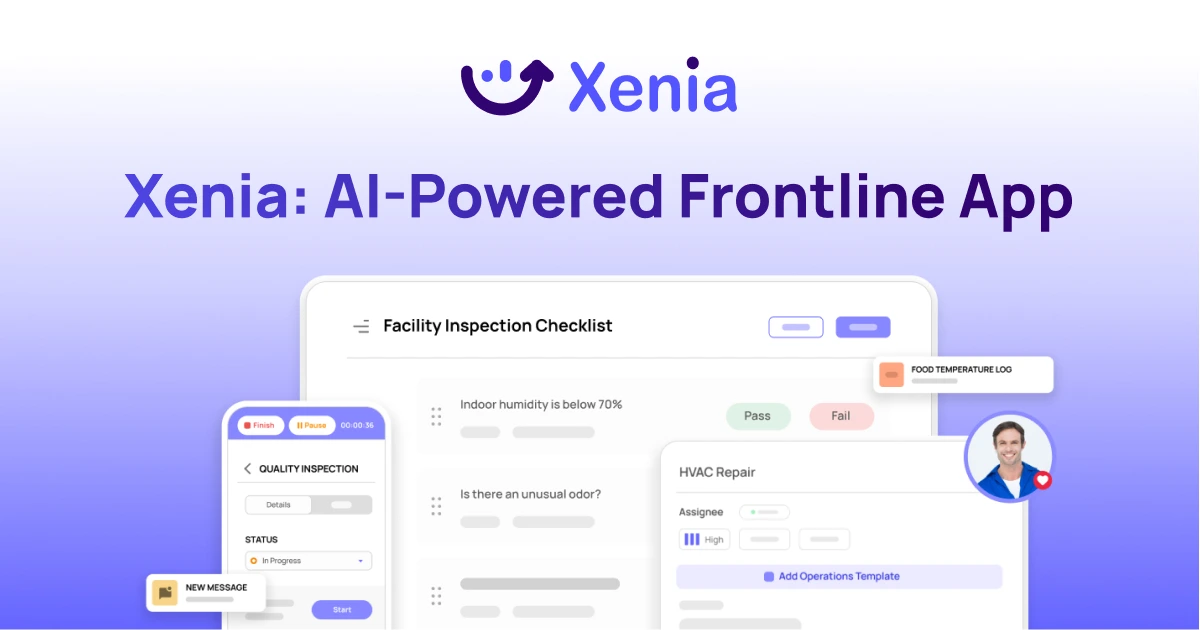
Xenia brings daily operations, maintenance, audits, and compliance into one mobile-first platform. Frontline teams execute work consistently across locations while leadership gets real-time visibility.
Why Multi-Location Operators Choose Xenia:
🤖 AI-Powered Operations, Create digital checklists instantly or convert paper forms with AI. Verify compliance automatically with photo analysis and get instant answers from your operational data.
✅ Daily Operations & Maintenance, Assign work across hundreds of locations in minutes. Report and route issues instantly. Schedule preventive maintenance to catch problems before downtime.
📊 Real-Time Visibility, Track completion, work orders, and performance across all locations through dashboards. Filter by site or asset to spot trends and take action.
Manage operations, maintenance, and compliance across all your locations from one platform

.svg)
.webp)
%201%20(1).webp)

.svg)
%201%20(2).webp)