
Post Summary
Most operations teams treat process vs procedure as the same thing. They should not.
When a process gets written like a procedure, it becomes too rigid to scale.
When a procedure gets written like a process, it becomes too vague to follow.
Both create the same outcome. Inconsistent execution. Compliance gaps. Frontline teams doing the same task ten different ways across ten different locations.
The fix is simple. You just need to know what each one actually is.
Let's start with the process, because that's where most documentation should begin.
.svg)

Priced on per user or per location basis
Available on iOS, Android and Web


What Is a Process?
A process is a high-level sequence of steps that describes how work flows from start to finish.
It defines what needs to happen, in what order, and who is responsible at each stage. It does not tell you exactly how to do each step. That detail comes later in the procedure.
A process answers one question: what is the flow?
Here is what makes something a process:
- High level and broad in scope
- Focuses on the flow of work not the details
- Has a clear start point and end point
- Involves multiple people or teams
- Stays consistent even when specific steps change
Frontline example: A restaurant food safety process looks like this. Receive ingredients. Inspect for quality. Store at correct temperatures. Prepare according to recipe standards. Serve within holding time limits. Document and discard anything out of compliance.
That is a process. It shows the flow. But flow without detail is just a good intention. That's where procedures come in.
What Is a Procedure?
A procedure is a detailed step-by-step set of instructions for completing a specific task within a process.
It tells you exactly how to do something. Who does it. What tools or equipment are needed. What order the steps happen in. What to do if something goes wrong.
A procedure answers one question: how exactly does this get done?
Here is what makes something a procedure:
- Detailed and specific
- Focused on one task or activity
- Written for the person doing the work
- Includes exact steps, tools, and standards
- Changes when methods or equipment change
Frontline example: Within that same food safety process, one procedure might be how to store refrigerated ingredients. Check the walk-in cooler temperature before storing. Place new stock behind existing stock using FIFO. Label each item with the date received. Verify the cooler is between 35 and 38 degrees Fahrenheit. Log the temperature in the daily food safety checklist.
Now that both are clear, here's how they stack up side by side.
Process vs Procedure: Key Differences
Understanding the difference between process and procedure is simpler than most teams think.
A process is the map. A procedure is the turn-by-turn directions.
**
Aspect, Process, Procedure
Scope, Broad/end-to-end, Narrow/task-specific
Detail level, High level, Step by step
Written for, Managers and teams, Frontline workers
Answers, What is the flow?, How exactly is it done?
Format, Flowchart or summary, Numbered steps or checklist
Changes when, Business goals change, Methods or tools change
Ownership, Operations or management, Team leads or trainers
**
One process contains many procedures. They work together, not separately.
The Documentation Hierarchy: Process, Procedure, and Work Instruction
But process and procedure don't exist in isolation. Most operations teams actually work with three levels of documentation, and knowing where each fits is what separates clean ops from constant confusion.
Process sits at the top. It shows the big picture flow of work. Think of it as your operational blueprint. How does a maintenance request move from submission to resolution? That is a process.
Procedure sits in the middle. It provides step-by-step instructions for completing a specific task within that process. How does a technician submit a maintenance request? That is a procedure.
Work instruction sits at the bottom. It is the most detailed level. It covers a single action within a procedure. How does a technician photograph equipment damage before submitting the request? That is a work instruction.
**
Level, What It Covers, Frontline Example
Process, End-to-end flow of work, Maintenance request process
Procedure, Step-by-step task instructions, How to submit a maintenance request
Work instruction, Single action within a task, How to photograph equipment damage
**
Most frontline operations need all three. The mistake most teams make is trying to put everything into one document and ending up with something too long to read and too vague to follow.
Once you have those three levels sorted, one more term comes up constantly, and it confuses almost everyone.
How SOPs Fit Into the Picture
SOP stands for standard operating procedure. This is where most teams get confused.
An SOP is not a separate category. It is a formatted document that can contain a process, a procedure, or both depending on how it is written.
In most frontline operations an SOP typically describes a procedure. It provides the step-by-step instructions a frontline worker needs to complete a specific task consistently every time.
The word standard is the important part. An SOP exists to make sure the same task gets done the same way across every location, every shift, every time.
Here is where operations teams run into problems.
- SOPs get written once, stored in a binder or shared folder, and never touched again
- Nobody knows if they are current.
- Frontline workers do not know they exist.
When something goes wrong, there is no way to verify whether the procedure was followed.
A platform like Xenia solves this directly. SOPs and procedures live inside the platform as digital checklists and templates.
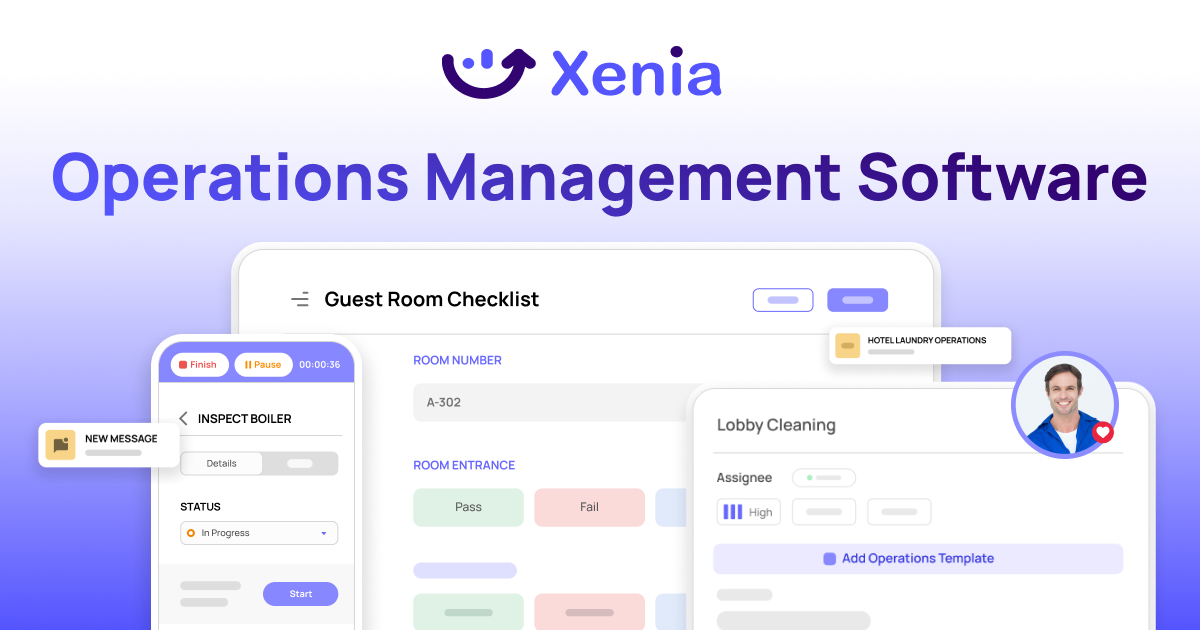
Frontline workers access them on their phones via the mobile app. Managers see completion in real time. Every step is logged with a timestamp and photo verification. When a health inspector shows up or an incident occurs, the documentation is already there.
No binders. No shared folders. No guessing whether the procedure was followed.
Why Getting Procedure vs Process Wrong Causes Problems
It sounds straightforward in theory. In practice, most teams still get it wrong, and the fallout is more serious than a labeling issue.
Getting procedure vs process wrong is one of the most common documentation mistakes in frontline operations. When operations teams confuse the two, things break down fast.
Procedures get written at the process level. The document is too vague. It tells frontline workers that food safety is important and temperatures must be maintained. But it does not tell them what to do, in what order, or what to record. Workers fill in the gaps themselves. Ten workers. Ten different interpretations. Ten different execution standards across your locations.
Processes get written at the procedure level. The document becomes a fifty-step manual trying to cover every possible scenario. Too long to read. Too rigid to follow when conditions change. Managers ignore it. Frontline workers improvise anyway.
Both scenarios lead to the same outcome:
- Inconsistent execution across locations
- Compliance failures during audits and inspections
- No documentation to show what was supposed to happen when something goes wrong
- Longer onboarding because new employees cannot follow unclear documentation
The fix is straightforward. Write processes at the process level. Write procedures at the procedure level. Keep them separate. Keep them clear.
Which One Should You Write?
The good news? Once you see the distinction clearly, the right call becomes obvious. Here's a simple way to decide.
Write a process when:
- You are mapping how work flows across multiple people or teams
- You need to show the big picture before getting into details
- You are onboarding a new manager or team lead
- You are redesigning how a function operates
Write a procedure when:
- A specific task needs to be done the same way every time
- A frontline worker needs step-by-step instructions
- You are training a new employee on a specific task
- You need documentation for compliance or audit purposes
Still not sure? Use this simple test.
Ask yourself: am I describing what happens or how it happens? If the answer is what, write a process. If the answer is how, write a procedure.
**
Situation, What to Write
Mapping how a maintenance request flows from submission to resolution, Process
Training a technician on how to submit a maintenance request, Procedure
Showing how food safety works across restaurant locations, Process
Teaching a cook how to store refrigerated ingredients, Procedure
Documenting how a new employee moves through onboarding, Process
Writing steps for completing a daily opening checklist, Procedure
**
Conclusion
Process vs procedure is not just a terminology debate. It is a documentation decision that directly affects how consistently your frontline teams execute across every location.
A process maps the flow. A procedure provides the steps. An SOP standardizes execution. Together they give your operation the consistency it needs to scale without losing quality.
The teams that understand the difference between process and procedure have fewer compliance failures, faster onboarding, and consistent execution across every location.
Xenia helps operations teams build, manage, and track all of it in one place. Digital SOPs and procedures your frontline team can actually access and follow.
Book a demo and see how Xenia helps multi-location operations teams turn documentation into consistent execution.
Frequently Asked Questions
Got a question? Find our FAQs here. If your question hasn't been answered here, contact us.
Are processes and procedures the same thing?

No. Processes are broad and high-level. Procedures are specific and detailed. Every process contains multiple procedures. Treating them as the same thing leads to documentation that is either too vague or too rigid to be useful.
What is the difference between procedure vs process in frontline operations?
In frontline operations, a process defines how work moves across your team from start to finish. A procedure tells a specific frontline worker exactly how to complete one task within that flow. You need both to run consistent operations across multiple locations.
What is the difference between a process and a procedure?
A process shows what needs to happen and in what order. A procedure shows exactly how a specific task gets done. One is the map. The other is the directions.
Is process and procedure the same thing?
No. A process maps the flow of work from start to finish at a high level. A procedure provides step-by-step instructions for a specific task within that process. They work together but serve completely different purposes.
What are the 4 types of processes?
Operational processes cover day-to-day work. Management processes cover planning and oversight. Support processes cover functions like HR and maintenance. Improvement processes cover how teams identify and fix problems.
Which comes first, process or procedure?
The process always comes first. You map the flow of work at a high level before writing the detailed instructions for each step within it. Think blueprint before instructions.

A Modern, AI-Powered Platform Built Specifically for Frontline Operations
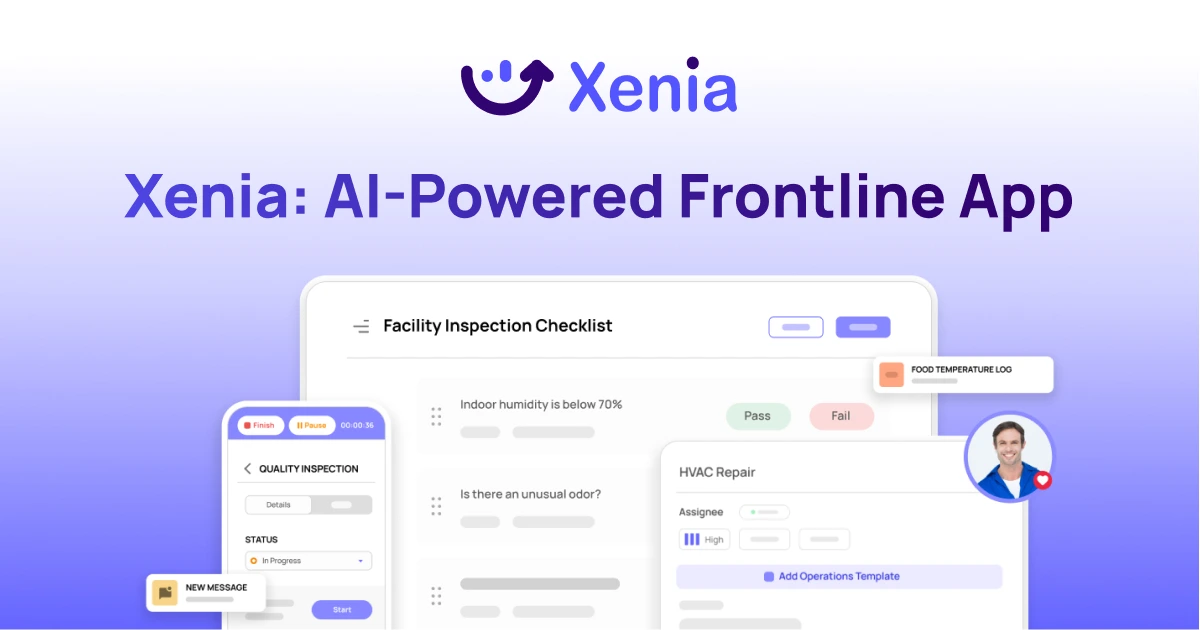
Xenia brings daily operations, maintenance, audits, and compliance into one mobile-first platform. Frontline teams execute work consistently across locations while leadership gets real-time visibility.
Why Multi-Location Operators Choose Xenia:
🤖 AI-Powered Operations, Create digital checklists instantly or convert paper forms with AI. Verify compliance automatically with photo analysis and get instant answers from your operational data.
✅ Daily Operations & Maintenance, Assign work across hundreds of locations in minutes. Report and route issues instantly. Schedule preventive maintenance to catch problems before downtime.
📊 Real-Time Visibility, Track completion, work orders, and performance across all locations through dashboards. Filter by site or asset to spot trends and take action.
Manage operations, maintenance, and compliance across all your locations from one platform

.svg)
.webp)
%201%20(1).webp)

.svg)
%201%20(2).webp)