
.webp)
Post Summary
Most businesses think a fire will never happen to them.
Until it does.
The reality is that the majority of commercial fires are preventable. A blocked exit route. An overloaded socket. Flammable materials stored near a heat source. Small oversights with big consequences.
A fire risk assessment is how you find and fix these problems before they become emergencies. This guide shows you exactly how to do it.
.svg)

Priced on per user or per location basis
Available on iOS, Android and Web


What Is a Fire Risk Assessment?
It is a structured review of your building. You find fire hazards, work out who is at risk, and put controls in place to protect them.
Not a one-time task. An ongoing responsibility that changes as your business changes.
Every employer is legally required to have one. And the person in control of the premises owns that responsibility.
Who Needs a Fire Risk Assessment?
If you employ anyone or operate from premises open to the public, you need a fire risk assessment. This includes:
- Offices and commercial buildings
- Restaurants and food businesses
- Retail stores
- Hotels and hospitality venues
- Warehouses and industrial sites
- Schools and healthcare facilities
No exceptions.
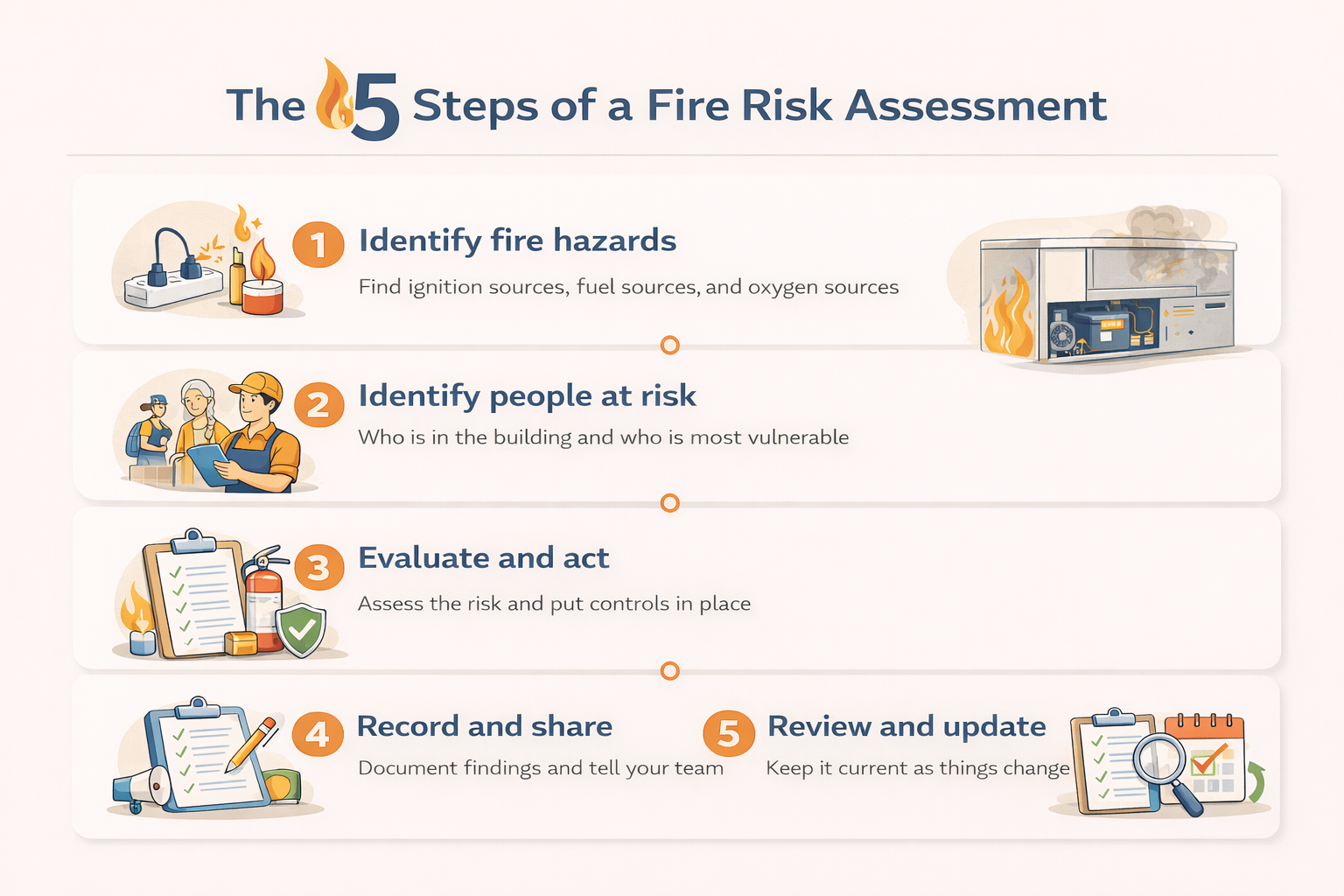
The 5 Steps of a Fire Risk Assessment
**
Step, What You Do
1. Identify fire hazards, Find ignition sources-fuel sources and oxygen sources
2. Identify people at risk, Who is in the building and who is most vulnerable
3. Evaluate and act, Assess the risk and put controls in place
4. Record and share, Document findings and tell your team
5. Review and update, Keep it current as things change
**
Identify fire hazards. Go through every area of your building. Spot what could ignite a fire and what could help it grow. Damaged cables, packed sockets, and combustible items left near heat sources.
Identify people at risk. Look at who comes into your building every day. Then figure out who needs the most protection. Solo workers, unfamiliar visitors, and people who would struggle to get out quickly.
Evaluate and act. Take your hazard list and make decisions. Can you get rid of it? Do it. Cannot remove it completely? Bring the risk down as much as possible. Then add your safeguards. Alarms, extinguishers, lit exit routes, trained people.
Record and share. Get everything on paper. Every hazard spotted, every action taken, every person accountable. Then make sure your team reads it and understands it.
Review and update. A building is never static. Staff change. Equipment gets replaced. Layouts shift. Revisit your assessment on a set schedule and every time something in your building moves or changes.
Fire Risk Assessment Template: What to Include
A solid fire risk assessment template covers these areas:
**
Section, What to Document
Premises details, Address-building type-occupancy
Hazard identification, Ignition-fuel and oxygen sources
People at risk, Staff-visitors-vulnerable individuals
Existing controls, Fire safety measures already in place
Actions needed, Gaps found and what needs fixing
Emergency procedures, Evacuation plan and assembly points
Review date, When the assessment will next be reviewed
Assessor details, Who completed it and when
**
A digital template saves time and makes updates simple. But fire alarm inspection software takes it further. Track what has been completed, assign follow up actions to specific team members, and keep every record organized and inspection ready at all times.
Common Fire Hazards to Look For
When walking your premises, these are the most common fire hazards to check:
Electrical hazards
- Overloaded sockets
- Damaged or frayed cables
- Appliances left on overnight
- Improper use of extension leads
Heating and cooking equipment
- Equipment left unattended
- Grease buildup in commercial kitchens
- Portable heaters near flammable materials
Storage and housekeeping
- Excessive paper or cardboard storage
- Waste not regularly removed
- Flammable liquids stored incorrectly
Building and exits
- Fire doors propped open
- Blocked or cluttered escape routes
- Missing fire stopping in walls and ceilings
Fire Safety Controls Every Business Needs
Once you have identified your hazards, these are the controls to put in place:
**
Control, What It Does
Fire detection and alarms, Early warning for everyone in the building
Fire extinguishers, First response to small fires
Emergency lighting, Visibility when the power goes out
Clear escape routes, Fast unobstructed evacuation
Fire doors, Contain fire and slow smoke spread
Evacuation plan, Everyone knows exactly what to do
Staff fire training, Team ready to respond correctly
Regular inspections, Controls stay functional and compliant
**
How to Keep Your Fire Risk Assessment Up to Date
Most businesses do the assessment once and forget about it.
That is a mistake.
A fire risk assessment is only useful if it reflects reality. Here is when you need to review yours:
- At least once a year as standard
- After any changes to the layout or building
- When new equipment is introduced
- After a fire incident or near miss
- When the number of occupants changes significantly
For businesses managing fire safety across multiple locations, keeping on top of reviews manually gets difficult fast. Fire alarm inspection software lets you schedule reviews, track completion, and get visibility across every site from one dashboard. No chasing paper records. No missed reviews.
Final Thoughts
Every business has a responsibility to protect the people inside it.
A fire risk assessment is how you meet that responsibility. Do it properly, review it regularly, and make sure your safety measures are actually in place and working.
That is not just good practice. It is the right thing to do.
For teams managing fire safety across more than one site, fire alarm inspection software brings everything into one place and takes the complexity out of staying compliant.
Frequently Asked Questions
Got a question? Find our FAQs here. If your question hasn't been answered here, contact us.
How often should a fire risk assessment be carried out?

Once a year as a baseline. But also go back to it any time your building changes. New layout, new equipment, more staff. And if there is ever a fire or a close call, review it straight away.
How much does a fire risk assessment cost?
It comes down to how big and complex your building is. A small business with a simple layout might pay a few hundred dollars for a professional to do it. Bigger buildings with more floors and more people will cost more. Doing it in house with the right knowledge brings the cost down significantly.
Who is responsible for completing a fire risk assessment?
The person in control of the premises. Usually the employer or building owner. They can do it themselves or appoint someone qualified. But the legal responsibility never leaves them.

A Modern, AI-Powered Platform Built for Facility Operations
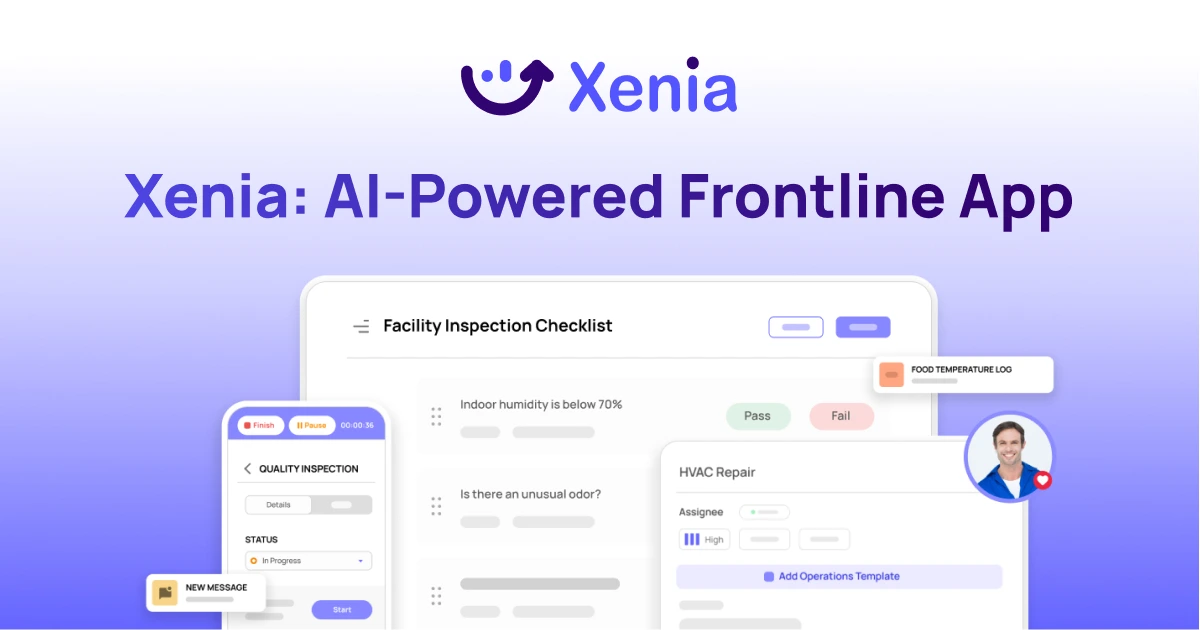
Xenia connects maintenance, safety, inspections, and daily operations into one mobile-first platform. Facility teams respond faster, prevent downtime, and maintain compliance, while leadership tracks performance across all buildings in real time.
Why Facility Managers Choose Xenia:
🤖 AI-Powered Inspections, Verify safety equipment and compliance automatically with AI photo analysis. Surface critical maintenance issues instantly with AI-powered summaries.
🛠️ Work Orders & Maintenance, Report issues via mobile or QR codes. Route requests to teams or vendors. Schedule preventive maintenance for HVAC, elevators, and emergency systems to reduce downtime.
📊 Safety & Visibility, Deploy fire safety and hazard inspection workflows. Monitor work order resolution times and asset health across all facilities.
Manage work orders, maintenance, and safety inspections across all facilities from one platform.

.svg)
.webp)
%201%20(1).webp)

.svg)
%201%20(2).webp)