
Post Summary
Your biggest business risks are not coming from the market.
They are coming from inside your own operations.
A missed checklist. An untrained employee. A process nobody bothered to update. These are the things that quietly damage businesses every single day.
That is operational risk. And most businesses do not take it seriously until something goes wrong.
This guide changes that.
.svg)

Priced on per user or per location basis
Available on iOS, Android and Web


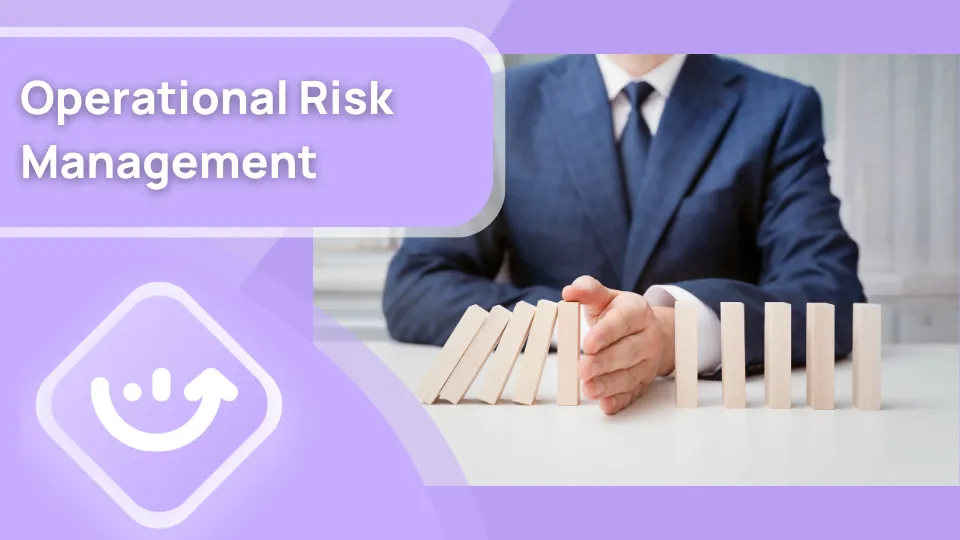
What Is Operational Risk Management?
Operational risk management is the process of finding and fixing risks inside your own business before they cause real damage.
Not market risks. Not competitor risks. Risks from your own people, processes, systems, and external events.
Most businesses react when something breaks. ORM flips that. It catches problems before they turn into costly incidents.
Here is where operational risk actually comes from:
**
Source, What It Covers, Example
People, Human error-misconduct-training gaps, Employee skips a safety check
Processes, Broken workflows-missing controls-outdated SOPs, No process for equipment sign-off
Systems, Technology failures-software bugs-cybersecurity, POS system goes down during peak hours
External Events, Regulatory changes-supply disruptions-natural disasters, New compliance law affects operations
**
The businesses that manage operational risk well do not just react faster. They build systems that catch problems before anyone gets hurt or any money gets lost.
The Operational Risk Management Framework
An operational risk management framework is the structure that stops risk management from being random.
Without it, risk depends on whoever happens to notice a problem. With it, risks get found, assessed, and addressed the same way every time regardless of location or team.
A solid operational risk framework has five components:
**
Component, What It Does
Common language, Risk means the same thing to everyone in your organization
Clear ownership, Every risk has one person responsible for it
Consistent process, Risks are identified and assessed the same way every time
Controls, Safeguards match the specific risks they are designed to address
Monitoring, Leadership stays informed in real time not just at quarterly reviews
**
For multi-location operators, the framework is what runs your risk program when you are not there. You cannot be at every location every day. Your framework is what keeps standards consistent across all of them.
The engine that powers the identify and assess stages of this framework is the operational risk assessment. That is where theory becomes action. And that is exactly what the next section covers.
How to Run an Operational Risk Assessment
An operational risk assessment helps you answer two questions about every risk in your business.
How likely is it to happen? And how bad would it be if it did?
Everything flows from those two answers. Here is the full process:
**
Step, What You Do
1. Risk Identification, Find where risk exists across your operations
2. Risk Assessment, Evaluate likelihood and impact of each risk
3. Risk Mitigation, Decide how to respond to each risk
4. Control Implementation, Put safeguards in place and follow through
5. Monitoring and Reporting, Track controls and keep leadership informed
**
Step 1: Risk Identification. You cannot fix a problem you have not found. Look at how work gets done every day. Check past incidents. Talk to your frontline teams. They know where mistakes and problems usually happen better than anyone at headquarters does.
Step 2: Risk Assessment. Finding risks gives you a list. This step helps you decide what to fix first. Rate each risk on likelihood and impact. Rank them. Assign one owner to each one.
Step 3: Risk Mitigation. Every risk gets one of four responses:
**
Option, What It Means, Example
Transfer, Shift the risk to a third party, Insurance-outsourcing
Avoid, Remove the activity creating the risk, Drop an unreliable vendor
Accept, Live with it when control cost outweighs benefit, Minor low-impact risks
Mitigate, Add controls to reduce likelihood or impact, Add a verification step to a process
**
Step 4: Control Implementation. Controls only work if people follow them. Write them clearly. Train your team. Check regularly that everyone is actually doing them at every location and shift.
Step 5: Monitoring and Reporting. This is what keeps your program alive between formal reviews. Build a dashboard. Track Key Risk Indicators. Act on what you see early before small signals become expensive problems.
KRIs worth tracking:
- Audit completion rates by location
- Food safety inspection scores over time
- Equipment maintenance compliance
- Near-miss reporting volume
- Frontline employee training completion rates by team
This is not something you do once. Update your assessment whenever something changes. A new location opens. An incident occurs. A regulation gets updated.
What Are the 5 Pillars of Operational Risk Management?
The five steps describe the process. The five pillars describe the foundation.
These are the organizational capabilities that make a strong ORM program possible.
**
Pillar, What It Does
Governance, Defines ownership and accountability at every level
Risk Culture, Creates an environment where people flag issues proactively
Risk Identification and Assessment, Ensures consistent-repeatable risk evaluation
Control Environment, Maintains the policies-processes and safeguards that manage risk
Monitoring and Reporting, Provides ongoing visibility so leadership can act on data
**
Governance
Every risk needs a clear owner, not a committee.
Assign responsibility at each level, top leaders, managers, and supervisors.
When someone is in charge, it gets done. If everyone is “in charge,” nothing happens.
Risk Culture
A good risk culture makes the system work. Teams should feel safe to report problems. Management of operational risk should be part of everyday work. Without this, people hide issues and gaps appear.
Risk Identification and Assessment
Repeatable, consistent, comprehensive. These are the three words that describe strong risk identification.
Same process, every location, every quarter. When you do this well, nothing slips through unnoticed.
Control Environment
The question is not whether you have controls. It is whether the right controls are being followed by the right people at the right time.
Review them regularly. Test them. Update them when your operations change. Controls that are not working are often worse than no controls at all because they create false confidence.
Monitoring and Reporting
Monitoring closes the loop on everything else.
KRIs tracked in real time. Leadership reports sent on schedule. Exceptions flagged and followed up immediately. When this pillar is strong, your ORM program never goes blind between formal reviews.
9 Operational Risk Management Best Practices
These are the best practices for risk management that separate businesses that stay ahead of problems from the ones that are always reacting to them.
Make Everyone Speak the Same Risk Language
When different teams define risks differently, your entire program falls apart. Pick a common risk language. Use it across every location, every department, every team. No exceptions.
Start With a Self-Assessment
Get every business unit to document their own risks and controls. This is called a Risk and Control Self-Assessment (RCSA). Done right, it gives you a real picture of where your organization is exposed. The key is input from the people doing the actual work, not just managers filling out templates.
Make Risk Part of Daily Operations
Risk management that lives in a quarterly report does nothing. It needs to be part of how your teams work every day. Managers check risk data before making decisions. Frontline teams know exactly what to flag and how to report it.
Replace Manual Processes With Technology
Manual processes don’t work well as you grow. The more locations you have, the more mistakes happen, missed checklists, late reports, and compliance problems.
Good ORM software like Xenia fixes this. Xenia helps multi-location teams standardize processes, track tasks, and spot compliance issues before they become big problems.
Keep Your Risk Register Current
A risk register that is six months out of date is worse than having no register at all. It creates false confidence. Assign an owner to every risk. Set review dates. Update it when things change.
Train the People Closest to the Risk
Your shift managers and floor teams are the first line of defense. They see problems before anyone at headquarters does. Train them to recognize risks and report them early. It is one of the best investments you can make in your ORM program.
Track Leading Indicators, Not Just Incidents
Don’t wait for problems to happen.
Make a simple dashboard with key risk signals, like completed audits, training, maintenance checks, and near-miss reports.
This helps you spot issues before they occur.
Review Controls Every Year at Minimum
Regulations change. Technology changes. Your business changes. Controls that worked last year might not be enough today. Put control reviews in your calendar and treat them as non-negotiable.
Connect ORM to the Rest of Your Risk Programs
ORM does not operate in a vacuum. Connect it to your compliance, audit, and enterprise risk functions. Share data. Share risk libraries. Give leadership one clean picture of overall exposure instead of five separate reports saying different things.
How to Build a Risk Register That Actually Gets Used
Most risk registers get built once and never opened again.
That is not a risk register. That is a document.
A risk register that actually works has six things in it:
**
Field, What to Include
Risk description, What is the risk in plain language
Risk source, People-process-system or external event
Likelihood rating, How likely is it to happen on a scale of 1 to 5
Impact rating, How bad would it be if it did on a scale of 1 to 5
Risk owner, One named person responsible for managing it
Planned response, Transfer-avoid-accept or mitigate
Review date, When this entry will next be reviewed and updated
**
Here are real operational risk examples that belong in a register for a multi-location operator:
**
Risk, Source, Likelihood, Impact, Response
Employee skips food safety checklist, People, High, High, Mitigate with digital verification
POS system failure during peak hours, Systems, Medium, High, Transfer via maintenance contract
New health regulation not communicated to locations, Process, Medium, High, Mitigate with structured comms system
Key supplier goes out of business, External, Low, High, Avoid by qualifying backup suppliers
Untrained new hire makes compliance error, People, High, Medium, Mitigate with frontline training program
**
The register only works if people use it. Assign real owners. Set real review dates. Build the review into your operational calendar.
Conclusion
Good ORM comes down to four things.
Find your risks. Rank them. Control them. Monitor them continuously.
Simple in theory. The execution is where it gets hard, especially when you are running multiple locations with teams moving fast every single day.
Businesses that get this right do not just have better frameworks. They have better tools that make consistent execution possible at scale.
Xenia is built for exactly that kind of operation. One platform to standardize processes, track compliance, and surface risks across every location before they turn into real problems.
Want to see how this looks in practice? Book a demo.
Frequently Asked Questions
Got a question? Find our FAQs here. If your question hasn't been answered here, contact us.
What industries need operational risk management most?

All of them need it. But multi-location operators in food service, retail, healthcare, and financial services carry the most operational risk exposure and have the most to gain from getting ORM right.
What is the difference between operational risk management and enterprise risk management?
ERM covers every risk your business faces. ORM is the piece of ERM focused specifically on internal operational risks. People, processes, systems, and external disruptions. ERM thinks about risk and reward. ORM focuses on risk reduction.
What does effective operational risk management look like in practice?
Get three things right. The framework tells everyone what to do. The culture makes sure they actually do it. The operational risk management tools make it scalable across every location. All three together. That is what effective ORM looks like.
ORM is known as what type of process?
Linear in structure, continuous in practice. You follow the five steps in order. Then you start over. Risks change constantly. So does the program that manages them.
Operations risk management includes how many steps?
The ORM process includes five steps: Identification, assessment, mitigation, control implementation, and monitoring. Every step is necessary. Every step builds on the one before it.
What is the primary objective of operational risk management?
Operational risk management strategies stop your own operations from working against you. ORM protects your business from internal failures before they turn into costly incidents.

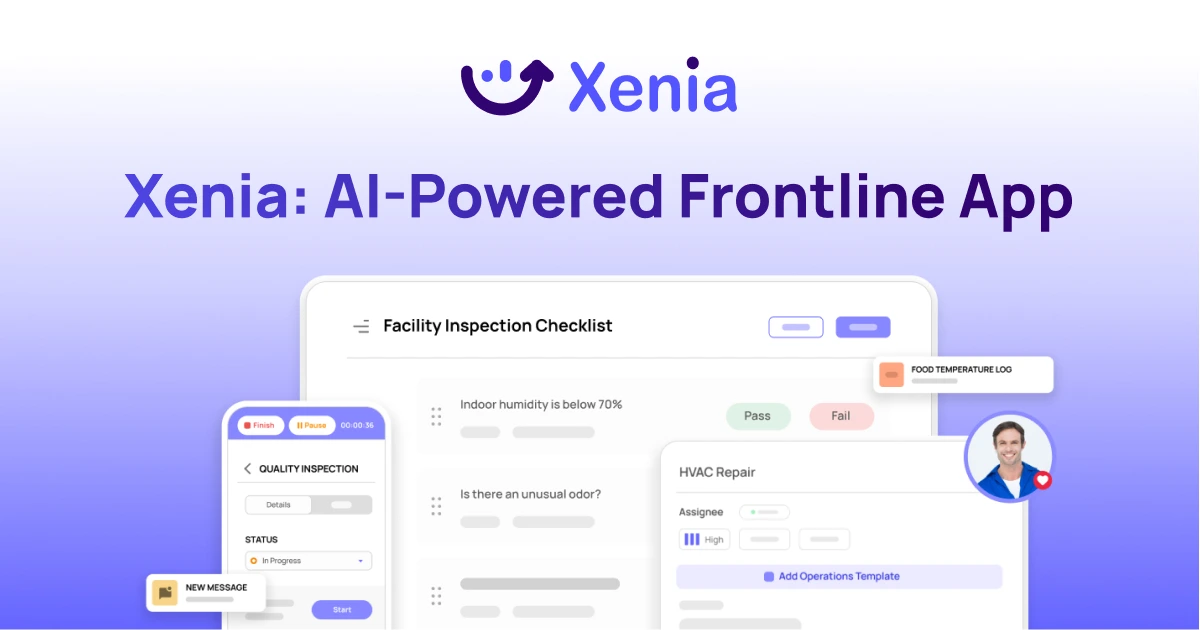
A Modern, AI-Powered Platform Built Specifically for Frontline Operations
Xenia brings daily operations, maintenance, audits, and compliance into one mobile-first platform. Frontline teams execute work consistently across locations while leadership gets real-time visibility.
Why Multi-Location Operators Choose Xenia:
🤖 AI-Powered Operations, Create digital checklists instantly or convert paper forms with AI. Verify compliance automatically with photo analysis and get instant answers from your operational data.
✅ Daily Operations & Maintenance, Assign work across hundreds of locations in minutes. Report and route issues instantly. Schedule preventive maintenance to catch problems before downtime.
📊 Real-Time Visibility, Track completion, work orders, and performance across all locations through dashboards. Filter by site or asset to spot trends and take action.
Manage operations, maintenance, and compliance across all your locations from one platform

.svg)
.webp)
%201%20(1).webp)

.svg)
%201%20(2).webp)