
Post Summary
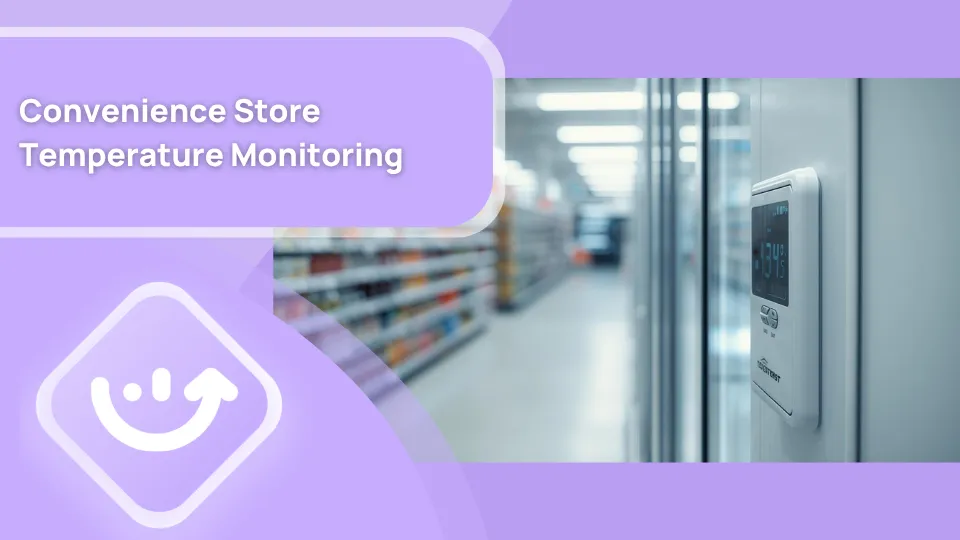
It is 2am. A sensor fires on your walk-in cooler.
The system sends a text to the store manager. They see it. They walk over, check the unit, and decide everything looks fine. Maybe they write something on a paper log. Maybe they do not. By 8am, nobody knows whether a corrective action was actually taken, what caused the excursion, or whether the food inside was safe.
This is not an edge case. This is the standard temperature excursion response workflow in most convenience stores right now.
Convenience store temperature monitoring does its job. The sensors catch the problem. Everything after that is manual, inconsistent, and largely undocumented. That 20-minute gap between alert and documented corrective action is where product loss happens, where health inspection violations get created, and where c-store compliance quietly falls apart.
This article maps that gap in detail and shows what automated corrective action management actually looks like in a real c-store environment.

.svg)

Priced on per user or per location basis
Available on iOS, Android and Web


Related Resources
- How convenience stores manage food safety compliance across locations
- What a corrective action process looks like end to end
- How Xenia monitors temperature compliance across locations
What does the manual temperature excursion response actually cost C-stores?
Most operators know their sensors are working. The alerts fire. The gap is what happens next.
Here is what the manual response workflow looks like in most stores:
**
Step, What actually happens, Time elapsed
Sensor detects excursion, Alert fires, 0:00
Alert reaches store manager, Text-email or app notification, 1 to 5 min
Manager investigates, Physical check of the unit, 5 to 15 min
Manager determines cause, Equipment? Door left open? Ambient temp?, 15 to 20 min
Corrective action taken, Product moved-unit adjusted-door closed, 20 to 30 min
Documentation, Paper log-if it gets filled in at all, 25 to 40 min
Supervisor notified, If at all, Variable
**
That is the best case. One person, fully awake, responding to a single alert. During overnight shifts with minimal staff, every step takes longer. And documentation is almost always the first thing that gets dropped.
The costs show up in four specific ways.
Product loss found after the fact. A cooler runs warm for two hours before anyone checks it. By the time they do, the damage is done. Perishables are compromised. But because there is no documented timeline, nobody can say exactly when the excursion started or how long the product sat outside the safe range.
Paper logs that prove nothing. A health inspector does not want to see a handwritten note that says "checked cooler, temp OK." They want a timestamped record showing when the excursion happened, what action was taken, who took it, and when the temperature came back into range.
Paper logs rarely have all of that. And they are not searchable when an inspector asks for the last 90 days. This is exactly why digital food safety management is replacing paper-based systems in multi-location c-store operations.
No link between the alert and the response. The sensor system and the corrective action record live in completely separate places. The sensor fires. The manager responds. But those two events are never connected in a single documented record. If the same cooler has three excursions in two weeks, nobody sees the pattern unless someone manually cross-references two different systems.
Compliance exposure every single time. Every undocumented temperature excursion is a potential violation. Under FSMA, corrective actions must be documented with records, and those records must be available to inspectors on request. Incomplete paper logs create direct regulatory risk every time an excursion goes unrecorded.
What does a complete automated excursion response workflow look like?
The difference between a manual workflow and an automated one is not just speed. It is completeness. The record at the end of an automated workflow is something you can actually use. The record at the end of a manual workflow is usually whatever the manager remembered to write down.
Here is the automated workflow, step by step.
Step 1: Sensor fires, corrective action SOP launches immediately
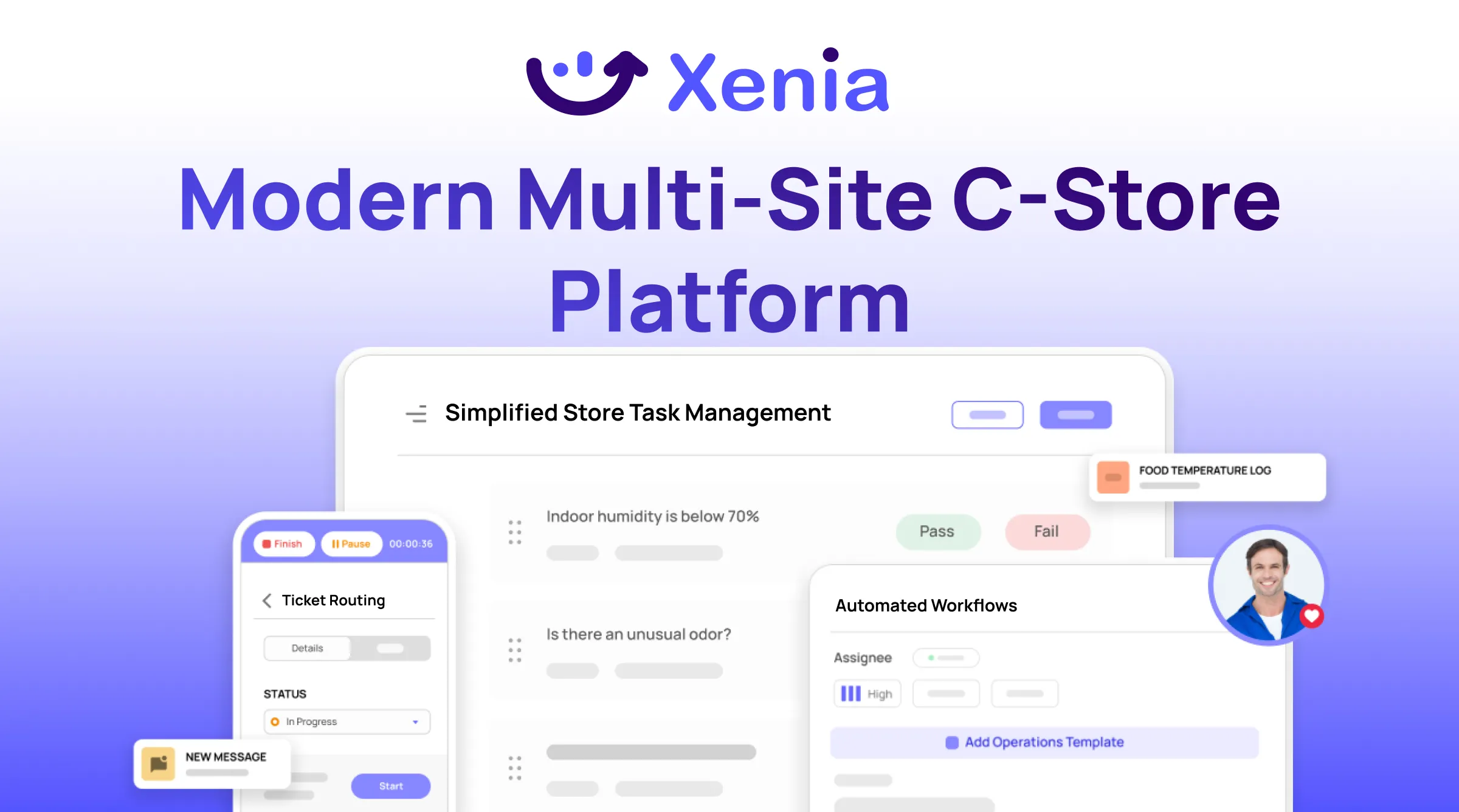
In an automated workflow, the alert does not just send a text. It triggers a structured food safety corrective action workflow in the ops platform within seconds. The store manager receives a notification that already contains the unit, the location, the current temperature, the threshold breached, and a prompt to start the corrective action SOP.
No guessing. No improvising. The response workflow begins on its own.
Step 2: Branching logic routes the response based on the cause
Not every temperature excursion has the same cause. Automated corrective action tracking software like Xenia uses branching logic to route the response based on what the manager identifies.
**
Identified cause, Automated next steps
Door left open, Close door-recheck temp in 15 min-document
Product overloaded, Remove excess-document-recheck
Equipment malfunction suspected, Equipment failure response path-auto work order to maintenance
Ambient temperature issue, Document-escalate to supervisor
**
The manager picks the cause from a structured prompt. The CAPA workflow adjusts the required steps automatically. The response is the same whether it is a 10-year veteran or someone on their third shift.
Step 3: Photo required at every step
Each corrective action step requires a photo before it can be marked complete. A photo of the temperature reading. A photo of the action taken. A photo of the unit after the response. The system will not let the record close without them. That is what makes the digital corrective action record defensible when an inspector asks questions.
Step 4: Work order auto-created if equipment failure is suspected
When the branching logic points to equipment failure, the platform creates a maintenance work order automatically and routes it to the right team. The manager does not make a separate call or submit a separate ticket. The temperature excursion and the work order are linked in one record.
If the same unit has had repeated excursions, that history is visible when the work order is opened. For operations that route these work orders through existing maintenance systems, how work order management connects to field operations covers that integration in full.
Step 5: Timestamped record closes when every step is done
When all corrective action steps are completed and documented, the record closes with a full timestamp trail. Alert time. Response start time. Each step. Resolution time. Temperature at each checkpoint. Clean, complete, and searchable.
How does corrective action documentation protect C-stores during health inspections?
A health inspector asks a simple question. Was this temperature excursion documented, and was a corrective action taken?
In a manual system, the answer depends on whether the store manager wrote something down that shift, whether they wrote enough, and whether that paper is still findable months later.
In an automated system, the answer is always yes. And you can prove it.
Some operators run manual temperature checks every four hours across every unit in the store. Coolers, freezers, roller grills, ovens, warmers. That kind of discipline takes real effort. But it still leaves gaps between checks, does not document the corrective action separately from the original log, and does not produce the exportable timestamped record a health inspector expects.
The complete food safety corrective action record an inspector needs includes:
- Exact time the excursion was detected
- Temperature at detection and at resolution
- Who responded and when
- Specific corrective action steps taken
- Photo evidence for each step
- Time temperature returned to safe range
A paper log captures some of this on a good day. A digital corrective action record captures all of it, automatically, every time, regardless of who is working.
The exportable temperature log matters too. When an inspector asks for 90 days of records, a digital system produces them in minutes. A paper-based system requires someone to physically locate, organize, and compile records that may be incomplete or simply gone.
What does a multi-location excursion pattern reveal that single-location logs hide?
A single store's paper log tells you about that store. It tells you nothing about what is happening across your portfolio.
Multi-location c-store compliance requires a different view.
When temperature excursion data flows into a central dashboard from all locations, patterns become visible that individual logs never show.
Recurring excursions at the same location point to equipment failure. Three walk-in cooler excursions at store 14 in 30 days is not bad luck. That is an equipment issue. A cross-location dashboard surfaces that pattern early enough to schedule preventive maintenance before the next inspection.
Time-of-day clustering points to staffing, not equipment. If excursions at multiple locations consistently happen between midnight and 4am, the problem is probably door management during low-staff overnight shifts. The fix is a training or staffing intervention, not a maintenance call.
Location-to-location comparison shows your highest-risk stores. A district manager covering 15 locations needs to know which stores have weak temperature compliance before an inspection, not after. Excursion frequency, response time, and corrective action completion rate by location gives that visibility. You cannot get it from individual paper logs.
This is where automated corrective action management software goes beyond the individual incident. It turns isolated events into operational patterns you can actually act on.
The broader picture of how convenience store operations manage compliance across multiple locations shows how this cross-location visibility fits into a complete c-store ops approach.
What does consistent automated excursion response make possible at scale?
When every temperature excursion triggers an automated corrective action workflow, three things change.
Every excursion is documented. No gaps because someone forgot, was too busy, or just did not bother. The record exists regardless of shift, time of day, or how long the person has been working there.
Equipment failure patterns surface before they become emergencies. When work orders link automatically to the excursions that triggered them, three work orders on the same unit in 60 days becomes visible. You catch the failing equipment before it fails completely during peak hours.
Store managers follow a standard SOP instead of improvising. A new hire at 2am does not have to figure out the right response from memory. The corrective action workflow tells them exactly what to do and confirms they did it before the record closes.
How does Xenia close the temperature excursion response gap?
Every problem described in this article has a direct solution in how Xenia handles the excursion-to-corrective-action workflow. Here is exactly how it maps.
Alert triggers corrective action SOP in seconds, not minutes. When a sensor fires and triggers a Xenia alert, a structured corrective action SOP launches on the store manager's mobile device immediately. No waiting for someone to call someone. The response begins on its own.
Step-by-step mobile guidance so every shift responds correctly. Xenia's mobile prompts walk the store manager through the corrective action SOP from detection to resolution. Every step has required fields. Every step that needs photo evidence cannot be marked complete without it. The response is consistent whether it is a 10-year veteran or someone on their third shift.
Equipment failure routes automatically to the maintenance team. When the corrective action workflow identifies equipment failure as the likely cause, Xenia creates a work order and routes it to the right team without any manual step. The excursion and the work order are linked in one record. Repeated failures on the same unit are visible in the equipment history.
Every response produces a complete, defensible record. Every completed corrective action workflow in Xenia produces a timestamped record: alert time, response start, each action with photo, and resolution time. That record is permanent, searchable, and exportable the moment an inspector asks for it.
Ninety days of temperature history ready on demand. Xenia's full temperature log, including every excursion, every corrective action, and every resolution, is exportable for any date range. Ninety days of records available in the time it takes to pull up a screen.
Portfolio-wide visibility from a single dashboard. The Xenia multi-location excursion dashboard shows excursion frequency, response time, and corrective action completion rates across the whole portfolio. A district manager covering 20 locations sees everything without logging into 20 stores.
Unresolved overnight excursions escalate automatically. If a corrective action SOP is triggered but not completed within a defined time window, Xenia escalates to a supervisor automatically. The excursion cannot be quietly ignored.
See how Xenia automates temperature excursion response. Book a demo built around your c-store compliance workflow.
Conclusion
The sensor is doing its job. The problem has never been detection.
It is the 20 minutes between an alert and a documented corrective action. The paper log that may or may not get filled in. The store manager improvising instead of following a defined protocol.
Automated corrective action tracking software closes that gap by structuring the response, documenting it, and making it consistent regardless of who is on shift.
Xenia does exactly that. Sensor alert to corrective action SOP in seconds. Step-by-step mobile guidance. Automatic work order creation. A complete exportable record ready for any inspection.
Book a Xenia demo and see the full excursion-to-corrective-action workflow live.
Frequently Asked Questions
Got a question? Find our FAQs here. If your question hasn't been answered here, contact us.
How should district managers use temperature excursion data across multiple locations?

Look for patterns, not just incidents. One excursion is an event. Three excursions on the same unit in 30 days is an equipment problem. Excursions clustering overnight across multiple stores is a staffing gap. The data tells you which problem you actually have.
What is the difference between a corrective action and a preventive action in temperature compliance?
A corrective action responds to the excursion that already happened. A preventive action fixes the root cause so it does not happen again. Most c-stores only have a process for the first one. That is why the same unit fails repeatedly.
Can a corrective action workflow work without replacing existing sensor hardware?
Yes. Corrective action management software connects to your existing sensors. It receives the alert and launches the structured response workflow. You do not need new hardware. You need a process that actually closes the loop after the alert fires.
How often do temperature excursions actually happen in convenience stores?
More often than most operators realize. Minor excursions on cold cases, roller grills, and freezer units happen regularly. Most go unlogged in manual systems because the alert fires but nobody writes anything down. What shows up on paper is only a fraction of what is actually happening.
What happens to food safety liability when a temperature excursion has no documented corrective action?
No documentation means no defense. If a customer gets sick and the excursion happened that night, you have nothing to show an inspector. A timestamped digital record is the only thing that proves your team responded.


A Modern, AI-Powered Platform Built Specifically for Frontline Operations
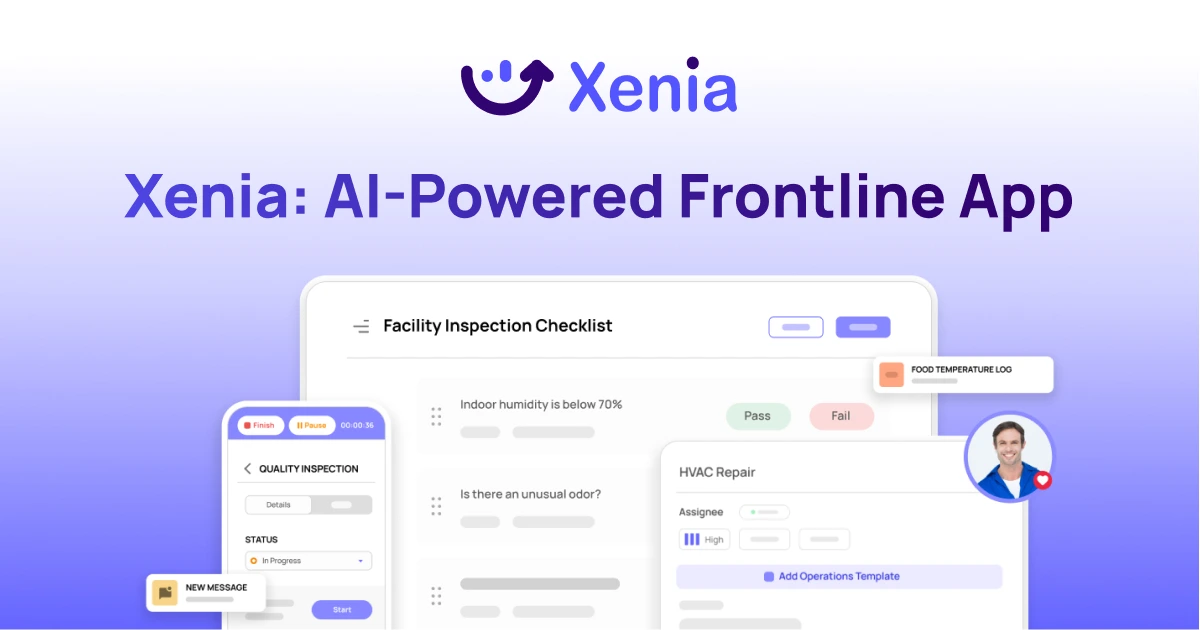
Xenia brings daily operations, maintenance, audits, and compliance into one mobile-first platform. Frontline teams execute work consistently across locations while leadership gets real-time visibility.
Why Multi-Location Operators Choose Xenia:
🤖 AI-Powered Operations, Create digital checklists instantly or convert paper forms with AI. Verify compliance automatically with photo analysis and get instant answers from your operational data.
✅ Daily Operations & Maintenance, Assign work across hundreds of locations in minutes. Report and route issues instantly. Schedule preventive maintenance to catch problems before downtime.
📊 Real-Time Visibility, Track completion, work orders, and performance across all locations through dashboards. Filter by site or asset to spot trends and take action.
Manage operations, maintenance, and compliance across all your locations from one platform

.svg)
.webp)
%201%20(1).webp)

.svg)
%201%20(2).webp)