
.webp)
Post Summary
A cashier short by $50 at the end of a shift.
A safe that hasn't been counted properly in three days. A register discrepancy nobody flagged until the weekly report landed on someone's desk.
None of these are accidents. They're what happens when cash handling procedures exist on paper, but nobody is actually following them on the floor.
Cash handling in retail is one of the highest-risk operational areas for any multi-location business. The exposure isn't just financial. Weak procedures create opportunities for theft, create compliance gaps, and put your business at risk every single shift.
This guide gives you everything you need. A complete retail cash handling policy template.
Step-by-step procedures for opening, during-shift, closing, and reconciliation. Cash handling tips for cashiers. And a clear picture of how to make sure those procedures actually get followed across every location you run.
.svg)

Priced on per user or per location basis
Available on iOS, Android and Web


Related resources
- How to reduce retail shrinkage with better loss prevention training
- A practical guide to running effective retail store audits
- How multi-location retail teams manage daily tasks without dropping the ball
- How to build a retail audit program that actually catches problems early
What are retail cash handling procedures?
Retail cash handling procedures are the documented steps your team follows every time they touch cash.
At the register. At the safe. During shift changes. At end of day.
Good cash handling procedures answer three things clearly:
- Who is authorized to handle cash and at what point in the process
- What steps must be completed, in what order, with what documentation
- How discrepancies get reported, investigated, and resolved
Without clear answers to all three, you don't have a cash handling policy. You have loose guidelines people follow when they feel like it and skip when they're busy.
Why cash handling in retail matters
The numbers make the case fast.
Retail shrinkage costs the industry billions every year. A significant portion comes from internal theft and cash handling errors, not shoplifting. Most of those losses happen because the process has gaps a tighter procedure would have closed.
Here's what poor cash handling procedures actually cost:
- Register shortages that go undetected until end-of-week reconciliation
- Safe discrepancies that can't be traced because no dual-control process exists
- Theft that's hard to prove because documentation is inconsistent or missing
- Audit failures because cash handling records aren't verifiable
- Customer-facing delays when shift handovers aren't documented properly
Good retail cash handling procedures close these gaps before they become losses.
Retail cash handling policy template: what to include
Every retail cash handling policy needs to cover these core elements. Use this as your starting point.
**
Policy element, What it defines
Authorized personnel, Who can access the register-safe and cash office
Dual control requirements, Which steps require two people to be present
Register fund starting amount, Standard opening float per register
Cash drop thresholds, Maximum cash in register before a drop is required
Safe access procedures, Who can open the safe-when and with what documentation
Discrepancy reporting, What to do when a count doesn't balance
Documentation requirements, What gets logged-by whom and how
Disciplinary consequences, What happens when procedures aren't followed
**
This policy needs to be documented, signed off by every team member who handles cash, and stored somewhere every manager can access instantly. A shared drive nobody checks doesn't count.
Xenia's checklists and SOPs tool lets you store your cash handling policy digitally with mandatory read and sign-off tracked for every team member across every location.
Step-by-step retail cash handling procedures
1. Opening procedures: register and safe setup
The opening process sets the tone for the entire shift. Done right, it creates a verifiable starting point that makes end-of-day reconciliation clean and accurate.
Opening cash handling checklist:
- Count the opening float and verify it matches the standard register fund amount
- Document the opening count with the amount, date, time, and name of the person counting
- Have a second team member or manager verify and countersign the count
- Check for anything unusual in the register drawer or cash area before starting
- Confirm the safe balance matches the recorded amount from the prior closing count
- Log any discrepancy between the recorded balance and the actual count immediately, before the shift begins
- Report discrepancies to the manager on duty before the register opens for transactions
- Lock the safe after completing the opening count
Never open a register without a verified, documented opening count. A shift that starts without a confirmed opening balance makes end-of-day reconciliation almost impossible to do accurately.
2. During-shift cash handling procedures for cashiers
Most cash handling errors happen during the shift, not at opening or closing. These steps reduce the opportunities for errors and theft while the store is trading.
During-shift cash handling checklist:
- Keep the register drawer closed between every transaction
- Count change back to the customer verbally before handing it over
- Place large bills on top of the register while the transaction processes, not in the drawer, until change is confirmed
- Never leave a register unattended with the drawer open
- Complete a cash drop to the safe when the register reaches the maximum cash threshold in your policy
- Document every cash drop with the amount, time, and both names if dual control is required
- Never share a register with another cashier without a formal register change process
- Report any suspected counterfeit bills to the manager on duty immediately
Cash drop procedure step by step:
**
Step, Action, Documentation required
1, Count cash to be dropped in view of a second person, Yes-both sign
2, Record the drop amount on the cash drop log, Yes
3, Place cash in a sealed deposit bag, Yes-bag number logged
4, Transfer to safe using dual control, Yes-both sign
5, Record the drop in the register log, Yes
**
Cash handling tips for cashiers:
- Always count cash received from a customer before putting it in the drawer
- If a customer disputes change, call a manager instead of resolving it yourself
- If your register doesn't balance during a shift, flag it immediately rather than hoping it fixes itself at closing
- Never accept bills over a certain denomination without manager approval if your policy requires it
3. Shift changeover procedures
Shift changeovers are one of the highest-risk points in retail cash handling. When accountability isn't documented, discrepancies from one shift get inherited by the next with no way to trace them.
Shift changeover cash handling checklist:
- The outgoing cashier counts their register drawer in full before leaving
- The incoming cashier counts the same drawer independently and records their count separately
- Both counts are compared and any discrepancy noted and signed off before the outgoing cashier leaves
- The manager on duty reviews and countersigns the changeover documentation
- Any discrepancy above the threshold triggers an immediate investigation before the shift continues
- The outgoing cashier signs off confirming the count and handover is complete
- Register access is transferred formally, not through a verbal handoff
Use a documented shift handover log for every changeover. A verbal "it's all good" is not a handover. It's a gap in your audit trail.
4. Closing procedures: cashing up in retail
Cashing up procedures in retail are where the day's cash handling gets verified against transactions. Done properly, this is the strongest control point in the entire process.
Closing cash handling checklist:
- Close the register to new transactions before starting the count
- Count the full register drawer in a secure, non-public area
- Record the closing count by denomination, not just total
- Compare the closing count to the expected amount based on opening float plus net cash sales
- Calculate any over or short and document it immediately
- Have a second person verify the closing count independently before recording the final figure
- Complete a bank deposit slip for any cash going to the bank
- Place the bank deposit in a sealed bag and log the bag number
- Return the float for the next day to the safe and confirm the amount
- Lock the safe before leaving the cash area
- The manager on duty signs off on the closing count and any discrepancies
Every closing count discrepancy, no matter how small, should be documented. A consistent pattern of small shortages is often a stronger indicator of a cash handling problem than a single large one.
5. Reconciliation procedures
Reconciliation is where cash handling data gets verified against your POS system records. This is your primary control for catching errors and identifying patterns that point to a process failure or theft.
Daily reconciliation checklist:
- Pull the POS sales report for the day, broken down by payment type
- Extract the total cash sales figure from the POS report
- Compare cash sales from POS to the net cash counted at closing, accounting for the opening float
- Calculate any over or short
- Review all cash drop records to confirm they match the safe log
- Confirm the bank deposit amount matches the recorded deposit figure
- Document the reconciliation result and sign off
- Report any discrepancy above your threshold to the appropriate manager or loss prevention contact
Reconciliation tracking framework:
**
Result, Threshold, Action required
Balanced, Zero variance, Log and file
Minor short, Under policy threshold, Document and monitor for patterns
Major short, Over policy threshold, Escalate to manager immediately
Over, Any amount, Document and investigate
Recurring pattern, Any consistent variance, Loss prevention review
**
Use a standardized cash count sheet to make reconciliation consistent across every location. When every location uses the same format, discrepancies are easier to compare and patterns are easier to identify across your portfolio.
Cash handling equipment every retail location needs
Good cash handling in retail depends on having the right equipment in place and working properly.
**
Equipment, Purpose, Key note
Cash register or POS system, Records every transaction, Never opened without a transaction
Drop safe, Receives cash drops during the shift, Dual control required for access
Counterfeit detection pen or UV light, Verifies large bills, Use on every bill above a set denomination
Deposit bags, Secures cash for bank transport, Log every bag number
Coin counting machine, Speeds up denomination counting, Manually verify if a discrepancy appears
Security camera coverage, Provides audit trail for cash handling areas, All cash handling within camera view
**
Room service cash handling example
For hospitality operators managing room service cash transactions, the same core principles apply with a few specific additions.
Room service cash handling needs to account for:
- The server carrying a float on their person during the shift
- Documenting each transaction at the point of delivery, not after returning to the cashier
- A reconciliation process at the end of each server's shift rather than only at end of day
- Tips documented separately from the base transaction amount
- Cash collected during the shift handed directly to the manager on duty, not held overnight
The reconciliation process mirrors the retail version. Starting float, plus collected cash, minus expected sales total, equals over or short. Document every variance. Every time.
Common cash handling mistakes in retail
These are the mistakes that create losses and compliance gaps most often.
Leaving the register drawer open between transactions. This creates opportunities for undetected cash removal and makes reconciliation harder.
Counting cash in public view. Cash counts should always happen in a secure, non-public area. Counting in view of the store floor is a security risk.
Skipping dual control on cash drops and safe counts. Single-person cash handling removes the primary protection against internal theft.
Failing to document discrepancies. If a register is short and nobody logs it, the pattern stays invisible. Undocumented discrepancies are how ongoing theft stays hidden for months.
Informal shift changeovers. A verbal handoff with no count and no signature means the incoming cashier inherits whatever was in the drawer before they arrived.
Not reviewing patterns. A $5 shortage once is a mistake. A $5 shortage every Thursday closing shift is a pattern that needs immediate attention.
How to scale cash handling procedures across multiple retail locations
A strong cash handling procedure at one location is a starting point. Making it consistent across 10, 20, or 50 locations is where most retail operators fall short.
The problems that show up at scale:
- Each location develops its own informal version of the procedure over time
- Managers train new staff differently based on personal habits and shortcuts
- Discrepancies at individual locations go unreported to the broader organization
- Nobody has visibility into which locations consistently run over or short until it's already serious
The fix is the same one that works for every operational standard at scale. Centralize the procedure. Digitize the documentation. Track compliance in real time across every location.
For more on how to build consistent retail operations across multiple locations, the retail operations execution guide covers the full framework. For C-store operators managing high-frequency cash handling across multiple shifts, the daily convenience store checklist covers the broader operational context.
How Xenia ensures cash handling SOPs are followed, tracked, and audited across all retail locations
Most retailers have a cash handling policy. The real problem is verification.
How do you know the procedure is actually being followed at every register, every shift, at every location you run?
Xenia ensures your cash handling SOPs get executed correctly, documented completely, and audited consistently across every location. It is an operations execution platform built for multi-location retail, restaurant, and C-store operators.
Here is what that looks like in practice:
- Digital checklists for opening counts, cash drops, changeovers, and closing reconciliation. Every step timestamped. Every completion logged. Nothing skipped without a manager alert.
- Cash handling audits with weighted scoring and photo documentation for key steps. Failed items generate corrective actions automatically.
- Real-time compliance dashboards showing which locations completed their cash handling procedures and which managers signed off. No manual report needed.
- Multi-location oversight so district managers can see cash handling compliance across all their locations in one live view.
For convenience store operators, Xenia integrates with the broader convenience store operations workflow. For retail chains, it connects to the retail operations execution layer.
Book a demo to see how it works for your operation.

Conclusion
Cash handling procedures are only as strong as the systems behind them.
A policy document sitting in a binder in the back office doesn't protect you. What protects you is a procedure every team member follows every shift, with documentation that proves it happened and real-time visibility that tells you when it didn't.
Start with the checklists and template in this guide. Document your policy. Build dual control into every high-risk step. Then make sure you have a system that tracks compliance across every location, not just the one you visited this week.
Xenia gives multi-location retail operators the infrastructure to turn cash handling SOPs into consistently executed, fully auditable operations across every location. Digital checklists, real-time compliance tracking, automatic corrective actions, and audit-ready documentation all in one place.
Book a demo and see how it works for your operation.
Frequently Asked Questions
Got a question? Find our FAQs here. If your question hasn't been answered here, contact us.
How do you handle a cash discrepancy in retail?

Document it right away. Record the amount, time, register number, and who was working. Report it to the manager on duty. Never adjust the count to make it balance without logging the discrepancy first. Small, consistent shortages at the same register are often more serious than one large gap.
What is dual control in retail cash handling?
It means two authorized people must be present for high-risk steps like safe counts, cash drops, closing counts, and bank deposits. It's the strongest protection against internal theft because one person alone can't manipulate the records without a witness.
What are the most important cash handling skills for retail cashiers?
Accurate counting, attention to detail during transactions, and knowing when to call a manager instead of handling something alone. The most important skill is following the procedure every single time, not just when someone is watching.
What are cash handling procedures in retail?
They are the documented steps your team follows every time they touch cash. Opening counts, cash drops, shift changeovers, closing counts, and end-of-day reconciliation. Good procedures define who does what, in what order, with what documentation, and what happens when something doesn't balance.


A Modern, AI-Powered Platform Built for Retail Operations
Xenia brings store operations, merchandising, audits, and loss prevention into one mobile-first platform. Store teams execute daily work consistently, maintain brand standards, and resolve issues faster, while regional and corporate leadership get real-time visibility across all locations.
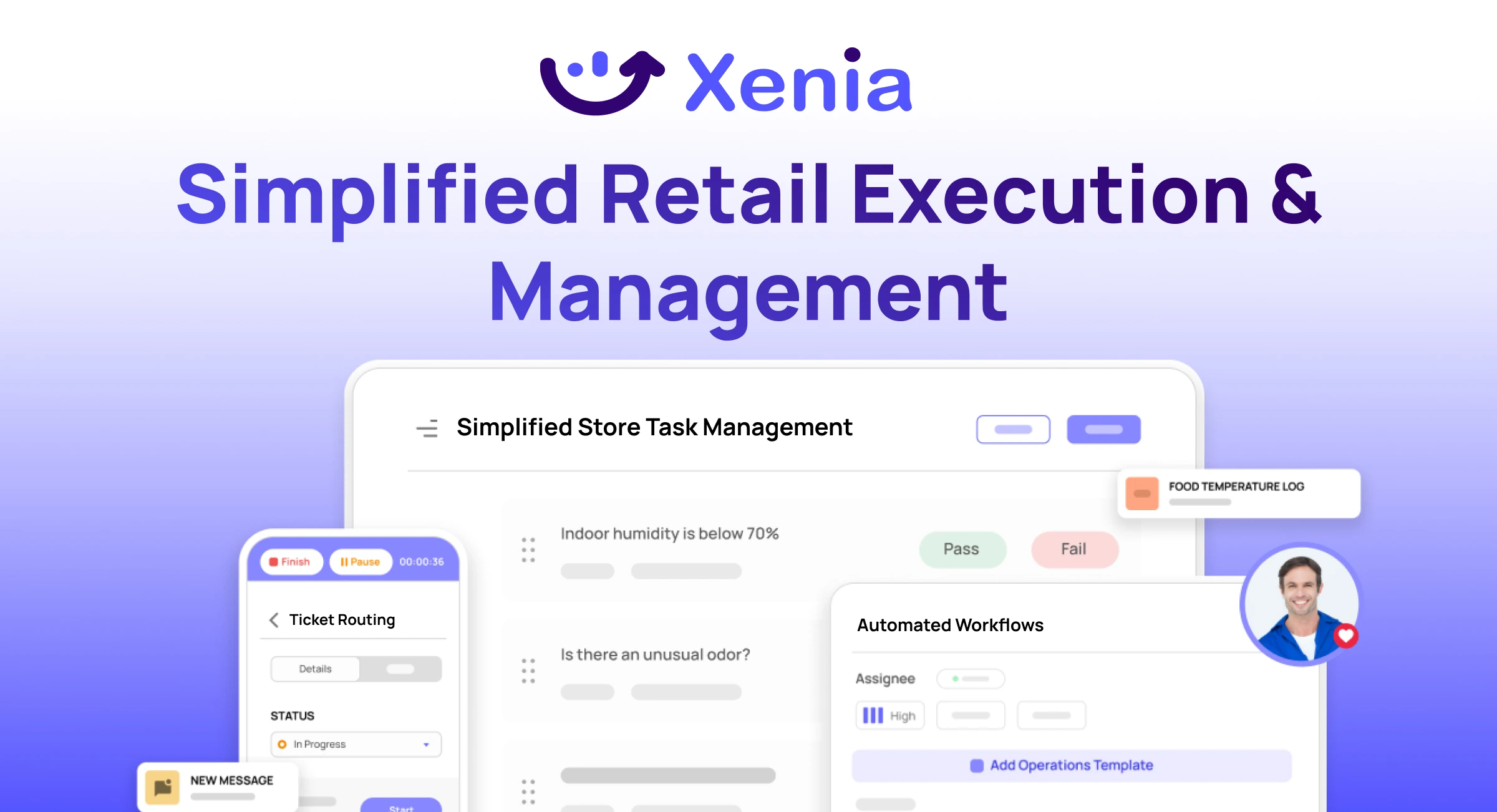
Why Retail Operators Choose Xenia:
🤖 AI-Powered Merchandising, Verify planograms, displays, and brand standards automatically with AI photo analysis. Build digital checklists instantly or convert existing merchandising guides.
🏬 Operations & Loss Prevention, Assign opening procedures, store walks, and resets across locations. Track theft, cash discrepancies, and security incidents with evidence and approval workflows.
📊 Real-Time Visibility, Compare audit scores and task completion across stores. Identify top and underperforming locations. Export reports for leadership reviews.
One platform for operations, merchandising compliance, and loss prevention across all locations.

.svg)
.webp)
%201%20(1).webp)

.svg)
%201%20(2).webp)