

Post Summary
Most SOP writing software was built for office teams. Someone in a quiet room with a laptop, plenty of time, and zero staff turnover.
That is not you.
You are managing shift workers across multiple locations. Your team speaks different languages, uses phones instead of laptops, and does not have 20 minutes to read a PDF before a rush. You need standard operating procedure software that actually gets used, not just written.
This guide covers the 9 best SOP writing software tools evaluated specifically for frontline operations. Every tool is rated on whether a store manager could roll it out without IT, whether staff can access it on mobile, and whether it holds up across multiple locations.
What to look for in SOP software if you run a frontline operation
The right standard operating procedure software for frontline teams is not the same as what works for a corporate office. Here is what actually matters.
**
Feature, Why it matters for frontline teams
Mobile app (iOS/Android), Staff complete tasks on the floor-not at a desk
No-IT setup, GMs and ops managers deploy without tech support
Multi-location push, One update reaches every location instantly
AI SOP builder, Generates draft procedures from plain language in seconds
Digital SOP templates, Pre-built formats for common frontline procedures
Checklist conversion, SOPs become tasks staff can complete and verify
Photo verification, Proof that the procedure was actually followed
Completion tracking, Managers see who did what-when and where
**
Mobile-first access. Your staff are not sitting at desks. If a tool does not work cleanly on a phone, it does not work for your team. Any SOP creation app you evaluate should be fully functional on iOS and Android without cutting features.
No IT required to deploy. A retail store manager or restaurant GM should be able to build, update, and push SOPs without filing a help ticket. The best SOP creator tools are set up and managed by ops teams directly.
Multi-location management. You should be able to update one SOP and push it to 10 or 50 locations at once. That is the whole point of having standard procedures across a network.
High-turnover usability. When a new hire starts, how fast can they access the SOPs relevant to their role? If the answer involves training logins and navigating file directories, the tool is not built for your reality.
AI SOP generation. The best online SOP makers now let you describe a procedure in plain language and generate a draft in seconds. That matters when you have 40 procedures to digitize and zero time to write them from scratch.
Execution, not just storage. Writing the SOP is step one. Step two is making sure staff actually follow it. Look for frontline SOP tools that convert procedures into actionable checklists with completion tracking.
9 best SOP writing software for restaurants, retail, and frontline teams
Here is how each tool performs when you put it in the hands of a real frontline operator.
Quick comparison: 9 SOP tools for frontline teams
.svg)
.webp)

**
Tool, Best for, Free plan, Mobile-first, AI SOP creator, Execution tracking
Xenia, Multi-location frontline ops, Yes, Yes, Yes, Yes
Process Street, Workflow-driven SOPs, Yes, Partial, Limited, Yes
SweetProcess, Simple SOP documentation, Trial only, Yes, No, No
Scribe, Automated screen-capture SOPs, Yes, Limited, Yes, No
Notion, Flexible SOP wiki, Yes, Yes, Yes, No
Trainual, Onboarding and training, No, Yes, Limited, No
Confluence, Enterprise knowledge base, Yes, Yes, Yes, No
Whale, Small business SOP docs, Yes, Yes, Yes, No
Tango, Visual screen-based SOPs, Yes, No, Yes, No
**
1. Xenia
Best for: Multi-location frontline operations that need SOPs tied to daily execution
Xenia is an operations execution platform built for multi-unit businesses in restaurants, retail, convenience stores, and hospitality. It is mobile-first by design, and it is the only SOP software on this list that takes a procedure from creation directly into daily execution.

Here is what that looks like in practice. You write or generate an SOP using the AI SOP builder. You convert it into a checklist. You assign it to specific locations and roles. Staff complete it on their phones, attach photos as proof, and flag issues in real time. You see completion status across every location from a single dashboard.
Key features:
- AI SOP builder: Generate procedure drafts from a plain-language prompt in seconds, or upload existing PDFs and let the platform digitize them into structured digital SOP templates
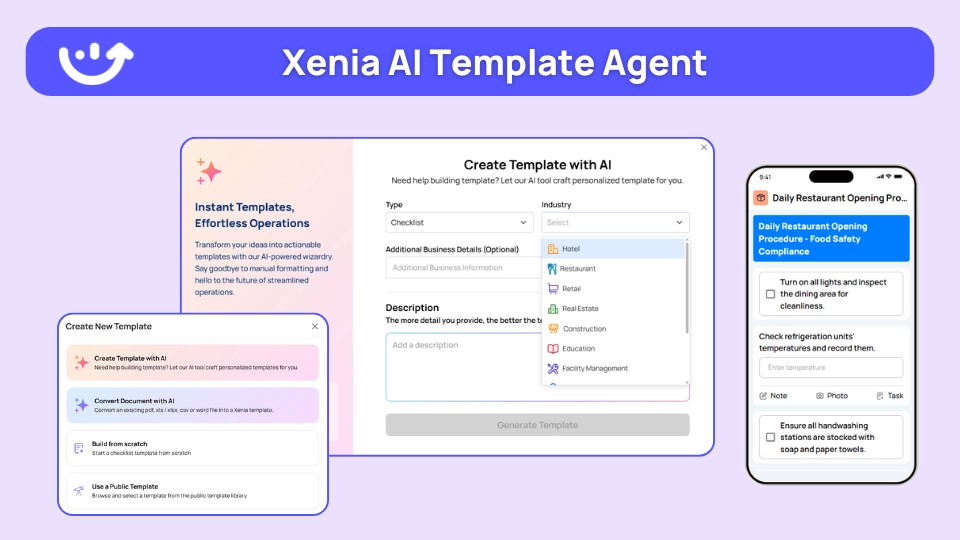
- Checklists with photo verification: Convert any SOP into an executable checklist where staff attach timestamped photos confirming completion
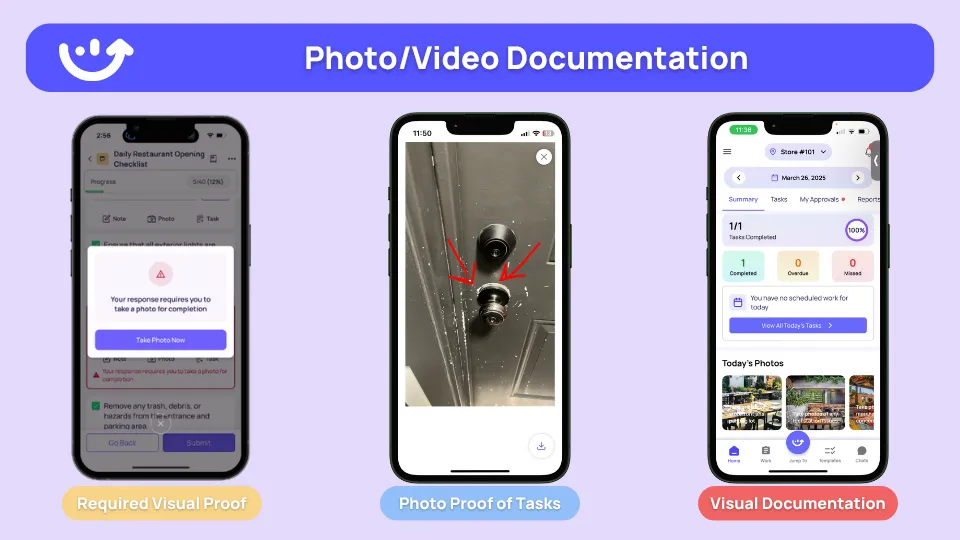
- Multi-location deployment: Push one SOP to 50 locations and track completion in real time from an above-store dashboard
.webp)
- Conditional logic: SOPs branch based on responses. If a temperature reading is out of range, a corrective action workflow triggers automatically

- Role-based access: Frontline staff, shift supervisors, GMs, and district managers each see what is relevant to their role
- Offline functionality: Staff complete SOPs without Wi-Fi. Data syncs when they reconnect
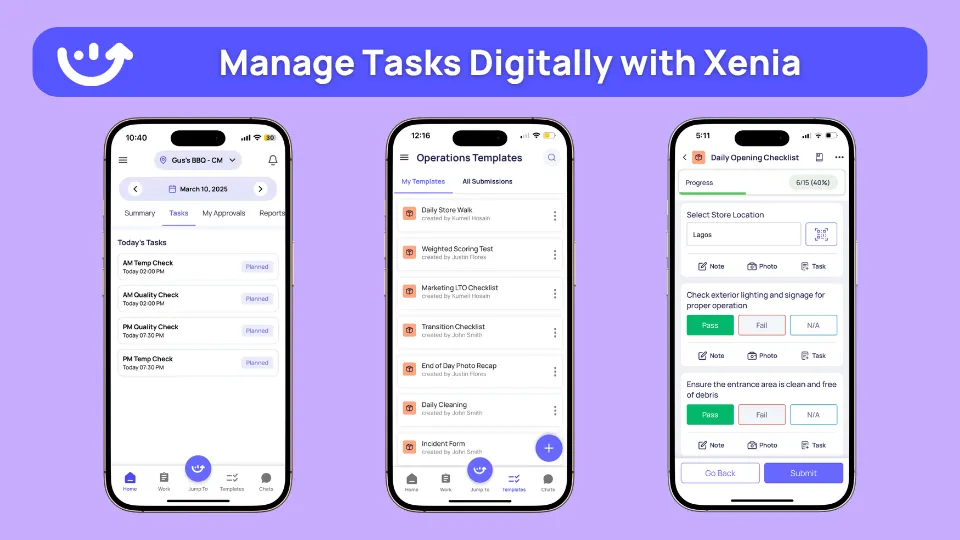
Frontline verdict: The only tool on this list where writing the SOP and executing the SOP happen in the same platform. District managers at restaurant groups and retail chains use Xenia to push standardized procedures across dozens of locations and verify completion without picking up the phone.

Priced on per user or per location basis
Available on iOS, Android and Web


2. Process Street
Best for: Operations teams that need structured, workflow-driven SOPs with approval steps
Process Street is a checklist and workflow automation tool popular with ops teams that need SOPs tied to multi-step approval processes.
The interface is clean and reasonably easy to navigate. You can build templates, assign them to team members, and track completions.

Where it fits frontline teams: Process Street is accessible on mobile, but the experience is more desktop-optimized. It works well for managers and supervisors creating and reviewing standard operating procedures.
For shift-level frontline staff who need a quick, phone-first checklist during a busy period, the experience is less intuitive than tools built mobile-first.
Honest trade-offs: No built-in photo verification. No multi-location dashboard in the base tier. Best for teams comfortable with software setup who have time to build workflows carefully. The SOP creation app experience on mobile is functional but not purpose-built for the floor.
3. SweetProcess
Best for: Small to mid-size teams that want clean, readable SOPs with basic task assignment
SweetProcess is a simple, document-focused SOP creator built around getting procedures out of people's heads and into a structured format. You write procedures, create policies, and assign tasks to team members. The interface is straightforward and the learning curve is low.

Where it fits frontline teams: Works on mobile and easy enough for non-technical users. Better suited to operations managers and trainers building SOP libraries than to frontline staff completing procedures mid-shift on the floor.
Honest trade-offs: No execution or completion tracking layer. You can document the SOP, but there is no visibility into whether staff actually followed it. No photo verification. Not built for retail operations SOP management at scale across multiple sites.
4. Scribe
Best for: Teams that need to build SOPs fast by recording existing digital workflows
Scribe is an AI-powered SOP creation app that generates step-by-step documentation automatically as you perform a task on screen.

Where it fits frontline teams: Scribe is strong for documenting software workflows. For physical, on-floor tasks like opening checklists, temperature logs, or display resets, it does not apply. It cannot capture what happens off-screen, which is most of what frontline work involves.
Honest trade-offs: Primarily a screen-capture documentation tool. Mobile experience is limited. Not built for multi-location deployment or frontline task execution. Best used alongside a dedicated operations platform rather than as a standalone standard operating procedure software solution.
5. Notion
Best for: Teams that want a flexible, all-in-one wiki and documentation workspace
Notion is a widely used workspace tool that many teams adapt for SOPs, wikis, and internal knowledge bases. It is flexible, visually clean, and easy to organize. You can build SOP libraries, tag procedures by category, and share pages with your team.
.webp)
Where it fits frontline teams: Notion works on mobile and is easy to navigate for office and managerial roles. But it is a document repository, not an operations execution tool.
There is no shift-level task completion tracking, no photo verification, and no multi-location dashboard. For frontline teams that need staff to execute restaurant SOP software-style procedures during a live shift, Notion requires significant workarounds.
Honest trade-offs: Powerful for documentation and knowledge management. Not built for frontline execution. High setup investment relative to what you get for shift-level use. Staff in high-turnover environments often need something far simpler to navigate under time pressure.
6. Trainual
Best for: Teams focused on employee onboarding and training documentation
Trainual is a business playbook and training platform. It helps growing teams document processes, build onboarding flows, and verify whether employees have acknowledged key procedures. Knowledge checks and completion tracking are built in.
Where it fits frontline teams: Mobile accessible and clean enough to navigate without tech support. The gap is in real-time execution. Trainual documents what staff should do, but does not track whether they are doing it during a live shift. It is closer to a training platform than a frontline SOP tool.
Honest trade-offs: Focused on training and onboarding, not day-to-day operations execution. No shift-level checklist completion, no photo verification, no corrective action workflows. If your need is daily SOP adherence and retail operations SOP tracking across multiple sites, you will need a separate operations tool alongside Trainual.
7. Confluence
Best for: Larger organizations already using Atlassian tools like Jira
Confluence is Atlassian's team wiki and documentation platform, widely used in tech and enterprise environments for standard operating procedures, runbooks, and internal knowledge bases. The integration with Jira makes it strong for organizations already running on the Atlassian stack.
As an SOP creator online, Confluence is capable and well-organized for teams that need a robust documentation layer.

Where it fits frontline teams: Honestly, Confluence is built for software teams, not shift workers. Most setups require IT involvement. The mobile experience is functional but not intuitive under time pressure. A shift lead pulling up a Confluence page mid-service is not a realistic scenario for most restaurant or retail environments.
Honest trade-offs: Powerful knowledge management for enterprise environments. Not mobile-first, not frontline-friendly, and not designed for multi-location operational deployment. If you are already in the Atlassian ecosystem and need documentation for managers and corporate teams, it works. For shift-level frontline SOP execution, it is the wrong fit.
8. Whale
Best for: Small business operators that want guided, simple SOP creation
Whale is a process documentation and training tool designed for small businesses and growing teams. The interface is clean and intuitive, and the AI SOP generator helps teams draft procedures from a prompt or improve existing documents. Setup does not require a technical team.
.webp)
Where it fits frontline teams: One of the easier tools to set up without IT support. Clean enough for non-technical staff. For small operators who need an accessible online SOP maker for documentation and onboarding, it is worth evaluating.
Honest trade-offs: No real-time task tracking, no photo verification, no multi-location operations dashboard. Best for single-location or small multi-unit teams documenting procedures and training new staff. Once you scale past a handful of locations, the lack of execution and reporting features becomes a real gap.
9. Tango
Best for: Teams that need visual, step-by-step SOPs built from screen recordings
Tango auto-generates SOPs by capturing what you do on screen. You click through a digital workflow, and Tango produces an annotated, step-by-step guide with screenshots. As an automated SOP creator for software and digital processes, it cuts documentation time significantly.

Where it fits frontline teams: For physical, on-floor operations, cleaning protocols, food safety checklists, display resets, restaurant SOP software tasks, it does not apply. It is a screen-capture tool. What happens off-screen does not get captured.
Honest trade-offs: Not an operations execution platform. No frontline task tracking, no multi-location management, no photo verification for physical procedures. Works best as a complement to an operations platform, not as standalone standard operating procedure software for frontline teams.
How frontline teams actually use SOP software day-to-day
This is the section most software reviews skip. They tell you what a tool can do. They do not tell you how it fits into an actual shift.
Picture a restaurant GM opening a location on a Monday morning. They are not at a desk reviewing documentation. They are walking the floor, checking temperatures, handling a delivery, and fielding three texts from staff at the same time.
For any SOP creation app or standard operating procedure software to work in that environment, it needs to be in their pocket. It needs to take 30 seconds to check, not 10 minutes to navigate. And it needs to give a district manager confidence that the opening procedure was completed correctly at all three locations, without anyone sending a spreadsheet.
Here is how frontline teams actually use these tools across a typical week:
During a shift: Staff open the mobile app, pull up the shift checklist tied to their role, complete each step, and attach a photo where required. The manager sees real-time completion from the same dashboard. No paper. No verbal check-in.
For onboarding new hires: A new team member gets assigned the relevant digital SOP templates for their role. They read the procedure, complete the attached checklist, and the system logs their acknowledgment. No binder handoffs, no printed sheets.
For multi-location consistency: A district manager updates a retail operations SOP at the corporate level. That update pushes to all 20 locations at once. Each location GM sees it in their queue, and their teams complete the updated procedure with timestamped photo verification.
For compliance and audits: When an inspector visits, the manager pulls up completed temperature logs, cleaning checklists, and food safety records from the past 30 days. Every entry has a timestamp, a staff name, and a photo. No scrambling.
The shift in thinking that makes a real difference: SOPs are not reference documents. They are operational tools. The teams that get the most value from frontline SOP tools treat every procedure as something that needs to be assigned, completed, and verified, not just written and stored somewhere.
From writing SOPs to executing them: what most tools miss
Most SOP writing software solves one half of the problem. It gives you a clean place to write and store procedures, organize your SOP library, and maybe track who opened a document.
What it does not tell you is whether the procedure was actually followed during Tuesday's closing shift.
Are you currently writing SOPs in Google Docs, storing them in a shared folder, and hoping staff check them when needed?
Are you sending PDF links through a group chat and relying on verbal confirmation that the procedure was completed?
That approach works at one location with a stable team. It does not hold up when you are managing multiple sites and dealing with the reality of high turnover.
The gap is execution. Writing the SOP gets you 30% of the way there. The other 70% is whether frontline staff complete the procedure correctly, on time, every shift, and whether managers can verify that without making five phone calls.
This is where Xenia restaurant SOP software differs from every other tool on this list.
Related reading
- How to use SOPs to improve restaurant operations
- Digital checklists guide
- Document management SOP software
Conclusion
The right SOP writing software for a frontline operation is not the one with the most features. It is the one your team will actually use during a shift at location five on a Tuesday night.
Most tools on this list are solid SOP creator options for writing and storing procedures. If that is your primary need, any of those is worth a closer look.
But if you manage multiple locations, deal with high turnover, and need to know whether your standard operating procedures are actually being followed across your entire network, tools that stop at documentation will leave you with a visibility gap you cannot close.
Xenia fills that gap. It is built for multi-unit frontline operators who need their SOPs to become executable, trackable, and verifiable across every location.
From AI SOP generation to real-time completion tracking across 50 sites, it is where SOP creation meets multi-location operations execution.
Start with Xenia | See Xenia's AI SOP builder | Browse 1,000+ digital SOP templates
Frequently Asked Questions
Got a question? Find our FAQs here. If your question hasn't been answered here, contact us.
Can AI write SOPs for my restaurant?

Yes. You describe the procedure in plain language and the AI builds the full step-by-step SOP for you. You review it, adjust anything, and push it to your team. Xenia AI Template Agent does this, and it can also digitize your existing paper procedures. If you have a big backlog to work through, it saves a lot of time.
What is the difference between SOP software and a checklist app?
SOP software is where you write the procedure. A checklist app is where staff execute it. Most tools do one or the other. The best option for frontline teams does both: write the SOP, turn it into a checklist, assign it, and get photo proof when it is done.
What SOP software works best for multi-location restaurant groups?
You need one update to reach every location at once, and you need to see who actually completed the procedure without chasing anyone. Xenia is built for that. Write the SOP once, push it to all your sites, and track completion in real time from one dashboard.
What is the easiest SOP creator for frontline teams?
Look for something your staff can open on a phone and use without any training. Xenia lets a GM type out a procedure, generate a draft in seconds, and assign it as a checklist the same day. No IT team needed, no complicated setup.


A Modern, AI-Powered Platform Built Specifically for Frontline Operations
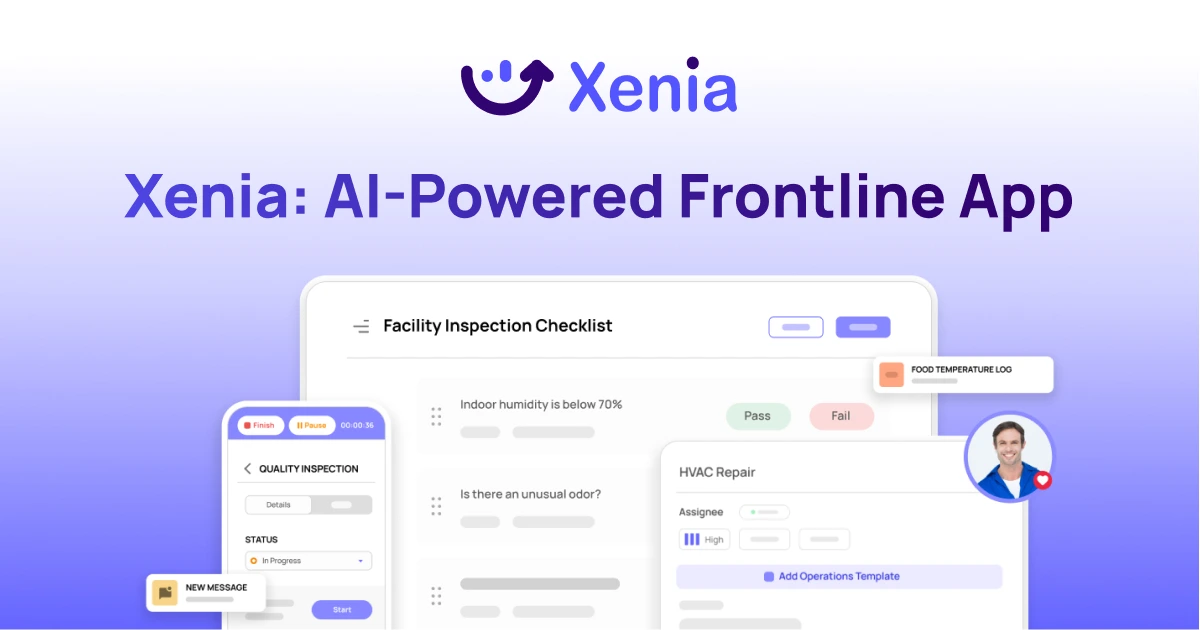
Xenia brings daily operations, maintenance, audits, and compliance into one mobile-first platform. Frontline teams execute work consistently across locations while leadership gets real-time visibility.
Why Multi-Location Operators Choose Xenia:
🤖 AI-Powered Operations, Create digital checklists instantly or convert paper forms with AI. Verify compliance automatically with photo analysis and get instant answers from your operational data.
✅ Daily Operations & Maintenance, Assign work across hundreds of locations in minutes. Report and route issues instantly. Schedule preventive maintenance to catch problems before downtime.
📊 Real-Time Visibility, Track completion, work orders, and performance across all locations through dashboards. Filter by site or asset to spot trends and take action.
Manage operations, maintenance, and compliance across all your locations from one platform

.svg)
.webp)
%201%20(1).webp)

.svg)
%201%20(2).webp)