

Summary
What determines audit frequency?
Three drivers set audit frequency for every multi-unit operator, regardless of vertical. Get these right and the cadence falls out of the model. Get them wrong and you either drown the frontline in checklist work or miss the failures that cost the franchise.
Regulatory floor. What the FDA, OSHA, USDA, or your franchisor mandates. The FDA Food Code 2022 directs health departments to inspect on a risk-based schedule: twice a year for Risk 1 (raw protein, complex prep), once a year for Risk 2, every two years for Risk 3.
Hotels live under franchisor Brand Standard Audit (BSA) cycles. C-stores layer FDA tiers on top of weights-and-measures and EPA underground storage tank rules. Retail layers OSHA and ADA on top. The regulatory floor is the minimum, not the goal.
Risk tier of the unit. A scratch kitchen with raw protein needs more frequent food-safety checks than a coffee kiosk. A 24-hour c-store with hot foodservice needs more frequent equipment checks than a fuel-only unmanned site.
A flagship downtown store doing $8M and a satellite kiosk doing $400K don't share an audit calendar. Tier the schedule by unit volume, format, and historical compliance.
Maturity of the location. New stores in their first 90 days, locations with a recent violation, units with a new GM, and stores in remodel or LSR (limited service restaurant) conversion all warrant elevated cadence until performance stabilizes for two consecutive cycles.
Most operators get the regulatory floor right and miss the other two. The Operandio restaurant audit guide and Trail's audit handbook both anchor on a tiered model: daily for critical control points, weekly for inventory and zone reviews, monthly for full operational reviews, quarterly for comprehensive compliance and brand standards.
Steritech recommends quarterly third-party assessments for grocery and c-store, frequent enough to catch issues before they go systemic, spaced enough to allow remediation. The cadence isn't a calendar setting. It's a function of risk that should shift when the unit shifts.
This is the same model behind weighted audit scoring with critical-item thresholds. High-risk items get checked more often and scored harder. Low-risk items get checked less often and scored softer. Frequency and weighting work together.
Example walkthrough, audit cadence in action
A 50-unit QSR group running a clean cadence looks like this in practice. Critical control points run on a per-shift loop. Weekly deep-dives rotate by zone. Monthly is the manager comprehensive. Quarterly is the district walk. Annual is the franchisor or third-party audit. Each layer feeds the next.
Take a single store on a Tuesday. The opening manager runs the opening checklist at 6am: walk-in temps, hot-hold setup, allergen station, line-up. Two temps are out of range.
The audit triggers a follow-up question on what corrective action was taken, requires a photo of the corrected setup, and assigns a corrective task to the kitchen manager with a 24-hour deadline.
The shift continues. At 11:30am the GM runs the mid-shift line check that catches temp drift before service. At close, the closing manager runs the closing checklist. Three audits, one day, all on a tablet with timestamps and photos.
That same week, the kitchen team rotates through a weekly deep-clean audit (Monday: walk-in. Wednesday: prep coolers. Friday: hood and fryer). The GM runs the monthly comprehensive on the last Tuesday of the month, covering food safety, brand standards, training compliance, and equipment condition.
The DM walks the store on a quarterly cadence using the comprehensive district template that covers compliance, financial controls, and brand. Once a year, Steritech or EcoSure runs the third-party food safety audit and the franchisor's QA team runs the unannounced brand audit.
This is the same shape across restaurant opening checklists, c-store shift handovers, hotel pre-arrival inspections, and retail closing checklists. The cadence layers are universal. The vertical changes the content of each layer, not the structure.
Where most operators break is on the corrective-action loop. A monthly audit that produces 30 findings and no closure tracking is worse than no audit at all. It documents knowledge of a problem with no remediation. Closed-loop corrective action tracking ties each finding to a task, an owner, a deadline, and an escalation path. Frequency without closure is theater.
How does audit frequency differ by vertical?
Cadence shape stays the same across verticals, but the content of each layer changes with the regulatory floor, the format of the unit, and the franchisor mandate. The matrix below is the operator-standard baseline. Tune up by unit risk tier.
**
Audit type, Restaurant (FSR/QSR), Hotel, C-store / fuel, Retail
Critical control points (temps-cash-safe), Daily-multi-shift, Daily, Per shift, Daily
Opening / closing, Daily, Daily, Daily, Daily
Zone deep clean / merchandising, Weekly, Weekly, Weekly, Weekly
Manager comprehensive audit, Monthly, Monthly, Monthly, Monthly
District / regional comprehensive audit, Quarterly, Quarterly, Quarterly, Quarterly
Third-party / mystery audit, Annually, Quarterly, Quarterly, Quarterly to annually
Health / regulatory inspection, 1 to 2x per year (risk-based), Annual fire and health, 1 to 2x per year plus UST, Annual (fire-ADA)
Franchisor / brand audit, Annual (if franchised), Annual BSA, Annual, Annual (if franchised)
New-location elevated cadence, Weekly comprehensive-first 90 days, Weekly comprehensive-first 90 days, Weekly comprehensive-first 60 days, Weekly comprehensive-first 60 days
**
The regulatory floor differs sharply. Restaurants run on FDA Food Code Section 8-401 tiering, two health-department inspections per year for Risk 1, applied locally (the Chicago Department of Public Health is the canonical local example).
Hotels run on franchisor BSAs. The Marriott Brand Standard Audit is an unannounced annual inspection where accumulated deficiencies trigger penalties and flag-removal notices. Hilton, IHG, Hyatt, and Choice operate parallel BSA cycles, layered with quarterly Leading Quality Assurance or mystery audits.
C-stores carry the heaviest regulatory load. The NACS State of the Industry Report shows c-stores produced $335.5 billion in in-store sales in 2024, with foodservice the leading growth driver. That pulls c-stores into the same FDA Food Code risk tiering as restaurants.
Layered on top: weights-and-measures inspections on fuel dispensers (annual to biannual depending on state), TABC or state liquor authority for beer-wine units, and EPA underground storage tank inspections (every 3 years for tightness, monthly for release detection).
Retail's regulatory floor is lighter (OSHA, ADA, fire) but the loss-prevention layer runs heavy: NRF's National Retail Security Survey tracks inventory shrink at 1.5 to 1.6% of total sales, which drives daily LP spot checks at high-shrink chains.
The fix for the cross-vertical operator is one template engine that handles all four. Conditional audits that adapt to format variation let a single audit template cover restaurant, c-store, retail, and hotel formats by hiding questions that don't apply to the unit. Same template, different question set per location group, no spreadsheet fork per vertical.
.svg)

Priced on per user or per location basis
Available on iOS, Android and Web


How to set up audit cadences in Xenia
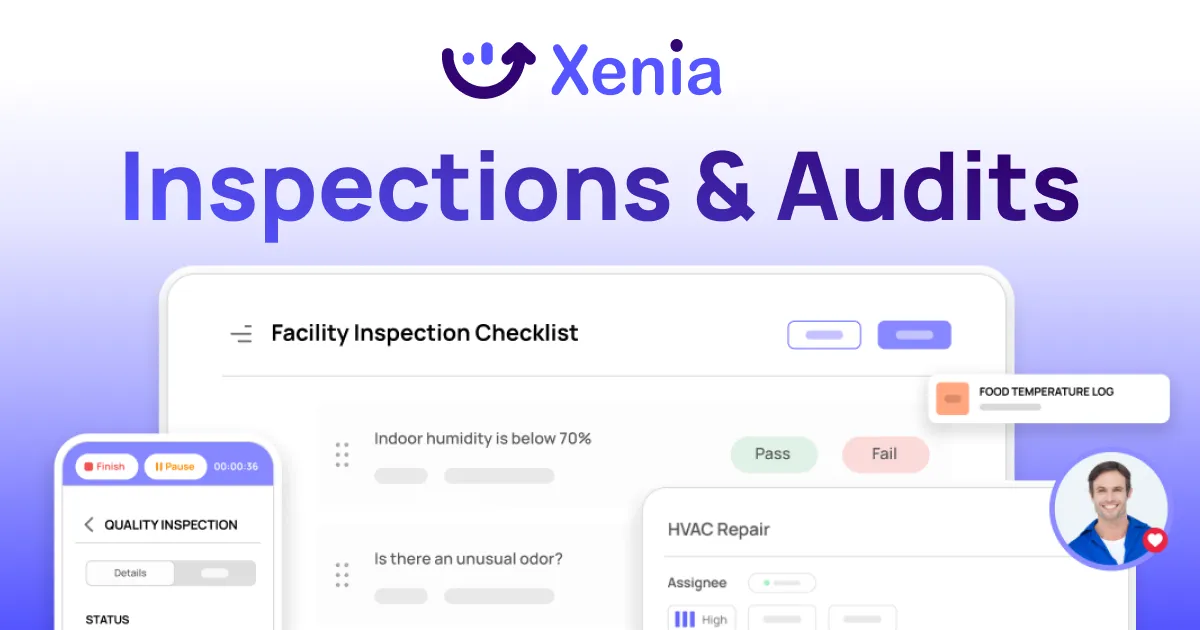
Setting up tiered audit cadences in Xenia takes five steps. Each step locks one layer of the cadence model. The system handles the recurrence, the role assignment, and the escalation. The operator handles the tier definitions.
- Build the audit template library. Create one template per audit type: opening, closing, mid-shift line check, weekly zone deep clean, monthly manager comprehensive, quarterly DM comprehensive, annual third-party readiness. Upload a SOP PDF and Xenia's AI Template Agent converts it to a digital audit form with conditional logic and required fields, useful when rolling out a new franchise SOP across 200 units in a weekend.
- Tag each template with its cadence and role. Daily templates assign to crew. Weekly templates assign to shift lead. Monthly templates assign to manager. Quarterly templates assign to DM. The role tag drives the dashboard view each user sees.
- Set the schedule. Templates can recur daily, weekly, monthly, quarterly, or on custom intervals. Set the due-time enforcement (open audit must be completed by 9am, close audit by 30 minutes after close) and missed-task escalation (escalate to DM at 24 hours overdue).
- Add conditional logic for format variation. Same audit template for 100 franchises, but units with drive-thrus see drive-thru questions, units with patios see patio questions, units with espresso bars see espresso bar questions. Nullify scoring means a unit without a patio isn't penalized on patio cleanliness, the audit reflects what the location actually does.
- Wire weighted scoring and the corrective-action loop. Critical items (allergen handling, fuel skimmer check, AED test) carry 10 points. Cosmetic items carry 1 point. Failures trigger a follow-up question, require a photo of the corrective action, and assign a corrective task with a deadline. If the task isn't closed by the deadline, the DM gets the escalation.
The combination of scheduled recurrence, role-based assignment, conditional logic, weighted scoring, and corrective-action escalation is what lets a 50-unit operator run daily, weekly, monthly, and quarterly audits without a separate spreadsheet per layer.
The same dashboard surfaces overdue items, flagged failures, and high-risk locations across every tier. The DM-scoped Above-Store View means each DM sees only their district, while regionals and corporate see the rollup.
Where do operators see results?
Operators who tier cadence by risk and tie audits to corrective-action closure see two outcomes that compound: higher signal-to-noise on the audit data and faster closure on the findings that matter. The cadence stops feeling like compliance theater and starts feeling like an operating system.
Shucking Good Hospitality reached a 94% completion rate on daily opening, closing, and food safety procedures across all restaurants by digitizing the workflow on Xenia.
A multi-unit convenience operator launched digital checklists across 11 stores and transitioned to nearly paperless operations within 14 days.
The audit-fatigue trap is the failure mode worth naming. Audit-fatigued teams produce data so unreliable it actively misleads district leaders. The fix is fewer, sharper audits with weighted scoring so the critical items carry the score, conditional follow-ups on failures only, and rotating which zones get audited each week rather than auditing everything every time.
A 50-unit operator running 12 sharp audits per month per store beats one running 30 dull ones, every quarter.
For operators sizing up the move, Xenia's restaurant task management hub and the audit management cluster cover the cadence model end to end. The Xenia vs. RizePoint comparison breaks down where weighted scoring and conditional visibility shift the audit math.
Frequently Asked Questions
Got a question? Find our FAQs here. If your question hasn't been answered here, contact us.
How often should I audit each location?

What's the right audit cadence for a QSR with 50+ units?
Do C-stores audit more frequently than restaurants?
Should the cadence change after a failed audit?
How do auditors avoid burnout at high cadences?
Can Xenia auto-schedule audits per location?


A Modern, AI-Powered Platform Built for Restaurant Operations
Xenia brings kitchen operations, food safety, audits, and team communication into one mobile-first platform. Restaurant teams execute daily work consistently, maintain compliance, and resolve issues faster, while leadership gets real-time visibility across all locations.
.webp)
Why Restaurant Operators Choose Xenia:
🤖 AI-Powered Operations, Convert paper logs instantly and verify food presentation and kitchen cleanliness automatically. Get instant answers about food safety trends without building reports.
🍽️ Food Safety & Compliance, Track line checks and temperature logs with automated alerts. Trigger corrective actions when readings exceed safe ranges. Maintain audit-ready records for health inspections.
📊 Multi-Location Control, Monitor food safety compliance and task completion across regions. Benchmark locations to identify training needs. Export reports for operational reviews.
One platform for kitchen operations, food safety, and compliance across all locations.

.svg)
.webp)
%201%20(1).webp)

.svg)
%201%20(2).webp)


.webp)


