
.webp)
Post Summary
Good frontline managers know when to teach and when to tell. When it’s quiet, they help their team learn and grow. When it’s busy, they give clear instructions and keep things moving.
Using the right approach at the right time is what makes a strong manager. This article explains the main management styles and how to use them in fast-moving frontline work.
.webp)
.svg)

Priced on per user or per location basis
Available on iOS, Android and Web


What are management styles?
A management style is how a manager leads their team. It shows how they give instructions, motivate people, and solve problems. Most managers stick to one style, but the best managers can switch between styles and use the right one at the right time.
The main management styles and how they work in frontline operations
Six management styles. Each one evaluated through the lens of managing hourly workers in a fast-paced, high-turnover environment, not a corporate office.
Autocratic (directive) management
The manager makes all decisions and gives the team clear instructions. No discussion. The manager calls the plays. The team executes.
Works well when: the line is backed up, there is a staffing emergency, or you are training new employees who need clear direction rather than choices. A dinner rush with three new hires on the floor is not the time for a team discussion.
Watch out for: using this for everything. Employees who are never consulted disengage over time. Experienced staff who are constantly told what to do on tasks they already know get frustrated and eventually leave.
Democratic (participative) management
The manager includes the team in decisions. They ask for ideas, explain the plan, and agree on the approach together before acting.
Works well when: You are fixing a recurring problem or improving how something is done. Asking the team usually brings better solutions and more support. Best with experienced employees who understand the work and can give useful input.
Watch out for: Using this style when things are busy. Asking for input during a rush can slow things down and confuse the team. It also doesn’t work well with new employees who don’t yet know the operation.
Coaching management
The manager focuses on developing employees, pointing to growth areas, identifying strengths, building skills over time.
Works well when: you are playing the long game on retention. Employees who feel they are learning and growing stay longer. Particularly effective for high-potential employees you want to develop into shift leads or supervisors. The manager's job here is to make the team better, not to do the work themselves.
Watch out for: never creating time for development conversations. Managers in high-turnover environments often stop coaching because it feels pointless. That creates a cycle where turnover stays high precisely because coaching never happens.
Pacesetting management
The manager sets high standards and leads by example, doing the work at the level they expect from the team.
Works well when: You are showing the team what good looks like or setting new standards. A manager who can jump on the line, handle a tough customer, or complete a proper close demonstrates what is expected.
Watch out for: Doing the work instead of helping the team learn to do it. If the manager always steps in because the team isn’t performing, the team stops developing and the manager ends up covering instead of managing.
Affiliative management
The manager focuses on relationships and keeping the team happy. People come before performance pressure.
Works well when: You need to boost morale after a tough time, manage a team with conflicts, or create an environment where employees speak up about problems. Teams that trust their manager communicate more, which helps catch small issues before they become big ones.
Watch out for: Avoiding tough conversations just to keep peace. Ignoring a low performer to avoid conflict can hurt the team. Warmth and accountability go together. Use tools to keep standards consistent even while focusing on relationships.
Visionary (authoritative) management
The manager sets a clear direction, where the team is going and why it matters and gives employees the freedom to execute within that framework.
Works well when: a district manager is trying to build consistent culture across multiple locations. Give store managers a clear operational vision and genuine ownership within that framework.
Watch out for: vision without operational specifics. Telling the team where you are going without telling them how their shift should run produces inconsistency across locations. Purpose without structure is just a poster on the wall.
Management styles at a glance:
**
Style, Works best when, Watch out for
Autocratic, Service rushes-emergencies-new hire training, Applied to every situation equally
Democratic, Process improvement-experienced team decisions, The operation is moving too fast for input
Coaching, Development conversations-retention-focused environments, Manager never creates time for it
Pacesetting, Setting initial standards-modeling excellence, Manager covers instead of developing the team
Affiliative, Rebuilding morale-building psychological safety, Manager avoids addressing performance issues
Visionary, Multi-unit culture building-experienced manager development, Vision not backed by day-to-day operational clarity
**
Which management style works best for frontline operations?
No single style wins. The pattern that works in frontline operations is a specific combination applied by situation, not a default mode that gets applied to everything.
The situation-based approach
Effective frontline managers move between styles based on what the moment actually requires.
**
Situation, Style that fits, Why
Service rush or operational emergency, Autocratic, Clear direction-fast execution-no discussion
New employee onboarding, Coaching, Build skill and confidence through guided practice
Experienced team problem-solving, Democratic, Better solutions-better buy-in
Individual development conversation, Coaching + Affiliative, Build the person-maintain the relationship
**
The manager who defaults to autocratic for everything gets a compliant but disengaged team. The manager who defaults to democratic for everything gets a collaborative but slow-to-execute team. Reading the situation and applying the right style deliberately, that is the actual skill.
The non-negotiable foundation
Regardless of which style a manager uses, two things must hold consistently: clear standards and consistent follow-through.
A warm, collaborative manager who never addresses standards violations teaches the team that standards are optional. A directive manager who is inconsistent produces confusion about what the actual expectation is. Style flexibility is the skill. Clear standards are what it operates on.
Servant leadership in frontline operations: what it actually looks like
Servant leadership is the management philosophy that the manager's job is to remove obstacles for the team and develop the people who do the work, not to direct from above.
In frontline operations, it is less a philosophy and more a set of specific daily behaviors.
What servant leadership looks like in a restaurant or retail operation
Four concrete examples:
- A manager who stocks the line before the rush so the team is not scrambling during service
- A manager who builds schedules around employee availability and personal commitments rather than optimizing purely for labor cost, see the workforce scheduling guide for how scheduling is one of the most practical expressions of servant leadership
- A manager who resolves equipment issues immediately rather than leaving the team to work around broken tools
- A manager who asks the team what they need to do their job better rather than only reviewing performance metrics
Where servant leadership has limits in frontline operations
Servant leadership works best with an experienced, well-performing team. If standards are being broken or performance is low, a manager who only supports without giving direction is avoiding responsibility.
It’s a way of leading, not a reason to avoid tough conversations. The best frontline managers combine serving their team with clear rules and consistent accountability.
How to identify and develop your management style
Most managers have a default style they fall back on under pressure. The goal is not to eliminate that default. It is to know when it is the wrong tool for the situation.
What does your team do when you are not there?
This is the clearest sign of your management style. A team that works well without you has been coached, not just told what to do.
If performance drops when you’re away, the team is working for you, not following standards they truly understand and believe in.
The difference between “performs when I’m here” and “performs when I’m not” shows more about your management approach than any self-test ever could.
How do you handle a service rush vs a quiet afternoon differently?
Managers who treat every situation the same way are not being consistent. They are being inflexible. Situational adaptation is the actual skill.
A manager who cannot shift styles has one tool for every situation. Some situations will fit that tool well. Many will not.
Use HR workflows for structured team development support that helps managers build coaching habits into their regular routine rather than treating development as a separate activity that only happens when things are slow.
Self-assessment: what is your default style?
**
If you find yourself doing this most often..., Your default style is probably..., Watch out for...
Telling the team what to do in most situations, Autocratic, Experienced employees quietly disengaging
Involving everyone in most decisions, Democratic, Slow execution during high-pressure moments
Jumping in to show how it is done, Pacesetting, Team not developing because you cover the gaps
Avoiding difficult conversations to keep the peace, Affiliative, Standards eroding without anyone saying it
Always talking about direction and purpose, Visionary, Team unclear on day-to-day execution expectations
**
How Xenia helps frontline managers build consistent teams
The management styles in this article only work if managers have the tools to follow through on them. Coaching conversations need documentation. Standards need visibility. Accountability needs a system that does not depend on the manager being physically in the building.
Xenia gives multi-unit operators exactly that. Managers can document team development conversations, track task completion and shift accountability, and surface performance patterns across locations, without relying on informal verbal check-ins that disappear the moment the shift ends.
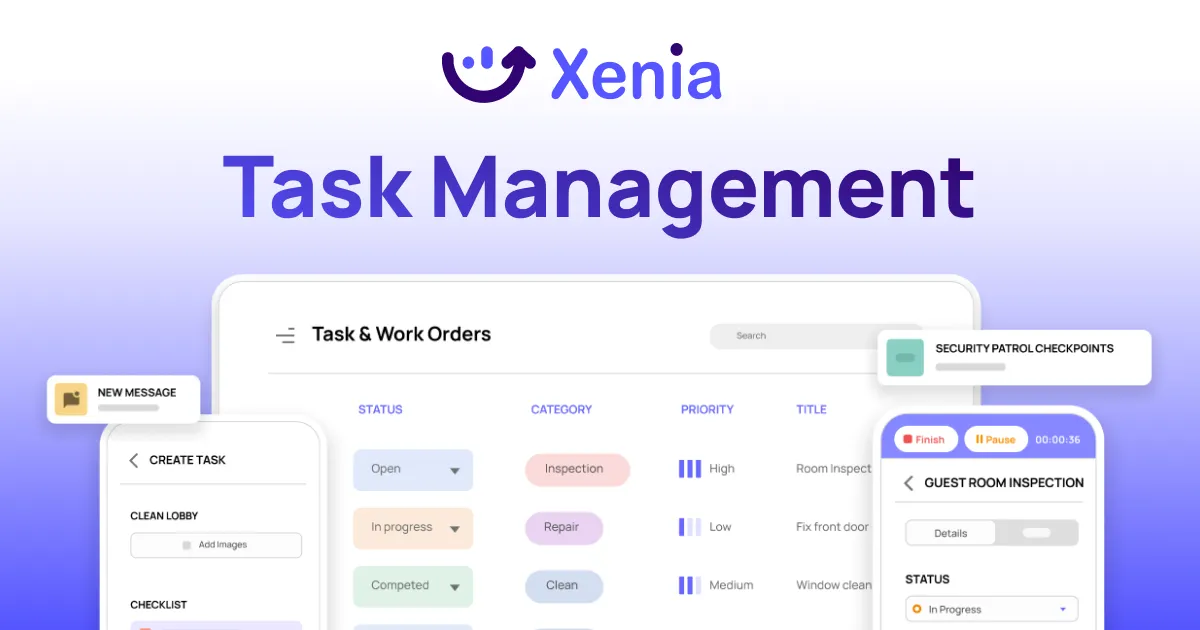
Specifically for frontline management and team development, Xenia helps operators:
- Track operational compliance by location so district managers can see which sites are running to standard without being on-site
- Build repeatable task workflows that hold standards consistent regardless of which manager is on shift
- Give area managers real-time visibility into shift-level accountability across all their locations
See how Xenia works for frontline team management and operational accountability at scale.
Conclusion
The store manager from the introduction had it right all along.
Coaching during the quiet afternoon. Directing during the rush. Two different tools applied to two different moments. Getting the timing right is the whole job.
Style flexibility is what separates managers who build consistent teams from managers who maintain compliant ones. Compliant teams execute when someone is watching. Consistent teams execute because they have been coached and held to standards that do not shift based on who is in the building.
That is the real work of frontline management. Every style in this article is a tool in service of that outcome.
See how Xenia works for frontline team management and operational accountability at scale.
Frequently Asked Questions
Got a question? Find our FAQs here. If your question hasn't been answered here, contact us.
What style works best for onboarding new employees?

Directive with coaching built in. Be clear on tasks and standards while explaining the reasoning behind them. New employees build skill and understanding from day one, not just compliance.
How does managing multiple locations change your approach?
Your style affects how you develop other managers, who then apply their own styles to their teams. Experienced store managers need autonomy and coaching on their own development, not task-level direction from above.
How do you handle an employee who pushes back on your style?
Listen first. Then figure out if it is a legitimate style mismatch or pushback about avoiding accountability. An experienced employee who feels over-directed is a different conversation than an underperformer who objects to any oversight.
What is the difference between management style and leadership style?
Management style is how you run daily operations. Leadership style is how you influence people toward a longer-term direction. A manager can run an efficient shift while doing nothing to develop the team. The best frontline operators do both.
How do you manage a team with mixed experience levels?
Use different styles with different people. New employees need direction. Experienced ones need autonomy. Applying one style to everyone feels consistent, it is not.

A Modern, AI-Powered Platform Built Specifically for Frontline Operations
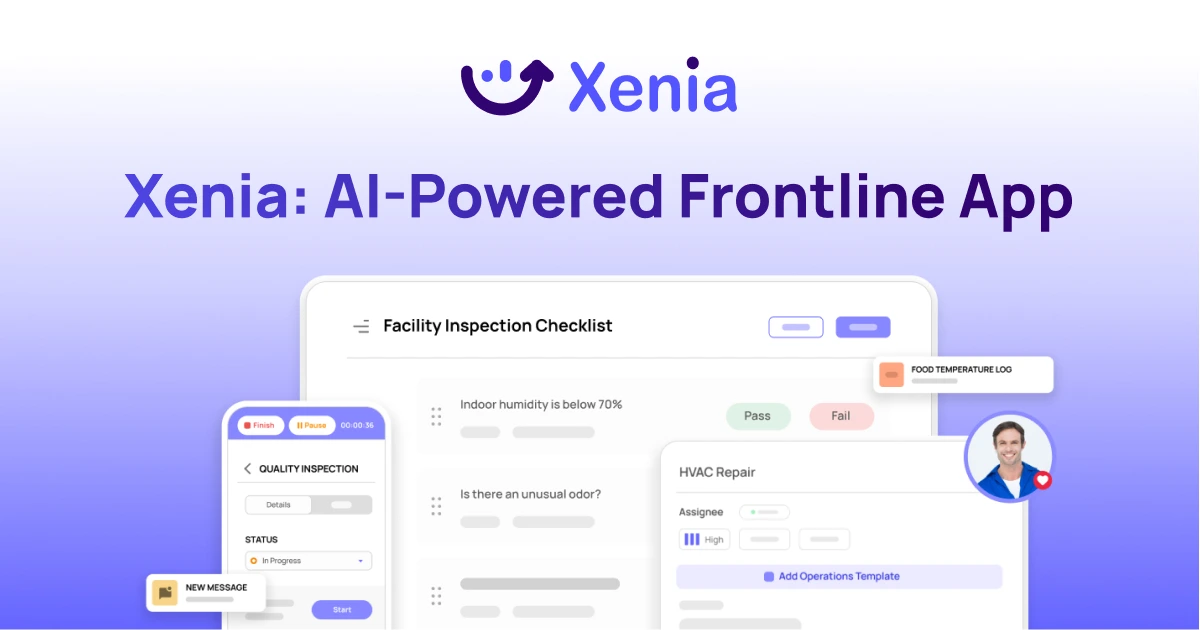
Xenia brings daily operations, maintenance, audits, and compliance into one mobile-first platform. Frontline teams execute work consistently across locations while leadership gets real-time visibility.
Why Multi-Location Operators Choose Xenia:
🤖 AI-Powered Operations, Create digital checklists instantly or convert paper forms with AI. Verify compliance automatically with photo analysis and get instant answers from your operational data.
✅ Daily Operations & Maintenance, Assign work across hundreds of locations in minutes. Report and route issues instantly. Schedule preventive maintenance to catch problems before downtime.
📊 Real-Time Visibility, Track completion, work orders, and performance across all locations through dashboards. Filter by site or asset to spot trends and take action.
Manage operations, maintenance, and compliance across all your locations from one platform

.svg)
.webp)
%201%20(1).webp)

.svg)
%201%20(2).webp)