
Post Summary
Something goes wrong at location 4.
A manager grabs a paper form, fills half of it, and puts it in a drawer.
Three weeks later the same thing happens at location 7.
Nobody knows. Nobody connects the two. The problem keeps happening.
That is bad incident reporting. And it happens every single day at operations running on paper forms and email chains.
Good workplace incident reporting software fixes this. It records what happened, sends it to the right people, creates a follow-up task, and checks that the task gets done.
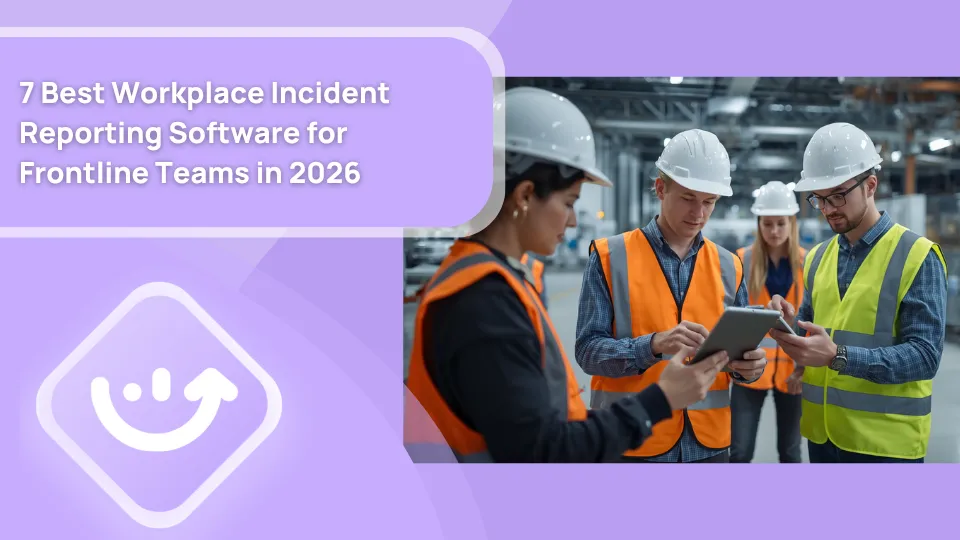
This article covers the 7 best tools for frontline teams in 2026. We are talking about real incidents that happen on the floor every day. Slips and falls. Broken equipment. Food safety problems. Customer injuries. Near misses.
Not software bugs. Not IT outages. Real operational problems that need real solutions.
What to Look for in Workplace Incident Reporting Software
Not all tools are the same. Here is what actually matters for frontline teams.
Works on a phone without Wi-Fi. Incidents happen in kitchens, warehouses, and parking lots. If the app needs a strong signal to work, reports get delayed and details get forgotten.
Structured forms, not blank text boxes. A text field is not a report. Good software guides the reporter through exactly what to capture based on what happened.
Photo evidence with timestamps. Photos filed the next day have less legal value. The app should timestamp and location-stamp every photo the moment it is taken.
Sends the report to the right people automatically. A food safety issue should reach the food safety manager right away. Not sit in a shared inbox.
Turns reports into corrective actions. Filing a report is step one. The software should assign a fix to someone, set a deadline, and check that it gets done.
Shows trends across all locations. District managers should be able to see patterns across all sites from one place. Not dig through individual reports one by one.
Most tools here do some of this. One does all of it, and connects incident reporting to daily operations too.
7 Best Workplace Incident Reporting Software in 2026
.svg)
.webp)

**
Tool, Best for, Works offline, Corrective actions, Cross-location view, Free plan
Xenia, Multi-location frontline ops, Yes, Yes, Yes, Yes-5 users
Intelex, Large industrial EHS programs, Yes, Yes, Yes, No
Cority, Enterprise health and safety, Yes, Yes, Yes, No
Notify Technology, Fast frontline alerting, Yes, Basic only, Yes, No
VelocityEHS, Mid-market manufacturing, Yes, Yes, Yes, No
Lumiform, Inspection-first teams, Yes, Yes, Yes, Yes
Sentrient, Healthcare and governed sectors, Limited, Yes, Yes, No
**
1. Xenia
.webp)
Xenia is a frontline operations platform built for teams running restaurants, retail stores, c-stores, and hospitality locations.
It is the only tool on this list where incident reporting connects directly to daily operations. When a report is filed in Xenia, the platform already knows the location, the recent inspections there, and the equipment involved. The report does not sit in isolation. It sits next to everything else happening at that site.
That connection is what makes Xenia different from every other option here.
Structured form templates. Every report is built from a pre-made template using Xenia's AI Template Builder. Reporters fill in the fields instead of writing freehand. The report looks the same at every location. Nothing gets missed.
Forms that change based on answers. If the incident involves a customer, the form shows customer-specific fields. If it involves a piece of equipment, the equipment fields appear. Irrelevant questions stay hidden. The reporter only sees what they need.
One form, multiple input types. A single Xenia incident report can include:
- Written notes
- Yes or no answers
- Numbers like how many people were involved
- Date and time
- Photos and videos
- Uploaded files
Everything in one place. No jumping between apps.
Photos with timestamps and location tags. Every photo taken inside a Xenia report is timestamped the moment it is captured. Reporters can also draw on the photo to highlight what matters. This makes the evidence clear and legally usable.
Location stamp on every report. Every submission shows where it was filed. This confirms the report came from the site, not from someone's phone later that night.
Automatic corrective actions. When a report is submitted, Xenia creates a corrective action task automatically. It assigns it to the right person. It sets a due date. If the action is not completed in time, it escalates. The problem gets tracked, not just logged.
Clean PDF exports. Every report can be saved as a PDF. Same format every time. Ready to hand to inspectors, HR, or legal teams.
One dashboard for all locations. District managers and regional leaders can see incidents across all sites in one view. They can see which types of incidents keep happening, which locations have open corrective actions, and where the risks are building up.
Connected to everything else in the platform.
- EHS inspection workflows sit next to incident reporting so hazards caught during inspections feed into the same system
- Health and safety tools and safety checklists link to incident records automatically
- Team communication tools alert the right people through the same app where work happens
- Staff accountability tracking shows who filed what and when
The app works offline on iOS and Android. Rated 4.9 out of 5 on G2 & Capterra. Most teams are running within two weeks of signing up.
Xenia has a free plan for up to 5 users. No time limit. Paid plans start from 15 users. Start for free or book a demo.

Priced on per user or per location basis
Available on iOS, Android and Web


2. Intelex

Intelex is a big enterprise EHS platform. It has been around for over 25 years and is used by large manufacturing, energy, and industrial companies with dedicated safety teams.
What it does: Incident forms for injuries, near misses, property damage, and environmental events. Mobile submission with photos and GPS. Investigation tools with root cause analysis. OSHA, EPA, and ISO compliance dashboards. Full EHS suite with training, audits, and contractor management.
What to know: It takes 6 to 10 weeks to set up. It needs dedicated EHS staff to manage it. It is not built for small or fast-moving teams. The backend is complex and some users report a steep learning curve.
Pricing: Enterprise pricing. Contact for a quote.
Best for: Large industrial organizations running full EHS compliance programs.
3. Cority
Cority connects health and safety management in one system. It is used by large organizations in manufacturing, healthcare, and energy where tracking long-term health outcomes alongside incidents matters.
What it does: Detailed incident forms with severity levels and triage. Root cause analysis and corrective actions in each record. Mobile app that works offline. Global dashboards across all sites. OSHA and ISO compliance tracking.
What to know: Lots of modules can make it hard to navigate. Some users say it can run slowly. Customer support response times get mentioned in reviews. Setup takes 6 to 12 weeks.
Pricing: Enterprise custom quote. Contact for details.
Best for: Large enterprises where occupational health and safety incident management need to work together.
4. Notify Technology

Notify is for teams that need to tell the right person about an incident fast. Security teams, logistics, and multi-site retail and hospitality groups use it most.
What it does:
- File an incident report in under 30 seconds on your phone
- Sends instant alerts via SMS, email, Slack, or Teams
- Escalates automatically based on how serious the incident is
- Tracks status from the report all the way to resolution
- Basic follow-up task tracking with due dates
What to know: Notify is fast but not deep. It does not have strong investigation tools, root cause analysis, or compliance reporting. The corrective action features are basic. If your team needs both fast alerts and thorough follow-through, you will likely need another tool alongside it.
Pricing: Per user per month. Most teams are up and running in 1 to 2 weeks.
Best for: Teams where the biggest priority is getting the right person notified quickly, not detailed documentation.
5. VelocityEHS
VelocityEHS sits between lightweight tools and full enterprise systems. It uses AI to help spot compliance risks before they turn into incidents.
What it does: Custom incident forms with mobile submission. Automated routing to safety officers. Root cause analysis and CAPA tracking. OSHA, EPA, and ISO compliance dashboards. AI-powered risk pattern detection.
What to know: Needs configuration time upfront. Most useful when there is a dedicated EHS person managing the platform. Smaller teams without EHS staff may find it harder to maintain.
Pricing: Enterprise per-user or per-site pricing. Contact for a quote.
Best for: Mid-size manufacturing and industrial teams with in-house EHS staff.
6. Lumiform
.webp)
Lumiform is mainly an inspection and audit tool. Incident reporting is a feature it offers alongside inspections, not its core focus.
What it does: Custom incident templates with conditional logic. Automatic corrective action creation with deadlines. Cross-location analytics dashboard. Works offline. Supports 60 languages. Rated 4.7 on G2.
What to know: Incident reporting is secondary to inspections in Lumiform's design. Regulatory investigation workflows and root cause analysis are more limited than dedicated incident management tools. If incident reporting is the main need, a more focused platform will serve better.
Pricing: Free plan available. Paid plans via contact.
Best for: Teams already using Lumiform for inspections who want basic incident reporting in the same place.
7. Sentrient

Sentrient is built for organizations that deal with patient safety incidents, data privacy breaches, and workplace safety events all at once.
What it does: Customizable forms for patient safety, data privacy, workplace incidents, and misconduct. Routing based on incident type and severity. Multi-site dashboards for trend tracking. Audit trail exports. Compliance tracking for healthcare regulations.
What to know: Web-first platform with limited native mobile capability. Not built for general restaurant, retail, or warehouse operations. Best for organizations inside heavily regulated industries.
Pricing: Subscription-based. Custom quotes for large healthcare groups. Setup takes 3 to 8 weeks.
Best for: Healthcare, aged care, and education organizations managing multiple types of incidents under strict regulations.
How to Choose the Right Workplace Incident Reporting Software
**
Your situation, Best fit
Multi-location frontline team needing reports-corrective actions-photo evidence and cross-site visibility in one system, Xenia
Large industrial enterprise running a full EHS program, Intelex
Enterprise connecting occupational health and safety incident tracking, Cority
Multi-site team where getting the right person notified fast is the top priority, Notify Technology
Mid-market manufacturing team with a dedicated EHS person, VelocityEHS
Team already using inspection software wanting incident reporting added in, Lumiform
Healthcare or heavily governed organization handling multiple incident types, Sentrient
**
Three quick questions to help you decide.
Is the main problem getting frontline teams to report correctly or managing a compliance program?
Those need different tools. Xenia and Notify Technology are built for frontline teams and can be live in days. Intelex and Cority are built for compliance programs and take months to set up.
Does the incident system need to connect to daily operations?
No other tool on this list does that. Xenia connects every incident report to the inspection history, maintenance records, and safety checklists from that same location and shift. That connection is what turns a report into a solved problem.
How fast do you need to be running?
Enterprise platforms take 6 to 12 weeks. Xenia takes 1 to 2 weeks. Lumiform's free plan works the same day. Know your timeline before you choose.
Book a demo to see how Xenia works for frontline teams.
Conclusion
Paper forms in drawers and email threads nobody follows up on do not fix problems. They just document them.
For large industrial EHS programs, Intelex and Cority handle that. For fast alerting, Notify works. For healthcare, Sentrient is built for it.
For frontline teams in restaurants, retail, c-stores, and hospitality who need structured reports, photo evidence, corrective actions, and cross-site visibility all inside the same platform they already use for daily operations, Xenia is the only tool on this list that does all of that.
Frequently Asked Questions
Got a question? Find our FAQs here. If your question hasn't been answered here, contact us.
What should a good incident report include?

Date, time, and location. Names of people involved and any witnesses. A clear description of what happened. Timestamped photos with location tags. What was done right away. How serious it was. A corrective action assigned to a specific person with a deadline.
Is there a free option?
Xenia has a free plan for up to 5 users with no time limit. It includes full incident forms, corrective action tracking, and photo capture. Lumiform also has a free entry plan. Most enterprise EHS platforms have no free tier.
What makes Xenia different?
Xenia connects incident reports to the rest of daily operations. When a report is filed, it sits next to the recent inspection at that site and the maintenance history of the equipment involved. No other tool on this list does that. That context is what makes corrective actions actually fix things instead of just getting logged.
What types of incidents should be reported?
Slips and falls, customer injuries, equipment failures, near misses, food safety issues, chemical exposures, fire events, and workplace security incidents. Use different form templates for each type so nothing important gets missed.
What is workplace incident reporting software?
It is a digital tool that replaces paper forms with structured, mobile incident reports. The best ones route reports to the right people automatically, create corrective actions, capture photo evidence, and show trends across all locations.


A Modern, AI-Powered Platform Built Specifically for Frontline Operations
Xenia brings daily operations, maintenance, audits, and compliance into one mobile-first platform. Frontline teams execute work consistently across locations while leadership gets real-time visibility.
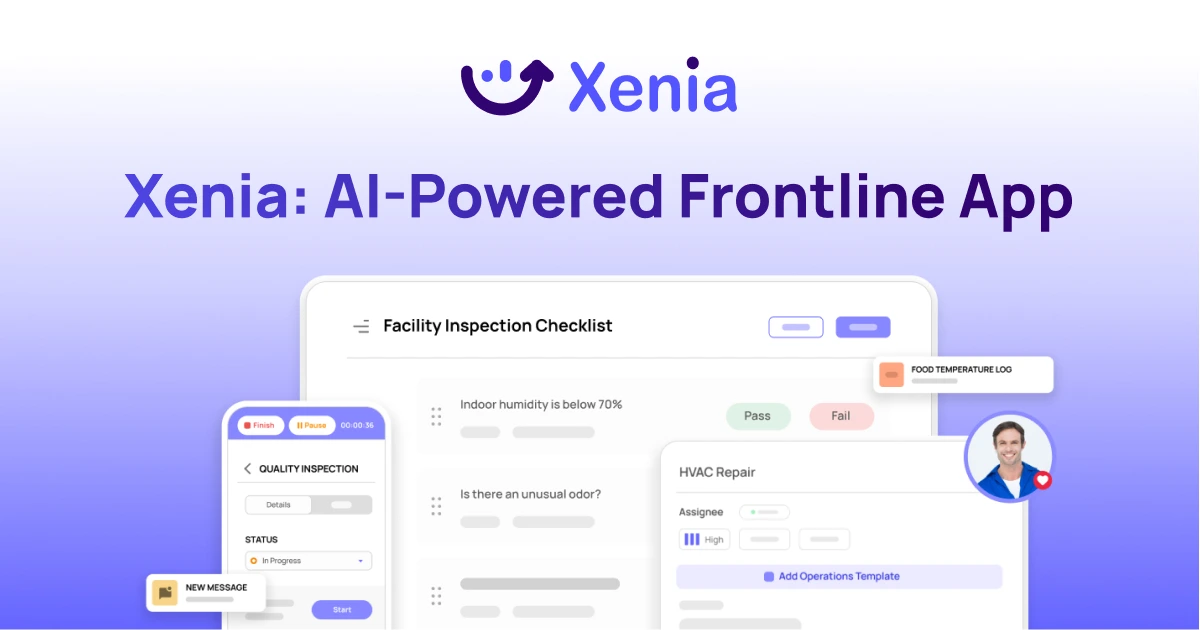
Why Multi-Location Operators Choose Xenia:
🤖 AI-Powered Operations, Create digital checklists instantly or convert paper forms with AI. Verify compliance automatically with photo analysis and get instant answers from your operational data.
✅ Daily Operations & Maintenance, Assign work across hundreds of locations in minutes. Report and route issues instantly. Schedule preventive maintenance to catch problems before downtime.
📊 Real-Time Visibility, Track completion, work orders, and performance across all locations through dashboards. Filter by site or asset to spot trends and take action.
Manage operations, maintenance, and compliance across all your locations from one platform

.svg)
.webp)
%201%20(1).webp)

.svg)
%201%20(2).webp)