
Post Summary
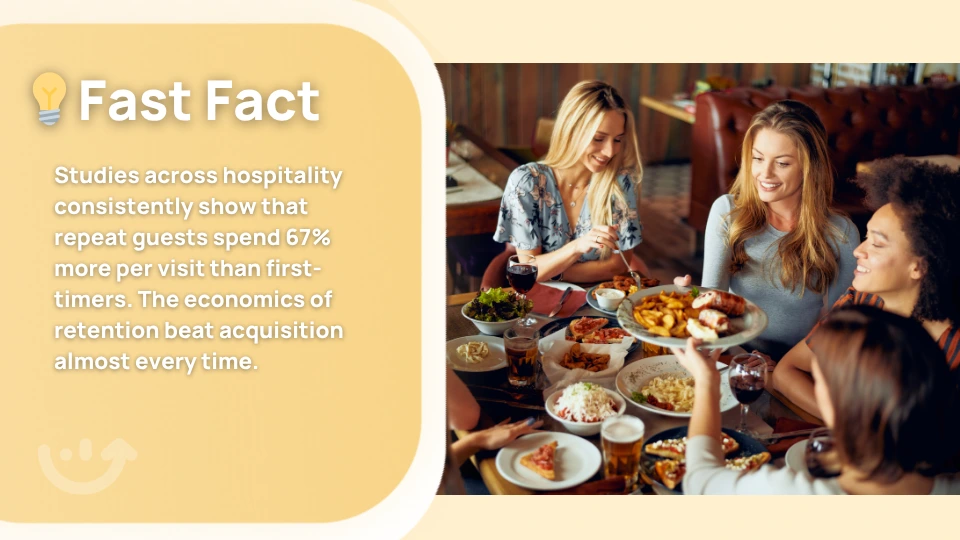
Most restaurants spend more money finding new guests than keeping the ones they already have.
That's backwards. A returning guest costs less to bring back, spends more, complains less, and tells their friends. Retention is the whole game.
But most restaurant marketing content splits things up. Social media is one team. Reviews are another. Customer service is the floor's problem. So you end up with a great Instagram, a Google profile full of ignored reviews, and a staff that has never heard the brand message. That gap is where repeat visits disappear.
This playbook connects all three. Social media, reviews, customer service, and where AI actually fits in as a real tool, not a buzzword.
Related Resources
.svg)

Priced on per user or per location basis
Available on iOS, Android and Web


The Restaurant Repeat-Visit Loop (The Only Framework That Matters)
Before tactics, you need a framework. Here it is.
Step 1: The on-site experience. Food, wait times, how staff handle problems. This is where your marketing promise gets kept or broken. Everything starts here.
Step 2: The feedback signal. The guest leaves and reacts. A Google review, a DM, a social mention. Most restaurants treat this as PR. It's actually an operations signal.
Step 3: Social and content. Your brand either shows up in their feed between visits or it doesn't. How you respond to reviews, what you post, how you handle comments. All of it shapes whether they come back.
Step 4: Personalized follow-up. You know something about this guest now. Use it. A loyalty update, a reply that references their feedback, a birthday offer that actually arrives on their birthday.
Step 5: The next visit driver. An event, a limited menu drop, a loyalty reward. Something that gives them a reason to pick you over the restaurant next door.
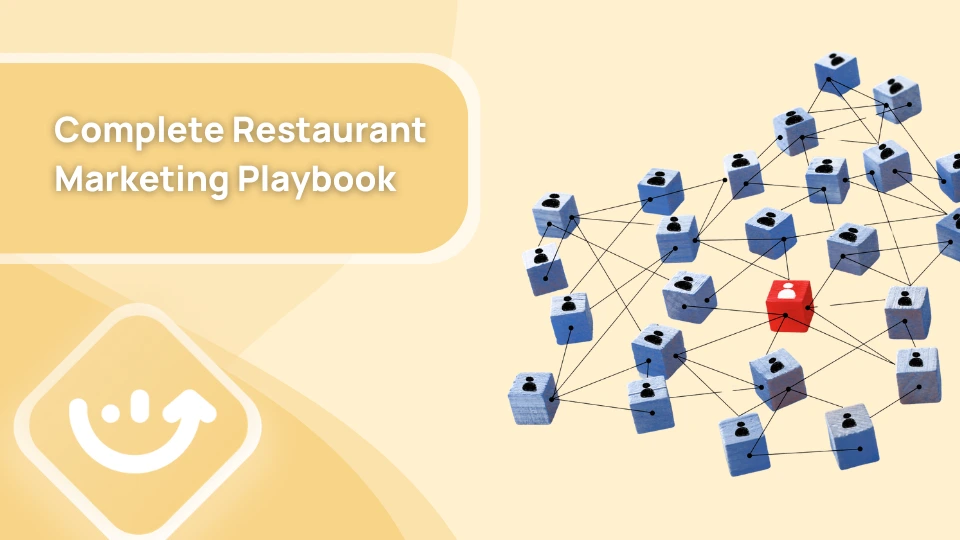
These five steps are not a funnel. They're a loop. Step 5 sends the guest back to Step 1 and the cycle starts again.
The operators who get this stop treating marketing as a separate department. Every on-shift decision becomes part of the marketing strategy.
Restaurant Social Media Marketing in 2026
The 4-channel stack that works for multi-location restaurants
You don't need to be everywhere. You need to be good on the platforms that move the needle. For most restaurant brands in 2026, that's four channels, each doing a different job.
**
Channel,Primary Job,What Works in 2026
Instagram,Visual brand and reels,Behind-the-scenes / plating / team content
TikTok,Short-form discovery and virality,Chef POV / reactions / day-in-the-life
Google Business Profile,Local search and conversion,Updated hours / photo uploads / review responses
Facebook,Community / events / older demographics,Events / group activity / local community posts
**
Google Business Profile is the most underused asset in restaurant marketing right now. A guest searches "best tacos near me" and your profile is what they see before they ever hit your website. Outdated hours, no photos, and zero review responses are costing you covers every single week.
For more on how review management connects to your brand, see restaurant reputation management.
Content cadence for multi-location operators
The common mistake at multi-location brands is trying to control everything from HQ. The result is content that looks polished but feels distant. Nobody cares about a corporate flat-lay of a burger they've never seen at their local spot.
A cadence that actually works:
HQ-led brand content (3x per week): New menu launches, seasonal promotions, brand campaigns, content that needs to look consistent across every location.
Store-led local content (1 to 2x per week): Staff birthdays, local shoutouts, behind-the-scenes from that specific kitchen. This content performs because it feels real.
User-generated content amplification: Repost and respond to guest content. Ask permission. Tag them back. This does two things. It shows real people love your food, and it gives that guest a reason to become a regular.
Micro-creator collaborations: You don't need a celebrity influencer. A local food creator with 8,000 followers in your delivery radius will outperform a national account with 200k followers who has no local relevance.
Restaurant Reviews and Customer Feedback: How to Build the Signal Loop
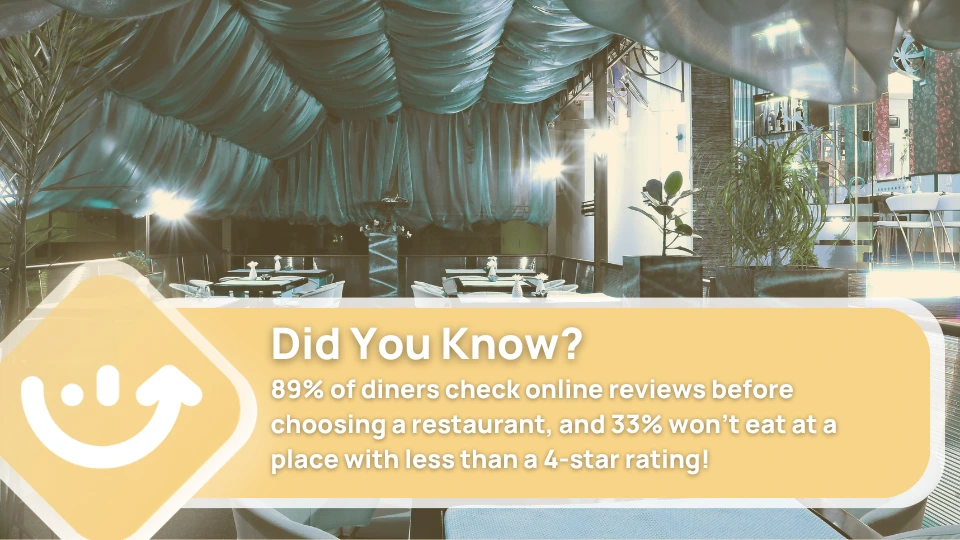
Every review is a message from a guest who cared enough to say something. The 4-star guest who mentions the wait time is telling you exactly where the experience breaks. The 2-star review about cold food is either a quality control failure or a delivery problem. Either way, it's fixable.
The issue is that most restaurant operators respond to reviews like they're doing damage control. They're not. They're doing market research.
The 24-hour response rule
For multi-location brands, every review should get a response within 24 hours. Negative reviews ideally within a few hours. Here's why this matters beyond optics: Google's algorithm treats active review engagement as a local SEO signal. Operators who respond consistently rank higher in local search results.
Responding at scale across 10, 20, or 50 locations is where AI tools for restaurant marketing start earning their place. More on that below.
Tying reviews to store-level operations
This is where most brands drop the ball. They see the review, they respond, they move on. What they don't do is log it, spot the pattern, and fix the underlying operational issue.
If three locations are getting the same comment about slow service on Friday nights, that's a staffing problem, not a PR problem. The fix isn't a better review response. It's a different shift structure. For a deeper look at how good and bad reviews should shape your operations, see good review restaurant examples.
Personalized Customer Service: What It Actually Means in a Restaurant
"Personalized customer service" gets thrown around a lot. In practice, at a restaurant, it means one thing: the guest feels like you know them.
That doesn't require magic. It requires data and training.
The 5 tools a restaurant needs to personalize at scale
At a practical level, personalization at a multi-unit restaurant requires five things working together.
**
Tool,What It Does,Why It Matters
CRM,Tracks guest history and preferences,Lets you segment and follow up
POS system,Records purchase behavior,Shows what they order and how often they visit
Reservation system,Captures dining occasion and party size,Powers pre-visit personalization
Loyalty program,Creates a return incentive and a data trail,Connects visit frequency to communication
Manager notes,On-shift memory of regulars,The human layer that tech can't fully replace
**
For customer-facing training that ties into all of this, restaurant customer service training is worth reading alongside this article.
How AI is changing personalization in 2026
AI is doing two things in restaurant marketing right now that are actually useful.
First, it's helping with review triage and response at scale. Instead of a marketing coordinator manually responding to 200 reviews across 15 locations, AI tools draft personalized responses based on the review content. The human reviews and sends. Time cut from 3 hours to 20 minutes.
Second, AI is helping restaurants identify which guests are at risk of churning. If a guest who visited every week for six months hasn't shown up in three weeks, that's a signal. An automated loyalty message with a reason to return can recapture guests before they're gone. That's ai marketing automation for restaurant that actually converts.
How to Handle Difficult Customers: A Manager Playbook
Difficult customers are part of the job. How your managers handle them in the moment determines whether that guest leaves angry and writes a review or leaves feeling heard and becomes more loyal than before.
The LARA framework works:
Listen. Don't interrupt. Let the guest say everything they need to say.
Acknowledge. Say something specific back. Not "I understand your frustration" (useless) but "You're right, that wait was too long and I'm sorry you had that experience."
Resolve. Offer something concrete. A comp, a remake, a manager's direct contact for next time.
Action. Follow through. Log it. Make sure the kitchen or floor knows what happened so it doesn't repeat on the next shift.
When to comp, when to refund, when to decline
Not every complaint deserves a comp. Here's a quick guide:
**
Situation,Recommended Response
Food quality issue (confirmed),Remake + offer comp
Long wait (within reason),Acknowledge + offer a discount on next visit
Guest preference mismatch,Offer partial solution / no automatic comp
Repeated same issue,Manager escalation / log as ops signal
Abusive behavior,Firm but polite decline / no comp
**
Online complaint handling follows the same principle. Respond publicly, brief and specific. Then move the conversation to a private channel.
A 12-Week Restaurant Marketing Cadence for Multi-Location Operators
Building a better marketing system doesn't happen in a week. Here's a realistic 12-week rollout that any 5 to 50 unit brand can follow.
Weeks 1 to 4: Baseline and audit
Pull your current repeat-visit rate. Check your Google Business profiles across every location. Audit your review response rate and average response time. Look at your social channels and identify what's working. Don't skip this phase. You can't measure improvement without a baseline.
Weeks 5 to 8: Content cadence and review loop
Set up the HQ/store content split. Train location managers on why and how to respond to reviews. Build a simple internal log for tracking feedback themes by location. Start your 24-hour review response rule.
Weeks 9 to 12: Personalization and manager training
Roll out or optimize your loyalty program. Train floor managers on the LARA framework. Build a simple escalation path for recurring feedback. Start connecting review themes to specific operational changes. For broader manager skills that support this, restaurant manager skills covers the mindset piece well.
Measuring Repeat-Visit Lift: The Metrics That Actually Matter
A lot of restaurant marketing reports are full of impressions and follower counts. Those numbers feel good. They don't pay rent.
Here are the four metrics worth tracking.
Repeat-visit rate: What percentage of guests visit again within 60 days? This is the north star metric for this entire playbook. If it goes up, the loop is working.
Review sentiment trend: Are your average ratings improving across locations over time? Break this down by location so you can see which stores have operations issues hiding behind the score.
Net Promoter Score per location: Guests who would recommend you are guests who come back. Low NPS at a specific location is an operations signal, not a marketing problem.
Social engagement to reservation conversion: This one is harder to track but worth attempting. Are guests who engage with your social content booking tables? If your content isn't driving behavior, it's just noise.
How Xenia Helps Restaurant Teams Keep the Marketing Promise on Every Shift
Here's the honest challenge for restaurant marketing directors. You can build the best social media strategy, the most thoughtful review response process, and the most personalized customer service playbook in your category. But none of it sticks if the floor team doesn't execute consistently.
Xenia's frontline communication and operations tools exist at exactly this layer.
When your marketing team runs a new campaign or a seasonal menu, Xenia's announcement system with read receipts means every location manager has seen and acknowledged the brief before the campaign goes live. No more stores running the wrong promo because the message got buried in a group chat.

When a review flags a recurring issue at a specific location, Xenia lets ops teams convert that insight into a corrective action task assigned to the right person. The loop closes. The next guest doesn't have the same experience.
Xenia's AI Photo Agent can verify that menu presentations, signage, and setup at every location actually match brand standards before the shift starts. The marketing promise doesn't break at the front door because someone forgot to update the specials board.
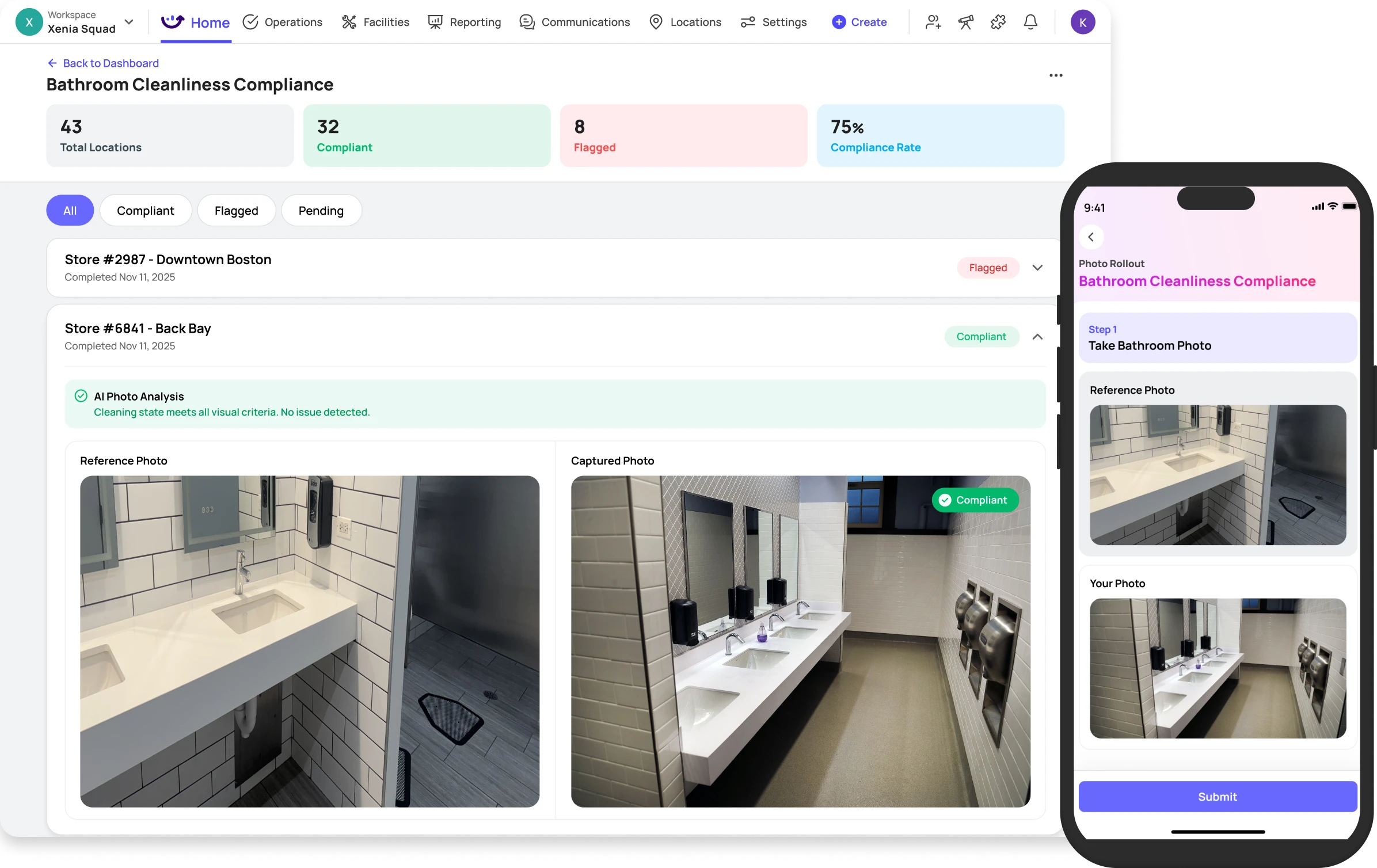
When district managers do store visits across multiple locations, multi-unit operations execution gives them a consistent framework for evaluating how well each location is delivering on the guest experience you've spent money marketing.
Customers like Demos Restaurants and Bacari Restaurants use Xenia to keep their operations execution consistent across locations, so the experience guests see in a review or on social matches what they actually find when they walk in.
Book a demo to see how Xenia connects marketing promises to on-shift delivery.
Conclusion
The restaurants that will win repeat visits in 2026 are not the ones with the biggest social following. They're the ones where the marketing team and the operations team are running the same play.
Social media builds awareness. Reviews capture the truth. Personalized service closes the loop. But all three only work when the floor team delivers on the promise every single shift.
That's the part most marketing playbooks skip. And it's exactly where Xenia sits.
Build your loop. Measure your repeat-visit rate. Fix the operational breaks that reviews keep surfacing. And if you want every location executing consistently enough to make that loop actually work, see what Xenia does for multi-location restaurant teams.
Frequently Asked Questions
Got a question? Find our FAQs here. If your question hasn't been answered here, contact us.
What AI tools are most useful for restaurant marketing right now?

Three areas that actually work: drafting review responses across locations, spotting lapsed guests in loyalty data, and verifying brand standards before each shift. Xenia's AI Photo Agent and AI Template Builder sit at the operations layer, which is where the marketing promise holds or breaks.
What does personalized customer service look like in a restaurant?
A server who remembers a regular's order. A manager who acknowledges someone's third visit this month. Your loyalty data flagging guests before they churn. Train your team to notice people. The tech helps you do it at scale.
How do you respond to bad restaurant reviews?
Within 24 hours. Be specific. Apologize once. Offer a real next step. No corporate scripts, no public comps. Move it to a private channel and log it internally. Same complaint appearing across locations means it's an ops issue, not a PR one.
How do restaurants get more repeat visits?
Consistent execution on shift, a loyalty system that follows up, and making guests feel recognized. Track how many guests return within 60 days. If that number is low, fix the experience before fixing the marketing.
What is the best restaurant marketing strategy in 2026?
Tie social, reviews, and customer service into one system. Deliver a good experience, capture the feedback, respond fast, personalize the follow-up, give them a reason to return. That loop is the strategy.


A Modern, AI-Powered Platform Built for Restaurant Operations
Xenia brings kitchen operations, food safety, audits, and team communication into one mobile-first platform. Restaurant teams execute daily work consistently, maintain compliance, and resolve issues faster, while leadership gets real-time visibility across all locations.
.webp)
Why Restaurant Operators Choose Xenia:
🤖 AI-Powered Operations, Convert paper logs instantly and verify food presentation and kitchen cleanliness automatically. Get instant answers about food safety trends without building reports.
🍽️ Food Safety & Compliance, Track line checks and temperature logs with automated alerts. Trigger corrective actions when readings exceed safe ranges. Maintain audit-ready records for health inspections.
📊 Multi-Location Control, Monitor food safety compliance and task completion across regions. Benchmark locations to identify training needs. Export reports for operational reviews.
One platform for kitchen operations, food safety, and compliance across all locations.

.svg)
.webp)
%201%20(1).webp)

.svg)
%201%20(2).webp)