
.webp)
Post Summary
Your restaurant forecasting only looks at sales. That's the problem.
Predicting tomorrow's revenue doesn't tell you which locations will fail health inspections. Sales forecasts don't show where food safety issues happen most. Labor predictions miss operational problems that create compliance failures.
Smart restaurant operators need operational demand forecasting. Which locations need extra food safety audits? Where do compliance issues happen repeatedly? What operational capacity do you need for growth from 800 to 1,300 stores?
You need restaurant demand forecasting software that predicts operational needs, forecasts compliance risks, and plans capacity for multi-location growth.
This guide explores the 10 best restaurant demand forecasting solutions.
.webp)
What is Restaurant Demand Forecasting Software?
Restaurant forecasting software looks at more than just sales. It checks your past performance to spot where problems usually happen. Tells you which stores need more food safety help. Figures out staffing based on which places keep failing inspections.
What it predicts beyond sales:
- Food safety scores and rule-breaking problems
- Staffing needs based on which stores mess up inspections
- When equipment will break down
- How many people you need when you grow
- Training needs for locations that keep failing
What normal forecasting misses:
- Store keeps failing temperature checks - that's a people problem
- Summer brings more food safety headaches
- How many managers do you really need for 1,300 stores vs 800
- Changing staffing when certain stores have compliance issues
- Timing audits based on which stores are risky
Good forecasting connects rule-following data with people decisions. A store that keeps failing food safety needs different staffing than stores that nail it every time.
Best Restaurant Demand Forecasting Software Comparison
**
Rank, Software, Operational Forecasting, AI Features, Multi-Location, Best For
#1, Xenia, Operations + compliance, AI audit predictions, Native dashboards, Multi-unit operational forecasting
#2, Lineup.ai, Sales + labor demand, Advanced AI, Multi-location, AI demand forecasting
#3, Restaurant365, ERP + operational data, Financial integration, Enterprise, Comprehensive forecasting
#4, Crunchtime, Sales + inventory, Enterprise AI, QSR chains, Large chain operations
#5, Fourth, Labor + inventory, Operational optimization, Multi-unit, Waste reduction
#6, NOVA, Real-time labor, Live adjustments, Multi-location, Real-time labor
#7, MarginEdge, Food cost focus, AI inventory, Multi-location, Food cost control
#8, MarketMan, Inventory planning, Usage patterns, Multi-location, SMB affordability
#9, 7shifts, Labor scheduling, POS integration, Multi-location, Labor optimization
#10, ClearCOGS, Waste minimization, Predictive ordering, Multi-location, Waste minimization
**
.svg)

.webp)
1. Xenia - Best Restaurant Demand Forecasting Software
- What it's for: Complete restaurant demand forecasting software with AI-powered operational predictions integrated into daily workflows
- G2 rating: 4.9/5
- Capterra rating: 4.8/5
- What makes it different: Only demand forecasting solution that predicts operational needs and compliance risks alongside traditional sales forecasting. AI analyzes audit patterns, food safety data, and operational performance to forecast where problems will occur.

Most restaurant forecasting software only predicts sales and basic labor needs. You get revenue forecasts in one system. Track food safety separately. Monitor compliance in another platform. Operational insights get lost between systems.
Xenia connects operational forecasting with daily workflows automatically. AI predicts which locations need extra food safety audits. Compliance patterns drive staffing adjustments. Capacity planning scales with operational data. Everything managed through one integrated platform.
How Xenia's Restaurant Demand Forecasting Works
AI-Powered Operational Forecasting: Analytical agent analyzes historical audit data, food safety patterns, and compliance trends to predict operational risks.
Location consistently fails morning temperature checks? AI flags for extra food safety training and adjusted opening procedures. Pattern of weekend health inspection issues? System schedules additional compliance audits and supervisor visits.
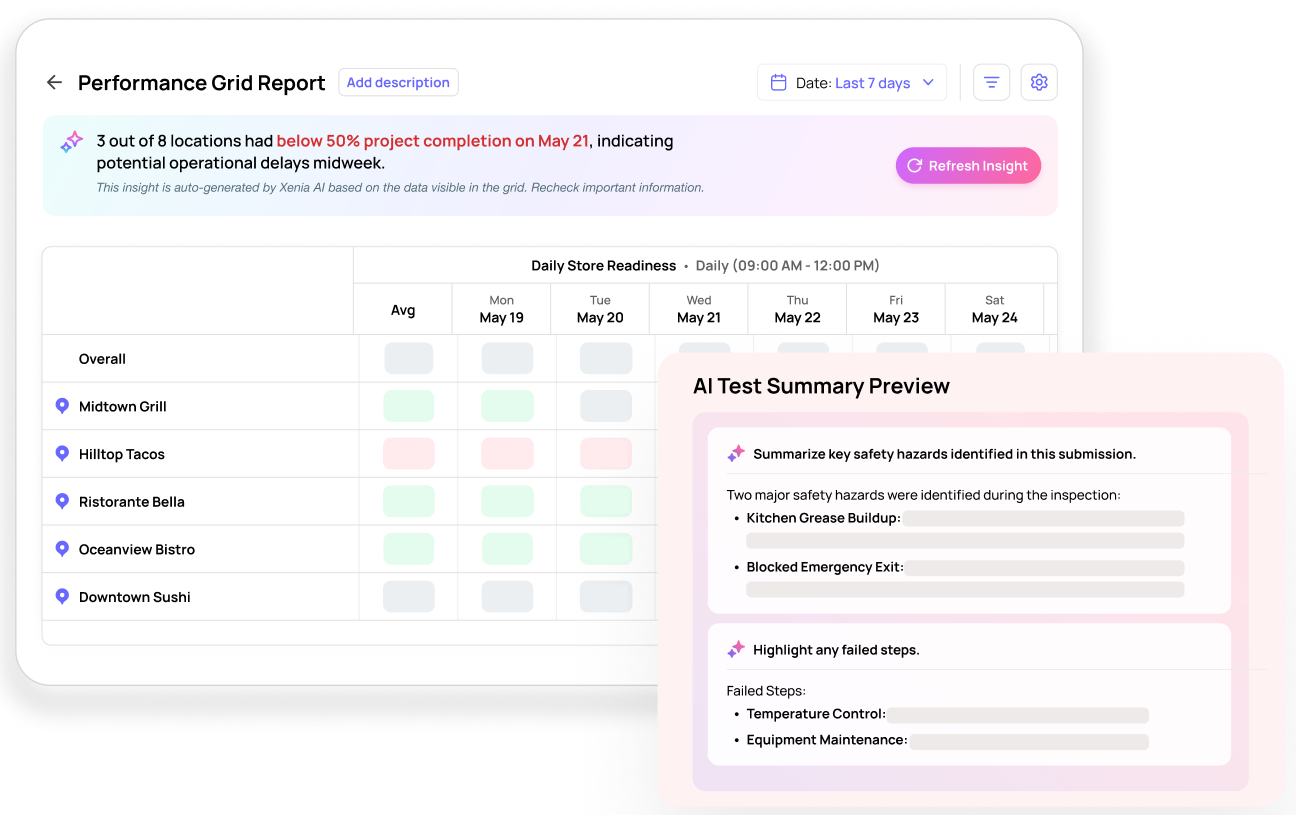
Compliance-Driven Staffing Forecasting: Traditional forecasting matches staff to sales volume. Xenia matches staff to operational complexity and compliance requirements.
High-risk location with recent violations needs experienced manager coverage. New location requires extra training staff for first 90 days. System forecasts staffing needs based on operational patterns, not just customer counts.
Capacity Planning for Growth: AI analyzes operational data across existing locations to forecast capacity needs for expansion from hundreds to thousands of stores.
What operational support does each location type require? How many district managers for 1,300 stores? Where will compliance bottlenecks occur? System models growth scenarios using actual operational data.
Audit Score Prediction: System tracks audit patterns and food safety trends to predict location performance before inspections happen.
"Location shows declining temperature log compliance and increasing food waste. Predict health score drop of 1.5 points without intervention." Proactive audits and training prevent problems instead of reacting after violations occur.
How Xenia Compares to Sales-Only Forecasting
**
What You Need, Xenia, Traditional Sales Forecasting
Operational predictions, Forecasts compliance risks and audit needs, Revenue and basic labor only
Capacity planning, Models growth from 800 to 1300+ stores, Sales projections without operational context
Compliance integration, Food safety patterns drive staffing, Compliance tracked separately
Multi-location insights, Identifies operational trends across locations, Location-by-location sales data
**
Bottom line: Use Xenia when you need operational demand forecasting that connects compliance data with staffing decisions and capacity planning for enterprise growth.

Priced on per user or per location basis
Available on iOS, Android and Web


2. Lineup.ai

- What it's for: Advanced AI sales and labor demand forecasting with automated scheduling
- Best for: Restaurant chains prioritizing forecasting accuracy and AI-driven optimization
Lineup.ai focuses specifically on AI-powered forecasting accuracy, claiming 35% better predictions than traditional methods. Strong emphasis on hourly sales forecasting and automated scheduling based on demand predictions.
Key features:
- Hourly sales forecasting with 35% accuracy improvement
- Automated scheduling based on demand predictions
- Variance analytics and performance tracking
- Multi-location baseline comparisons
- AI-driven labor optimization
Good if: You prioritize forecasting accuracy above all other features and want cutting-edge AI predictions
Consider if: Custom pricing and newer platform may require more implementation support
3. Restaurant365

- What it's for: Enterprise resource planning with integrated sales and labor forecasting
- Best for: Multi-unit restaurants needing comprehensive business management with forecasting
Restaurant365 combines forecasting with complete restaurant ERP functionality including accounting, inventory, and operations management in one platform.
Key features:
- Sales projections using historical data analysis
- Labor spend control with forecasting integration
- Multi-location planning and reporting
- Prime cost tracking and optimization
- Comprehensive ERP functionality
Good if: You need complete restaurant management software with forecasting as one component
Consider if: Enterprise pricing starts at $499+ monthly per location
4. Crunchtime
.webp)
- What it's for: Enterprise AI sales and guest forecasting for large restaurant chains
- Best for: QSR chains with 100+ locations needing high-accuracy predictions
Crunchtime provides enterprise-grade AI forecasting designed for large-scale restaurant operations with advanced accuracy capabilities.
Key features:
- AI sales, guest count, and check forecasting
- Inventory planning integrated with demand
- Multi-unit demand management
- Enterprise-grade accuracy and reliability
- Large-scale operational optimization
Good if: You're a large chain prioritizing maximum forecasting accuracy
Consider if: Custom enterprise pricing and implementation complexity
5. Fourth

- What it's for: AI labor and inventory forecasting focused on operational efficiency
- Best for: Multi-unit operations prioritizing waste reduction and labor optimization
Fourth provides single platform combining labor and inventory forecasting to minimize waste while optimizing staffing.
Key features:
- AI sales forecasts driving operational decisions
- Combined labor and inventory optimization
- Centralized planning across multiple locations
- Waste reduction through better forecasting
- Operational efficiency focus
Good if: You need integrated labor and inventory forecasting for waste reduction
Consider if: Custom pricing and enterprise focus
6. NOVA
- What it's for: Real-time labor forecasting with live sales-to-staffing adjustments
- Best for: Restaurants needing hourly labor optimization based on actual sales performance
NOVA provides unified POS and labor view with real-time dashboards that adjust staffing recommendations based on current sales performance versus forecasts.
Key features:
- Real-time sales and staff productivity dashboards
- Hourly demand-based staffing recommendations
- Live productivity metrics and adjustments
- Unified POS integration for immediate insights
- Dynamic labor cost control
Good if: You need live labor adjustments throughout service periods based on actual performance
Consider if: Custom pricing and focus primarily on labor rather than comprehensive forecasting
7. MarginEdge

- What it's for: AI-powered inventory demand forecasting focused on food cost optimization
- Best for: Restaurants prioritizing food waste reduction and inventory accuracy
MarginEdge uses AI to predict inventory needs and automate purchasing recommendations to minimize food waste and optimize costs.
Key features:
- AI purchase recommendations based on demand forecasts
- Variance tracking between predicted and actual usage
- Recipe costing integrated with demand planning
- Predictive ordering to prevent waste
- Food cost optimization analytics
Good if: Food cost control is your primary concern and you want AI-driven inventory forecasting
Consider if: Custom pricing and primary focus on inventory rather than labor forecasting
8. MarketMan
.webp)
- What it's for: Affordable inventory demand planning and forecasting for smaller restaurants
- Best for: Small to medium restaurants needing cost-effective forecasting solutions
MarketMan provides usage-based reorder forecasts with vendor integration at accessible pricing for independent and small chain restaurants.
Key features:
- Demand forecasting for inventory planning
- Automated vendor ordering based on predictions
- Recipe costing with forecast integration
- Usage pattern analysis
- Cost-effective pricing structure
Good if: You're a smaller restaurant needing affordable forecasting without enterprise complexity
Consider if: Limited to inventory forecasting without comprehensive labor optimization
9. 7shifts
.webp)
- What it's for: Sales-based labor forecasting and automated scheduling optimization
- Best for: Restaurants prioritizing labor cost control and schedule optimization
7shifts uses POS integration to forecast labor needs and automatically create optimal schedules based on predicted sales volumes.
Key features:
- Sales-to-labor ratio forecasting and optimization
- Automated scheduling based on demand predictions
- Multi-location labor planning and reporting
- POS-driven forecast accuracy
- Labor cost tracking and control
Good if: Labor scheduling and cost control are your primary forecasting needs
Consider if: $39 per location monthly and focus primarily on labor rather than inventory
10. ClearCOGS
.webp)
- What it's for: Predictive inventory forecasting specifically designed to minimize food waste
- Best for: Restaurants with significant waste problems needing specialized inventory forecasting
ClearCOGS focuses on demand-based inventory planning with sales trend analysis to reduce waste through precise ordering.
Key features:
- Sales trend forecasting for inventory optimization
- Automated reorder points based on demand patterns
- Waste variance alerts and tracking
- Demand-based inventory planning
- Food cost optimization focus
Good if: Food waste is a major concern and you need specialized inventory forecasting
Consider if: Niche platform with emerging market presence
Related resources
- AI Scheduling Guide
- Workforce Scheduling Guide
- Food Safety Training Guide
- Restaurant Operations Checklist
- Food Safety Software
Conclusion
Restaurant forecasting breaks when you only count sales.
Tomorrow's revenue doesn't tell you which locations will bomb their health inspection. Sales numbers don't show where your food safety problems keep popping up.
Most restaurant software just guesses sales and basic labor needs. That misses the real problems.
Xenia leads restaurant forecasting by connecting operational predictions with daily workflows.
The Analytical agent predicts food safety issues before violations occur. Compliance patterns drive staffing decisions automatically. Capacity planning uses real operational data for scaling from hundreds to thousands of locations.
Start free with 25 tasks and 5 users to test operational forecasting in your restaurant operations or book a demo to see how Xenia transforms restaurant demand forecasting beyond sales predictions.
Frequently Asked Questions
Got a question? Find our FAQs here. If your question hasn't been answered here, contact us.
Does restaurant forecasting software work for franchises?

Yes, restaurant forecasting software handles franchise operations with different rules, menus, and compliance requirements per location. Corporate managers see all franchise data while individual franchisees manage their specific locations. Enterprise platforms accommodate multi-brand franchise groups effectively.
Can restaurant forecasting software predict busy days?
Yes, restaurant forecasting software predicts busy periods using sales history, weather forecasts, and local events. AI knows rainy days are slower and game nights are busier. Systems automatically adjust staffing and food prep for predicted demand. Manual overrides handle special promotions or private events.
What is the best restaurant forecasting software?
Xenia is the best restaurant forecasting software because it predicts operational needs like food safety audits and compliance risks, not just sales. The AI connects audit patterns with staffing decisions automatically. Free version includes 25 tasks and 5 users for testing operational forecasting workflows.
How accurate is restaurant forecasting software?
Restaurant forecasting software achieves 70-85% accuracy initially, improving to 90%+ within 3-6 months. AI learns your specific patterns over time. Operational forecasting accuracy depends on data quality and compliance pattern consistency. Most restaurants see better predictions than manual methods within 30 days.
Do I need restaurant demand forecasting software?
Yes, if you have 2+ locations or struggle with food waste, staffing problems, or compliance issues. Manual forecasting creates mistakes that cost money. Software prevents stockouts, reduces food waste 5-10%, and optimizes labor costs 15-25%. Single locations benefit but multi-location businesses need it most.

A Modern, AI-Powered Platform Built for Restaurant Operations
Xenia brings kitchen operations, food safety, audits, and team communication into one mobile-first platform. Restaurant teams execute daily work consistently, maintain compliance, and resolve issues faster, while leadership gets real-time visibility across all locations.
.webp)
Why Restaurant Operators Choose Xenia:
🤖 AI-Powered Operations, Convert paper logs instantly and verify food presentation and kitchen cleanliness automatically. Get instant answers about food safety trends without building reports.
🍽️ Food Safety & Compliance, Track line checks and temperature logs with automated alerts. Trigger corrective actions when readings exceed safe ranges. Maintain audit-ready records for health inspections.
📊 Multi-Location Control, Monitor food safety compliance and task completion across regions. Benchmark locations to identify training needs. Export reports for operational reviews.
One platform for kitchen operations, food safety, and compliance across all locations.

.svg)
.webp)
%201%20(1).webp)

.svg)
%201%20(2).webp)